Not so Alone After all
Author: Sara Payne
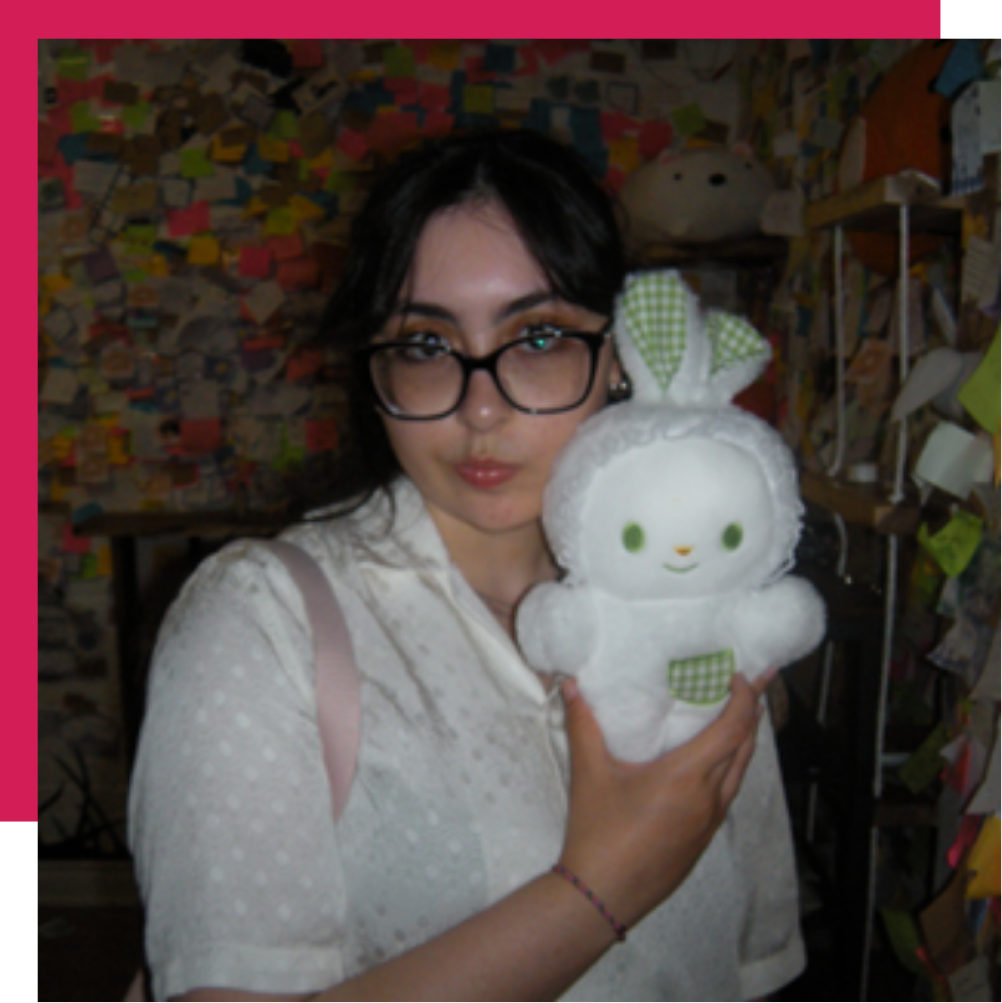
The future can be terrifying, but planning for mine gave me hope. When I got sick, I tried to take it one day at a time because I quickly learned how unpredictable life can be. However, I still planned for my future: graduate high school, go to college, become a paramedic and be happy. I never knew if I was going to achieve those things, but holding onto that picture in my mind helped me a lot.
When I was in hospital, anytime I felt like giving up I would look outside and see my future self in an ambulance, helping others. I was healthy and happy in my uniform. I would also envision myself in my future apartment, decorated the way I want it and my cat lying by the window enjoying some sun.
There have been times I thought I wasn’t going to be able to achieve my dream. But knowing how badly I wanted it to become a reality made me work that much harder. I wasn’t going to let cancer take this away from me. One of my favourite quotes is, “You want it because your future self already has it.” It gives me motivation to work hard and keep going.

Music was another thing I held on to when I was sick. Music and lyrics are like a story that can be interpreted however you want and provide an escape. One song I regularly listen to nowadays is WITHOUT YOU by NCT U. It's about feeling alone and isolated, but it also shows that all it takes is one person to turn your life around and help you see better days. It makes me think of my friends who never left my side when I got sick and my mom who was with me 24/7.
I have a lot of good memories with my mom in the hospital. I also met some amazing people and even made some friends for life. Connecting with teens my age who went through the same thing I did and hearing their stories of survival helped me feel more at ease.
Regardless of what someone is dealing with, I think everyone has one thing they can hold on to even if they may not realize it. Maybe it’s a feeling, or a person or a small thing you do daily.
It can be hard to figure out what it is because our brain can get so filled with the stresses in life.
I think I’m now at a point where I’ve learned to enjoy my own company. I have a few solid friendships I wouldn’t trade for the world. I have good relationships with my cousins and even when I am physically alone, I don’t feel lonely.
Having cancer, and even being in remission, is such an isolating and lonely experience sometimes, but getting lost in daydreams about my future and listening to music makes me feel less lonely. I truly hope everyone has that one thing to comfort them and bring them joy, even if it's for just 10 minutes a day. I can’t say for sure things will get easier, but I think it’s still worth it.

Survive
Author: Kayla Russell

About myself: My name is Kayla Russell. I attend the University of Waterloo as an undergraduate student. I was diagnosed when I was 11 years old, and 2024 marks ten years cancer-free. I've always enjoyed writing and reading stories; I just can't get enough of them. I didn't always love poetry, though. I didn't start writing until a few years ago, and one of the things I wrote about was letting go of some pent-up feelings. Yet, the reason I will always continue to love poetry is because of the way we can relate to each other through our words. This is also the reason I wrote this piece, which was to show myself how I happened to think at the time. Nevertheless, I hope it is one that can be of some comfort to you.
"Survive, they said
But I’d rather stay in bed..."
Writing Process: I usually write my poems in a journal and then type them up on my computer just as a second copy or like an electronic diary, if you will. Sometimes I start writing something and then it ends up being completely different. A peaceful, cozy spot where I can curl up or sit comfortably is where I usually find myself writing. Writing is like my release. When I’m feeling sad or irritable, I write. I write to escape, or I write to find some answers. I started writing these poems to help create a safe space for myself to know that it’s okay to feel however I feel. Also to remind myself that there's no right or incorrect way to feel about what happened to me; it’s a journey.
Survive, they said
Survive, they said
But I’d rather stay in bed
All day long
Where my pillow
Sings sweet songs
Of rest here
But something inside me
Has a little more energy
Than I did yesterday
So, I make my way
Out of bed
And stand in front of the mirror
Surprisingly,
I don’t look as tired
But I'm worn out on the inside
Something inside of me
Says hide
But I wipe my tears
And walk away from the mirror
It will be okay
Tomorrow’s another day
Survive, they said
For every poison that wishes to
Kill me from the inside out
That is not the thing that will kill me
The cages of my mind with thoughts
That are locked behind
Bars, yelling the same thing
You’re not good enough
You will never survive this
They were right, you probably won’t make it
I am weak from the thoughts that drain the life
Out of me
Who is she?
Who is the one who’s done with life
Who is the one who doesn’t let strife
Come in between her and her dreams
Who will let me dream?
So, I have to take the prisoners
All of the emotions I’ve locked away
And say
It’s okay to feel
But I can’t complain
The comfortability from laying in a bed of fearTells me
Nothing can hurt me if I pretend it’s not real
I can just spiral in doubt
Until I fall asleep with the pain that
Lulls me away to the land of dreams
When I wake up, I know what they will say
Survive, they said
It’s only up
From here

Giants
You have beautifully risen
Despite all the bad
That has happened
Your triumph is a beanstalk
Reaching new heights
Tackling new giants
And still growing

Am I Still Dreaming?
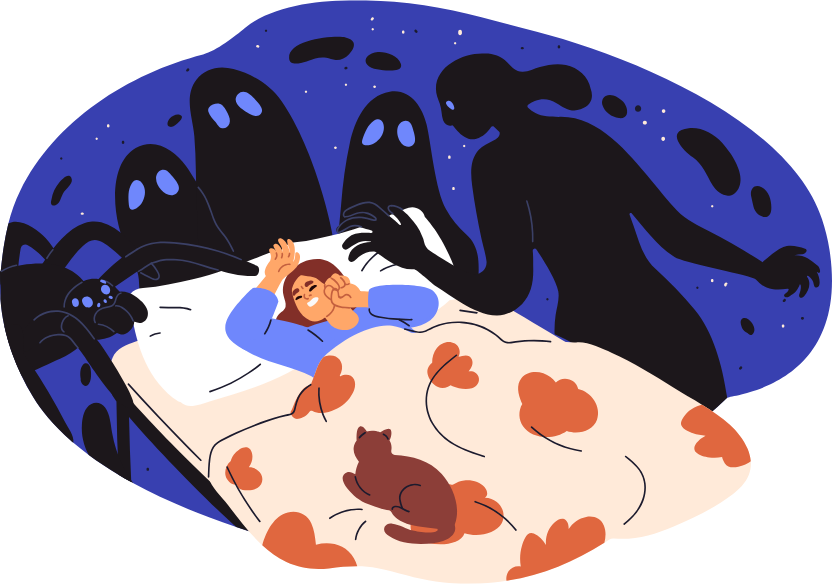
A very scary
Dream of mine
Is for all
My nightmares to come true
Is it bad that I wish to
See how strong I can be
To fight off all
That haunts me?
Using AI for Brain Tumour Treatment

Radiation therapy (RT) is a common treatment for brain tumours (the second most common cancer in childhood after leukemia). The goal is to deliver a focused dose of radiation to the tumour and surrounding at-risk regions while minimizing radiation to normal brain tissues. This is particularly crucial for young patients in whom excess RT to normal brain tissues can lead to significant long-term side effects.
The standard method of manual radiation therapy planning is time-consuming and can vary in quality depending on the experience of the radiation therapist and oncology staff. Artificial intelligence (AI)-assisted planning has been shown to improve the speed and quality of RT plan design and reduce unnecessary doses to normal brain tissues.
In a project involving the Princess Margaret Cancer Centre in Toronto, as well as the London Regional Cancer Program (Ontario), researchers evaluated the potential benefit of collaborative AI-RT planning for children, youth and young adults with brain tumours. The group intends to disseminate the cutting-edge AI technology and create new collaborations to improve RT for thousands of cancer patients across Canada.
For this study, 61 patients were enrolled, with approximately two RT plans created by expert RT planners (standard practice) and one AI-assisted plan created for each patient. In a blind evaluation by the treating oncologists, the AI-assisted plans were deemed to be as good or better than the manual plans. AI-assisted plans delivered a slightly smaller dose of radiation to normal brain tissues and were designed in less time.
The conclusion: AI-assisted radiation therapy planning creates high-quality radiotherapy plans for children and young adults with brain tumours. This is the first study of AI-assisted RT planning to include children, and creates an opportunity to rapidly create high quality plans for patients needing urgent treatment, and facilitate planning for smaller centres.
Read the full published article: A Prospective Study of Machine Learning − Assisted Radiation Therapy Planning for Patients Receiving 54 Gy to the Brain
Derek S. Tsang, MD, MSc; Grace Tsui, BSc, MRT(T); Anna T. Santiago, MSc, MPH; Harald Keller, PhD; Thomas Purdie, PhD, FAAPM; Chris Mcintosh, PhD; Glenn Bauman, MD; Nancy La Macchia, MRT(T); Amy Parent, BSc, MRT(T); Hitesh Dama, BSc, MRT(T); Sameera Ahmed, MSc; Normand Laperriere, MD; Barbara-Ann Millar, MBChB; Valerie Liu, BSc; David C. Hodgson, MD, MPH, FASTRO

Join us in Raising Money for Kids with Cancer!

Do you want to give back to an organization that is important to you but don’t know where to begin?
Individual, community, school and corporate events in support of POGO make a big impact in the lives of children and youth with cancer, survivors and their families.
Celebrate a milestone, host a sporting event, fundraise at your school, plan a social event, create a team challenge at your office or add a fundraising component to an existing event — there are so many options!
The funds you raise provide financial assistance to families so they can pay for out-of-pocket costs associated with their child’s treatment, support survivors with customized school and work counselling when their disease or its treatment has left them with learning challenges and fund promising research that examines the impact of childhood cancer and its treatment.
Get started today with our easy-to-use fundraising platform. Reach out to events@pogo.ca with any questions or for help getting started!
Related Content
POGO CEO Lauren Ettin Makes the Rounds

Since Lauren Ettin joined POGO as Chief Executive Officer in April 2024, she has been making the rounds, becoming familiar with the inner workings of POGO programs and services at our partner hospitals, and the unique nature of childhood cancer care and Ontario’s childhood cancer care system. Here’s what she shared.
Q: How has your experience and background prepared you for your new role at POGO?
Lauren: My career has been in health care across all sectors: public, private and not-for-profit, with the same vision of always improving the delivery of care for all Ontarians. I've worked in the Ontario government, consulting, in an association and led a not-for-profit.
My last role was my first in pediatrics and I was really struck that children are not little adults; delivering care for kids is distinct and unique. In Ontario, we have a remarkable childhood cancer care system—an actual cohesive system—established by visionary leaders and recognized as a national, if not international, leader in the healthcare field.
Q: In the last four months, you have spent a lot of time getting to know POGO’s partners and our various stakeholders. Why was it important to spend so much time in the community?
Lauren: In pediatric cancer, there are so many different lenses and perspectives. It was really important for me to spend time meeting our partners, building relationships with people and understanding their experience and vision for the system; where they see our collective strengths and opportunities—and then bringing that all back to inform POGO’s work and priorities.
There is exceptional pride in the quality and accessibility of Ontario’s childhood cancer care system. At POGO, we have an opportunity to build on our ability to bring people together to learn from each other, and plan, execute and spread in scale together—not only to other parts of Ontario’s healthcare system, but around the world.
Q: Describe what has stood out for you in your short time at POGO.
Lauren: What stands out most is how we put children and family at the centre of care, knowing a childhood cancer diagnosis impacts the child but reverberates more broadly. And the interprofessional healthcare teams are experts in supporting individual patients from diagnosis and treatment to survivorship, and sometimes, unfortunately, to end of life. POGO’s programs address their physical medical needs, but also their mental health and personal needs.
POGO also collects data on every child diagnosed to inform system planning. The research we do and the clinical practice guidelines we develop translate into better care and improved outcomes.
What’s more, we have incredibly supportive donors who share our vision for children's cancer care in the province.
This all makes POGO incredibly unique.
Q: September is Childhood Cancer Awareness Month. What do you want people to know or understand about childhood cancer in Ontario?
Lauren: Over the past 50 years, there have been dramatic improvements in childhood cancer care and fewer kids are dying of cancer. Today we expect approximately 85% of children who are diagnosed to be long-term survivors due to things like research and clinical trials. Still, with all this good news about increase in survivorship, cancer is still the most common disease-related cause of death in children over the age of 1 year.
Also, it is important to note that two of every three childhood cancer survivors are at risk of a late effect due to their cancer or its treatment, like second cancers or cognitive challenges. While surviving cancer is certainly the goal, it is not where the journey ends. The impacts of childhood cancer can last a lifetime.
Q: POGO will soon release a new Childhood Cancer Care Plan, developed in consultation with a wide range of stakeholders. What are two or three things that made a strong impression on you as you stepped into your role and worked to bring the Plan to completion?
Lauren: To address the unique complexities, ripple effects and long-term impacts of childhood cancer, POGO and its partners have built a system that provides wrap-around care and support for children and families at every stage of the journey. One of the things we heard from the consultations is that we're on the right path with opportunity for improvements, and the way to execute on the Childhood Cancer Care Plan is for all our partners, within their different roles, to work together to move the Plan’s goals and objectives forward.
Q: With all that you’ve seen and heard through your rounds what are you most excited about?
Lauren: I’m excited to build on POGO’s collaboration with current and new partners; to convene leaders and focus our attention on making tangible improvements in care that are aligned to the goals and objectives in the next Childhood Cancer Care Plan. I feel strongly that our intentional efforts are sure to reap great rewards. Ontario can continue to strengthen its world-class childhood cancer system so that patients and survivors can count on having the treatments, resources and supports they need today – and for life.
Related Content

Study Examines Late Effects and Treatment Protocols for Hodgkin Lymphoma in Children

Childhood cancer and its treatment come at a risk of late effects for survivors. In fact, the evidence shows that two of every three childhood cancer survivors are at increased risk of at least one late effect due to their cancer or its treatment, including heart disease, second cancers and cognitive challenges.
A recent study published in JAMA (The Journal of the American Medical Association) looks at the treatment of Hodgkin lymphoma in children and the resulting risk of cardiac disease to survivors.
POGO Medical Director, Dr. David Hodgson, is the lead author of the study titled Late Cardiac Toxic Effects and Treatment Protocols for Hodgkin Lymphoma in Children.
“Cardiac disease as a late effect of treating Hodgkin lymphoma is a serious risk that is well documented,” he says. “One of the challenges of improving treatment is that we don’t want to wait for over 20 years to observe the late effects of treatments we’re currently giving today. The goal of this study was to estimate the risk of late effects of current treatment to better understand how to advise current patients and families, and also explore what changes to treatment would have the greatest benefit to reduce these risks.”
Understanding the extent to which treatment can be modified for improved health outcomes is critical for several reasons.
- Reducing treatment intensity is a trade-off against the risk of relapse.
- Understanding which components of treatment can be adjusted, and to what extent, can lead to better decisions about treatment modifications.
- Care for survivors is based on their treatment exposure making the burden of follow-up care an important consideration.
The study evaluated the treatment of 2,563 patients with Hodgkin lymphoma treated in four consecutive Children’s Oncology Group clinical trials between 2002 and 2022. Patients were treated with different doses of radiation therapy and doxorubicin chemotherapy – both of which are known to increase the risk of cardiac late effects. Based on the doses of these treatments, the 30-year cumulative incidence of severe or life-threatening heart disease was estimated to decrease from 10% in the first trial to 6% in the last trial. The findings were favourable, suggesting that evolutions in treating Hodgkin lymphoma will lead to a net reduction in late cardiac disease. Moreover, findings suggest that for adolescent and young adult patients, increasing the use of “cardioprotective” medications during treatment would be one of the best ways to reduce this risk further, without compromising cure rates.
“While there is still work to be done to monitor the long-term gains in reducing cardiac toxic effects, this is encouraging news that bodes well for the quality of life of childhood cancer survivors,” says Dr. Hodgson. “And, as with every study, we need to ensure that the guidelines for follow-up care of survivors, particularly in POGO AfterCare Clinics, are updated to reflect the latest evidence.”
Read the study here.
Related Content
Freedom International: Childhood Cancer Champion Since 2016

Freedom International Brokerage Company (Freedom) is one of Canada’s leading full-service, Inter-Dealer Brokers—providing electronic brokerage services to wholesale capital market participants in Canada and globally.
Since 2016, Freedom has been a committed corporate partner to POGO, demonstrating their shared vision of making a difference in the lives of children battling cancer through substantial financial, in-kind and volunteer contributions.

Freedom’s involvement began when Kevin Kirby, President and CEO, joined POGO’s Development Cabinet, a group tasked with growing POGO’s fundraising revenue. Recognizing their values aligned with POGO’s mission, Freedom quickly became a valued partner and has contributed $302,500 over the last nine years in support of POGO's programs and signature events that raise critical funds for childhood cancer research, financial assistance to families, and school and work supports for survivors.
Tim Anastakis, Vice President at Freedom, underscores the significance of their partnership with POGO, stating, "Knowing that I work for a company that prioritizes children's charities makes me proud," a sentiment that is echoed amongst Freedom employees.
In addition to their financial support, Freedom goes above and beyond by providing coveted tickets to Toronto Blue Jays and Toronto Maple Leafs games—offering families the chance to have happy moments together at a time that is typically filled with hospital visits and days at home sick.
"It's a pleasure knowing Freedom ticket donations help towards brightening a child's life even for a small moment." – Andrew Cooper, FX Forward Broker, Freedom International
PARTNER WITH POGO
Corporate partners play a critical role in helping POGO transform the childhood cancer care system and enable POGO to deliver care and support to children, youth, survivors and their families affected by childhood cancer.
POGO offers a portfolio of sponsorship opportunities that can enhance your brand, raise your community profile, and help you achieve your marketing and promotional goals.
How Slushies and Red Lights Provide Supportive Care for Childhood Cancer Patients
About a decade ago, I sat in a hospital in Leeds, Yorkshire, discussing with the parents of one of my young patients their high-dose chemotherapy treatment, including the risks of severe infection, liver and lung problems. “And,” I added as an aside, “there’s a chance of mucositis, which is a sore mouth, like a mouth ulcer.”
Three weeks later, and the child could hardly open their mouth—with lips cracked and bleeding, spitting out small pieces of the lining of their mouth, unable to eat or even swallow their own saliva. The lack of attention I had paid to mucositis up to that point struck me hard. And back then, there was very little we could do to prevent or treat it.
POGO Guidelines Offer New Approaches to Mucositis Care
Fast forward to mid-2020s when the POGO Clinical Practice Guideline update to Prevention of oral and oralpharyngeal mucositis in pediatric cancer and hematopoietic stem cell transplant patients summarized the most effective—and importantly the ineffective—therapies and approaches to prevent and treat mucositis in children and young people.
The POGO guideline gave us some new approaches to try, and, as it was an extremely well-produced and high-quality international guideline, the leverage to kick some of these approaches into action.
Why is it important that the guideline marks out ineffective treatments?
1) There's the hassle of taking medicines when they don't do anything.
2) There's the side effects, including stinging and bad tastes.
3) There's the unnecessary costs to the health service.
Slushies Bring New Meaning to Cold Comfort
One approach suggested in the guideline was "cryotherapy." You might have heard about cryotherapy for freezing off veruccas (warts) on your feet, or maybe with respect to Walt Disney freezing his body after death, but the phrase just means "treating with cold." In the case of mucositis prevention, this means the patient holding ice chips in their mouth. It's meant to reduce the amount of blood flowing to the delicate layers just inside the mouth, and so reduce the amount of chemo passing there to cause damage. In the UK, we struggled with the technical troubles of how to exactly procure, store and regulate popsicles within our hospital system, but this has been spectacularly and tastily overcome at McMaster Children’s Hospital in Hamilton, Ontario, with an in-unit slushie machine. Choosing which slushy you can have with chemo seems much more appealing than holding an ice cube in your mouth until it melts!

Shining a Red Light on Healing
The other main approach in the guideline was photobiomodulation. This is the use of a special wavelength of red (or infra-red) light to encourage the cells of the mouth lining to heal faster. Working with a hugely enthusiastic pair of dentists, and in collaboration with our local hospital charity, we acquired an LED-based photobiomodulation system. We put together detailed information on how to use it, how to clean it, and (after a beautiful bit of co-design and qualitative research from Dr. Claudia Heggie), a film made with young patients to explain it.
Now, despite my slight incredulity that shining what looks like a fancy red torch on someone would make them feel better, we use it frequently. We’ve massively reduced the severity of mucositis in our transplant unit and reduced the numbers of patients who've needed TPN (all your “food” fed through your central line). We’ve had patients travel from long distances to get some red light magic to feel better. We’ve seen requests from around the country asking how other units in the UK can get it going. Which makes us sound great, but it should be noted that this only got going because the POGO guidelines were there. Not wishy washy “expert” statements from the manufacturers of these devices, but guidelines with solidity and seriously interrogated evidence. This quality of document helps us persuade the administrative teams who need to control the finances of our hospitals that the intervention is truly likely to help our patients, and maybe even save money.
POGO’s Impact Immeasurable
These guidelines, the creation of a team based in Ontario, has spread good things much, much further. POGO, please listen to me, as a “come from away”: your work has power. POGO should be extremely proud of the guidelines they develop, nurture, help to create and support the uptake of. The impact they have around the world is immeasurable.
By Bob Phillips, BMBCh, PhD
Professor of Pediatric Oncology and Director, Candlelighters Supportive Care Centre,
University of York/Hull-York Medical School, UK

Dr. Bob Phillips is a Senior Academic at the Centre for Research and Dissemination and Hull York Medical School and an Honorary Consultant in Pediatric/ Teenage-Young Adult Oncology at Leeds Children's Hospital. Bob is a respected global leader in supportive care management. He spoke at the 2023 POGO Symposium on Childhood Cancer.
A Reservoir of Strength: Navigating My Child’s Cancer Journey

A question I’m often asked is, “How did it all start?”
It starts with our daughter Ellie—our healthy 10-year-old daughter who played on every sports team. To us, she was the picture of vitality.
One day we noticed what we thought was an innocent bump on her left cheek. Our general practitioner (GP) wasn’t concerned, thinking it was just a benign tumour made of fat tissue. We didn’t think too much of it until it started to grow. Ellie didn’t like how it was changing her face, so we made an appointment with a plastic surgeon to have it removed. Like our GP, he also assumed it was a little benign cyst and that it was nothing to worry about.
Two weeks later, we visited our plastic surgeon for Ellie’s routine post-op meeting. I observed the nurse’s energy and knew that something was wrong. It was the way his eyes darted between me and his computer screen that made the air in the room shift. At that exact moment, I felt my world fracture.
The plastic surgeon took me into the hall and told me Ellie’s biopsy was abnormal and needed to be sent away for more tests. Ten days later, we received the devastating news—our little girl had a type of cancer called rhabdomyosarcoma.
Struggling to make sense of our new reality, we met Arvinder, our POGO Interlink Nurse. When she called to book her first home visit with Ellie, I remember confessing to her that I was terrified and didn’t know how to get through this. She quickly replied, “Don’t worry; you’ve got me now, and I’m going to get you through this.”
Arvinder kept her promise. She’s made multiple home visits; connected us to every single resource we can access; met with Ellie’s teachers and explained to them how her treatment has affected her learning, academics and more, and, above all, she held our hands every step of the way.
About two months into Ellie’s treatment, we were at the hospital for a long day of chemo. Our oncologist asked me to step out and meet her in a small room down the hall from where my husband was sitting bedside with Ellie.
She calmly told me that Ellie’s biopsy indicated she may have a genetic mutation that would make her chemo-resistant. If Ellie was positive for this gene, it meant her treatment plan and chances of survival would change drastically. This also meant that our son, Oakley, might carry the same gene, making him vulnerable to a cancer diagnosis as well. Once again, the air in the room changed, and I was thrown even deeper into a place of fear and uncertainty.
Returning to the room where Ellie was receiving chemo, I had to sit across from my husband and text him every word I could remember our oncologist saying. My hands were trembling while I wrote to him, watching his face absorb this news two feet away from me. We were unable to react, hold each other or say anything without Ellie catching on. Instead, we just sat there silently while tears filled our masks.
Something interesting happens when you’re faced with the traumatizing and terrifying possibility that you could lose your child. It turns out we have this hidden reservoir of strength buried deep inside us. All parents have it, I assure you. And when your child’s health or wellbeing is threatened, the doors to this reservoir get ripped off their hinges and you are flooded with a strength and resilience you didn’t know you had.
During the seven agonizing weeks that we waited for Ellie’s genetic test results, we waited to find out if our daughter would survive this or not. We made her comfort our primary focus, trying to find as many moments of joy and peace as we could. We did everything we could to turn our fear and grief into love and beauty for our daughter. And it worked. When Ellie looks back at her treatment, she mostly remembers it as a cozy, warm and family-centered time. She remembers us all cocooned on the couch, sitting by the fire, taking long warm baths (which we did every 45 minutes, day and night, to relieve the pain). We did everything we could to make her feel hugged, when in reality, we were clinging to the edge trying to maintain our grip.
Finally, I got the call confirming Ellie was negative for the genetic mutation, and we were cleared to proceed to our next phase of treatment—precision radiation called proton therapy, which was only available to us in Jacksonville, Florida. This moment will go down as the most glorious release, the greatest exhale a human being can ever make. It changed every breath I’ll ever make again, and it changed my entire life.
When we returned home to Canada after two months in Jacksonville, Ellie continued chemo at the POGO Satellite Clinic at Credit Valley Hospital—a warm and lovely treatment space not too far from our home. Her nurses, Lindsay and José, walked Ellie through every step of the process and gave her control over her treatment. We saw the same faces every week, which helped alleviate Ellie’s fears. And when she would get a fever in the middle of the night, we had our cozy, familial place to go to.

It's been 10 months and Ellie’s scars have healed, her hair has grown back and she is back in school and on all her favourite sports teams. But as I said before, cancer doesn’t have a clear ending. It’s not over when chemo is done or when a child rings the bell. Ellie’s collateral damage is still to be determined. There is the real possibility of complications later in life and we all live with the fear of relapse or secondary cancers when she’s older.
Despite my worries, I find comfort in knowing that POGO is still on this journey with us post-treatment. Ellie will be monitored regularly for the rest of her life at a POGO AfterCare Clinic. If any late effects are detected, they will be caught early and treated, and the information about her childhood diagnosis and its treatment will continue to be available to us and used as a guide.
I want to make note of a beautiful thing that happens during a child’s treatment. You’ll notice when a parent is talking about their child’s cancer, everything is framed as “we.” “We” have chemo today, “we” have a port flush, “we” have bloodwork, “we’re” being admitted. And families speak this way because our child is an extension of us—if they’re going through something, you better believe we’re going through it right beside them, every step of the way.
I cannot speak for other families, but for ours, the “we” extended beyond our family unit. Arvinder, our POGO Interlink Nurse became part of our “we.” Lindsay and José at the POGO Satellite Clinic became part of our "we." Not merely as part of a service or an access point, but as part of our team and our family, who we simply could not have done this without.
To us, POGO is and forever will be part of our “we.”
Adapted from Samantha Taylor's speech at the 2024 POGO PJ Party
Related Content
POGO Welcomes New CDO, Shannon Caskey

POGO is pleased to welcome Shannon Caskey as our new Chief Development Officer, with oversight for POGO’s fundraising and communications teams, starting April 1, 2024. Shannon succeeds Lynn Wilson who retired from POGO in March and whose outstanding leadership helped raise millions of dollars that have impacted and benefited childhood cancer care in Ontario.
Shannon is a Certified Fundraising Executive (CFRE) who was recently awarded as Best Individual Fundraising Professional by Charity Village. She holds a graduate certificate in Corporate Communications, an Honours BA in English Language & Literature and has work experience at SickKids Foundation, Right to Play Canada and True Patriot Love Foundation.
For the past six years Shannon has served as the inaugural Director of Development at The Darling Home for Kids, where she established an excellent team and developed their fundraising strategy, resulting in significant growth in donors and doubling annual revenue. Shannon was the overall lead on the strategy and execution of The Embrace Campaign, the organization’s largest capital campaign in its history.
Having worked predominantly in organizations supporting children, Shannon is excited to bring her development expertise to her new role at POGO: “To step into the role of POGO’s Chief Development Officer is a true honour. I have long admired the accomplishments of the organization in their mission to achieve the best childhood cancer care system for everyone affected. I look forward to working with the amazing POGO team, donors, volunteers and supporters to continue making an impact to help ensure access to the best care our province can provide.”
Please join us in extending a warm welcome to Shannon.