From Urgent Questions to Lasting Pathways: Fertility Care at SickKids
For many children and adolescents with cancer, treatment is lifesaving. But these treatments can also impact something deeply personal — their future fertility and the potential for biological children. For years, nurses have heard similar questions from patients and families:
Will I be able to have children one day? Are there options? What are those options? Is it too late?
Without clear pathways, these questions were often left unanswered, and solutions were not always available. The need was clear: fertility preservation had to become timely, equitable, and normalized within pediatric oncology care.

In 2024, SickKids took a significant step forward by building a formal Fertility Preservation Program. The goal was to create an interdisciplinary, sustainable care pathway that facilitated standardized and timely access to fertility preservation for patients across varied diagnoses, ages, and urgency levels. Over 60 clinicians across disciplines — nursing, oncology, hematology, gynecology, endocrinology, pathology, urology, fertility specialists, informatics, social work, education, implementation science, and survivorship — with patient and parent partners, joined focused working groups to design care pathways that made sense in clinical settings. The group created detailed workflows to address referral processes, urgent and non‑urgent pathways, education, and survivorship considerations. Pathways for ovarian tissue cryopreservation (OTC), egg freezing, sperm banking, electroejaculation, and testicular sperm extraction (TESE) were clearly defined and implemented as standard of care.
The Nursing Role in Fertility Preservation
Nursing has been central to this work. In the first days of a new cancer diagnosis, nurses are consistently present at the bedside, making them instrumental in fertility pathways. Education and normalization were key early priorities. By equipping nurses with language, resources, and straightforward flow charts, the aim was to make these conversations informative and less uncomfortable for patients, caregivers, and the medical team. While fertility preservation counselling is often done by physicians, nurse practitioners, or physician’s assistants, nurses play an active role in identifying eligible patients, normalizing fertility discussions, reinforcing education, and supporting families through complex, emotional decisions.
The program also recognizes patients who are unable to undergo fertility preservation, whether due to treatment urgency, age, cultural/personal reasons, or medical contraindications. Nurses remain essential supports for these patients, both during treatment and in survivorship, validating grief, answering evolving questions, and reconnecting families with fertility resources, as needs change over time.
Collaboration at Its Core
A key strength of the program is collaboration with Mount Sinai Fertility, allowing SickKids’ patients timely access to specialized fertility expertise. Importantly, some aspects of fertility preservation are covered through provincial funding or hospital budgets; others are not, highlighting ongoing inequities in access.
At its heart, the SickKids Fertility Preservation Program reflects something nurses have always known: fertility matters. It matters to patients thinking about their future, to families planning for life beyond illness, and to survivors redefining what that future might look like. For nurses, this work is about more than procedures — it’s about listening, normalizing, advocating, and making space for hope, even in the hardest moments.
For more information and resources, visit the SickKids Fertility Preservation Program website.

This story was written for the spring 2026 issue of The RePORTer, POGO’s Nursing Newsletter, by SickKids staff Rebecca Côté, RN, Clinical Program Coordinator, Sarah Gabura, RN, MN, NP-Pediatrics, Dr. Kriti Kumar, Staff Oncologist, Haematology/Oncology.


The Aha! Moments
Every nurse has “aha” moments that, when looking back, they go, “Oh yes, that is how we got here.” Sometimes we don’t realize them when they are happening, but it all comes into focus once we get to where we are going. For me, these were three of those key moments.

The first “aha” moment: I remember racing down the halls with a young patient in a transport wheelchair, not because we were in a hurry or there was an emergency, but because it was FUN. That was the first day of my pediatric clinical placement as a nursing student and I so clearly remember thinking, “Bringing fun into the hospital? That is something I can get on board with.”
The next “aha” moment: Flash forward a few years, I started in oncology at CHEO and remember the creative thinking of the nurses and medical staff to make the hospital as fun as possible for children and their families. Water fights with saline syringes, using cotton balls and a basin to make a bathtub for a stuffed animal, “Neutrophil Dance Parties” to shake a few more neutrophils loose; all of it to make what is an incredibly challenging time even the slightest bit better. It is that combination of playful energy and care that has always stood out when I reflect on my time at CHEO.
The third “aha” moment: While volunteering with Campfire Circle as a canoe trip nurse for teens who were on or off treatment for their oncology diagnosis, I remember watching the group swimming and talking about their experiences, their scars, their joys. It was an unprompted moment that I felt so privileged to witness. Something that couldn’t be replicated within the walls of a hospital, it showed the power of having space for connection and how experiences, like camp, could facilitate that so effortlessly.
Looking back, those three “aha” moments have led to where I am now, working as a nurse for Campfire Circle, an organization that provides free camp-inspired programs to children with cancer or serious illness and their families. Fun, care, and connection are incorporated into everything we do. Some days, that is a platelet party with ice cream and party hats galore in the Med Shed, one of our on-site medical facilities at camp, and then sending the camper back out to go on the high ropes obstacle course! Other days, it is making sure a camper’s Total Parenteral Nutrition (TPN) is delivered nightly in the middle of Algonquin Park so they can create memories on the multi-night canoe trip with their friends! I could have never imagined that this would be where I would end up, but to say it is a “dream come true” would be an understatement.
To any nurse, medical staff or pharmacist looking to make their own “aha” moments by singing campfire songs with a patient that they know from their home centre or going waterskiing with a child that they haven’t seen in 10 years since they transitioned to AfterCare, we would love to invite you to experience the joy that camp brings to families, campers and medical staff themselves!

This contribution to “Reflective Practice Corner” was written for the spring 2026 issue of the RePORTer by Meghan Peirce RN, BNSc, MSc in Child Life and Pediatric Psychosocial Care, at CHEO and Campfire Cirlcle.
Reflective Practice Corner, a standing section in The RePORTer—POGO’s Nursing Newsletter—features reflections from nurses across the province, offering insight into their experiences. It also invites readers to pause and consider the questions posed.

Caring for the Whole Family: Financial Challenges in Pediatric Oncology
 When a child is diagnosed with cancer, a family’s life is turned upside down. The emotional impact is profound, and for some families, the financial toll can be equally overwhelming. Families often face reduced household income; either because a caregiver must take a leave from work, or reduce work hours, while simultaneously managing significant out-of-pocket costs related to treatment. These costs can include medications not fully covered by insurance; over-the-counter medications; travel expenses; parking fees; meals and accommodation, especially when treatment requires travelling far from home. Rising expenses for essentials such as gas, groceries, and daily living necessities only add to this strain, making it increasingly difficult for families to manage the financial impact of cancer treatment.
Pediatric oncology nurses are often entrusted with the stories of families facing significant challenges throughout their child’s treatment, including financial difficulties. It is essential to be well informed about the resources available to support these families to know how to guide them to the appropriate services that can help alleviate their financial burdens. By doing so, it ensures comprehensive care, addressing not only the medical needs but also the emotional and financial well-being of the family.
In Ontario, private and provincial financial assistance programs play a vital role in reducing this burden, allowing families to focus on their child’s care rather than financial stress. Many of these programs are income-based, ensuring those with the greatest financial need receive the support required. A patient’s social worker and POGO Interlink Nurse work closely with families to assess their financial needs throughout treatment and identify which programs are available and most appropriate.

While available financial resources can vary between hospitals and geographic regions, the POGO Financial Assistance Program provides support to every family experiencing childhood cancer across Ontario, regardless of income. The program offers financial relief by reimbursing some of the costs incurred as a result of a child’s cancer treatment. Even with these programs, some families still face substantial financial challenges, especially when treatment involves frequent travel or extended hospital stays.
Many of these financial relief programs for families are accessible during a child’s active treatment, but for some families, the need for financial support does not end when treatment is complete. Funding for families who require access to rehabilitative services post-treatment highlights a current gap in financial support available in Ontario.
Continued financial relief after treatment is critical in ensuring families can access essential rehabilitative care or recover from the significant impact of a cancer diagnosis on their financial situation. Having the knowledge about what supports exist, and who to refer to for further guidance, can be an essential part of supporting children living with and beyond cancer, and their families.
In addition to hospital and provincially-supported programs, families may benefit from the following financial resources:
- Childhood Cancer Canada – The Emergency Fund
- Ontario Parents Advocating for Children with Cancer
- Kindred Foundation – Family Support
- Shine Through the Rain – The Rainy Day Fund
Families are also encouraged to check with their hospital foundation, as many offer patient and family support programs that may help offset treatment‑related expenses.
Please note that availability may vary by institution and region. Be sure to check whether your organization is affiliated with these or other community partners that provide financial support to families.
This story was written for the spring 2026 issue of The RePORTer, POGO’s Nursing Newsletter, by McMaster Children’s Hospital Interlink Nurses, Briar O’Neil, RN, BScN, and Emily White, RN, BScN.

REDiAL- Resuming Normalcy During Acute Leukemia
Leukemia maintenance therapy primarily involves oral chemotherapy at home, with less frequent hospital visits, and lower intensity symptoms that are expected to have less impact on daily activities. ALL (acute lymphoblastic leukemia) experts believe it is medically safe to resume developmentally appropriate activities during maintenance, and that promoting physical activity and social engagement may mitigate the severity of symptoms, late effects, and improve quality of life.

A significant gap and variability in the education provided at the start of maintenance therapy was identified by members of the leukemia team at SickKids. Building on the success of the new diagnosis education program, a structured education intervention called REDiAL (REsuming normalcy During Acute Leukemia treatment) was created by an expert interdisciplinary team, delivered by the leukemia clinic nurses, and evaluated.
The overall goal of the education sessions is to support families’ capacity to resume a sense of normalcy, and identify those who will need additional support to adjust to maintenance therapy.
Over the past year, the education sessions were delivered to over forty families of a child diagnosed with ALL, within one month of starting maintenance therapy. Sessions were delivered both in-person and virtually to meet the needs of the caregivers. The average length of the sessions was 35 minutes. 50% of sessions were attended by one caregiver, and the other 50% was a combination of 2 caregivers, 2 caregivers and their child, or 1 caregiver and 1 child. Most (60%) sessions were delivered virtually based on caregiver preference. Notable topics included transitioning back to school in person, extracurricular activities, sleeping independently, travel, review of medications, and healthy nutrition.
The team reviewed caregiver feedback collected with a survey for ongoing tailoring of the content, length of session, and delivery. 100% of caregivers responded ‘Yes’ to ‘Did you learn something new during this education session?’, and ‘Would you recommend this session to another family?’ Caregivers also provided valuable qualitative feedback, including:
“Learning about the social aspects (school, work), dietary, and positive transitions we are being suggested to make was reassuring and comforting.”
Another caregiver noted the session helped with feeling prepared for meeting with the team on day one of Maintenance. Another caregiver asked for:
“More focus on mental health and dealing with the longevity of treatment.”
The contact nurses provided valuable field notes with each session, with unanimous reports of feeling the sessions strengthened their therapeutic relationships with their patients and respective families.
As of October 2025, REDiAL education sessions have been adopted into the standard of care for leukemia patients receiving treatment at SickKids. Evaluations of the content, delivery, and follow up remain ongoing. The team is excited to share their insight to inspire other institutions to adopt similar initiatives, and expand caregiver education to other time points in leukemia therapy.

This story was written for the spring 2026 issue of The RePORTer, POGO’s Nursing Newsletter by Tanya Pryshlak, Clinical Program Coordinator, RN, BScN, The Hospital for Sick Children. Tanya has over eight years of inpatient and outpatient experience in pediatric oncology nursing. She brings a passion for empowering patients and their families through education, and has played a crucial role in the development and roll out of the education sessions.
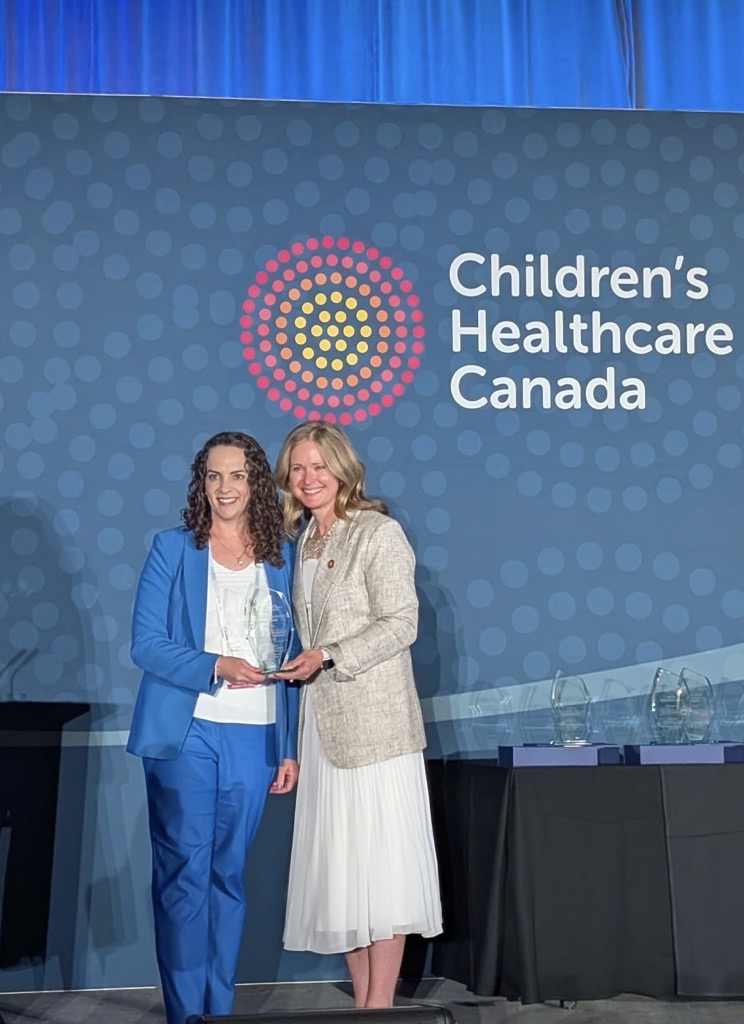
Pediatric Oncology Group of Ontario (POGO) Receives National Award for Impact in Children’s Health
Toronto, ON, June 1, 2026 – The Pediatric Oncology Group of Ontario (POGO) has received the 2026 Child Health Systems Impact Award from Children’s Healthcare Canada (CHC) in recognition of its leadership in building and advancing a world-class childhood cancer care system.
This award reflects what is possible when visionary leadership and intentional system design place children and families at the centre. POGO was founded with the understanding that children are not small adults, and childhood cancer requires a specialized, coordinated system of care to address the complex needs of growing minds and bodies.
Children and youth with cancer require more than treatment—they need an integrated system that supports their physical, emotional, and social well-being. Equity is foundational to that care: no child’s health outcome should depend on where in Ontario they live. Ontario’s Childhood Cancer Care System, led by POGO, removes barriers to care and supports children and families across the full continuum—from diagnosis to treatment, into survivorship, and when needed, palliative and end-of-life care.
The CHC Board Awards Committee recognizes POGO’s outstanding contributions and leadership in advancing Ontario’s childhood cancer care system, citing how POGO’s province-wide model of evidence-informed care has transformed how childhood cancer services are delivered. POGO’s innovations have led to measurable improvements in access and long-term outcomes, and the organization’s steadfast, collaborative partnerships have contributed to a national and global benchmark for pediatric oncology care, ultimately improving both the quality of care and the lived experience of children with cancer across Ontario.
“This award reflects POGO’s founding vision and the strength of province-wide partnerships with multidisciplinary healthcare teams, researchers, government, donors, and, importantly, families, working together to support children and youth with cancer,” said Lauren Ettin, CEO of POGO. “We are grateful to Children’s Healthcare Canada for this recognition. We share the award with our partners in childhood cancer care and remain committed to continuing this work, strengthening the system and ensuring every child and family receives the wraparound care they deserve.”
About POGO
The Pediatric Oncology Group of Ontario (POGO) provides wraparound care to ensure that everyone affected by childhood cancer has access to the best care and support. POGO partners to achieve an excellent childhood cancer care system for children, youth and their families, survivors of childhood cancer, adolescents and young adults with cancer, and healthcare teams, in Ontario and beyond. POGO champions childhood cancer care and, as the collective voice of this community, serves as the official advisor to Ontario’s Ministry of Health. POGO is a non-profit organization with charitable status, here for kids with cancer, for now, for life. Learn more at www.pogo.ca
About Children’s Healthcare Canada
Children’s Healthcare Canada is a national association representing organizations that deliver health services to millions of children and youth each year. CHC advocates to accelerate excellence and innovation in health systems serving children, youth, and their families across the continuum of care. The Innovation & Impact Awards recognize excellence, collaboration, and leadership across the community, from clinicians and researchers to administrators, family partners, and advocates.
Media contact:
Jacqui DeBique
Senior Manager, Communications
info@pogo.ca

POGO Strengthens Cancer Care for Adolescents and Young Adults (AYA) Across Ontario
AYA Cancer Awareness Week highlights need for equitable, age-appropriate cancer care for those aged 15 to 39
Toronto, ON – April 5, 2026 – The Pediatric Oncology Group of Ontario (POGO) is leading a province‑wide effort to improve access to age-appropriate care for adolescents and young adults with cancer, in collaboration with hospitals across Ontario and government partners.
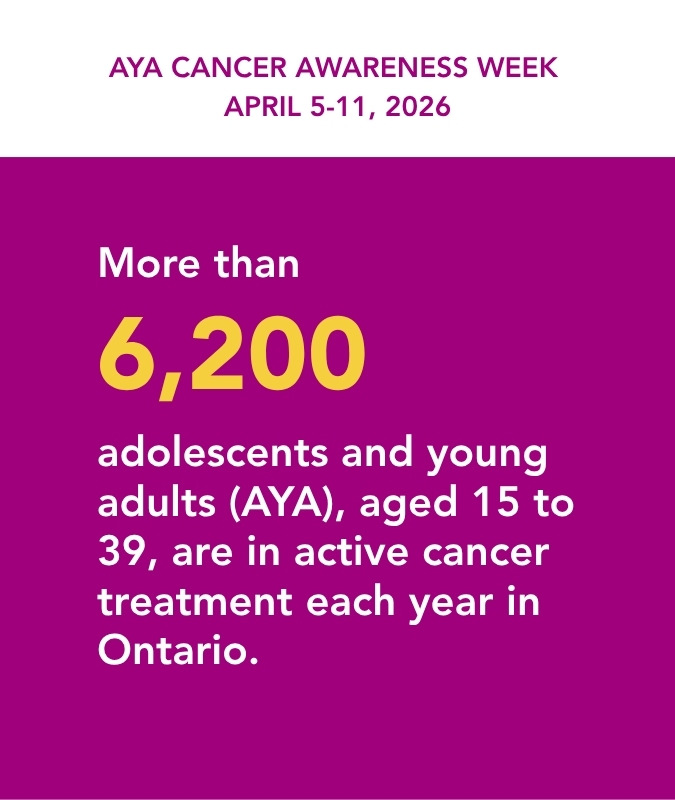
Each year in Ontario, more than 6,200 adolescents and young adults aged 15 to 39 are in active cancer treatment, including over 3,700 newly diagnosed patients. This age group is at a pivotal stage in their lives, often finishing school, starting careers, buying homes, and building families. A cancer diagnosis during this time can have far reaching effects on education, employment, mental health, fertility, relationships, and long term well-being — creating care needs that differ from those of children or older adults.
With the generous support of the Ministry of Health, POGO is supporting program expansion and working to ensure equitable access to expert care no matter where adolescents and young adults live in Ontario. POGO currently partners with eight hospitals across the province, where teams offer supports such as counselling for fertility preservation, mental health, sexual health, employment and education, as well as referrals to specialists.
“POGO is committed to ensuring that every adolescent and young adult with cancer has access to age appropriate care that reflects their distinct needs,” said Lauren Ettin, POGO CEO. “By working with our partners, we are building a provincial system that provides the right support to those between the ages of 15 and 39 at a critical juncture in their lives.”
POGO is partnering with and funding programs at the following Ontario hospitals:
- Hamilton Health Sciences
- London Health Sciences Centre
- Princess Margaret Cancer Centre
- Southlake Health
- Sunnybrook Health Sciences Centre
- The Ottawa Hospital
- Waterloo Regional Health Network Cancer Centre
- William Osler Health System

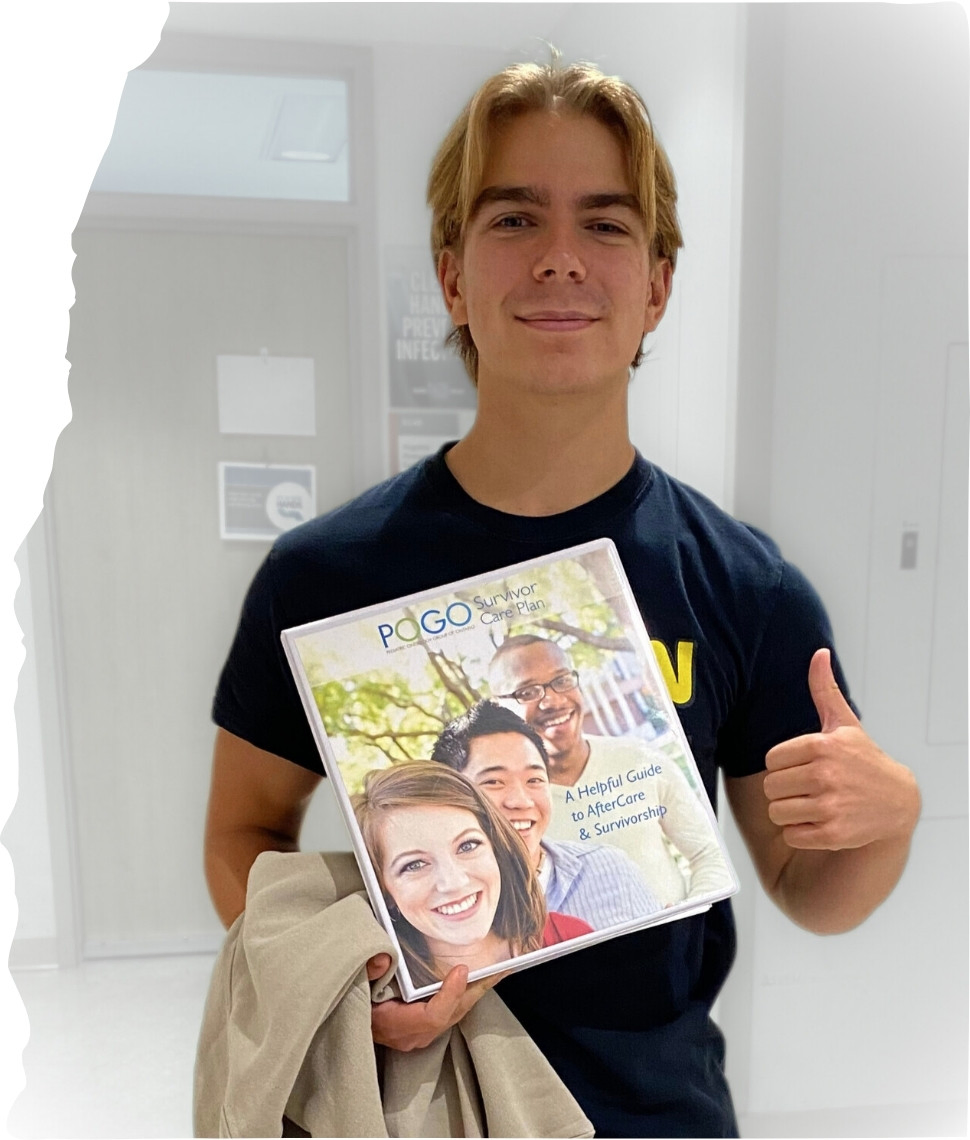
Scholarship Applications After Cancer: Hugh’s Practical Advice for Students
When Hugh, a brain tumour survivor, was applying to postsecondary school last year, he learned about scholarships from his POGO School and Work Transitions Counsellor, me!
We worked on the applications together and recently talked about the process and any advice he had for this year’s scholarship applicants.
“First find out which scholarships you qualify for,” Hugh says. “Some are looking for a specific diagnosis or disability while others are looking for things like people with lots of volunteer experience.”
It is important to read the application instructions carefully because they’re all different. If reading for detail is not your thing, ask someone to help.
Each scholarship asks for some kind of “Personal Statement” about your cancer journey and what your plans are for school and the future. After putting together a draft, Hugh sent his statements to me to look over and edit.
You’ll also need a letter with proof of your diagnosis, which is in your AfterCare Binder, or you can ask your medical team.
Some scholarships may also ask for a reference letter. “Each scholarship had different requirements, so it wasn’t one and done,” Hugh says. “Giving yourself lead time is a good idea: you have to ask for the reference, sometimes you have to provide them with background information about who you are and your relationship to them, and then you have to give them time to write it.”
Hugh found this time to be a bit overwhelming because so many things were happening at one time—deciding which school to go to, getting his accommodations set up, course selection, figuring out housing, all the while waiting to hear if he’d been awarded a scholarship.
Last summer, Hugh was happy to hear he’d been awarded not only one, but two scholarships for childhood cancer survivors!
Once he got the news, he still had a lot of work to do: send his social insurance number, write a thank you letter, provide a quote for each of their websites, figure out which scholarship sent the money to his school, and which sent it right to him. He also had never received a cheque before and had to figure out what to do with it!
Hugh recommends leaning on your support system to help you navigate this process. “I talked to family, friends who were already in postsecondary, my teachers including my special education resource teacher (SERT), the school guidance counsellor, and of course, my friendly neighbourhood School and Work Transitions Counsellor.”
This story was written by Helen Antoniades, POGO Counsellor, for the spring 2026 issue of the POGO School and Work Transitions Program newsletter.
Turn Your Childhood Cancer Experience into Support for Others
POGO School and Work Transitions Counsellors play a critical role in ensuring childhood cancer survivors have care specific to their needs and that they get the most from hospital and community supports to improve their overall well-being. Their strong relationships with community partners go a long way in strengthening the support POGO Counsellors provide.
Every day, POGO Counsellors meet with childhood cancer survivors and family members who carry a depth of wisdom, resilience, and compassion that can make a profound difference for someone who is just beginning or feeling alone in their own journey. CancerConnection.ca is an online peer support community offered by the Canadian Cancer Society. It is a safe place for people with cancer, and their loved ones, to connect, learn, and share their experiences.
As a volunteer facilitator in CancerConnection.ca, you’ll have the opportunity to share your story, offer support, and connect with others who truly understand. Many volunteers tell us that giving back not only helps others—it helps them reflect, heal, and feel part of something bigger.
Your voice matters. Your experience matters. And your presence could be exactly what someone else needs to feel less alone.
If this speaks to you, please contact Barb Williams, Manager, POGO School and Work Transitions Program, for more information.
If you don’t want to be a peer facilitator, that’s ok! You can still be a valuable part of the online community by joining the newly created Childhood Cancer Lived-Experience group.
This story was written for the spring 2026 issue of the POGO School and Work Transitions Program newsletter.
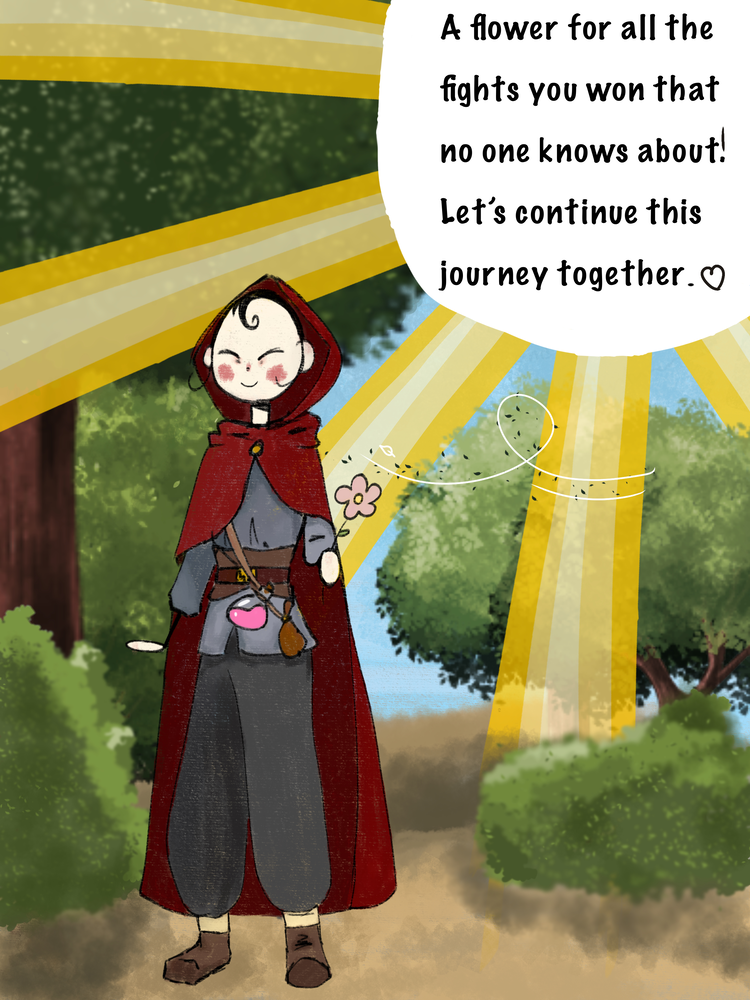
Creative Corner with Sarah
“Art makes me happy ‘cause it makes me feel freer and more 'in control' of my life!”
Sarah Eid
Diagnosis: Ewings Sarcoma
Tools: IPad, stylus, Sketchbook & pencil (for sketch)
App: Ibispaint
Time: ~5h
Creator/artist: All made by me!
Since I was a kid, I always loved drawing things (especially characters and outfits). Drawing always helped me feel better and get things out of my mind. Throughout elementary to high school, it always brought me peace.
When I first got diagnosed, I felt like I had nothing to do and that everything just stopped.That’s when I realized that all this free time (whether it was during treatment or waiting for results) was the perfect opportunity for me to enhance myself doing what I loved most and attempt new things in it (I started practicing more with watercolour and digital art!). It helped me get through a lot because it made me feel capable of doing the things I love and create a peaceful world for me that had all my stories and characters together without thinking much about what’s happening in the real world.
I felt proud and somewhat happy because I was getting better and expanding my abilities in something I always loved but rarely had time for. It made me feel like I was still kinda “me” even after all these changes and events . Art makes me happy ‘cause it makes me feel freer and more “in control” of my life! 😁
Creative Corner is a feature of the POGO School and Work Transitions Program newsletter that showcases the many creative strategies childhood cancer survivors use to cope, heal, and navigate their journeys, shared in their own voices.
The Privilege of a Heartbeat: A Teen Survivor Learns to Live Fully After Cancer
In today’s world, a lot of people (myself included) don’t seem to recognize just how important your health is. Most people couldn’t imagine how much their life would change if they were suddenly told, out of the blue, that you’d be spending the better part of the next eight months in a hospital bed. It really sucks, right? Well, that’s how my 16th year on this earth went, yet surprisingly, I would never trade my life for another. Not only did this unexpected health event change my views on day-to-day life, it also gave me a positive outlook on my life, no matter the situation.
In 2024, a month before my birthday, I was ultimately diagnosed with ALCL lymphoma. For a couple of months leading up to my diagnosis I was bedridden, unable to walk or do anything without being in excruciating pain due to a yet undiagnosed tumour that caused a pressure fracture in my spine. I remember waking up from a nap in the hospital room to my mom crying and the doctor trying to comfort her. I remember thinking about every little thing that I took for granted in life and how lucky I was (and still am) just to be alive. What I realized is that everything other than a heartbeat is a privilege.

“Our life is worth a million planets so live like it”
– Childhood Cancer Survivor
Now without giving you a sob story about this, I’m just going to say one thing: IT REALLY SUCKED. What sucked, you ask? I’ll tell you, but I you may not be expecting the answer about what a now 17 year-old boy missed about his life. If I’m being honest, it for sure sucked that I couldn’t go out in big crowds, or go to parties, or travel. The time in the hospital really made me miss a lot, and yeah, all that fun stuff would have been nice, but here’s what I really missed:
- Feeling healthy and being strong enough to do day-to-day tasks like walk to the kitchen
- Being able to stomach my favourite foods
- Working out and staying active
- Being able to shower without a pic line in my arm
- Being able to think
Most importantly I missed feeling normal.
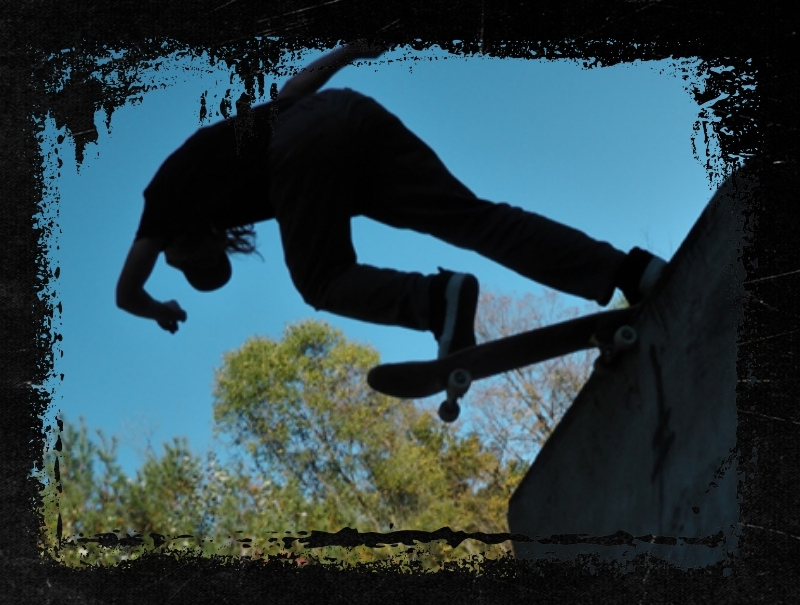
I have now been cancer-free since March 2025. It hasn’t been easy getting back to who I was, but feeling like I was a non-functioning member of society made me want to find my place. I now value my life like nothing else and have found hobbies I actually enjoy. Let me tell you, it feels absolutely amazing to have that smile back on my face. I finally get to be a real kid again and I am so grateful. Remember how I said your health is important? That includes protecting your body as well. Last October, I broke my elbow while skateboarding. I ended up having to be in a full arm cast for three months, putting me right back in the same situation of not being able to be productive or have fun. SO PLEASE be careful when you’re having fun and living every moment of your life to the fullest because you never know what the next chapter of your life will bring you.
Our life is worth a million planets so live like it. Instead of letting restrictions fully stop you from living, play a little game called “how far can I go?” Do not let restrictions put an end to your goals and hobbies because as long as you have a heartbeat, you should be grateful every morning you wake up.
This story was written by a childhood cancer survivor for the spring 2026 issue of the POGO School and Work Transitions Program newsletter.