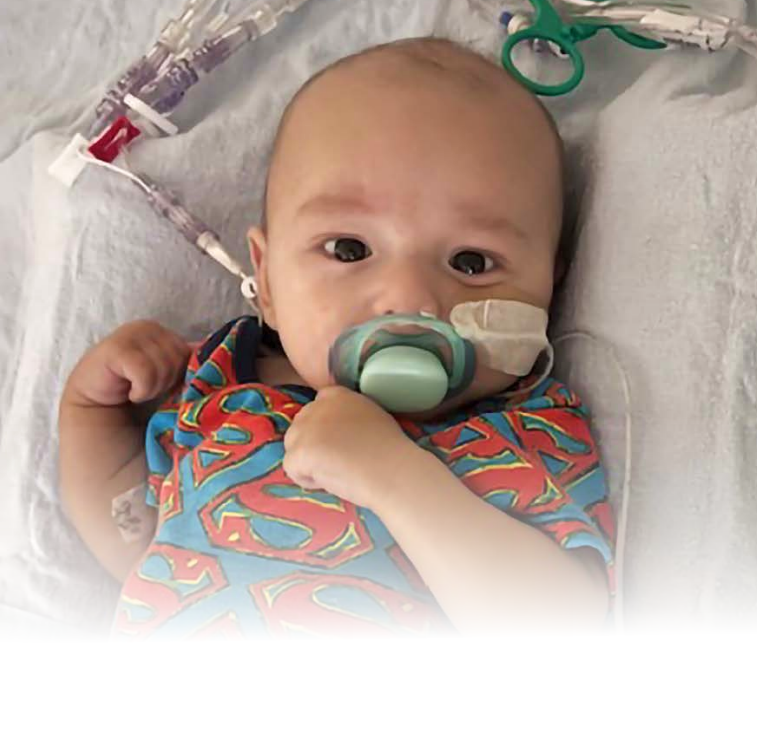
Ryley’s Superman Journey: From Diagnosis to Daycare
When I was pregnant, everything looked perfect. My wife Jessica and I had gone through insemination, every test came back clear, and we felt reassured. At our anatomy ultrasound, they mentioned Ryley’s kidneys looked slightly enlarged, but said not to worry, that it was common in boys and usually resolved after birth. So we didn’t worry.
Ryley was born via C-section on May 5, 2023. Before we were discharged, we were sent for a routine ultrasound. That’s when everything changed. A pediatrician walked into our room, sat down, and handed us a report. At the bottom it read, “possible cancer.” In one breath, I went from holding my newborn to wondering if he would survive the night.
 We were told he needed to be transferred to the children’s hospital in Toronto. They said it could wait until Monday, but I couldn’t bear the thought of sitting in limbo. Jessica and I packed what we could and drove through the night.
Once we arrived, everything blurred together: ultrasounds, bloodwork, catheters, and more. On May 11, Ryley had his biopsy. He struggled to wake up afterward and was sent to intensive care. Days later, we heard the words I had been bracing myself for: rhabdomyosarcoma, a rare type of cancer that starts as a growth of cells in soft tissue. Our oncologist explained that Ryley would need 14 rounds of chemotherapy. I did the math. He’d be nearly two years old when it ended. His entire babyhood would be spent in treatment.
As a nurse, I sometimes slipped into professional mode when discussing tests or procedures. But most of the time, I was just scared, exhausted, and trying to keep it together—for Ryley and for Jessica.
Chemo began just four days later. While we started treatment in Toronto, Ryley’s care quickly became a split between SickKids Hospital and the POGO Satellite Clinic in Sudbury. He got sick often—dangerously sick.
We took multiple emergency flights, including helicopter rides, back to Toronto when his condition worsened. In that first year alone, we travelled over 50,000 kilometers. Our lives became a blur of hospital rooms, highway stretches, and moments that tested every ounce of strength we had.
When we first came home to Sudbury, Vicky, our POGO Interlink Nurse, became a lifeline. We had drained our savings and were trying to stay afloat. She helped us find and access every bit of support available, including financial assistance from POGO, the POGO hotel program for trips back and forth to Toronto, and even other community resources when the costs began to pile up. Vicky made sure we were never completely on our own.
Still, the road was far from easy. Ryley faced multiple infections, sepsis, allergic reactions, and dangerous fevers that would spike in minutes. Surgery was the next big step. The plan was to remove his bladder entirely, but after twelve agonizing hours in the waiting room, the surgeon told us he had managed to save part of it and reconstruct it.
That felt like the best day of our lives.
The weeks after surgery were brutal. Catheter blockages led to kidney injury. Ryley’s incision split, and I found myself holding his bowel in my hands, shouting for help. He was rushed back into surgery. Later, there was a suspected bowel obstruction and another emergency operation. And then the Code Blue I will never forget. Ryley was limp in my arms with a 42+ degree fever and unresponsive. Jessica and I thought we’d lost him, but somehow, he made it through.
And then, again, another best day of our lives.
 Through it all, Ryley amazed everyone. Even as a tiny baby, he smiled at nurses, watched every procedure with curiosity, and charmed entire teams. We started calling him Superman. We had shirts made, and to this day, he still wears his superhero gear proudly.
Ryley finished chemo in October 2024. For six months after, he was still considered immunocompromised. Only this past spring did he finally receive his vaccinations. By summer 2025, he was ready for daycare. Watching him walk into that room healthy, strong, and ready to play felt like the return of the life we had dreamed of since the day he was born.
And through it all, the Sudbury POGO Satellite Clinic was our anchor. I don’t know how we would have managed without it. The clinic became our second family. Ryley adored the nurses, and they adored him. Being close to home meant we had family support and a sense of normal when nothing felt normal. Those nurses watched him grow, celebrated his milestones, advocated for us, and even visited his daycare to help staff understand what he’d been through.
Ryley is two now. He still has challenges ahead, but he is here, laughing, growing, and living his little boy life. And every day, we are grateful for the care that carried us through the darkest moments and gave us this chance to look forward.
By Danika Bergeron

Even superheroes need help. Be the sidekick every superhero needs: Donate Today

“Cancer has been a thief in our lives”: A Mother’s Story
When Jordan’s son Kian was diagnosed with leukemia, her family’s world shifted overnight. With four young boys and a dairy farm to run, life in their small Ontario community was already busy—but nothing could have prepared them for what came next. Through months of hospital stays, setbacks, and small triumphs, the POGO Satellite Clinic in Kitchener-Waterloo became their lifeline. Here, Jordan shares her family’s story.
 My name is Jordan, and I’m the proud mom of four boys: Arian, who’s nine; Tias, who’s six; Kian, who’s five, and little Taren, who’s three.
Before cancer, our days were filled with school runs, speed skating, and helping my husband on our dairy farm. It was a full, happy, chaotic life.
Then Kian started spiking fevers and complaining of tummy pain. After two weeks, my nursing instincts told me something wasn’t right. I pushed for tests. The bloodwork came back abnormal, and before we knew it, we were being transferred to the Children’s Hospital more than 100 km away in Hamilton.
At first, doctors suspected infection or sepsis. Leukemia wasn’t obvious because there were no bruises or the usual signs. But then came the words no parent ever expects to hear: your child has cancer.
From that day forward, everything changed.
Kian’s treatment was filled with complications. He needed a rare blood transfusion flown in from BC because of unusual antibodies. He developed an infection at his bone marrow site. And he had to have an NG tube—a thin tube through his nose into his stomach—for both chemo and feeding. The adhesive from the tube caused painful skin infections, and his blood counts were painfully slow to recover.
We expected to be at hospital for a week but ended up living there for two months. The high-dose steroids brought a whole other set of challenges: a puffy face, weight gain, mood swings, and hunger that made him “hangry.”
But the physical part was only half of it.
Cancer has been a thief in our lives.
My husband is a dairy farmer, and you can’t just take time off when you own the farm. So, I left my nursing job (eventually giving up my license) to manage Kian’s care full-time. Cancer didn’t just bring financial strain; it stole time, attention, and energy from our whole family. It changed who we are, how we parent, and who remains in our lives.
It stole bonding time with my youngest son, time I’ll never get back. It left my older kids wrestling with anxiety and feeling invisible. My eldest, Arian, once wrote that “everyone is always concerned about Kian, but forget that we exist.” Hearing that as a mom breaks you.
Coming home after long hospital stays was hard. Kian looked like a different child. He was bloated from steroids, a tube taped to his face, unable to walk steadily. Sometimes he crawled; sometimes his brothers had to help him move. Watching your child lose basic abilities is devastating.
But there were moments of grace. Once, when all Kian wanted was dill pickles, a friend showed up with a jar—peeled and cut small enough not to irritate his feeding tube. To anyone else, it might have looked like a jar of pickles. To me, it was survival.
And then, there was POGO.
I can’t describe what a gift it is to have some piece of normalcy when everything else has been torn apart.
The POGO Satellite Clinic in Kitchener-Waterloo became our lifeline. Instead of driving hours to Hamilton, Kian could get expert care close to home. That meant less time on the road, more time with his brothers, and a chance for all of us to feel normal again.
I can’t describe what a gift it is to have some piece of normalcy when everything else has been torn apart.
Beyond care, the clinic gave us something just as important: community. The staff knew us by name. They understood the ups and downs of treatment and made us feel seen. Through POGO, we learned that we were never alone in this.
 Today, Kian is strong, funny, and creative. He’s even started making videos to help other kids understand what cancer treatment is like. That’s who he is: a little boy who turns something painful into something that helps someone else.
When I look at Kian, I see how far he’s come, but I also see how far we’ve come as a family. My husband and I have weathered storms we never imagined. Arian, Tias, and Taren have learned resilience no child should need to. And I’ve learned that asking for help—and accepting it—is not weakness. It’s survival.
– By Jordan Vanstee
For Childhood Cancer Awareness Month, the Vanstee family hosted the second annual Kian’s Skate for Childhood Cancer to raise awareness and funds for POGO. The event surpassed its goal, raising nearly $6,400 in support of care for children with cancer and their families.
The 2025 POGO Awards Honour Excellence in Childhood Cancer Care
On Friday, November 7, the Pediatric Oncology Group of Ontario (POGO) proudly celebrated the recipients of the 2025 POGO Awards. Since their inception in 1999, these awards have recognized the outstanding contributions of individuals across Ontario who are advancing childhood cancer care both within the province and beyond. Through their work in POGO partner hospitals, this year’s honourees embody POGO’s core values of partnership, collaboration, and excellence, and continue to make a meaningful impact in the lives of children, youth, families, and the broader pediatric oncology community.
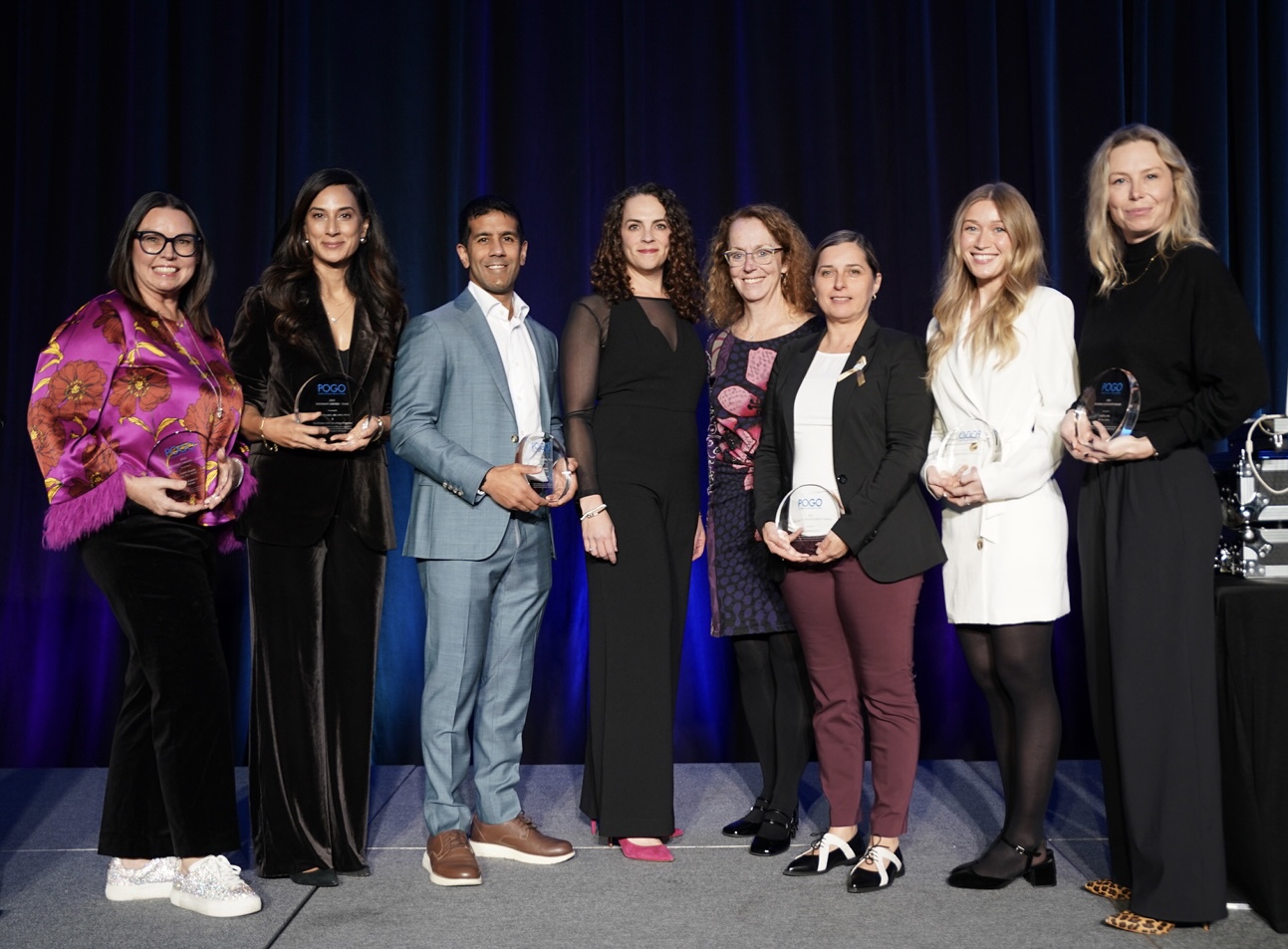
Congratulations to the 2025 POGO Recognition Awards recipients: Lillian Sung, MD, PhD, FRCPC Champion Award (not pictured) Sumit Gupta, MD, PhD, FRCPC and Sue Zupanec, MN, NP Visionary Award (Team – Tie); Alisha Kassam, MD, MPH, FRCPC and the Southlake AYA Oncology Program Visionary Award (Team – Tie); Rebecca Mackenzie Community Partner Impact Award; Emma King BA, CHYS Early Career Professional; Lindsay Jibb, RN, PhD, CPHON Nursing Leadership Award. They are joined (centre) by POGO CEO Lauren Ettin and POGO Medical Director Donna Johnston.
POGO Champion Award
Lillian Sung, MD, PhD, FRCPC
In tribute to a career of seminal research, visionary leadership, and unwavering dedication that has improved childhood cancer care across Ontario and propelled progress worldwide.
POGO Visionary Award – Team (Tie)
Sumit Gupta, MD, PhD, FRCPC and Sue Zupanec MN NP
In acknowledgement of their trailblazing contributions that have transformed lives and shaped the future of pediatric leukemia treatment in Ontario and beyond.
POGO Visionary Award – Team (Tie)
Alisha Kassam, MD, MPH, FRCPC and the Southlake AYA Oncology Program
For their commitment to equitable, age-appropriate cancer care for adolescents and young adults in Ontario that has inspired system-wide change.
POGO Nursing Leadership Award
Lindsay Jibb, RN, PhD, CPHON
In recognition of her groundbreaking innovations that have contributed to advancing pediatric oncology nursing in Ontario and beyond.
POGO Early Career Professional Award
Emma King, BA CHYS
In recognition of her patient-centred approach and dedication to adolescents and young adults diagnosed with cancer.
POGO Community Partner Impact Award
Rebecca McKenzie
In honour of her impact through fundraising, partnership building, and generous support that has powerfully advanced POGO’s mission and serves as an inspiration to others across the province.
Learn more about the POGO Recognition Awards Program
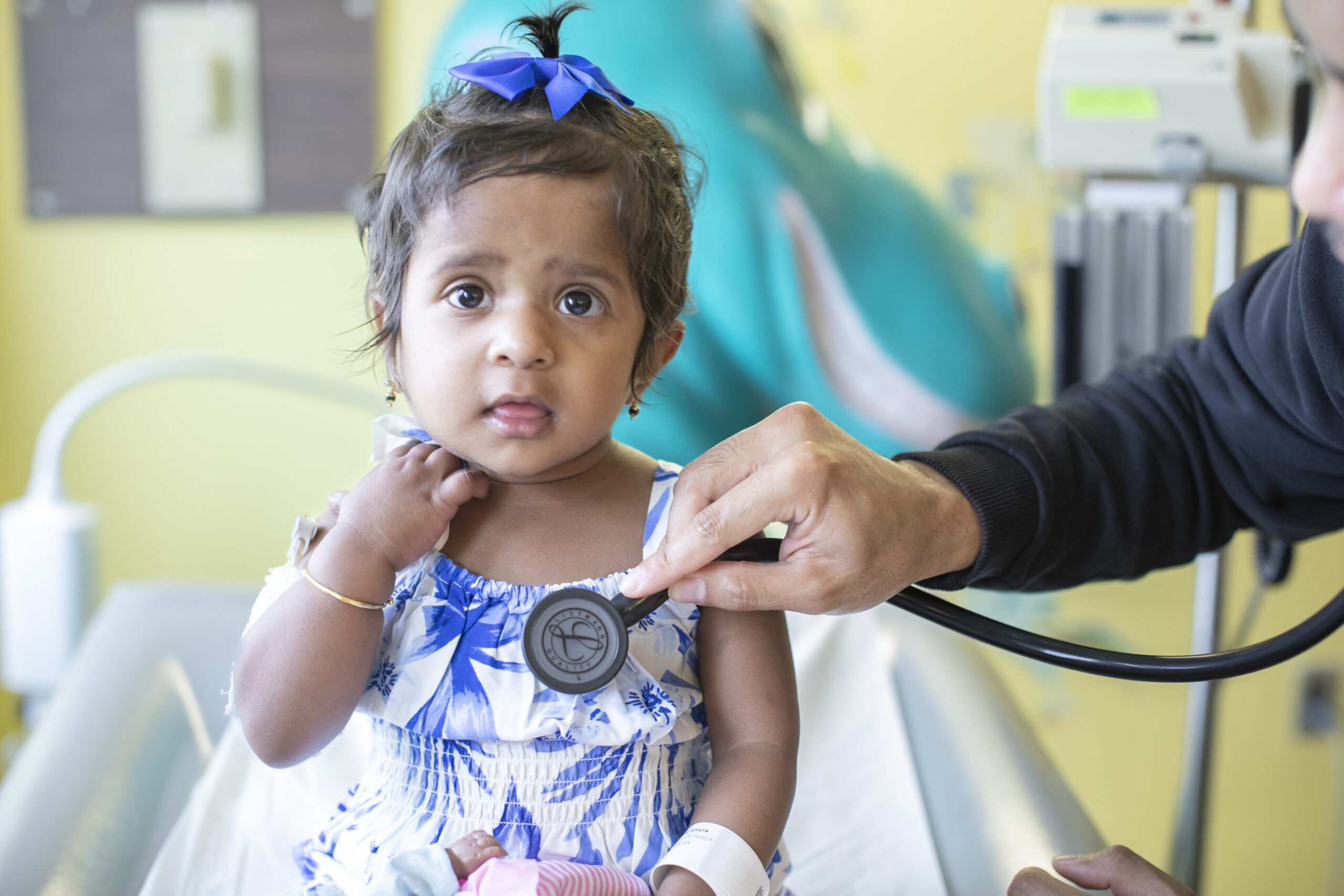
Facing Stage 4 Cancer at Just Two Months Old
By Ruveena Mariathas
When Mallika was born, we thought she was just a fussy baby. She cried every night, and we took turns holding her upright while sleeping on the couch. Several visits to walk-in clinics indicated she had colic. But when she stopped having wet diapers and bowel movements, we knew it was something
more serious.
At just two months old Mallika was diagnosed with stage 4 rhabdomyosarcoma. Her treatment began almost immediately—aggressive chemotherapy that had us constantly travelling to downtown Toronto, me with no income and bills piling up.
Our POGO Interlink Nurse connected us to POGO’s Financial Assistance Program and handled the paperwork during a time when everything felt overwhelming. On her regular visits to our home, she always took time to check in o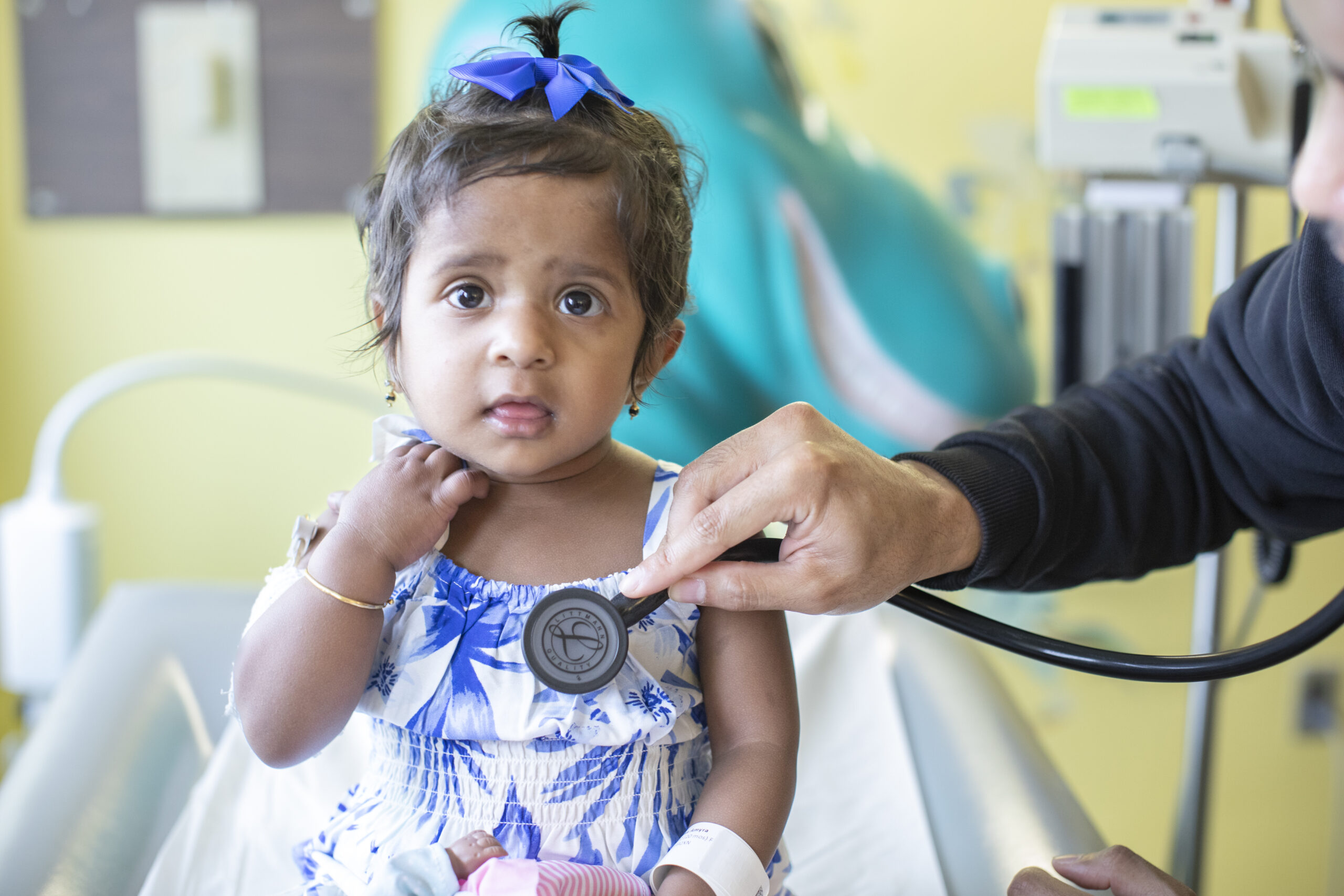 n our older daughter, Ashwana, to make sure she was coping with her sister being sick and her parents being away so often at the hospital.
Eventually, we were able to move part of Mallika’s care to the POGO Satellite Clinic at Scarborough Health Network. Being close to home meant we could sleep in our own beds, spend more time with Ashwana, and bring Mallika in for her daily chemotherapy without the added pressure of a long commute. The Satellite Clinic is a warm and welcoming environment, and the nurses became like family—they knew her well, noticed small changes and helped us through some scary moments, including a serious episode of dehydration.
Mallika has had surgery to remove her bladder and now needs daily catheterization, which means we have to use a tube to keep her wounds from closing. When she turns five, doctors plan to create a neobladder—a surgically constructed bladder to help restore some normal function. Despite all she’s faced, she’s full of energy and steadily catching up on her milestones.
Mallika rang the bell at the clinic to mark the end of treatment. Our POGO nurse cried. We cried. After everything we’d been through, it felt like we could finally breathe.