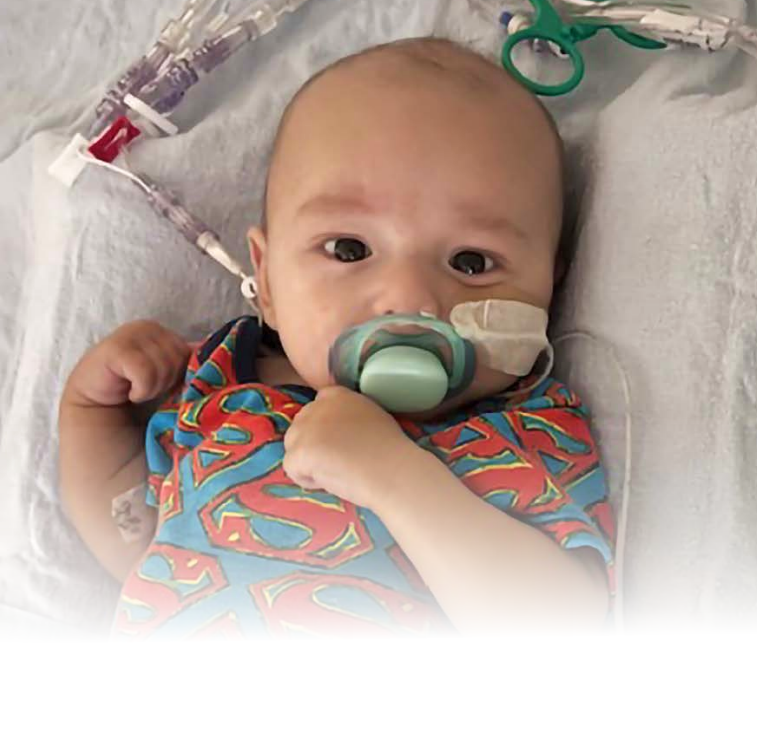
When I was pregnant, everything looked perfect. My wife Jessica and I had gone through insemination, every test came back clear, and we felt reassured. At our anatomy ultrasound, they mentioned Ryley’s kidneys looked slightly enlarged, but said not to worry, that it was common in boys and usually resolved after birth. So we didn’t worry.
Ryley was born via C-section on May 5, 2023. Before we were discharged, we were sent for a routine ultrasound. That’s when everything changed. A pediatrician walked into our room, sat down, and handed us a report. At the bottom it read, “possible cancer.” In one breath, I went from holding my newborn to wondering if he would survive the night.
 We were told he needed to be transferred to the children’s hospital in Toronto. They said it could wait until Monday, but I couldn’t bear the thought of sitting in limbo. Jessica and I packed what we could and drove through the night.
Once we arrived, everything blurred together: ultrasounds, bloodwork, catheters, and more. On May 11, Ryley had his biopsy. He struggled to wake up afterward and was sent to intensive care. Days later, we heard the words I had been bracing myself for: rhabdomyosarcoma, a rare type of cancer that starts as a growth of cells in soft tissue. Our oncologist explained that Ryley would need 14 rounds of chemotherapy. I did the math. He’d be nearly two years old when it ended. His entire babyhood would be spent in treatment.
As a nurse, I sometimes slipped into professional mode when discussing tests or procedures. But most of the time, I was just scared, exhausted, and trying to keep it together—for Ryley and for Jessica.
Chemo began just four days later. While we started treatment in Toronto, Ryley’s care quickly became a split between SickKids Hospital and the POGO Satellite Clinic in Sudbury. He got sick often—dangerously sick.
We took multiple emergency flights, including helicopter rides, back to Toronto when his condition worsened. In that first year alone, we travelled over 50,000 kilometers. Our lives became a blur of hospital rooms, highway stretches, and moments that tested every ounce of strength we had.
When we first came home to Sudbury, Vicky, our POGO Interlink Nurse, became a lifeline. We had drained our savings and were trying to stay afloat. She helped us find and access every bit of support available, including financial assistance from POGO, the POGO hotel program for trips back and forth to Toronto, and even other community resources when the costs began to pile up. Vicky made sure we were never completely on our own.
Still, the road was far from easy. Ryley faced multiple infections, sepsis, allergic reactions, and dangerous fevers that would spike in minutes. Surgery was the next big step. The plan was to remove his bladder entirely, but after twelve agonizing hours in the waiting room, the surgeon told us he had managed to save part of it and reconstruct it.
That felt like the best day of our lives.
The weeks after surgery were brutal. Catheter blockages led to kidney injury. Ryley’s incision split, and I found myself holding his bowel in my hands, shouting for help. He was rushed back into surgery. Later, there was a suspected bowel obstruction and another emergency operation. And then the Code Blue I will never forget. Ryley was limp in my arms with a 42+ degree fever and unresponsive. Jessica and I thought we’d lost him, but somehow, he made it through.
And then, again, another best day of our lives.
 Through it all, Ryley amazed everyone. Even as a tiny baby, he smiled at nurses, watched every procedure with curiosity, and charmed entire teams. We started calling him Superman. We had shirts made, and to this day, he still wears his superhero gear proudly.
Ryley finished chemo in October 2024. For six months after, he was still considered immunocompromised. Only this past spring did he finally receive his vaccinations. By summer 2025, he was ready for daycare. Watching him walk into that room healthy, strong, and ready to play felt like the return of the life we had dreamed of since the day he was born.
And through it all, the Sudbury POGO Satellite Clinic was our anchor. I don’t know how we would have managed without it. The clinic became our second family. Ryley adored the nurses, and they adored him. Being close to home meant we had family support and a sense of normal when nothing felt normal. Those nurses watched him grow, celebrated his milestones, advocated for us, and even visited his daycare to help staff understand what he’d been through.
Ryley is two now. He still has challenges ahead, but he is here, laughing, growing, and living his little boy life. And every day, we are grateful for the care that carried us through the darkest moments and gave us this chance to look forward.
By Danika Bergeron