POGO Strengthens Cancer Care for Adolescents and Young Adults (AYA) Across Ontario
AYA Cancer Awareness Week highlights need for equitable, age-appropriate cancer care for those aged 15 to 39
Toronto, ON – April 5, 2026 – The Pediatric Oncology Group of Ontario (POGO) is leading a province‑wide effort to improve access to age-appropriate care for adolescents and young adults with cancer, in collaboration with hospitals across Ontario and government partners.
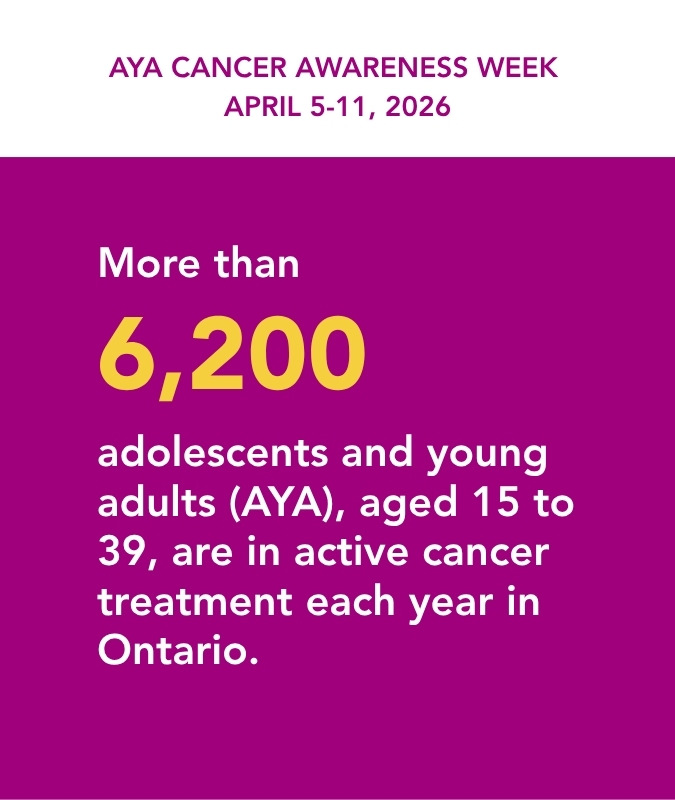
Each year in Ontario, more than 6,200 adolescents and young adults aged 15 to 39 are in active cancer treatment, including over 3,700 newly diagnosed patients. This age group is at a pivotal stage in their lives, often finishing school, starting careers, buying homes, and building families. A cancer diagnosis during this time can have far reaching effects on education, employment, mental health, fertility, relationships, and long term well-being — creating care needs that differ from those of children or older adults.
With the generous support of the Ministry of Health, POGO is supporting program expansion and working to ensure equitable access to expert care no matter where adolescents and young adults live in Ontario. POGO currently partners with eight hospitals across the province, where teams offer supports such as counselling for fertility preservation, mental health, sexual health, employment and education, as well as referrals to specialists.
“POGO is committed to ensuring that every adolescent and young adult with cancer has access to age appropriate care that reflects their distinct needs,” said Lauren Ettin, POGO CEO. “By working with our partners, we are building a provincial system that provides the right support to those between the ages of 15 and 39 at a critical juncture in their lives.”
POGO is partnering with and funding programs at the following Ontario hospitals:
- Hamilton Health Sciences
- London Health Sciences Centre
- Princess Margaret Cancer Centre
- Southlake Health
- Sunnybrook Health Sciences Centre
- The Ottawa Hospital
- Waterloo Regional Health Network Cancer Centre
- William Osler Health System

Scholarship Applications After Cancer: Hugh’s Practical Advice for Students
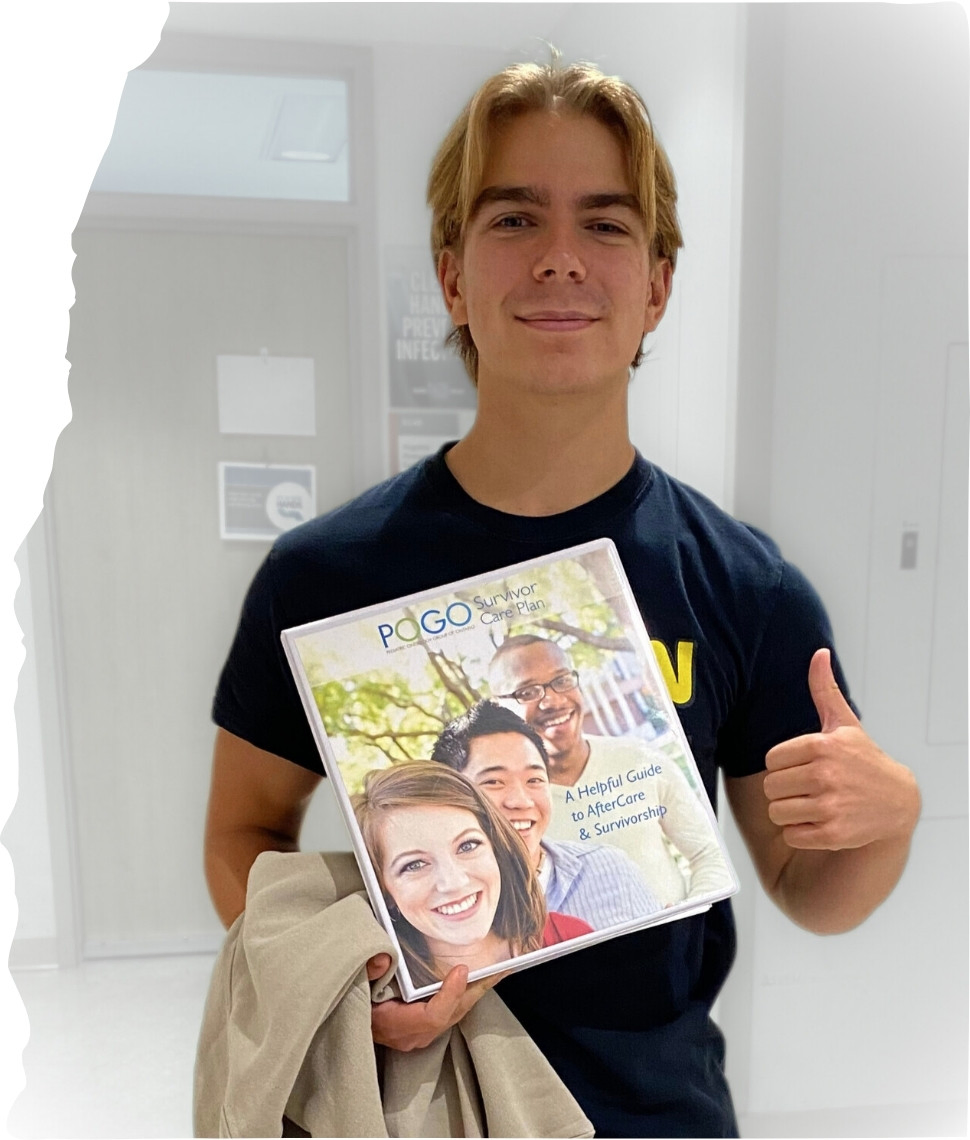
When Hugh, a brain tumour survivor, was applying to postsecondary school last year, he learned about scholarships from his POGO School and Work Transitions Counsellor, me!
We worked on the applications together and recently talked about the process and any advice he had for this year’s scholarship applicants.
“First find out which scholarships you qualify for,” Hugh says. “Some are looking for a specific diagnosis or disability while others are looking for things like people with lots of volunteer experience.”
It is important to read the application instructions carefully because they’re all different. If reading for detail is not your thing, ask someone to help.
Each scholarship asks for some kind of “Personal Statement” about your cancer journey and what your plans are for school and the future. After putting together a draft, Hugh sent his statements to me to look over and edit.
You’ll also need a letter with proof of your diagnosis, which is in your AfterCare Binder, or you can ask your medical team.
Some scholarships may also ask for a reference letter. “Each scholarship had different requirements, so it wasn’t one and done,” Hugh says. “Giving yourself lead time is a good idea: you have to ask for the reference, sometimes you have to provide them with background information about who you are and your relationship to them, and then you have to give them time to write it.”
Hugh found this time to be a bit overwhelming because so many things were happening at one time—deciding which school to go to, getting his accommodations set up, course selection, figuring out housing, all the while waiting to hear if he’d been awarded a scholarship.
Last summer, Hugh was happy to hear he’d been awarded not only one, but two scholarships for childhood cancer survivors!
Once he got the news, he still had a lot of work to do: send his social insurance number, write a thank you letter, provide a quote for each of their websites, figure out which scholarship sent the money to his school, and which sent it right to him. He also had never received a cheque before and had to figure out what to do with it!
Hugh recommends leaning on your support system to help you navigate this process. “I talked to family, friends who were already in postsecondary, my teachers including my special education resource teacher (SERT), the school guidance counsellor, and of course, my friendly neighbourhood School and Work Transitions Counsellor.”
This story was written by Helen Antoniades, POGO Counsellor, for the spring 2026 issue of the POGO School and Work Transitions Program newsletter.
Turn Your Childhood Cancer Experience into Support for Others
POGO School and Work Transitions Counsellors play a critical role in ensuring childhood cancer survivors have care specific to their needs and that they get the most from hospital and community supports to improve their overall well-being. Their strong relationships with community partners go a long way in strengthening the support POGO Counsellors provide.
Every day, POGO Counsellors meet with childhood cancer survivors and family members who carry a depth of wisdom, resilience, and compassion that can make a profound difference for someone who is just beginning or feeling alone in their own journey. CancerConnection.ca is an online peer support community offered by the Canadian Cancer Society. It is a safe place for people with cancer, and their loved ones, to connect, learn, and share their experiences.
As a volunteer facilitator in CancerConnection.ca, you’ll have the opportunity to share your story, offer support, and connect with others who truly understand. Many volunteers tell us that giving back not only helps others—it helps them reflect, heal, and feel part of something bigger.
Your voice matters. Your experience matters. And your presence could be exactly what someone else needs to feel less alone.
If this speaks to you, please contact Barb Williams, Manager, POGO School and Work Transitions Program, for more information.
If you don’t want to be a peer facilitator, that’s ok! You can still be a valuable part of the online community by joining the newly created Childhood Cancer Lived-Experience group.
This story was written for the spring 2026 issue of the POGO School and Work Transitions Program newsletter.
Creative Corner with Sarah
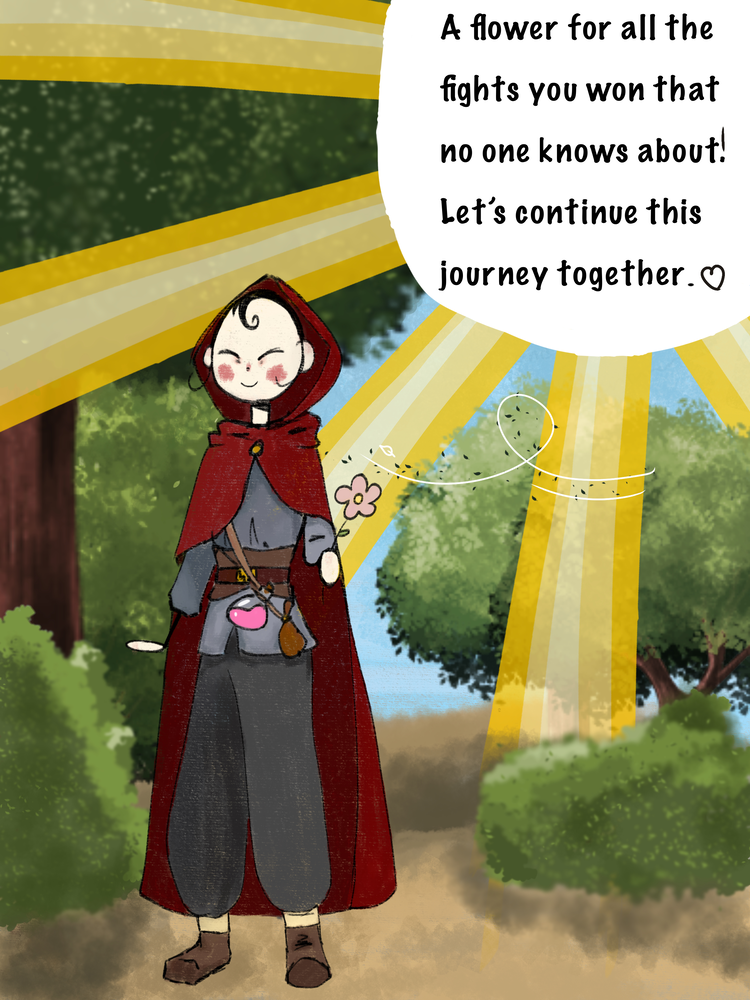
“Art makes me happy ‘cause it makes me feel freer and more 'in control' of my life!”
Sarah Eid
Diagnosis: Ewings Sarcoma
Tools: IPad, stylus, Sketchbook & pencil (for sketch)
App: Ibispaint
Time: ~5h
Creator/artist: All made by me!
Since I was a kid, I always loved drawing things (especially characters and outfits). Drawing always helped me feel better and get things out of my mind. Throughout elementary to high school, it always brought me peace.
When I first got diagnosed, I felt like I had nothing to do and that everything just stopped.That’s when I realized that all this free time (whether it was during treatment or waiting for results) was the perfect opportunity for me to enhance myself doing what I loved most and attempt new things in it (I started practicing more with watercolour and digital art!). It helped me get through a lot because it made me feel capable of doing the things I love and create a peaceful world for me that had all my stories and characters together without thinking much about what’s happening in the real world.
I felt proud and somewhat happy because I was getting better and expanding my abilities in something I always loved but rarely had time for. It made me feel like I was still kinda “me” even after all these changes and events . Art makes me happy ‘cause it makes me feel freer and more “in control” of my life! 😁
Creative Corner is a feature of the POGO School and Work Transitions Program newsletter that showcases the many creative strategies childhood cancer survivors use to cope, heal, and navigate their journeys, shared in their own voices.
The Privilege of a Heartbeat: A Teen Survivor Learns to Live Fully After Cancer
In today’s world, a lot of people (myself included) don’t seem to recognize just how important your health is. Most people couldn’t imagine how much their life would change if they were suddenly told, out of the blue, that you’d be spending the better part of the next eight months in a hospital bed. It really sucks, right? Well, that’s how my 16th year on this earth went, yet surprisingly, I would never trade my life for another. Not only did this unexpected health event change my views on day-to-day life, it also gave me a positive outlook on my life, no matter the situation.
In 2024, a month before my birthday, I was ultimately diagnosed with ALCL lymphoma. For a couple of months leading up to my diagnosis I was bedridden, unable to walk or do anything without being in excruciating pain due to a yet undiagnosed tumour that caused a pressure fracture in my spine. I remember waking up from a nap in the hospital room to my mom crying and the doctor trying to comfort her. I remember thinking about every little thing that I took for granted in life and how lucky I was (and still am) just to be alive. What I realized is that everything other than a heartbeat is a privilege.
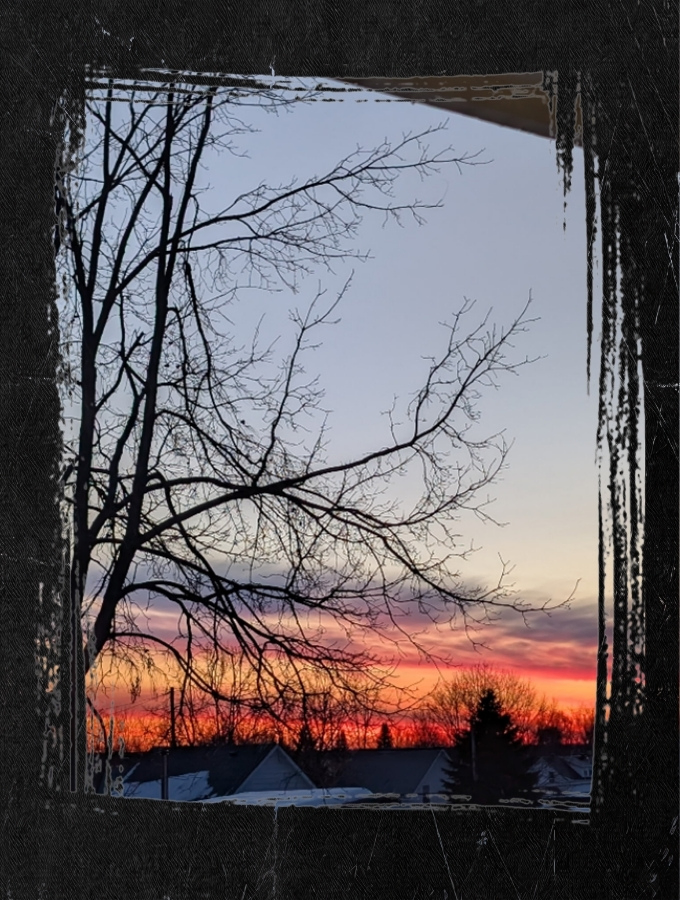
“Our life is worth a million planets so live like it”
– Childhood Cancer Survivor
Now without giving you a sob story about this, I’m just going to say one thing: IT REALLY SUCKED. What sucked, you ask? I’ll tell you, but I you may not be expecting the answer about what a now 17 year-old boy missed about his life. If I’m being honest, it for sure sucked that I couldn’t go out in big crowds, or go to parties, or travel. The time in the hospital really made me miss a lot, and yeah, all that fun stuff would have been nice, but here’s what I really missed:
- Feeling healthy and being strong enough to do day-to-day tasks like walk to the kitchen
- Being able to stomach my favourite foods
- Working out and staying active
- Being able to shower without a pic line in my arm
- Being able to think
Most importantly I missed feeling normal.
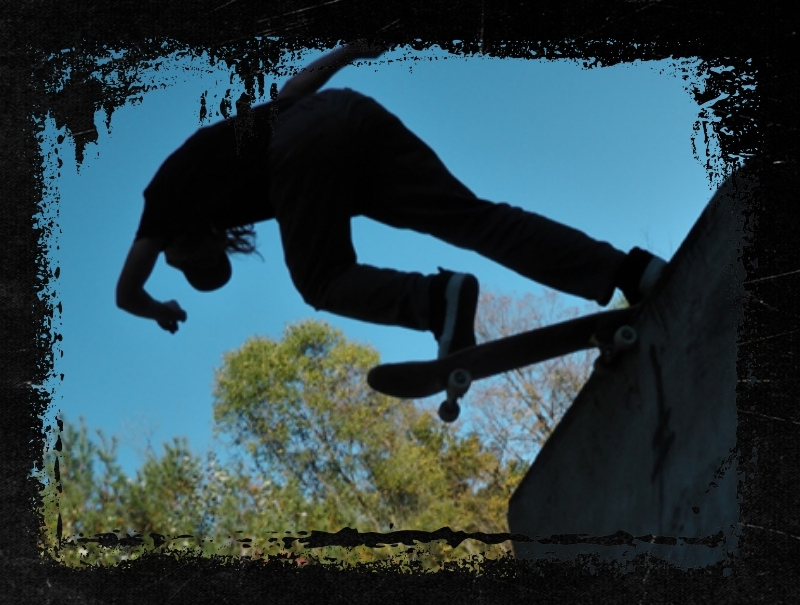
I have now been cancer-free since March 2025. It hasn’t been easy getting back to who I was, but feeling like I was a non-functioning member of society made me want to find my place. I now value my life like nothing else and have found hobbies I actually enjoy. Let me tell you, it feels absolutely amazing to have that smile back on my face. I finally get to be a real kid again and I am so grateful. Remember how I said your health is important? That includes protecting your body as well. Last October, I broke my elbow while skateboarding. I ended up having to be in a full arm cast for three months, putting me right back in the same situation of not being able to be productive or have fun. SO PLEASE be careful when you’re having fun and living every moment of your life to the fullest because you never know what the next chapter of your life will bring you.
Our life is worth a million planets so live like it. Instead of letting restrictions fully stop you from living, play a little game called “how far can I go?” Do not let restrictions put an end to your goals and hobbies because as long as you have a heartbeat, you should be grateful every morning you wake up.
This story was written by a childhood cancer survivor for the spring 2026 issue of the POGO School and Work Transitions Program newsletter.

POGO Internship Wrap-Up: Michael’s Journey with First Avenue
This summer, First Avenue Investment Counsel proudly hosted Michael Ciaramitaro as a summer intern as part of their ongoing partnership with the Pediatric Oncology Group of Ontario (POGO). For Michael, who benefits from POGO’s Aftercare Program, the opportunity to intern with a firm deeply committed to the cause was more than just a learning experience, it was a full-circle moment.
From day one, Michael immersed himself in the world of wealth management and life in the big city. One of his most rewarding projects was presenting multiple investment ideas to the public equities team. What began as curiosity quickly evolved into a full-blown research project, where Michael refined his equity research and presentation skills under the mentorship of Brian Madden, Ian Chong and Ethan Cummings.
Reflecting on his challenges, Michael acknowledged that stepping into the unfamiliar world of public equities and learning to navigate the Bloomberg Terminal pushed him outside of his comfort zone. Through curiosity, persistence, and a willingness to ask questions, he gained valuable insights from seasoned professionals at the firm. “I was able to soak up every ounce of knowledge I could, just by listening and watching,” he shared.
The internship also reaffirmed Michael’s career goals. With a strong interest in becoming a financial advisor, he found his passion for client service and community-focused work further validated through this experience. His time with First Avenue highlighted the importance not only of technical skills but also of relationships, teamwork, and giving back. Michael spoke warmly about the culture of the firm, describing it as a “work hard, play hard family.” Whether in team meetings or team socials, he saw firsthand how collaboration and camaraderie are woven into the workplace.
Perhaps most meaningful to Michael was the chance to see the impact of community partnerships from a new perspective. Having relied on POGO’s support himself, he was able to contribute to the fundraising and advocacy efforts that support children, youth and families impacted by childhood cancer. “Being on this side of the relationship was eye-opening for me,” he said. “It reinforced my commitment to staying actively involved in supporting these missions as I grow in my career.”
Leah Boyd, President of First Avenue Investment Counsel, reflected on the importance of hosting interns like Michael:
“Our partnership with POGO is about more than fundraising, it’s about investing in the next generation. With this internship program, our goal is to provide childhood cancer survivors with the tangible skills and confidence they need to thrive in any professional setting. Michael brought passion, positivity, and a unique perspective to our team, and we’re proud to have been part of his journey. His story reminds us why community partnerships matter and how they shape not just careers, but lives.”
As Michael looks ahead, he plans to continue giving back to causes like POGO through advocacy, professional contributions, and perhaps one day serving on a board. For now, he leaves his internship with new skills, lasting relationships, and memories that include everything from pitching investment ideas to team socials.
About The Author:
First Avenue Investment Counsel Inc. (First Avenue) is a Canadian firm specializing in investment management and multi-family office services. The firm’s pension-style investment approach, inclusive of equities, fixed income, and proprietary alternatives, is designed to help clients achieve their unique financial goals. Acting as trusted partners and investing alongside their clients, First Avenue aligns financial success with individual values and long-term aspirations. Committed to excellence and a personalized approach, the firm provides guidance with clarity and confidence throughout the wealth planning journey. First Avenue also fosters a collaborative environment where employees are empowered to pursue their ambitions and make a positive impact on the communities they serve.
Plushies, Photography and a Story
Authors: Hailey Millard, Varun Sayal and Natasia Vernon
Author: Hailey Millard

Hi! My name is Hailey Millard, and I’m 20 years old. I had just turned three when I was diagnosed with acute lymphoblastic leukemia. It was a very long and hard battle that I fought. This November, I will be 15 years in remission!
I started knitting when I was 10. I picked up crocheting this past year and began trying to sell my creations on Shopify. I love to make stuffies! It’s my absolutely favourite thing to do.


I’ve struggled with anxiety my whole life, and knitting and crochet are two of the few things that quiet my brain. I also love helping people and putting smiles on their faces. So, when I give or sell my work, it makes me really happy that I can make someone smile or even help them through whatever struggle they’re facing.
Some of my favourite pieces that I have made include octopuses, turtles (big and small), pickles, T. rexes, brontosaurs, and even a snowman! I hope that whoever is reading this smiles at the pictures of my stuffies.
Author: Varun Sayal
Age of diagnosis: 17
Diagnosis: Ependymoma. Fortunately, it was benign. Most of the tumour was removed surgically, and the rest through radiation therapy.

Photography has not only become a creative outlet, but it has also served as my reminder to continue exploring. To continue pushing myself to my limits. To keep learning. But of course, reality kicks in, and health issues can challenge my ability to stay consistent. If there is one thing I have learned, as a photographer and through this whole journey, it is to make the best of whatever is in front of me.
Whether I am standing around and photographing a beautiful sunset sky with little to no effort or sitting down and placing the camera on my foot to get a better image of Lake Louise, this "playing the cards you have been dealt" approach certainly applies to my art.

Author: Natasia Vernon
Diagnosis: Neuroblastoma
Age of diagnosis: 10 weeks

Trigger Warning: Difficult themes mentioned
Our Monster
There’s a monster in my belly. It caught hold of the inside of a body, tainted me a greyish hue of sick and made itself at home. Gripped so tight, the monster built a whole future for me out of my blood and bones. It’s happy here, settled in its infant form and whispered in the night, my voice so new to both of us; we only knew to cry.
It took up an insurmountable amount of space; the loudest, the biggest, the strongest. Until it met my mother. She held grief in her heart already, met a monster of a similar breed not long before and watched it pave its war path. When she held me, she could feel the weight of the monster, hear the shadows creeping from my skin, see icky green and poisoned cells; her child, now possessed. Her screams ripped through the hospital, cut right to the core of the monster and made it known. Our voices battling in the white walls of a sterile room, the monster forced to an uncertain hush.
At four years old and one bus ride away, a sister is waiting in a house I can’t remember. She hides behind closed doors, listening to the sound of fighting parents or to the claustrophobic quiet of our home. The same home where the father invited in strangers to fill a void that spread by way of viscous sorrow. My sister releases every last drop of salt from her body; she fills the entire house with enough tears to drown.
In a future that will feel a lifetime away, she will lock the door behind her and teach herself to swim. My father’s pain will disperse into the summer wind. My mother will bury her grief in a garden, and her screams will melt down to a prideful melody. The monster will have freed me. I'll live the life it paved for me, learning to grow flowers from my scars.
Here, living in the empty room I share with the monster, my dad takes me from our crib. He holds me gently in his arms and listens as my heartbeat stills. My mother screams at the doctor that something is wrong. My sister plays with dolls, where she learns to translate life and death into make-believe. My dad grips tighter. My mom begs for flowers; discovers them sprouting from an old wound. Slowly. Steady. My heart.

Creative Corner with Ava
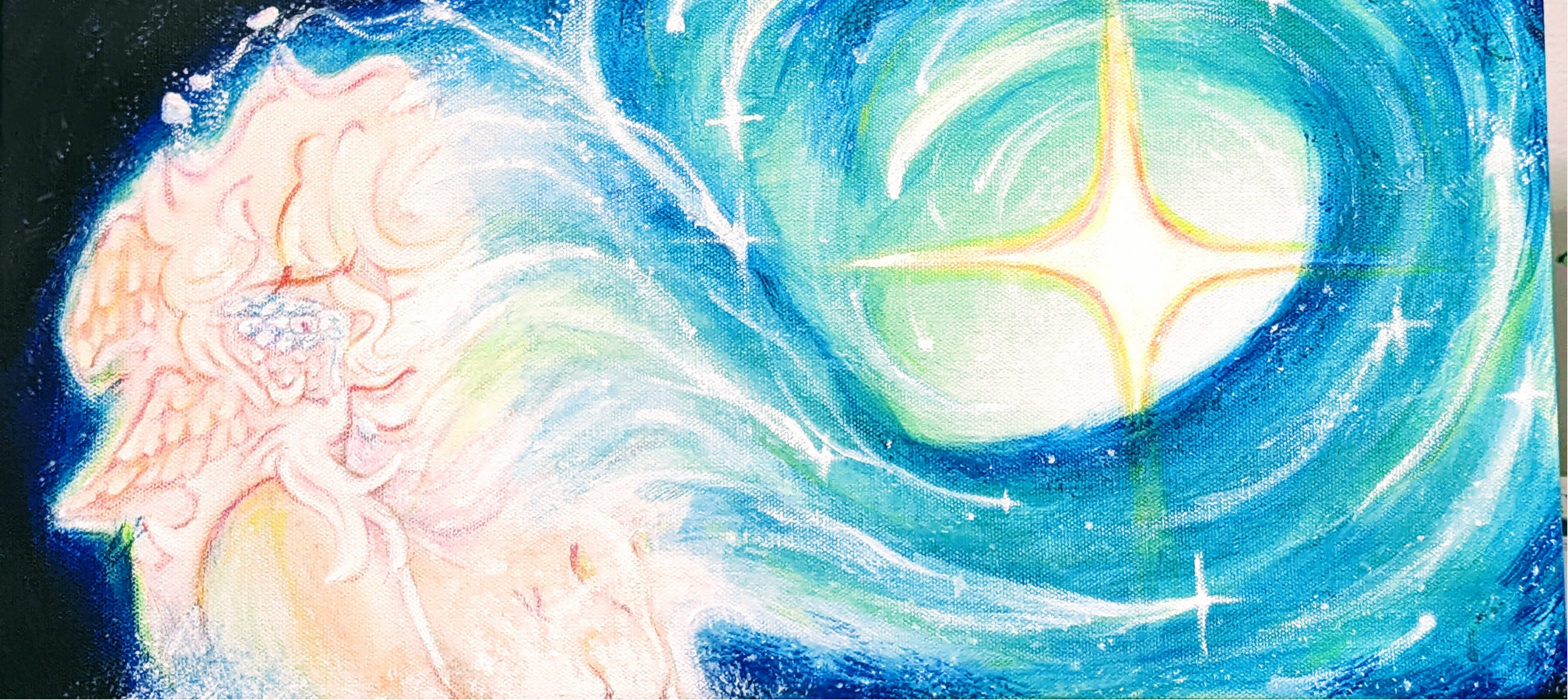
Hi to who ever is reading my entry! I’m a seventeen-year-old high school student. I’m three years into remission from a rare form of leukemia. I’ve always had a passion for creative pursuits, and I’ve been making art since I could hold a crayon 😂. It was my mom who taught me to colour. I remember colouring my very first character in our basement (it was a My Little Pony alicorn princess of space), with my mom helping me stay within the lines. Since then, I’ve continued to draw characters like dragons, monsters and my own original characters, and create stories for them. I’m working on becoming a Mangaka which is a Japanese- style comic artist/maker. As a side effect from the treatment I was on, I do have some issues with my hands, but I still plan to keep making characters and their stories. I love many forms of art like sculpting, water colour, sketching, mixed media and digital.
Thank you for taking the time to read this. – Ava