From Urgent Questions to Lasting Pathways: Fertility Care at SickKids
For many children and adolescents with cancer, treatment is lifesaving. But these treatments can also impact something deeply personal — their future fertility and the potential for biological children. For years, nurses have heard similar questions from patients and families:
Will I be able to have children one day? Are there options? What are those options? Is it too late?
Without clear pathways, these questions were often left unanswered, and solutions were not always available. The need was clear: fertility preservation had to become timely, equitable, and normalized within pediatric oncology care.

In 2024, SickKids took a significant step forward by building a formal Fertility Preservation Program. The goal was to create an interdisciplinary, sustainable care pathway that facilitated standardized and timely access to fertility preservation for patients across varied diagnoses, ages, and urgency levels. Over 60 clinicians across disciplines — nursing, oncology, hematology, gynecology, endocrinology, pathology, urology, fertility specialists, informatics, social work, education, implementation science, and survivorship — with patient and parent partners, joined focused working groups to design care pathways that made sense in clinical settings. The group created detailed workflows to address referral processes, urgent and non‑urgent pathways, education, and survivorship considerations. Pathways for ovarian tissue cryopreservation (OTC), egg freezing, sperm banking, electroejaculation, and testicular sperm extraction (TESE) were clearly defined and implemented as standard of care.
The Nursing Role in Fertility Preservation
Nursing has been central to this work. In the first days of a new cancer diagnosis, nurses are consistently present at the bedside, making them instrumental in fertility pathways. Education and normalization were key early priorities. By equipping nurses with language, resources, and straightforward flow charts, the aim was to make these conversations informative and less uncomfortable for patients, caregivers, and the medical team. While fertility preservation counselling is often done by physicians, nurse practitioners, or physician’s assistants, nurses play an active role in identifying eligible patients, normalizing fertility discussions, reinforcing education, and supporting families through complex, emotional decisions.
The program also recognizes patients who are unable to undergo fertility preservation, whether due to treatment urgency, age, cultural/personal reasons, or medical contraindications. Nurses remain essential supports for these patients, both during treatment and in survivorship, validating grief, answering evolving questions, and reconnecting families with fertility resources, as needs change over time.
Collaboration at Its Core
A key strength of the program is collaboration with Mount Sinai Fertility, allowing SickKids’ patients timely access to specialized fertility expertise. Importantly, some aspects of fertility preservation are covered through provincial funding or hospital budgets; others are not, highlighting ongoing inequities in access.
At its heart, the SickKids Fertility Preservation Program reflects something nurses have always known: fertility matters. It matters to patients thinking about their future, to families planning for life beyond illness, and to survivors redefining what that future might look like. For nurses, this work is about more than procedures — it’s about listening, normalizing, advocating, and making space for hope, even in the hardest moments.
For more information and resources, visit the SickKids Fertility Preservation Program website.

This story was written for the spring 2026 issue of The RePORTer, POGO’s Nursing Newsletter, by SickKids staff Rebecca Côté, RN, Clinical Program Coordinator, Sarah Gabura, RN, MN, NP-Pediatrics, Dr. Kriti Kumar, Staff Oncologist, Haematology/Oncology.


The Aha! Moments
Every nurse has “aha” moments that, when looking back, they go, “Oh yes, that is how we got here.” Sometimes we don’t realize them when they are happening, but it all comes into focus once we get to where we are going. For me, these were three of those key moments.

The first “aha” moment: I remember racing down the halls with a young patient in a transport wheelchair, not because we were in a hurry or there was an emergency, but because it was FUN. That was the first day of my pediatric clinical placement as a nursing student and I so clearly remember thinking, “Bringing fun into the hospital? That is something I can get on board with.”
The next “aha” moment: Flash forward a few years, I started in oncology at CHEO and remember the creative thinking of the nurses and medical staff to make the hospital as fun as possible for children and their families. Water fights with saline syringes, using cotton balls and a basin to make a bathtub for a stuffed animal, “Neutrophil Dance Parties” to shake a few more neutrophils loose; all of it to make what is an incredibly challenging time even the slightest bit better. It is that combination of playful energy and care that has always stood out when I reflect on my time at CHEO.
The third “aha” moment: While volunteering with Campfire Circle as a canoe trip nurse for teens who were on or off treatment for their oncology diagnosis, I remember watching the group swimming and talking about their experiences, their scars, their joys. It was an unprompted moment that I felt so privileged to witness. Something that couldn’t be replicated within the walls of a hospital, it showed the power of having space for connection and how experiences, like camp, could facilitate that so effortlessly.
Looking back, those three “aha” moments have led to where I am now, working as a nurse for Campfire Circle, an organization that provides free camp-inspired programs to children with cancer or serious illness and their families. Fun, care, and connection are incorporated into everything we do. Some days, that is a platelet party with ice cream and party hats galore in the Med Shed, one of our on-site medical facilities at camp, and then sending the camper back out to go on the high ropes obstacle course! Other days, it is making sure a camper’s Total Parenteral Nutrition (TPN) is delivered nightly in the middle of Algonquin Park so they can create memories on the multi-night canoe trip with their friends! I could have never imagined that this would be where I would end up, but to say it is a “dream come true” would be an understatement.
To any nurse, medical staff or pharmacist looking to make their own “aha” moments by singing campfire songs with a patient that they know from their home centre or going waterskiing with a child that they haven’t seen in 10 years since they transitioned to AfterCare, we would love to invite you to experience the joy that camp brings to families, campers and medical staff themselves!

This contribution to “Reflective Practice Corner” was written for the spring 2026 issue of the RePORTer by Meghan Peirce RN, BNSc, MSc in Child Life and Pediatric Psychosocial Care, at CHEO and Campfire Cirlcle.
Reflective Practice Corner, a standing section in The RePORTer—POGO’s Nursing Newsletter—features reflections from nurses across the province, offering insight into their experiences. It also invites readers to pause and consider the questions posed.

Caring for the Whole Family: Financial Challenges in Pediatric Oncology
 When a child is diagnosed with cancer, a family’s life is turned upside down. The emotional impact is profound, and for some families, the financial toll can be equally overwhelming. Families often face reduced household income; either because a caregiver must take a leave from work, or reduce work hours, while simultaneously managing significant out-of-pocket costs related to treatment. These costs can include medications not fully covered by insurance; over-the-counter medications; travel expenses; parking fees; meals and accommodation, especially when treatment requires travelling far from home. Rising expenses for essentials such as gas, groceries, and daily living necessities only add to this strain, making it increasingly difficult for families to manage the financial impact of cancer treatment.
Pediatric oncology nurses are often entrusted with the stories of families facing significant challenges throughout their child’s treatment, including financial difficulties. It is essential to be well informed about the resources available to support these families to know how to guide them to the appropriate services that can help alleviate their financial burdens. By doing so, it ensures comprehensive care, addressing not only the medical needs but also the emotional and financial well-being of the family.
In Ontario, private and provincial financial assistance programs play a vital role in reducing this burden, allowing families to focus on their child’s care rather than financial stress. Many of these programs are income-based, ensuring those with the greatest financial need receive the support required. A patient’s social worker and POGO Interlink Nurse work closely with families to assess their financial needs throughout treatment and identify which programs are available and most appropriate.

While available financial resources can vary between hospitals and geographic regions, the POGO Financial Assistance Program provides support to every family experiencing childhood cancer across Ontario, regardless of income. The program offers financial relief by reimbursing some of the costs incurred as a result of a child’s cancer treatment. Even with these programs, some families still face substantial financial challenges, especially when treatment involves frequent travel or extended hospital stays.
Many of these financial relief programs for families are accessible during a child’s active treatment, but for some families, the need for financial support does not end when treatment is complete. Funding for families who require access to rehabilitative services post-treatment highlights a current gap in financial support available in Ontario.
Continued financial relief after treatment is critical in ensuring families can access essential rehabilitative care or recover from the significant impact of a cancer diagnosis on their financial situation. Having the knowledge about what supports exist, and who to refer to for further guidance, can be an essential part of supporting children living with and beyond cancer, and their families.
In addition to hospital and provincially-supported programs, families may benefit from the following financial resources:
- Childhood Cancer Canada – The Emergency Fund
- Ontario Parents Advocating for Children with Cancer
- Kindred Foundation – Family Support
- Shine Through the Rain – The Rainy Day Fund
Families are also encouraged to check with their hospital foundation, as many offer patient and family support programs that may help offset treatment‑related expenses.
Please note that availability may vary by institution and region. Be sure to check whether your organization is affiliated with these or other community partners that provide financial support to families.
This story was written for the spring 2026 issue of The RePORTer, POGO’s Nursing Newsletter, by McMaster Children’s Hospital Interlink Nurses, Briar O’Neil, RN, BScN, and Emily White, RN, BScN.

REDiAL- Resuming Normalcy During Acute Leukemia
Leukemia maintenance therapy primarily involves oral chemotherapy at home, with less frequent hospital visits, and lower intensity symptoms that are expected to have less impact on daily activities. ALL (acute lymphoblastic leukemia) experts believe it is medically safe to resume developmentally appropriate activities during maintenance, and that promoting physical activity and social engagement may mitigate the severity of symptoms, late effects, and improve quality of life.

A significant gap and variability in the education provided at the start of maintenance therapy was identified by members of the leukemia team at SickKids. Building on the success of the new diagnosis education program, a structured education intervention called REDiAL (REsuming normalcy During Acute Leukemia treatment) was created by an expert interdisciplinary team, delivered by the leukemia clinic nurses, and evaluated.
The overall goal of the education sessions is to support families’ capacity to resume a sense of normalcy, and identify those who will need additional support to adjust to maintenance therapy.
Over the past year, the education sessions were delivered to over forty families of a child diagnosed with ALL, within one month of starting maintenance therapy. Sessions were delivered both in-person and virtually to meet the needs of the caregivers. The average length of the sessions was 35 minutes. 50% of sessions were attended by one caregiver, and the other 50% was a combination of 2 caregivers, 2 caregivers and their child, or 1 caregiver and 1 child. Most (60%) sessions were delivered virtually based on caregiver preference. Notable topics included transitioning back to school in person, extracurricular activities, sleeping independently, travel, review of medications, and healthy nutrition.
The team reviewed caregiver feedback collected with a survey for ongoing tailoring of the content, length of session, and delivery. 100% of caregivers responded ‘Yes’ to ‘Did you learn something new during this education session?’, and ‘Would you recommend this session to another family?’ Caregivers also provided valuable qualitative feedback, including:
“Learning about the social aspects (school, work), dietary, and positive transitions we are being suggested to make was reassuring and comforting.”
Another caregiver noted the session helped with feeling prepared for meeting with the team on day one of Maintenance. Another caregiver asked for:
“More focus on mental health and dealing with the longevity of treatment.”
The contact nurses provided valuable field notes with each session, with unanimous reports of feeling the sessions strengthened their therapeutic relationships with their patients and respective families.
As of October 2025, REDiAL education sessions have been adopted into the standard of care for leukemia patients receiving treatment at SickKids. Evaluations of the content, delivery, and follow up remain ongoing. The team is excited to share their insight to inspire other institutions to adopt similar initiatives, and expand caregiver education to other time points in leukemia therapy.

This story was written for the spring 2026 issue of The RePORTer, POGO’s Nursing Newsletter by Tanya Pryshlak, Clinical Program Coordinator, RN, BScN, The Hospital for Sick Children. Tanya has over eight years of inpatient and outpatient experience in pediatric oncology nursing. She brings a passion for empowering patients and their families through education, and has played a crucial role in the development and roll out of the education sessions.

Homeward Bound: Building Pediatric Palliative Care Capacity in Northern Ontario
For many years, our team at the POGO Satellite Clinic in Sudbury, located at Northeast Cancer Centre, Health Sciences North (Health Sciences North), has recognized a significant gap in the number of healthcare providers with experience, knowledge, competency and confidence in caring for children with life-limiting illnesses, who are medically fragile or have complex care needs. As a result, many Northern Ontario families do not feel confident bringing their children home from children’s hospitals when they are receiving palliative or end-of-life care, due to limited expertise and support closer to home. This gap has placed a physical, emotional and financial burden on families who must remain far from their communities for extended periods. It also adds pressure to the pediatric palliative care facilities in Ottawa and Toronto.
We’ve long known that as oncology nurses and physicians, we have the skills and experience to care for medically fragile children who live nearby. However, children living in more remote Northern communities often lack access to the same level of care and support.
 In my role as the Sudbury POGO Interlink Nurse until recently, the only one serving all of Northern Ontario—I’ve had the privilege of building relationships with healthcare providers across the region. While we’ve offered case-by-case support, I’ve always dreamed of creating a more formal and consistent way to strengthen pediatric palliative care across the North.
That dream became a reality with support from POGO staff and a Kindred Cares Grant from the Kindred Foundation. This funding allowed us to deliver pediatric palliative care education to providers in key Northern Ontario communities, including Thunder Bay, Sault Ste. Marie, Sudbury, Timmins, and North Bay.
Before receiving the grant, I became a certified Pallium LEAP facilitator, which enabled me to share my knowledge and lived experience as a Northern provider familiar with the challenges of limited resources and services.
The education sessions funded by the Kindred Grant were delivered through two models:
- A 2-hour in-person community information session to share knowledge and foster open discussion.
- Two Pallium LEAP Pediatric courses, with funded spots for participants to engage deeply, share experiences, and learn collaboratively.
In total, 67 healthcare professionals from various disciplines participated in these sessions. Together, we explored challenges, brainstormed solutions, and shared both successes and setbacks in a supportive and inclusive environment.
As a result of this initiative, I have since established an online community of practice with providers across the North to help support sustained capacity building. Most importantly, this work has enabled more children and their families to return home for palliative and end-of-life care. There is still a lot work to be done, but I am optimistic about where we are headed.
This story was written for the fall 2025 issue of The RePORTer, POGO’s Nursing Newsletter by: Vicky Wilton, RN, POGO Interlink Nurse, Health Science North.

Reflections on Advances in Pediatric Oncology Survivorship and AfterCare
Eleanor Hendershot is an experienced pediatric oncology nurse at McMaster Children’s Hospital, whose career spans over 30 years, including roles at SickKids and Princess Margaret Cancer Centre. She is deeply focused on survivorship and AfterCare and is a dedicated advocate for evidence-based compassionate follow-up care for childhood cancer survivors.
 In reflecting on my last three decades working in pediatric oncology nursing, it’s evident that the field has undergone remarkable transformation. In particular, with my focus on AfterCare for the past 13 years, with experience across leading institutions, I’ve witnessed how advances in therapy, supportive care, and clinical research have significantly improved outcomes.
The majority of children are not only surviving cancer but also living long and productive lives. This progress has shifted attention toward survivorship, with increasing emphasis on the long-term health and well-being of pediatric cancer survivors.
Within survivorship care, the Children’s Oncology Group has developed evidence-based guidelines (www.survivorshipguidelines.org) to support routine screening for late effects of cancer and its treatment. These late effects are influenced by the type of disease and individual treatment exposures (chemotherapy, radiotherapy, surgery), and may include second malignancies, organ dysfunction (cardiovascular, auditory, bony, renal, pulmonary, endocrine, neurocognitive, etc.), and psychosocial concerns. Importantly, late effects may emerge years or even decades after therapy ends, making survivorship care an essential component of comprehensive oncology practice.
One of the most significant recent advances in this field is the refinement of late-effects screening based on new evidence, research and expert consensus. A key example is the monitoring of cardiomyopathy (disease of the heart muscle) in survivors treated with anthracyclines (a type of chemotherapy used to treat certain types of cancer such as leukemia and lymphoma). Until recently, guidelines recommended lifelong echocardiograms for all survivors, regardless of cumulative anthracycline dose. New evidence, however, has demonstrated that survivors who received less than 100 mg/m² are not at increased risk of cardiomyopathy and therefore do not require lifelong routine echocardiographic surveillance.
Although this adjustment may appear modest, its impact is profound. Survivors of leukemia, the largest survivor population, typically receive low cumulative anthracycline doses. For these patients and their families, lifelong counselling and repeated cardiac screening created unnecessary anxiety and reinforced the sense of living under ongoing medical surveillance. From a cost-benefit perspective, routine echocardiography in low-risk patients carried significant cost and resource implications without measurable benefit.
As part of the updated guidelines, ongoing heart monitoring is no longer required, allowing leukemia survivors, in some instances, to be discharged from follow-up care once they are ten years post-therapy and have reached the age of 18 or if they are a teenager when diagnosed until both criteria are met.

The benefits of this targeted approach extend well beyond medical outcomes. By reducing unnecessary tests and clinic visits, survivors and families gain greater peace of mind and some relief from the intensity of lifelong surveillance, while healthcare systems benefit from more efficient use of resources. Just as importantly, minimizing disruptions to education, employment, and social development allows survivors to move forward in their lives with greater confidence. This balance—protecting long-term health while recognizing that not all survivors carry the same risks—has become central to modern, individualized survivorship care.
In reflecting on the evolution of pediatric oncology nursing and survivorship care, it’s clear that our field has made tremendous strides—not only in improving survival rates but also in refining how we support survivors long-term. The shift toward individualized care, such as updated cardiac screening guidelines, has reduced unnecessary interventions and empowered survivors to live with greater confidence.
Since 2001, POGO has been a cornerstone in supporting survivors of childhood cancer through its AfterCare Clinic Program network. Today, eight POGO AfterCare Clinics across Ontario serve more than 5,000 survivors, helping ensure that children, adolescents and young adult survivors of childhood cancer receive the essential follow-up care they need to lead healthy, fulfilling lives.
This contribution to “Reflective Practice Corner” was written for the fall 2025 issue of the RePORTer by Eleanor Hendershot, MN, BScN, RN, Pediatric Nurse Practitioner, McMaster Children’s Hospital.
Reflective Practice Corner, a standing section in The RePORTer—POGO’s Nursing Newsletter—features reflections from nurses across the province, offering insight into their experiences. It also invites readers to pause and consider the questions posed.

Delivering Nursing Education in Thunder Bay, Ontario: A Perspective of Learning and Connection
As pediatric oncology nurses working across Ontario, we share a deep commitment to advancing care for children with cancer. Representing three distinct institutions, we bring together a blend of clinical expertise, Satellite clinic experience, and case management insight. In March 2025, we had the opportunity to travel to Thunder Bay Regional Health Sciences Centre (TBRHSC) to deliver nursing education, including the Association of Pediatric Hematology/Oncology Nurses (APHON) Pediatric Chemotherapy and Biotherapy Provider course, in preparation for the launch of the POGO Satellite Clinic and POGO Interlink program.

The teaching experience itself was rewarding on many levels. As instructors, it was a chance not only to teach but also to learn from one another. Each of us brought unique perspectives: Kirsty shared a wealth of clinical expertise and knowledge of Satellite care; Kyt contributed deep insights from his extensive background across nearly every pediatric oncology nursing role; and Diana represented one of Thunder Bay’s main referring centres. Observing each other’s teaching styles highlighted both the common ground we share and the distinct approaches that shape our practice.
In addition to the Chemotherapy/Biotherapy course, we delivered two full days of targeted education, to four enthusiastic clinic nurses, on key pediatric oncology topics, including bone marrow suppression, treatment side effect management, fever/neutropenia and sepsis, supportive care, and oncologic emergencies. Some of these topics were identified by the Thunder Bay team (Amy Halvorsen, Manager of Pediatrics, and Nicole Zuefle, POGO Interlink Nurse and Satellite Nurse Coordinator) as areas where additional education was needed. Hands-on learning in central venous line care, port accessing, and closed-system transfer device use provided valuable practical experience. The strong attendance from nurses, physicians, and learners reflected the Thunder Bay team’s dedication and commitment to advancing care.
 The trip also offered perspective. Experiencing the distance firsthand underscored the challenges families face when traveling for treatment. The POGO Satellite Clinic at TBRHSC will help ease that burden, allowing children and families to receive care closer to home. This reinforced an important truth: across the province, dedicated pediatric oncology nurses provide specialized care every day. Each individual effort contributes to something greater — a shared commitment to supporting children and families facing cancer.
It was a privilege to meet the TBRHSC nurses and welcome them officially to the POGO family. Their enthusiasm, expertise, and pride in their space were inspiring. Having connected with them in person, it feels especially meaningful when we now send patients their way.
Outside of work, we had time to explore Thunder Bay together. We visited the Terry Fox monument, Kakabeka Falls (“the Falls of the North”), the Sleeping Giant, and enjoyed local cuisine. Weather delays stretched our trip by an extra day — yet another reminder of how travel challenges can impact families seeking treatment. And, from the moment we arrived, it was clear that the local Indigenous culture was thoughtfully woven into the hospital environment. Parking lots were named after animals of spiritual significance, and we learned about the hospital’s Spiritual Care Team, which offers patients and families traditional practices such as smudging. This integration of culture into care was both meaningful and inspiring to see.
The TBRHSC nurses sent us off with a sweet farewell: a box of their famous Persian doughnuts. It was the perfect ending to a trip filled with learning, connection, and shared purpose.
This story was written for the fall 2025 issue of The RePORTer, POGO’s Nursing Newsletter by: Diana Masse, RN, Nurse Case Manager Children’s Hospital, London Health Sciences Centre, Kirsty Morelli, NP, Satellite Nurse Coordinator, Scarborough Health Network, Kaniska Young-Tai (Kyt), RN, Satellite Nurse Coordinator SickKids
Marking National Indigenous History Month with a Special Video for Parents and Caregivers of Children with Cancer
Introductory Note from POGO
The POGO Indigenous Children with Cancer Initiative, established in 2019, is dedicated to enhancing equality and cultural safety in the care of Indigenous children with cancer and their families. This initiative brings together individuals with lived experience, healthcare providers from across the Ontario, Indigenous Navigators from hospitals, and members of the Indigenous Cancer Care Unit of Ontario Health.
In honour of National Indigenous History Month this June, we are proud to share a heartfelt video designed to increase understanding of a childhood cancer diagnosis. Recognizing the diverse caregiving roles within Indigenous communities, this video is intended for anyone in the child's support circle, including parents, community elders, extended family, and Indigenous healers.
Jennifer Keis, Nurse Practitioner at SickKids and a valued member of our initiative, shares her reflections below on the creation of this video and its impact on her practice.
Walking alongside Indigenous Patients and their Communities
In nursing, we are taught to provide culturally-safe, patient/family-centered, and holistic care. My experience with the POGO Indigenous Children with Cancer Committee has reinforced that achieving this requires an open mind and a willingness to listen and learn from others.
I am grateful for the wisdom, stories, and expertise shared by Indigenous healthcare providers, community members, and families who are part of the committee. Their strength in sharing the challenges and trauma of navigating the healthcare system with such honesty and integrity has had a profound impact on me. I recognize that I must continue to engage in learning, listening, and adapting to ensure I am providing meaningful and thoughtful care to Indigenous families.
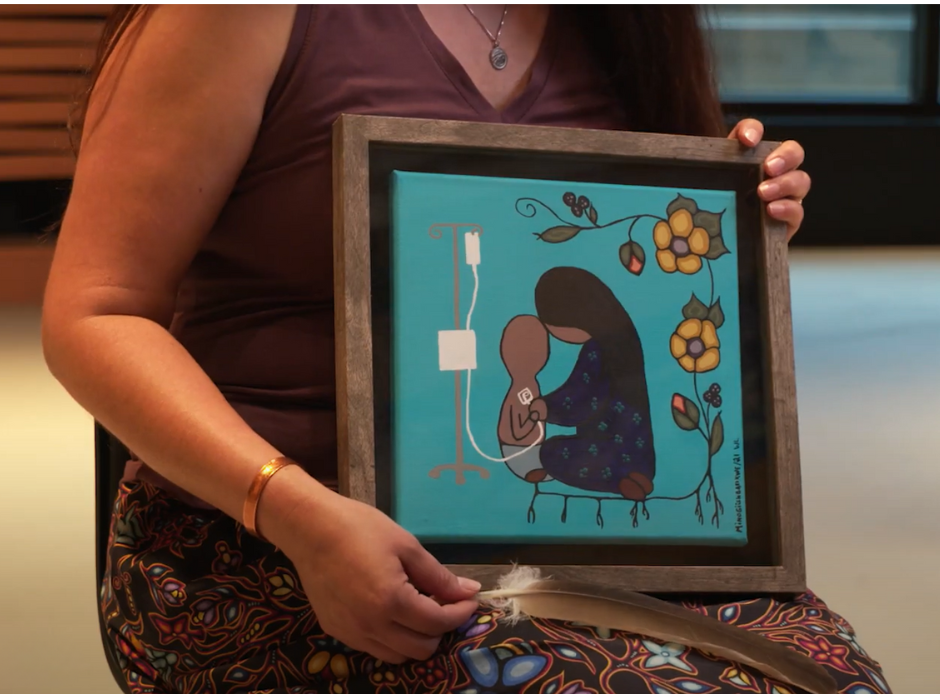
I had the privilege of getting to know the patient featured in the video, Makenzy, and his mom, Wendy, during a long stay at SickKids, so you can imagine the emotional impact the video has had on me. In the video, Wendy, who, in her spare time, enjoys art as a hobby, shares with viewers a painting, which beautifully illustrates the family’s hope to remain connected to their Indigenous culture and practices while Makenzy was receiving treatment for leukemia. Wendy’s powerful symbol of resilience and connection is not unlike the hope of other Indigenous families who will need pediatric oncology care in the future.
Indigenous families deeply value preserving cultural identity, even as they navigate the challenges of western healthcare. This shared experience resonates with many and underscores the importance of walking alongside Indigenous patients and their communities—recognizing, respecting, and integrating their traditional practices and medicines into our care approach.
Supporting Families through Childhood Cancer Diagnoses
As nurses, we understand how overwhelming it can be for families to receive a childhood cancer diagnosis. Suddenly, families are thrown into an unfamiliar world filled with medical jargon, blood tests, diagnostic procedures, and various healthcare providers. While trying to comprehend the gravity of the diagnosis, families are faced with making significant treatment related decisions that may feel overwhelming, all while grappling with the emotional shock of the news.
Now, imagine how much more difficult this experience is for families coming from a place of historical and medical trauma, racism and discrimination, loss of cultural identity, and health disparities. The intricate nature of these challenges can magnify the emotional toll, making it even harder for families to navigate this already overwhelming experience.
Creating a Culturally-Sensitive Support Tool for Indigenous Families
Our vision in creating the video is to provide an avenue to open communication, build rapport, and share information in a way that is culturally sensitive and less overwhelming for Indigenous families facing a new childhood cancer diagnosis. Acknowledging the significant value of connection within Indigenous communities and with their elders, we also understood the importance of providing an educational tool that families can share with others.
Thank you for reading my reflections on the privilege of participating in the POGO Indigenous Children with Cancer Committee and helping to create the video, Childhood Cancer: A Guide for First Nations Communities. If you haven’t watched it yet, I encourage you to do so.
Watch Childhood Cancer: A Guide for First Nations Communities
I hope it becomes a valuable resource for sharing with colleagues, but most especially, with Indigenous pediatric oncology families you support. As nurses, we have the privilege of spending meaningful time at the bedside, listening to families share their stories, building trust, and advocating when their voices need to be heard. My hope is that the video, along with other POGO Indigenous resources, will support you in fostering these important relationships with cultural humility, an openness to listen and learn, and compassion in the care we provide.
Jennifer Keis is a pediatric nurse practitioner at The Hospital for Sick Children, working with families facing leukemia or lymphoma.
A New Era in the Treatment of Pediatric B-ALL
Expert Recommendations for Administration of Blinatumomab and Looking to the Future
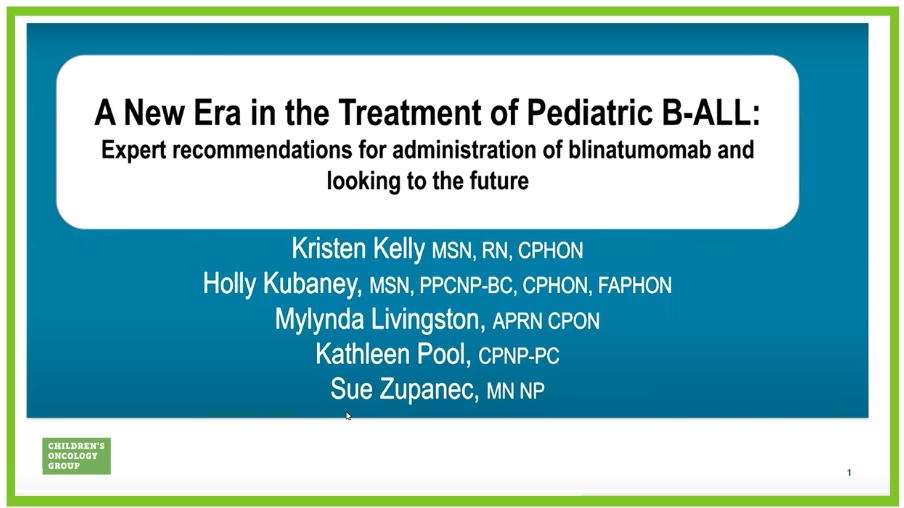
For those working in pediatric oncology, there’s been no shortage of conversation this past year about a new era in treating pediatric B-ALL. The Children’s Oncology Group (COG) Nursing Steering Committee hosted a webinar earlier this year, providing insights into the widely discussed AALL1731 study and sharing practical strategies for managing blinatumomab infusions. This webinar was presented by the Children’s Oncology Group (COG) Nursing Steering Committee on February 12, 2025.
The intended audience for this webinar is primarily nurses, although allied health professionals will also find it beneficial. Attendees will gain insights into the AALL1731 study results and learn how nurses have effectively addressed challenges related to blinatumomab infusions in their institutions.
The webinar objectives are:
- Review AALL1731 study results
- Highlight nursing contributions to success of blinatumomab on COG clinical trials
- Brief review of qualitative results – perspective of caregivers
- Framework for improving healthcare experiences
- Perceived risks (to patient/family outcomes) with care delivery
- Consideration of hypogammaglobulinemia
- Sharing examples of delivery practices
- Rural populations
- 7-day bags
- Equipment challenges
- Prior authorization
If you missed the live webinar, you can still watch it here – COG Nursing Webinar Blinatumomab
 If you collect Continuing Education Units, you can earn 1.5 hours by watching this presentation and using the QR code to access the evaluation.
Articles of Interest
- Bernhardt MB, Militano O, Honeyford L, Zupanec S. Blinatumomab use in pediatric ALL: Taking a BiTE out of preparation, administration and toxicity challenges. J Oncol Pharm Pract. 2021 Mar;27(2):376-388. doi: 10.1177/1078155220979047. Epub 2020 Dec 18. PMID: 33334253.
- Montgomery KE, Zupanec S, Yun C, Okada M, Kubaney H, Feehily E, Withycombe JS. A Quality Approach to Blinatumomab Delivery in Pediatric Oncology: A Children’s Oncology Group Study, 2024, J Pediatr Hematol Oncol Nurs (Epub 9 Sept 2024).
- Withycombe JS, Kubaney HR, Okada M, Yun CS, Gupta S, Bloom C, Parker V, Rau RE, Zupanec S. Delivery of Care for Pediatric Patients Receiving Blinatumomab: A Children’s Oncology Group Study. Cancer Nurs. 2024 Nov-Dec 01;47(6):451-459. doi: 10.1097/NCC.0000000000001309. Epub 2023 Nov 22. PMID: 38016041; PMCID: PMC11128477.
Cancer-Related Fatigue and What Pediatric Oncology Nurses Need to Know
Cancer-related fatigue is a major but often under-recognized aspect of childhood cancer care. As treatments become more effective and survival rates improve, attention is shifting to the overall well-being of young patients during therapy. Fatigue stands out as a common experience that can affect every part of a child’s life, from play to school to home. Understanding fatigue is an essential step in providing truly comprehensive pediatric oncology care.
What does the evidence say about fatigue in pediatric oncology?
We know that fatigue is one of the most prevalent, severe and distressing symptoms and it can persist long-term into survivorship. Fatigue is associated with a decreased quality of life and can co-occur with other symptoms such as depression and sleep disturbance.
So, what can we do about it?
POGO’s Guidelines Program provides healthcare professionals in Ontario and worldwide with the best options for managing the adverse effects of cancer and its treatment with the goal of improving the health and quality of life of children with cancer.
Read more about the program here.
Recently, this POGO program released a fatigue clinical practice guideline (CPG) to get you moving in the right direction. The purpose of the fatigue CPG is to guide healthcare providers in the management of fatigue in children and adolescents with cancer and pediatric recipients of hematopoietic stem cell transplants (HCT).
The fatigue CPG ultimately highlights four recommendations and one good practice statement (see table below). Nurses at the bedside and in clinics are uniquely positioned to implement these evidence-based recommendations.

I’ve reviewed the fatigue CPG, now what?
Start with the good practice statement. You can ask your patients about fevers, nausea and vomiting, pain and more, so now is the time to start asking about fatigue. There are many tools to help you assess fatigue; see if your institution is using any of them. Some examples include: Peds-PRO-CTCAE, PROMIS and SSPedi: Symptom Screening in Pediatrics Tool.
Next, try recommendation 1, the use of physical activity. There is no perfect intervention for physical activity, but you can assess what brings your patient joy and start small and scale up. Maybe it is a dance party that the unit holds for 10 minutes a day or maybe your unit has organized scavenger hunts that have the patients up and moving around the unit and hospital. Encourage families to get involved and plan activities such as walks, bike rides or yoga.
 Guided by the POGO fatigue CPG, the Children’s Oncology Group (COG) New Diagnosis Guide now incorporates information about fatigue, including describing fatigue as a symptom of cancer and cancer therapy and offering suggestions to families on how to manage fatigue. This guide can help you start the conversation.
Find the New Diagnosis Guide and other COG family resources here. https://childrensoncologygroup.org/cog-family-handbook
Review POGO’s clinical practice guidelines on fatigue, and other topics, here.
AboutKidsHealth has also developed some great resources about fatigue which you can read more about here: Cancer-related fatigue

Denise Mills, MN, RN(EC), NP Pediatrics
POGO Provincial Clinical Lead, Pediatric Oncology Nursing
References
- Hooke, M.C., & Linder, L.A. (2019). Symptoms in children receiving treatment for cancer-part 1: fatigue, sleep disturbance, and nausea/vomiting. Journal of Pediatric Oncology Nursing, 36(4), 244-261.
- Patel, P., et al. (2023). Guideline for the management of fatigue in children and adolescents with cancer or pediatric hematopoietic cell transplant recipients: 2023 update. www.thelancet.com Vol 63 September, 2023.