Speaking a Family’s Native Language a Source of Psychosocial Support
 Arvinder Aulakh has been a pediatric oncology nurse at SickKids for over 18 years. In 2020, she joined the team of POGO Interlink Nurses working in hospitals across Ontario to provide culturally sensitive, family-centred care when a child is diagnosed with cancer. POGO Interlink Nurses help families navigate the healthcare system throughout the child’s cancer journey. They are invaluable members of the child’s healthcare team helping families decipher unfamiliar medical terminology; working with interpreters to remove language barriers; providing school support for the child, classmates and staff; locating community resources; and supporting siblings and other family members. Arvinder works with families in the Peel/Halton region of The Greater Toronto Area, and does so in English and her native language of Punjabi, with a solid understanding of Urdu and Hindi. The therapeutic relationship POGO Interlink Nurses are able to establish with families is unique, and speaking a second language has allowed Arvinder to make an extra special connection with many in her care. She knows what it can be like to encounter barriers when English is not your first language and she brings that sensibility to her work with families.
Sharing a common language reinforces cancer education
“My personal experience is seeing my extended family members struggle with understanding English in different aspects of their lives,” she says. “Through that, I have learned how to use simple words to communicate with families where English is not their first language. And when I meet a family from India, I ask if I should speak Punjabi. Almost always, the answer is, ‘yes.’”
“Many families trust the medical teams caring for their child. When I meet families, they are reassured that their child’s care plan meets a standard of care across North America. Families feel supported when treatment education, school and work are discussed because these are aspects of their lives they worry about when their child is diagnosed.”
“My ability to communicate with children and their families in their native language of Punjabi gives them the opportunity to express their experiences through the cancer trajectory. Families are able to ask questions to understand the diagnosis, prognosis, treatment plan, and support systems available in their community and school planning.”
Giving voice to psychosocial support
Home visits are an integral part of the POGO Interlink Nurse role. During visits, nurses can meet the extended family, like grandparents. When there is no language barrier, all family members are able to participate in the healthcare teaching Arvinder does because they understand the information and can ask questions. The psychosocial support this offers is enormous for the family and child in treatment.
“Parents and other family members who are able to express themselves in their language are able to look for emotional and mental health supports as opposed to only practical support,” says Arvinder.
“I can remember one mother telling me that she felt so relieved that she could call me anytime with a question or concern and speak in her language. Another mother said, ‘it was nice to just talk.’”
“Working with these families, I have learned that they may not have been fully aware of the supports available to them because they didn't understand the information given to them in English. I have been able to encourage families to advocate for themselves which allows them to feel empowered.”
“Speaking to families in Punjabi has allowed me to provide care that is unique to their needs based on their cultural, religious and spiritual backgrounds. This ultimately helps reduce their stress.”
“With my cultural knowledge, I am also able to understand a family’s decision about certain aspects of care. For example, some families have specific prayers that are done on specific days that might interfere with treatment days. I can advocate for these families to have a one-off change in their treatment day to accommodate the prayer. I also understand the cultural context that families reference, like certain foods, holidays and customs.”
Arvinder became a POGO Interlink Nurse to develop pediatric oncology skills in other aspects of care, namely providing specialized childhood care with an additional focus on supporting extended families, the child’s school community and family’s wider community. She believes that families appreciate the ability healthcare providers have and effort they make to offer culturally sensitive care. For the families in her care for whom English is not their first language, Arvinder says, “I have a lot of empathy for these families. As a proud South Asian woman, I am especially privileged to serve South Asian families in my catchment area.”

Michelle Johnston Joins POGO Board of Directors
 In May 2022, the POGO Board of Directors announced the appointment of board member Michelle Johnston.
Michelle brings lived experience with the childhood cancer care system having supported a close friend through her child’s diagnosis and lengthy treatment for leukemia.
“POGO’s mission is near and dear to my heart,” says Michelle. “I look forward to contributing to POGO in ways that will help ensure all those affected by childhood cancer receive the best possible care and support.”
A proud northerner from Timmins, Ontario, and as a woman with mixed European and Indigenous ancestry, Michelle has burst through glass ceilings throughout a career spanning 30+ years in the provincial energy sector. She currently serves as President of the Society of United Professionals and as Chair of that union’s Board. During her tenure at the Society, Michelle has maintained its strong financial position and led successful organizing campaigns to grow the Society’s membership. Michelle also has extensive governance experience. Her additional current appointments include Vice President (Canada) of the International Federation of Professional and Technical Engineers, Chair of the Canadian Nuclear Workers Council, a member of the Canadian Labour Congress’s Canadian Council, a member of the United Way of Greater Toronto Executive Board, and a director of the Ontario Federation of Labour, Canadian Nuclear Association and Electricity Human Resources Canada.
The POGO Board and team look forward to working with Michelle to help achieve an excellent childhood cancer care system for children and youth with cancer, survivors and their families.
Meet the POGO Board of Directors
What’s so loved about POGO Satellite Clinics?
One of the many things to love about the POGO Satellite Clinics is that each one is part of a networked, shared-care system. The system is a partnership between the five Ontario hospitals with a specialized childhood cancer program (tertiary hospital) and eight community hospitals in the province. They save families time and money in travel to the tertiary hospital by providing standardized childhood cancer care closer to the family’s home. And, when that happens, much-needed capacity is created in those tertiary hospitals. But, that’s not all! When asked to share what they love about the Clinics they manage, the team of POGO Satellite Clinic nurses shed light on what else they have in common.
End-of-treatment celebrations
For many families and patients, getting to the end of treatment is like letting out a long-held, painful breath. So, understandably, it can be a time of celebration, one that is marked in various ways across the network of POGO Satellite Clinics. There may be a bell to ring, a gong to sound, a jingle to sing, or a party where the patient receives a “certificate of completion.”
 “Ringing that end-of-treatment bell marks the moment in an extra-powerful and special way for the families,” says Kirsty Morelli of Scarborough Health Network, Centenary Hospital.
Deb Crann from Grand River Hospital can’t help but chuckle. “We are still trying to master our end-of-treatment jingle; we are clearly not music majors!”
At Windsor Regional Hospital, according to Ursula DeBono, “Our gong is a fantastic way to celebrate the end of treatment.”
Multidisciplinary healthcare providers who deliver care as a close-knit team
POGO Satellite Clinic care is provided with a range of healthcare providers on the team. While each Clinic is staffed differently, families can rest assured that every team member is committed to the best possible outcomes for their child.
“We have a close-knit team,” says Deb Crann. “I love our work family of registered nurses, a registered dietitian, Satellite lead pediatrician, child life specialist, welcoming receptionist and music therapist.”
 At Trillium Health Partners, Credit Valley Hospital, one way families and patients get to meet the diverse members of their team is through a Bitmoji board. “Each team member is represented by a caricature of themselves doing something fun,” says Jose Oliveria. “It’s a light-hearted way to engage families with our team-based approach to care,” adds Lindsay Lauer.
Amanda Gaudet, equally proud of her team’s efforts at Orillia Soldiers’ Memorial Hospital, says, “A smaller clinic allows us to have flexible hours to accommodate patients and to get them in and out faster; they can even come in on weekends!”
“We have an awesome, bilingual team,” says Sylvie Roberge at Northeast Cancer Centre, Health Sciences North, “and we really pull together for our Northern Ontario kids, who are simply the best.”
At Peterborough Regional Health Centre, Shay Cannon notes, “We get to know the kids and their families, like who likes to count before their port is accessed and who doesn’t. And we’ll follow a child’s 10-step checklist if that’s what they need us to do prior to a finger poke.”
Cheerful, fun-filled spaces
 Families spend countless hours over many months in hospitals. POGO Satellite Clinic teams go above and beyond to make treatment rooms and waiting areas as inviting as possible. You might find a treasure box, toys and games, electronics, outdoor patios and other creature comforts.
“We have special rooms for teens and a playroom with murals and comfortable furniture,” says Lisa Egan-Bates of Southlake Regional Health Centre.
Shay Cannon adds, “I love giving the kids canvas to paint pictures for the clinic room. They are so proud to have their paintings on the wall.”
“Besides our cheerful space, we also have a treasure box with special toys for kids to choose from after any visit or procedure,” says Ursula DeBono.
No child should ever experience a cancer diagnosis. When that happens, though, POGO Satellite Clinics, POGO Satellite Clinic nurses and the multidisciplinary teams they work with, and the affiliated tertiary hospital, work together to provide coordinated, standardized, shared care at the right time and place, with an extra special touch. Now that’s a lot to love!
Learn more about the POGO Satellite Clinic Program
Dr. Charmaine van Schaik Appointed to New Role of Vice-Chair, POGO Board of Directors
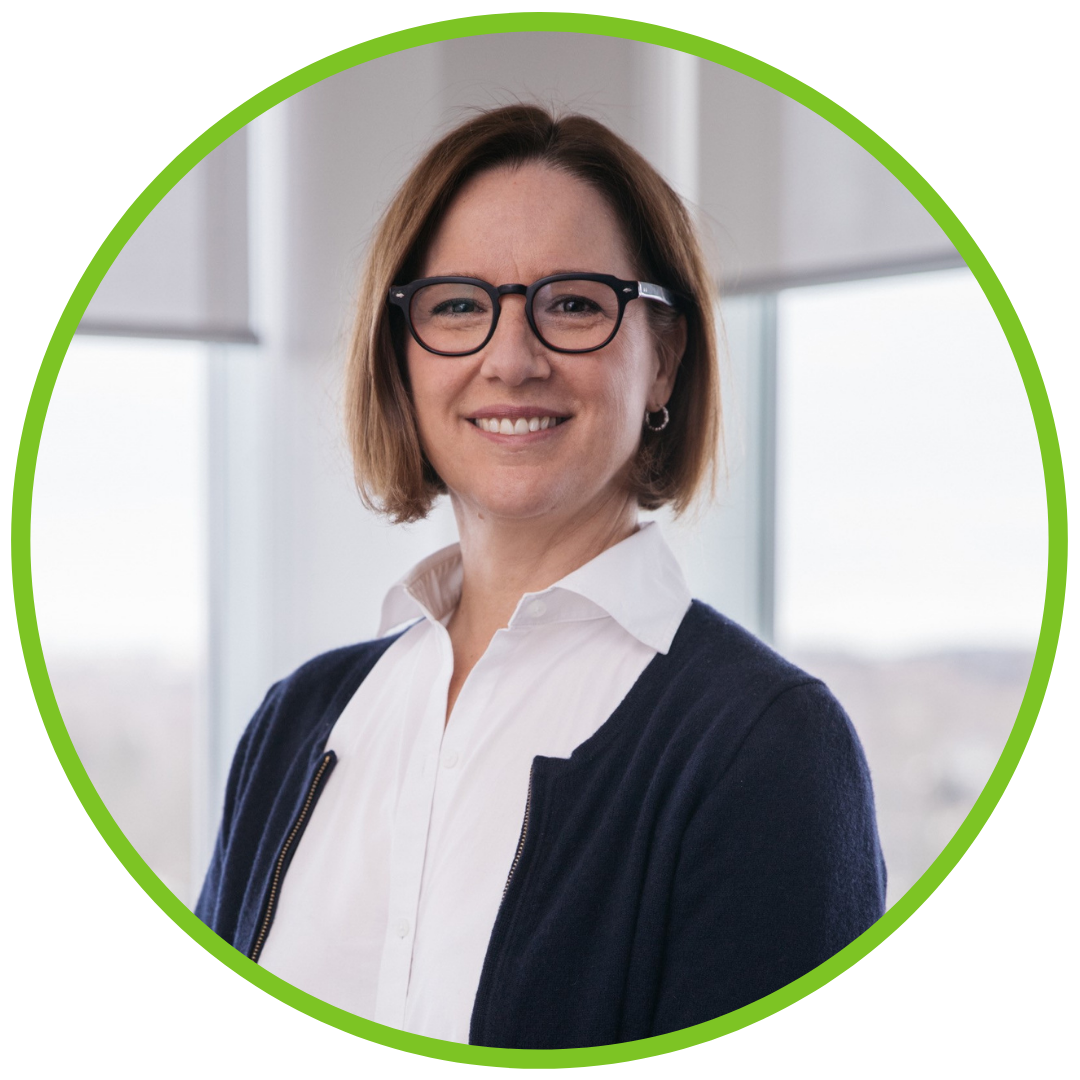 POGO is pleased to announce the appointment of Dr. Charmaine van Schaik to the new role of Vice-Chair of the POGO Board of Directors. Dr. van Schaik will work closely with James Scongack, POGO Board Chair, to advance POGO’s impact as a non-profit organization with charitable status that works in partnership to achieve the best childhood cancer care system for children, youth, their families and survivors in Ontario and beyond.
As Vice-Chair, Dr. van Schaik brings a skill set complementing that of the Board Chair and she will work with the Chair to carry out leadership duties, including representing POGO’s interests and mission in various settings.
“I’m very excited to step into this new role to work alongside James and to support the POGO Board of Directors in fulfilling our governance duties effectively and efficiently,” says Dr. van Schaik.
Dr. van Schaik has been a member of the POGO Board since 2014 and has contributed to several Board committees responsible for governance and philanthropy. She has been actively involved as a member of POGO’s Provincial AfterCare and Supportive Care Steering Committees, and numerous planning committees for POGO’s continuing education events for healthcare providers.
A general pediatrician, Dr. van Schaik was the Chief of Pediatrics at Southlake Regional Health Centre and the first Medical Director of the POGO Satellite Clinic at Southlake when it launched in 2009. She helped bring childhood cancer care closer to home for families in Southlake’s catchment area and pediatric oncologists to the community setting. Dr. van Schaik continues to provide childhood cancer care to children and families at Southlake and currently holds the titles of Active Staff, Co-Medical Lead COVID-19 Vaccination Committee; Physician Leader Quality & Patient Safety; and Physician Leader Maternal Child Program.
POGO’s Board and team congratulate Dr. van Schaik and look forward to her leadership in helping the Board fulfill its duties.
To learn more about how POGO actively champions childhood cancer care click here.
Dr. Mariana Silva Leaves a Legacy Gift to POGO

Leaving a legacy in your will can help fund important long-term projects that will make a deep and meaningful impact on many people’s lives. The Silva family is feeling immense satisfaction knowing their mother, Dr. Mariana Silva, made POGO a beneficiary in her will and that her life’s work will continue.
“Our mother dedicated most of her adult life to advancing care for children with cancer,” says Tomas Silva. “It was her desire that the work she started in life would continue long into the future. It is comforting to know that through this gift, the impact she made as a committed pediatrician and passionate hematologist and oncologist will continue for years to come.”
Dr. Mariana Pradier Silva, 1958-2021
For more than three decades, Dr. Silva made a significant impact on children and youth with cancer, survivors of childhood cancer and their families in many ways, including through her participation on the POGO Board of Directors and POGO’s clinical initiatives across Ontario. A true champion of childhood cancer care, Dr. Silva was instrumental in the development and implementation of the POGO Provincial Pediatric Oncology AfterCare Program and was a key representative on several initiatives to improve equitable access to care for kids with cancer around the world.
Including POGO in your will
POGO’s mission is to achieve the best childhood cancer care system for children, youth, their families and survivors in Ontario and beyond. As a charitable organization, POGO relies on donations and government funding to run trusted programs and services, many of which have been adopted or modelled nationally and internationally across various areas of care. We are humbled that supporters like the Silva family are now taking their contributions one step further by including POGO in their estate plans and wills.
When to start planning legacy giving
Experts say it’s a good idea to update your will after any significant life event, such as a birth, divorce, death or change to your financial status. Without estate planning, you will not be able to influence how, when and to whom your assets will be distributed after you die. Creating a will is your opportunity to leave a legacy to beloved family and friends and the causes you have respected and supported during your life.
Leaving a legacy gift to POGO, when just a small percentage can have a significant impact, is an invaluable way to make an ongoing and meaningful contribution to childhood cancer care. Charitable bequests also have tax benefits for your estate, which ultimately help other beneficiaries.
If you’re interested in learning more about leaving a legacy gift to POGO, contact us at legacygiving@pogo.ca.
Leave a Legacy Month (May) is a community-based public awareness campaign that encourages people to leave a gift through their will or another planned giving vehicle to a charity or cause that is meaningful to them.
How Childhood Cancer Affects the Mental Health of Children and their Families
In a podcast for Catch Psychotherapy, POGO Interlink Nurse Tina Hamalainen discusses the psychosocial impacts of a childhood cancer diagnosis on the child, and their family and school community. Here are some highlights, published with permission of Catch Psychotherapy.
The Impacts POGO Interlink Nurses Witness
Impact on Parents
Cancer means different things to different people and it can be very stressful to hear those words about your own child; it's one of the biggest stressors that a family ever experiences. And along with that are many emotions and feelings which include fear of losing their child, sadness, anxiety, depression, fear of recurrence. Suddenly their lives have turned upside down. Anything normal has changed; families are in a situation that they didn't prepare for, including potentially stopping work to care for their ill child.
Impact on Siblings
Siblings experience a lot of the same emotions as the ill child or their parent—the same fear, worry, anger, guilt. It’s a very common theme for siblings to feel neglected or abandoned; and then they feel guilty for feeling that way. There’re so many mixed emotions that these children and adolescents are trying to process.
Impact on the Child/Youth with Cancer
Kids and adolescents experience social isolation. They're suddenly not able to attend school, for example. School is their norm, it's their place to be in society. And oftentimes, especially at the early stages of diagnosis, in-person school is not possible.
Depending on the type of cancer, if they had a brain tumour for example, radiation therapy can have impacts on their memory or their cognitive functioning, where they might need academic accommodations.
Related Content: Finding Strength by Embracing my Vulnerability
Impact of Schooling
Despite a cancer diagnosis, or maybe because of it, for some families, the normalcy of school allows them to focus on the future—future goals and academic achievements. The family might have concerns about academic success. Parents worry about how their child could possibly continue going to school while on treatment. The child can feel great stress about not seeing their friends every day and being forgotten or missing out, there is anxiety about keeping up academically and graduating high school with their peers.
Impact on the School Community
For the teacher, it might be their first experience of having a child in their classroom with cancer. And at that same time, they're being bombarded with questions from their other students about this child's diagnosis and they do not have the experience/knowledge to support their students.
Impact of Recovery
We can underestimate emotional recovery which can linger longer than physical recovery with fears of relapse or a secondary cancer, and adjusting to a “new normal.”
How POGO Interlink Nurses Support the Family’s Psychosocial Needs
Support for the School Community
- They encourage classmates to think about how they can support their friend in treatment over the weeks and months to come; what things would they do or not do to welcome them back to school?
- They encourage classmates to stay connected by video calling their friend, or placing a drop box in the classroom to collect letters, cards and jokes they’ve written or pictures they have drawn.
- They provide classmates, teachers and siblings’ classes with education and information about the child’s cancer, and its treatment and impact. Being able to educate not only the teachers, but classmates as well—providing information in preparation for that student to come back—is really important, and it ends up helping the ill child.
Support for Learning Needs
- They facilitate home instruction when the child’s treatment keeps them out of school.
- They work together with families on a plan to re-integrate the child to school.
- They work with the child and school administration to set goals for earning credits and graduating, exploring options like summer school and online courses.
- They help advocate for supports for children and adolescents who need accommodations.
Support for the Family Unit
- They do home visits to see firsthand what the family is going through.
- They provide family-centred care that instills hope by trying to address the needs of every member of the family unit.
- They connect students experiencing late effects that hinder their academic success to the POGO School and Work Transitions Program, where POGO Counsellors help them get the support they need at various academic levels or to make the transition from high school to appropriate work.
The above tips were published with permission of Catch Psychotherapy. Listen to the full 30-minute podcast with POGO Interlink Nurse Tina Hamalainen and Janet Morrison of Catch Psychotherapy here: Episode 16 | How Childhood Cancer Affects the Mental Health of Children and Their Families w/ Tina Hamalainen
Survivor’s Childhood Cancer Experience Inspires her Career in Pediatric Oncology Nursing
Kafia Ibrahim is a registered nurse whose personal experience as a two-time childhood cancer survivor inspired her career path. She works in the haematology/oncology unit at The Hospital for Sick Children (SickKids) in Toronto and attributes some of her success to touchpoints she had with a POGO Interlink Nurse while in treatment and a POGO Counsellor after treatment.

Kafia was diagnosed with rhabdomyosarcoma, a soft tissue cancer, when she was eight years old. Her treatment involved chemotherapy and radiation. At 15, Kafia relapsed and faced a second diagnosis of another soft tissue cancer. This time, surgery and chemo were part of her treatment protocol.
“I was too young to remember the details,” Kafia says “but I know that from the time I was diagnosed, my family had very positive experiences with Tina, my POGO Interlink Nurse. I attended Campfire Circle (formerly Camp Ooch and Camp Trillium) because of her and made lifelong friends, and she came to our home and connected us to many community and financial supports.”
Related Content: Surviving Childhood Cancer: From Confidence Buster to Confidence Builder
After her treatment ended, Kafia faced many challenges pursuing her academic and career goals.
“Those challenges were a result of the side effects of treatment,” she explains. “With nothing to control my pain and the resulting negative impact this had on my mental health, it took me longer than usual to finish high school. In Grade 10, I went from online school, to alternative school and back online. I utilized many of the services of the POGO School and Work Transitions Program during this time. When I was finally able to finish high school, my POGO Counsellor, Lucie, helped me with my university applications. She also notified me of scholarships that I would be eligible to apply for, and I received one from Childhood Cancer Canada. My POGO Counsellor also helped me get extra time for tests at school, something I didn’t even know was possible. She helped me know my rights and build my confidence to ask for what I needed. I don’t know if I would have done as well as I did if it were not for my POGO Counsellor.”
Wonderful nurses made an impact
While Kafia’s experiences through her cancer journey were not all great, the positive ones led to her career decision.
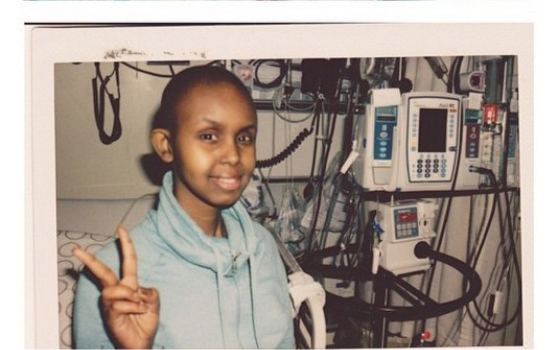
“I have had my fair share of experience with healthcare providers, especially nurses,” says Kafia. “I’ve experienced the good, the bad and the ugly. The amount of influence that nurses can have on a patient’s experience with their disease is more than one would expect. I still remember the wonderful nurses that helped get me through some of my hardest days. Whether it was singing my favourite song with me, celebrating my 16th birthday when I was in-patient or providing me with a shoulder to cry on when things got too much. I want to be able to provide this personal connection for another child and their family that may be going through a similar situation.”
Related Content: Returning to School after a Cancer Diagnosis? Ask for Help!
Gaining invaluable on-the-job experience
From 2019 to 2020, while in her nursing program, Kafia had the opportunity to work as a clinical extern at SickKids. In this mentored nursing assistant role in the haematology/oncology unit, she gained invaluable experience. She got to know families and found many ways to offer them respite, like staying at their child’s beside so they could take a coffee break. Remembering how bored she was as a patient, Kafia made it a point to entertain her patients. She learned the importance of building trusted relationships. Also, working in the hospital where she had received treatment was a way to see if any underlying or unresolved emotions would surface that might get in the way of her career success. Thankfully, none did!
“This job allows me to meet the bravest people. I feel like my experience with cancer allows me to see the bigger picture when providing care to patients and their families. My career plans include becoming a POGO Interlink Nurse in 3 to 5 years and finding ways to better support the transition from pediatric to adult care for childhood cancer patients. When I see the impact that my care can have on patients, it motivates me to work harder.”

Kafia Ibrahim is a registered nurse at The Hospital for Sick Children. She earned her Bachelor of Science in Nursing from the Seneca/York Collaborative Program. She is a two-time childhood cancer survivor. Her POGO Interlink Nurse and POGO Counsellor inspired and supported her career goals.
Immigrant Families and the Childhood Cancer Journey
Vinesha Ramasamy was 15 years old when she started noticing a lot of swelling and sharp pain in her left leg. The intense pain made it difficult to walk and almost impossible to go up and down stairs. Her family’s physician thought it was typical of adolescent muscle strains and Vinesha was told repeatedly to take pain relief and take it easy.

“Thankfully, an amazing teacher took notice,” says Vinesha. “She reached out to my parents and told them that my symptoms didn’t seem normal and strongly urged us to go back to the doctor and insist on an X-ray. When the family doctor got the results, he immediately referred us to an orthopedic surgeon. When the surgeon was going over the X-ray with my family, I stopped him and asked, ‘Do you think it’s malignant?’ He paused and said, ‘I think it might be, and that is what we are going to try to find out.’ My mom hesitated. She didn’t know what ‘malignant’ meant.”
Vinesha and her family arrived in Canada as refugees from Sri Lanka when she was a child. English was her parents’ second language and they had no social network to help them navigate the healthcare system. In that moment, Vinesha knew she was going to have to guide her parents through everything that was about to come next. Indeed, in the days, months and years that followed, she was the one taking notes and explaining everything to them.
Alyson Bierling is a recent graduate of McMaster University’s global health master’s program and a registered nurse in the pediatric hematology and oncology inpatient ward at McMaster Children’s Hospital. The Ramasamy family’s experience does not surprise her. At the 2021 POGO Symposium, she shared preliminary findings presented in abstract (summary) format on the challenges faced by immigrant families experiencing a diagnosis of childhood cancer.
“While a childhood cancer journey is arduous for any family, these families struggle in unique ways,” says Alyson. “Immigrant families are often left in the dark about the condition of their child due to language barriers, cultural needs often go unmet, and families grapple with a complicated and unfamiliar healthcare system that is structurally inequitable.”
In the early days after her diagnosis, Vinesha went through ten months of aggressive, high-dose chemotherapy with many complications and side effects. She was supported by POGO through the POGO Satellite Clinic at Credit Valley Hospital, allowing her to have some of her tests, monitoring in between chemotherapy cycles and hundreds of blood transfusions done closer to home.
“POGO also offered much-needed financial assistance for basic things like meals—without that, I know it would have been almost impossible for my parents to handle the responsibilities that come with parenting a child with cancer,” says Vinesha.
Related Content: A Search for Health Care beyond Survival: Rabi’s Story
Three days after her 16th birthday, she underwent surgery and was luckily spared from a leg amputation. However, because drastic amounts of muscle were removed and her leg was reconstructed internally with prosthetics, Vinesha was told she wouldn’t walk again and was given the slim hope that with a lot of physical rehabilitation, maybe, someday, she would progress to an assisted device.
“I was officially disabled,” she says. “My parents were working minimum wage jobs without any private insurance or financial coverage for physiotherapy or special equipment. Subsidized support would have greatly accelerated my recovery, but we weren’t aware of any available resources. Instead, I learned some exercises and spent the next twelve years doing a few minutes of daily physio in my bedroom with Velcro straps, an elastic band and some ankle weights. I can now walk with some challenges, but it is tragic for me to think about how that lack of specialized, focused physical therapy has affected the rest of my life.”
Alyson’s research confirms that families like the Ramasamys are often isolated and lack support to assist with their practical and emotional needs.
“Immigrant families face discrimination and often receive disparate care,” she says.
Her research sought to identify strategies that childhood cancer programs can implement to address these barriers.
“If we do not address them,” she adds, “the socio-cultural and systemic disadvantage already experienced by immigrant families will be further exacerbated. Addressing barriers may ease the demands placed on families and promote more equitable care for immigrant patients.”
Strategies for Addressing Barriers Faced by Immigrant Families from Alyson Bierling's study titled Exploring the Challenges Faced by Immigrant Families Experiencing Childhood Cancer: A Scoping Review
- Address language barriers – Provide a specialized and consistent translator and do not use children as interpreters
- Bridge cultural differences – Use cultural interpretation services; acknowledge and validate alternative understandings of disease and approaches to care
- Facilitate connectivity and support – Provide peer-to-peer support programs for families who share similar linguistic and ethno-cultural backgrounds
- Confront discrimination – Make it a priority to eliminate disparate treatment of immigrant patients and engage in reflexive practice to acknowledge biases
- Meet practical needs – Identify families with financial and other needs and ensure they are prioritized for services
“Today, after also having survived a serious lung cancer recurrence, I am blessed to be monitored regularly for late effects at a POGO AfterCare Clinic in Toronto,” says Vinesha. “I am truly grateful to be alive, however, I know things could have turned out better for me and for many other survivors and families like mine. Many immigrants and refugees that come to this country have a ‘don't-make-a-fuss’ mentality. They may be in survival mode or suffering from PTSD. It is essential for doctors and hospital staff to keep in mind that just because we are not persistently complaining it doesn't mean we are fine; it could just mean we are not being asked the right questions.”
 Vinesha Ramasamy is a two-time cancer survivor. She graduated from the University of Toronto with High Distinction at the top of her graduating class in commerce and finance, and currently works in global sustainability and corporate citizenship at a major financial institution. Her life revolves around contributing to various not-for-profit organizations in mentorship, advocacy, public speaking and striving for policy reform with the goal of equitable outcomes, healing, dignity and better lives for everyone, primarily marginalized groups. Vinesha spoke at the POGO AfterCare Education Day on May 14, 2021, where she shared her lived experience on intersectionality within the healthcare system with childhood cancer healthcare workers from across Ontario.
 Alyson Bierling has been practicing as a registered nurse in the inpatient pediatric hematology/oncology unit at McMaster Children's Hospital since 2019 and is currently working as an oncology nurse educator in Rwanda. She received her Bachelor of Science in Nursing at McMaster University in 2018 and went on to complete her Masters of Science in Global Health at McMaster University in 2021. Alyson’s research and clinical interests include health equity and refugee health. She leads a working group that focuses on improving care for culturally and linguistically diverse patients.
Dr. Ewurabena Simpson Discusses Culturally Respectful Health Care
A conversation with POGO Transitions Counsellor Sarah Brandon and her respected colleague Dr. Ewurabena Simpson.

Sarah: We know that representation matters. Can you describe what that means for Black patients and their families?
Dr. Simpson: Speaking from my own experience as a patient, having a pediatrician who was also from the Black community had an important impact on the therapeutic relationship that my pediatrician had with me and with my family. Seeing someone from a similar cultural background meant that our pediatrician understood how our skin tone may have changed the way that certain conditions manifested on my complexion and how our cultural background influenced my family’s views on health and learning. It also meant that our family felt safe discussing specific challenges and experiences of subtle or overt racism as we settled into our life in Canada. One of the most lasting impacts that having a Black pediatrician had for me was that it helped me to see myself as a future physician, that I also belonged and that I could make a difference in the lives of all children regardless of their backgrounds.
Sarah: What does culturally respectful health care mean to you and what are 3 goals to strive for?
Dr. Simpson: I don’t think that there is a right answer to this question but in my mind, a commitment to culturally respectful health care would imply that we as healthcare providers will maintain an awareness and openness to others regardless of whether they are similar to or different from ourselves.
Dr. Simpson’s Three Goals for Culturally Respectful Health Care
- It is important to acknowledge that we all come from different life experiences and cultural backgrounds that will influence the way that we experience health and access health care.
- As healthcare providers, we should be aware that we cannot know everything about another person’s experience.
- We should remain humble and open to learning about our patients’ cultural backgrounds and experiences so that we can respond to and support their health needs in a way that is sensitive to and respectful of their culture.
Sarah: What can healthcare providers do in their practice to ensure Black patients feel safe and heard in our care?
Dr. Simpson: With each and every patient, it is important for us to check our personal biases and to be aware of how they may unconsciously influence our daily interactions and our approaches to patient care. When caring for Black patients, it is important to recognize that being Black does not represent a specific belief system, group of behaviours or any cluster of health attributes. Each patient is an individual and every family is a unique unit. As a healthcare provider, you should treat every patient encounter with an open mind and avoid making generalizations or assumptions that are based on a patient’s racial or cultural background. While being of African or Caribbean descent may be associated with race-based disparities in health, we should always remember that a patient’s health and experiences are shaped by much more than their physical attributes.
Sarah: What is the importance of honouring Black History Month in hematology and oncology as part of the continued fight against racism?
Dr. Simpson: Black History Month is our opportunity to celebrate the ongoing contributions of African, Caribbean and Black communities in Canada. By acknowledging these contributions and these communities in medicine and in hematology/oncology, this inclusion reinforces the fact that we all belong in this community, that we all have a role and that we all have a voice.
Sarah: Do you have a message for our Black childhood cancer survivors this Black History Month?
Dr. Simpson: You have gone through a long and difficult journey to overcome your illness and to get to a place of better health. You are among our champions for childhood cancer and for Black history. You inspire all of us and we hope that you feel cared for and safe in your medical care and in your day-to-day lives. If there are ways that we, as your healthcare providers, can be more supportive and sensitive in your care, we are open to doing better.
While this article was written in recognition of February being Black History Month, POGO recognizes that continually providing culturally respectful health care contributes to our vision of an excellent childhood cancer system. Read POGO's Diversity, Equity and Inclusion statement.
 Sarah Brandon is a POGO Transitions Counsellor working at CHEO and Kingston General Hospital to empower youth and young adult survivors of childhood cancer and brain tumours in their transition from high school to post-secondary education or work.

Presentations Help Survivors Build Skills
The 2022 Survivor to Survivor (S2S) Network presenters have been chosen! The four presenters are ready to work with topic experts to create presentations on subjects that matter to the childhood cancer and brain tumour survivor community.
Payton's topic is how volunteering and networking can help survivors find jobs. She says, “I am so passionate about this topic because I have been fortunate enough to benefit from the services of many volunteer-based organizations. I have seen what a difference volunteers can make and just how integral they are to these organizations. I am looking forward to sharing this passion with the S2S Network!”
Dirk, who’ll be presenting on how to speak up and advocate for yourself, believes that S2S sessions can help childhood cancer survivors, especially when they’re transitioning from treatment to the "real-world." He says what’s so important is that survivors not only learn from the content of S2S sessions, but they also get to connect with other survivors and feel that they’re not alone.
Olivia will be presenting on how each childhood cancer or brain tumour survivor’s journey is different and shouldn’t be compared to anyone else’s. She knows that after treatment, survivors often need to learn how to regain confidence in their ability to grow and learn, and she wants them to know that there is no deadline to be successful.
Faiza’s session will be about how to deal with difficult conversations that can come up about cancer and survivorship, and things survivors can do to support their wellbeing. She says, “I never felt such a deep connection with others in terms of cancer until I joined last year’s S2S session. If you struggle with any late effects of cancer, I'm sure the workshops will be a great source of inspiration for you, as much as they were for me. I can't wait to see you there!”
Watch your email and follow us on Facebook and Instagram for the dates of each S2S session!
Sign up for POGO Transitions eNews Newsletter and get S2S Workshop updates.
Learn more about POGO's Survivor to Survivor (S2S) Network.
Learn more about the POGO School and Work Transitions Program.