Pilot Project Aims to Help Youth in Childhood Cancer Treatment Achieve Academic and Career Goals
Kathryn, like many 18-year-olds, dreamed of attending university. Unlike many her age, Kathryn was undergoing treatment for neuroblastoma when her dream came true.
It was at this point that Sarah Brandon met Kathryn. Sarah is a Counsellor in the POGO School and Work Transitions Program.
“Kathryn was totally spunky and she absolutely blew me away with her motivation to be a university student,” says Sarah. “That was her number one goal. Her number two goal was to fit in and not be seen as different despite being on treatment for neuroblastoma for 14 years of her life.”
POGO Transitions typically supports adolescent and young adult (AYA) survivors of childhood cancer and brain tumours who are faced with significant late effects. These late effects can interfere with their ability to achieve their educational and career goals beyond high school. POGO Counsellors facilitate a smoother transition for these survivors.
A recent study (seeking publication), The Transition to Meaningful Activity for Childhood Cancer Survivors: Understanding the Role of the POGO School and Work Transitions Program (Stasiulis, E., Boydell, K. 2020), reported positive mental and emotional health impacts of the POGO Transitions Program on survivors. POGO hypothesized that extending this support to additional survivor groups, such as youth on-treatment patients, would result in similar outcomes.
In 2021, POGO received $1M in funding from the Slaight Family Foundation for the Program’s expansion. Part of this grant is now funding a pilot project to explore extending eligibility to the Program to include young people, like Kathryn, still receiving treatment while making decisions about their future after Grade 12.
POGO Interlink Nurses work at hospitals with specialized childhood cancer programs and help families navigate the journey of a cancer diagnosis. They identified that there is a small but increasing number of youth still on treatment at a time when they are interested and able to plan for their school and work futures.
Because these patients are facing the additional challenges related to active cancer treatment (including medical disabilities), a collaborative model has been developed in which POGO Interlink Nurses, who have expert knowledge about the clinical care path, will refer clients and collaborate with POGO Counsellors who will apply their expertise in educational and vocational counselling and support.
“Many young people in cancer treatment have a complex diagnosis and treatment protocol,” says Denise Mills, POGO’s Provincial Clinical Lead of Pediatric Oncology Nursing, and Kathryn’s long-time nurse practitioner. “At a time when their health status is uncertain, we are investing in their future and helping them to reach their goals.”
“The accessibility centre at Kathryn’s university was not accessible,” Sarah explains. “She was overwhelmed by the many challenges she faced trying to register as a student requiring accommodations because of her medical disability. Rather than getting the assistance that she required, Kathryn was sent away with a huge task list. This wore on her mental health, affecting her positive, motivated attitude as a student. This is when I had the privilege of using my role to support Kathryn."
"It was very valuable for me to have constant communication with POGO Interlink Nurse Arvinder Aulakh and Denise, who knew Kathryn and her family very, very well," adds Sarah. "They were able to give me background information that was helpful to me as Kathryn’s advocate navigating through the Accessibility Centre’s bureaucracy. I was able to speak with the manager and explain how the Accessibility Centre needed to up its game in order for Kathryn to get the support and accommodations that were rightfully hers. From there, we found professional and sympathetic ears that enabled Kathryn to achieve her incredible lifelong goal of attending university.
Tragically, Kathryn passed away shortly before completing her first year but, along the way, she educated her educators on how to support a student like her with medical disabilities. Working with Kathryn was one of the great privileges of my career and such a rewarding experience. Her motivation, wisdom and beautiful family support were not only courageous, but absolutely inspirational to me.”
The POGO Transitions/POGO Interlink pilot project aims to contribute to the continued care and support of youth who are receiving cancer treatment at hospitals with specialized childhood cancer programs and experiencing challenges in navigating the post-secondary and work worlds as a result. The objective is to address this gap in service through a collaborative model of care. Youth included in this pilot project will qualify for a one-time consultation OR ongoing Transitions counselling based on need. After their participation in the pilot project, patients and/or guardians will be surveyed/interviewed about their participation. POGO Interlink Nurses and POGO School and Work Transitions Counsellors will participate in an evaluation to measure the pilot’s impact and success.

Doing Good for the Childhood Cancer and Survivor Community
Austin: What was it like battling cancer as a young teen?
Eloise: I was 14 years old when I was diagnosed with cancer, just weeks shy of starting my Grade 10 year. I was already trying to grapple with big questions like, “Who am I?” and “Who do I want to become?” I was busy navigating life and all things that “normal” teenagers experience. Then, on top of this quest for identity, I was suddenly confronted with a life-threatening illness. I felt overwhelmed, confused and defeated. I had no idea how to react or how to feel. There is no better way to describe it than an absolute rollercoaster of emotions.
In my opinion, the fundamental difference between young kids going through cancer and teens, is their sense of awareness. Unlike many young kids next to me on the 8th floor of SickKids, I KNEW something was wrong. Actually, I knew EXACTLY what was wrong. I had cancer—a disease I never imagined I would have, especially at 14.
Many brave young children I encountered accepted this painful journey with a sense of “normalcy.” Despite all they were going through, they maintained their positivity and love for life. This was something I could not mirror—not for lack of trying. I wanted to exude the same level of strength, courage and positivity as many of those children but I was keenly aware of my painful, frustrating and exhausting journey with cancer. People sometimes forget that teenagers are far closer to identifying as adults than they are to children, yet, they are unique and require a certain approach to their care.
Austin: In what ways does your journey with cancer still impact you today?

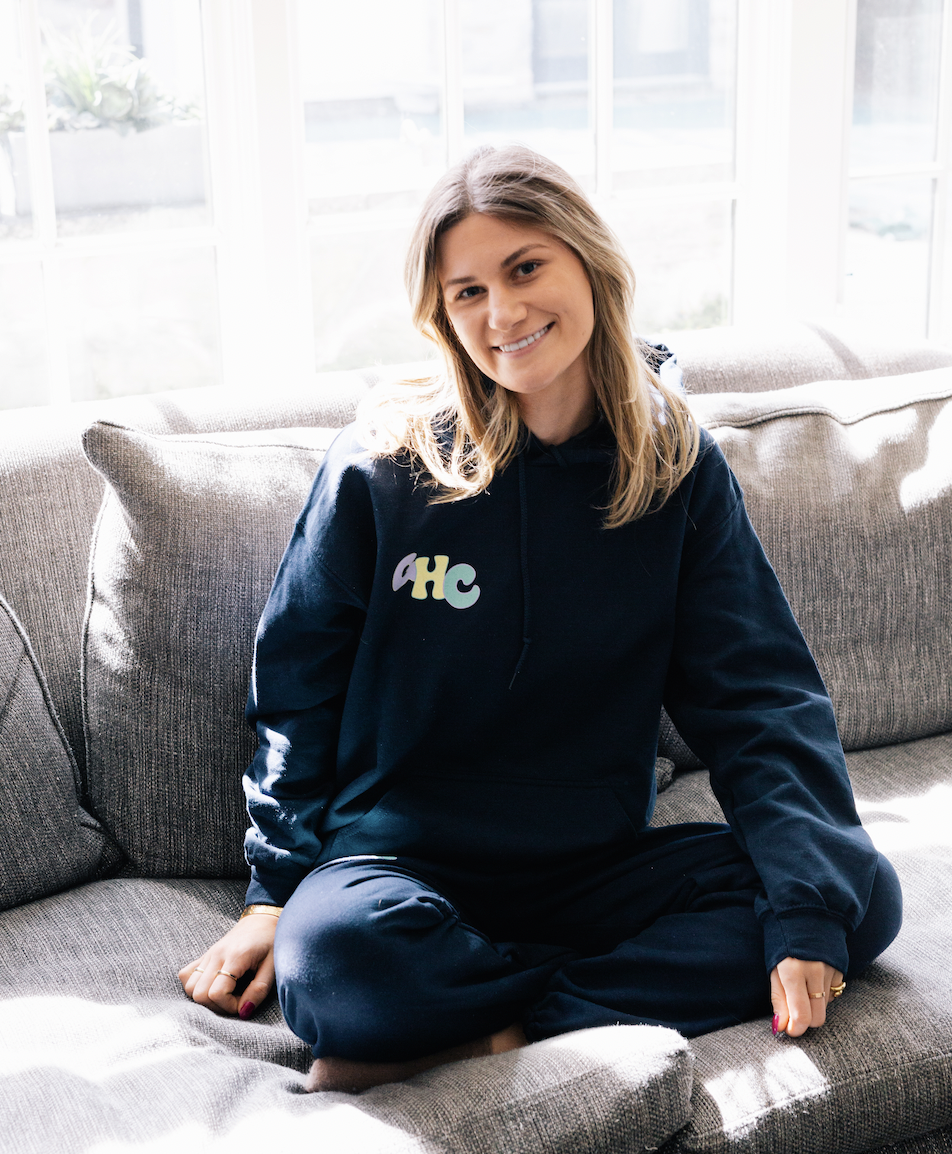
Eloise: Despite being cancer-free for nearly eight years, my journey through survivorship has been far from easy. Cancer continues to influence many areas of my life, both positively and negatively. On a professional level, I have built a career inspired by my experience. The Good Hood Club is a loungewear company that champions childhood cancer care, most notably by donating 50% of its profits to childhood cancer organizations like POGO. Given my journey and fortune with cancer, I constantly seek ways to give back. The Good Hood Club has provided me with a vehicle to do that.
Although cancer is a “distant memory,” the emotional turmoil it sparked is not. Daily, I battle anxiety primarily linked to having had cancer as a teen. This has been an ongoing challenge for me; however, I am committed to finding ways to help me manage it. More abstractly, cancer has taught me many invaluable life lessons. Undoubtedly, my biggest takeaway has been my appreciation and love for life.
Austin: How did you decide to start Good Hood Club as a business and how did you come up with the name?
Eloise: While studying commerce at Queen’s, I took a digital marketing class in my 3rd year. One of the projects required us to create an e-commerce-based business from scratch. While most of our classmates saw this as merely a school project, my group saw it as an opportunity to do something good. My best friend, Chloe, and I wanted to create something meaningful. We thought, “What can we sell that will do good?” Our answer, “Hoods.” We also wanted people to feel part of a more significant community, a club. Hence the name, Good Hood Club.
Austin: What does Good Hood Club mean to you, both on a personal and a professional level?
Eloise: On a professional level, I could not have asked for a better way to dive into the workforce. I have gathered experience across various areas. I have had unparalleled hands-on experience in marketing, operations, strategy, manufacturing, finance...you name it! I am incredibly grateful for the experience Good Hood Club has given me to date. Over time, I hope to watch the company grow, continuing to touch the lives of those battling childhood cancer.
On a personal level, Good Hood Club has been an invaluable healing method. The easiest way to deal with my pain is by transforming it into purpose. Good Hood Club has allowed me to do this, and for that, I am eternally grateful.
Austin: Do you think as a survivor of childhood cancer that there are enough support systems in place to help families and children?
Eloise: I think that there is always room for improvement. However, I am eternally grateful for the help and support I have received over my journey. The childhood cancer community is filled with exceptional individuals who have made invaluable contributions to the community. I would love to see additional resources in the realm of psychosocial support. For me, mental health has been a massive part of my journey with cancer; however, it has not necessarily been a massive part of my care. In my experience, cancer has been just as much a mental health disease as a physical one; yet, it is not treated as such. I hope for a future where both aspects are equally prioritized in cancer care protocols, right from the beginning.
Related Content
Austin: Do you have any advice for young adults that survived childhood cancer that are struggling to find a career that will be fulfilling for them?
Eloise: It is easy to get caught up in what you think you want and should do versus exploring what you truly want and were meant to do. As a business student, I was on a path to a corporate career. I thought that was what I wanted. The second I took the opportunity to try new things and explore, I uncovered newfound passions I wanted to pursue. My advice would be to always experiment and try. Don’t stay committed to one path until you have taken the opportunity to see what else you might want to explore.
Eloise founded Good Hood Club with her university best friend, Chloe, to make their love for hoodies more meaningful and promote comfort during stressful times. 50% of Good Hood earnings go to POGO (Pediatric Oncology Group of Ontario) and their mission to achieve the best childhood cancer care system for children, youth, survivors and their families in Ontario and beyond.
You can find Good Hood at:
Website: https://goodhoodclub.com
Facebook: https://www.facebook.com/goodhoodclub/
Instagram: https://www.instagram.com/goodhood.club/

Austin is an ALL survivor who is interested in music and is an avid drummer. He’s also passionate about giving back to cancer charities that helped him and his family during their cancer journey.

Virtual Learning When You Have ADHD
From the Perspective of a Childhood Cancer Survivor - Leigha Bartholomew

Being a childhood cancer survivor, I know what it is like to fall behind in school. Months of my schooling were spent in a hospital and attending weekly medical appointments. I began to feel overwhelmed thinking I’d never be able to catch up or that I wasn’t doing as well as my peers. It was never expected that I would be at the same level as everyone else while I was going through treatment, at the time I believed I just wasn’t good enough. I’m sure a lot of cancer survivors have felt the same way at one point or another.
I had a similar feeling when post-secondary schools introduced a virtual learning environment in the midst of the pandemic. I started noticing a shift in my capabilities. A new learning atmosphere meant new challenges that I couldn’t adapt to as quickly as I had in the past. Attending classes became more difficult, focusing on work and remembering to finish assignments on time developed into more of an issue than it had been just a few months before, and my motivation to be involved in class discussions decreased. On top of that, I couldn’t bring myself to speak with my professors over Zoom about the challenges that I was facing. It seemed like I was in a rut and I didn’t know how to pull myself out.
My ADHD diagnosis came just a few months after we started learning virtually. While I was familiar with ADHD, I was surprised to learn that I had the disorder myself. Adding this on top of the other issues I had with mental health (I was diagnosed with Generalized Anxiety Disorder in high school) was not something I had even considered, especially so far into my education. If someone were to look at my grades, I bet they wouldn’t have considered it either. Luckily, I didn’t have to go through these challenges all on my own.
Because mental health and learning disabilities pose a challenge for a number of young people, there are resources that have been put into place by schools to help students get through their education. In post-secondary school, there are learning strategists or assistive/adaptive technologists for students seeking academic support. Your academic advisor is also available to help you find programs or services tailored for your specific challenges.
Related Content
Being a childhood cancer survivor can further complicate things. While some survivors may already be predisposed to having mental health and learning challenges, others can develop them due to the treatments they received or other related factors and experiences. These issues can also continue into adolescence and adulthood. Since most people working in pediatric oncology are aware of these challenges, there are specific resources available to survivors and their families. POGO AfterCare Clinic professionals, such as counsellors, art therapists, clinical psychologists and social workers are some of the resources available to help cancer survivors develop strategies related to the difficulties they might be facing with school or everyday life, and POGO School and Work Transitions Counsellors can help you to access these various resources!
My advice to fellow survivors would be to understand that you are not alone if you find yourself struggling. I am sure a lot of people can relate to me when I say that I prefer in-person schooling over the virtual classroom, but that doesn’t mean it’s any less scary having to make the transition. If my own experiences have taught me anything, it’s that everyone has a different style of learning. If you need help, reach out. No matter how difficult things might seem, there are always people and programs available to students and survivors if they need help.
Boxing for Mental Health
18-year-old Isla MacIntosh discusses how boxing helps her cope with her mental stressors

Taneisha: Can you tell me a little bit about yourself and your experience with childhood cancer?
Isla: I was diagnosed with leukemia when I was four years old and have been in remission since the age of seven. I work at a golf course in Ottawa and I just finished my first year in the Behavioural Science Program at St. Lawrence College.
Taneisha: Other than your family, does anyone else know about your diagnosis? Did you have to miss any school due to your cancer and its treatment?
Isla: My parents mentioned it to people they knew and our surrounding neighbours and, of course, my school knew. I missed kindergarten entirely so my first year attending school in person was in Grade 1. Everyone was very supportive.
Taneisha: Do you feel you continue to get the support you need?
Isla: My sister has done everything she could to support me ever since I was young. She pretty much gave up her childhood because of me. In my early teens, I realized how big my diagnosis really was, and I needed to find an outlet to relieve stress. At 14, boxing became that outlet. My whole family is supportive of my boxing.
Taneisha: How did you discover boxing?
Isla: I found this youth recreational boxing class in Ottawa where I grew up. The coach was the first female boxing coach. She was a big inspiration to me because she had cancer so I felt that I could relate to her. She also helped me find a great boxing school when I started going to school in Kingston. Now I train 3-4 days in person and on the other days, I do dryland training. Dryland training means conditioning, running, weights and other strength activities.
Taneisha: How did boxing help you with your mental health stressors and how did it help you get through your first year of college?
Isla: When I moved away for school in Kingston, I found a safe place for boxing with nice people, which helped me not worry as much about school. Boxing is very technical. When you are in the middle of it, you have to focus on boxing and nothing else. It takes you out of any stressful situation you might feel you are in.
Taneisha: What are your goals—both for boxing and your education?
Isla: I like to compete so my goal for boxing would be to go to nationals. My goal for school is to find a full-time job that relates to behavioural science.
Taneisha: Do you have any advice for other childhood cancer survivors who are going through something similar to what you are going through?
Isla: My advice would be to find an outlet that is important to you, especially if you are older and there are external pressures. It could be sports, music or something else. An outlet can be a safe place for you to express yourself.
 Taneisha Kandiah was diagnosed with leukemia when she was 18 months old. She has been in remission since the age of three. She recently graduated from the University of Ottawa in life sciences.
Creative Corner with Holly
Holly Bokor's Port Illustration
 Port is part of a triptych* of self-portraits about my memories from when I had cancer at age 14. A lot of medical experiences and journeys can result in feeling dehumanized, objectified. Port focuses on the wires and tools, with no identifying features of the figure. The background contains scans of old documentation from my own treatment. Though it’s a drawing of myself, the sense of identity is purposefully removed. It reflects my feelings of emotional detachment. Essentially, it’s an attempt to capture that strange dissociation that occurred while I was in treatment.
*Artwork made up of three pieces or panels
Holly is a recent graduate of Seneca College's illustration program. They find solace in expressing thoughts through line. You can find more of their work at congercine.com.
Patients and families tell their stories through their eyes
To quote Brené Brown, “Maybe stories are just data with a soul.” It is POGO’s hope that everyone who engages with these stories will learn something new about the childhood cancer experience, by seeing it through the eyes of patients and their families.
Ethan’s Story
Ethan was six years old when he was diagnosed with medulloblastoma, sub category 3.
Today, Ethan is 10 years old and in this story he draws on his love of video games to talk about overcoming obstacles, forging new paths, and appreciating what makes him and others unique.
Layya’s Story
This story is a poignant reminder of the impact that a childhood cancer diagnosis has on the entire family unit, in particular, siblings. Layya talks about the confusion and pain she felt watching from the sidelines as her sister, Sara, went through treatment for a brain tumour.
Sara’s Story
Sara is Layya’s sister. She was diagnosed with low-grade astrocytoma when she was seven years old. What followed was a harrowing journey that moved her family from their home in Lebanon to Canada to seek treatment, which was difficult for the entire family. The hardest part of the journey for Sara, though, came after she was declared "cancer-free," which is an experience shared by many survivors. Reintegrating into school and relating to her peers were tremendous challenges at first. Yet Sara perseveres, and her story is a powerful reminder that even small acts of kindness can make all the difference in the lives of a child with cancer.
Yvonne’s Story
Yvonne is mother to Alyssa. This story describes Yvonne’s early experiences with the healthcare system as she searched for an answer to what was ailing her child. A mother’s intuition is a powerful thing, and Yvonne knew something was terribly wrong. Instead of support, she encountered suspicion, judgment and worse.
This story delivers a message that is hard to hear, but one that we can all learn from. It is not about any one institution, but rather highlights inequities in the healthcare system at large that will only be corrected when we collectively acknowledge and address them. POGO shares this story in the spirit of learning together to help us all be positive agents of change.
Nelly’s Story
Nelly was diagnosed with medulloblastoma when she was 10 years old, which significantly affected her vision. She was in the dark—literally and figuratively—and felt so hopeless at times that she didn’t see the point of engaging with the world around her. Nelly’s story reminds us how disorienting a cancer diagnosis can be for a child, and how resilient children can be in the face of challenging circumstances.
The Ups and Downs of Disclosing That You Are a Childhood Cancer Survivor

Jessica Wright is a brain tumour survivor. In 2018, after an application process, she was selected as one of four Survivor to Survivor (S2S) Network Presenters. POGO’s S2S Network is a special series of interactive sessions where survivors present helpful information, lead discussions and share personal experiences about a variety of survivorship topics. During the course of their engagement, presenters build skills, a connection and a community with fellow survivors.
By Jessica Wright
By the time I was 10 years old, I was having lots of migraines and struggling at school.
My family brought me to the doctor several times, but I wasn’t diagnosed until my teacher—a childhood cancer survivor herself—convinced my parents to insist I get an MRI. I remember all of us were in shock when they told us I had a pilocytic astrocytoma tumour, which is essentially a slow growing brain tumour.
The tumour is smack in the middle of my brain so chemo would not have been effective, and surgery was not an option. I was treated with radiation for six weeks, but I still live with the tumour today; I liken it to a dead mouse behind a wall. I also live with several side effects. I struggle with balance; I move a bit slower than the average person and my strength is very poor. I have a strong sensitivity to smells and I still suffer from migraines. I am also blind in one eye. None of these things are significantly noticeable so I blend in with the rest of the world and look like a healthy person. That’s the thing with childhood cancer survivors; many of us live with disabilities long after we survived our illness. For some people, like me, these disabilities are invisible so we can be perceived as lazy, especially in a school or work environment.
Sign up for the The POGO School and Work Transitions Program newsletter
That is why I am so grateful to POGO for creating a program where survivors can learn from each other about how to deal with things like employment, school, advocacy and disclosure. I need special accommodations to compensate for my disabilities and I have learned firsthand that how and when you choose to disclose these things can contribute to your success at work.
There was the time I was hired to work at a store, and I chose not to disclose my disability. My job was to stock the shelves and set up for the store’s grand opening, after which, perhaps, I would be hired permanently once the store opened. It went well for the first couple of days until I got stuck in the aisle with cleaning products. I tried to tough it out, but I got light-headed and felt faint. I asked my supervisor if I could be moved to another area of the store and she was accommodating, but my co-workers didn’t know why; they just felt I was getting special treatment. I think if I had said something at the beginning, I would never have been put in that aisle to begin with and maybe things would have turned out differently.
I have another story where I disclosed my disabilities during the hiring process because part of my job was going to be accepting deliveries. I let them know that I cannot manage with very heavy lifting and about some of my other challenges because of my brain tumour. My supervisor was very understanding and even supportive. After a few weeks, when she saw me struggling at the end of a long day, she asked if I wanted to work shorter shifts. She tried to work around my limitations as best she could.
Being a POGO S2S facilitator has enabled me to share my experiences with other survivors and hopefully help them cope with their own struggles. It has also been very uplifting and empowering for me. Everyone understands what I am going through. No matter what I say or what I do, they don’t judge me, and they don’t complain. I have never been anywhere where I felt so accepted. It has truly been the best experience of my life.
This story was featured in POGO’s 2019 Community Impact Report.
Welcome to our New Corporate Partner
We are thrilled to announce that in November 2022, Desjardins made a three-year commitment of $90,000 to POGO. Together, we are transforming the cancer journey for children, youth, survivors, and their families in Ontario and beyond.
As a financial cooperative group committed to empowering people and communities, Desjardins recognizes the socioeconomic toll childhood cancer treatment has on our families.

How the Germ of an Idea Spread in a Community
 By: Dr. Jodi Rosner
The idea for the Kitchener Kids with Cancer Run/Walk came to me while I was running in my first half marathon in 2013. These races can be very inspirational. There are people cheering at the side of the road encouraging the runners with signs like, “Smile if you don’t have underwear on” and “The pain goes away, but electronic results last forever.” Although these signs put a smile on my face, my personal reasons for completing the race were all the memories of the kids I have been blessed to meet in my role as a pediatric oncologist at Grand River Hospital. If they could endure what we put them through when they are fighting cancer, then surely I could make it to the end. The idea to organize a race to raise money for children with cancer came to me that day, growing with each kilometre, and by the time I crossed the finish line, I had the beginning of a plan.
In 2014, the first Kitchener Kids with Cancer Run/Walk took place at the back of the hospital in the doctors’ parking lot. We had about 135 participants and we raised $17,000 in support of POGO and the services they provide to our young patients and their families. We thought this was a great success. Little did we know that this race would grow to be a huge event, touching the lives of many in the community.
We have since outgrown the hospital parking lot. The race now takes place at the Waterloo Region Museum, attracting close to 600 participants. To date, we have raised over $350,000 for POGO. It is incredible to see how a community can come together to fight for such a great cause. This race has turned into a way to support the kids who are currently fighting cancer and to remember those who have lost their battle. I am thankful to all of the families that I have had the pleasure of caring for and for the wonderful committee members who are the real reason that this race is such a success.
The 2022 Kitchener Kids with Cancer run takes place on Sunday, September 11. Everyone is welcome and we look forward to seeing you all there. Learn more at www.kwrunforpogo.com
In 2018, Dr. Rosner was recognized as a valued partner with a Friends of POGO Award. Learn more.
Counselling Programs Help Cancer Survivor Navigate His Career Path
Dirk Noyahr was always proud of the university degree he earned but it took him a long time to come to terms with the one he didn’t. Today, at 26, Dirk is feeling better about his choices. He got there thanks to members of the healthcare team caring for him as a survivor of childhood cancer who referred him to two distinct counselling programs, enabled by POGO.
Dirk was diagnosed with brain cancer—medulloblastoma—at the age of 17.
“I was in what was supposed to be my last year in high school and, instead, I ended up undergoing treatment for cancer.”
Dirk had surgery to remove the tumour and was also treated with radiation therapy and chemotherapy. Throughout his treatment, Dirk was home schooled and gained enough credits to graduate on time.
“I didn’t have the prerequisites I needed to get into a science program like I wanted, so I applied for psychology and spent the first year of university taking the courses I needed to switch.”
However, school wasn’t as easy as it was before.
“I struggled with memory, multi-tasking and focus. Still, in 2018 I graduated with a degree in biochemistry from York University and soon after was accepted into the radiation therapy program at the University of Toronto, a joint program with the Michener Institute of Education at University Health Network.
I picked the radiation program because, as a cancer survivor, I felt I could be supportive to other patients going through the same thing. I just wasn’t sure if it was the right choice for me. I was also processing my own and my parents’ thoughts and feelings about the time and money I had already spent obtaining a biochemistry degree.
Luckily, it was at this time when I met Barb, my POGO School and Work Transitions Counsellor.
I was at one of my annual appointments at the POGO AfterCare Clinic at Princess Margaret Cancer Centre. I had been discussing some anxiety about my new career path and the POGO School and Work Transitions Program was recommended to me.
Barb helped me conclude that it was okay for me to have this newfound aspiration, and she was instrumental in helping me win a $5000 scholarship for childhood cancer survivors to pursue it.”
Then an unfortunate and unexpected situation happened during Dirk’s clinical practicum.
“I felt the trauma of treatment come back to haunt me. I was reserved and had trouble interacting with patients and other therapists. The school requested I take a break until January 2020 with the stipulation that I get support to help me manage.
Barb attended meetings with me at the university and facilitated letters to help in the adjudication process. She acted as a sounding board throughout. She also arranged for me to defer my scholarship until my return to classes.
When I returned to school, things were going well until my last year, during my placement. It was only then, doing the job, that I realized what it was truly like and I found it wasn’t right for me. There was too much loud talking, shouting out numbers and instructions, and working at a fast pace while making sure everything was accurate; this just didn't suit me after my cancer diagnosis. As someone who likes to take his time, not make quick decisions that can literally harm patients if I get the decision wrong, I just could not see myself doing this full time until I retired.”
Dirk’s career path to radiation therapy changed around the same time that the pandemic turned everyone’s world upside down. He found new pursuits; one of them was drawing on a latent interest in technology. Through online instructional videos, he began learning about web development and programming his own web applications.
“I didn’t pursue this before because I always felt pressured to go into healthcare—maybe because of my desire to give something back based on my diagnosis and survival. Then, I was on a virtual appointment with a nurse practitioner in my POGO AfterCare Clinic. I told her about my feelings related to the change in my career path and she referred me to the Canadian Cancer Society’s (CCS) Pediatric Family Counselling Program at Princess Margaret Cancer Centre.”
In keeping with POGO’s Childhood Cancer Care Plan goals to address the growing need for psychosocial services, POGO facilitated bringing the CCS pilot program to a POGO AfterCare Clinic to help survivors manage the impact of cancer on themselves or their family. The program complements the excellent personal care survivors receive in the POGO AfterCare Program by providing individual, private and confidential counselling to address ongoing needs or challenges. The program follows a brief therapy model, which is time-limited and focuses on the client’s presenting symptoms and current life circumstances. It emphasizes the strengths and resources of the client.
Through his CCS counsellor and Barb’s ongoing support, Dirk has come to realize some important things about moving on from radiation therapy.
“Before counselling I felt scared about leaving the comfort zone of a career I was pursuing for three years of my life. I feel more confident now. I know nothing in life is easy. I have to work to get to where I want to be in the tech field. I also now see that healthcare is not the only way to help other cancer survivors; maybe there’s a way to help through this growing field of tech. Thanks to the resources of my CCS counsellor and my POGO Counsellor, I feel like I can be successful. I know I’m on a good path.”
 Dirk has added the title of Presenter in the POGO Survivor to Survivor (S2S) Network to his list of achievements. In 2022, he will be leading presentations for other childhood cancer survivors on self-advocacy, something he has learned through trial and error over the years. Dirk sees his S2S presentations as another way he can give back to others and share some of his knowledge and life experiences after treatment so it can help others in a similar situation.