Advancing Childhood Cancer Care in a Post-COVID World
A Synopsis of the 2021 POGO Multidisciplinary Symposium on Childhood Cancer
The COVID-19 pandemic has healthcare providers and the families in our care literally hiding emotions behind masks. Family members cannot fully see the empathy we feel, and as providers, we are unable to use our traditional methods of providing compassionate care. Over the past 18 months, families have had to live their cancer journey in parallel with a global pandemic requiring multiple restrictions to hospital visits, with additional screening and COVID-19 testing. This has elevated levels of distress and burnout for families and hospital care teams alike. Recognizing this, the 2021 POGO Symposium planning committee sought to explore the issues of patient and caregiver distress and resilience, as well as healthcare provider burnout. As part of maintaining professional resiliency beyond the acuteness of COVID-19, the POGO Symposium provided an opportunity to learn about important clinical and diagnostic updates, and continued healthcare and scientific innovation.
Family Stories Remind of our Purpose
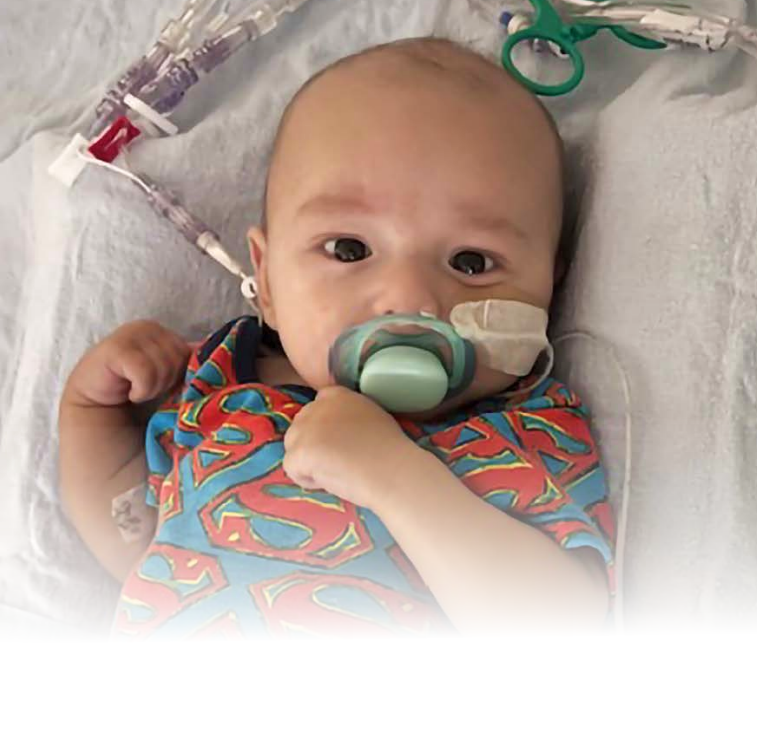
A parent testimonial opened day one and grounded us as pediatric oncology professionals in the “why” of our work. In sharing about her 14-year-old daughter’s cancer diagnoses, Guylaine Tremblay touched on the importance of psychosocial supports for all family members. On day two, the Saenz family gave real-life context to the challenge of accessing clinical trials that so many families face. These stories were powerful reminders of the impact a childhood cancer diagnosis has on the family and how the pediatric oncology community must better understand these needs and provide comprehensive and personalized support.
Care for Caregivers of all Stripes
When it comes to caregiver resilience after their child is diagnosed with cancer, we heard that 80% of families will adapt and be resilient based on our standardly-delivered supports and strategies. Of critical importance is finding a way to identify the remaining 20% who will need intensive psychosocial and possibly psychiatric support, and to ensure there are suitable professionals available for referral and intervention. Healthcare teams must also make room for self-compassion in our stressful and often chaotic work days, as we try to leverage available resources to assist families who require extra support.
Delivering Virtual Care to Survivors
The COVID-19 pandemic has also dramatically altered the way we deliver care, and especially aftercare to survivors, with the rapid implementation of virtual care. We learned what can be done well, what was of benefit to patients and families and what could be successfully carried forward in a post-pandemic world. New and innovative approaches to follow-up care include recognizing unique needs tied to the transition from acute care to survivorship clinics.
Clinical and Diagnostic Advances Bring New Hope
Of course new innovations in childhood cancer continue to emerge, and presentations on clinical and diagnostic advances added greatly to our learning. Work in the area of immune checkpoint inhibitors shows great success in treating Hodgkin lymphoma and promise for other diagnoses. It was exciting to hear about updates on CAR T for both B-cell leukemias and acute myeloid leukemia (AML), one of the more difficult childhood cancers to treat. This brings signs of hope for improved outcomes with less toxic therapy approaches. Potentially ground-breaking work in liquid biopsy allows us to imagine a world where we no longer need invasive, surgical intervention to detect cancer both at diagnosis and during cancer surveillance.
Innovation Panel Explores Strategies for Canada
The POGO Symposium wrapped up with a slate of presentations and a panel discussion with luminaries in the field that tackled everything from innovative solutions to improve clinical trial access to how Canada can develop an innovation strategy that serves patients and the economy. The message that innovation is not only invention but the successful development and implementation of these inventions was very strong. This session also highlighted our collective challenge to make available new and often expensive therapies. The discussion presented the opportunity for all of us to consider how we can individually and in partnership move the needle on public policy for advances in pediatric cancer.
With something of interest for everyone, the 2021 POGO Symposium showcased the bravery of families to help us all learn from their stories and the tremendous dedication of professionals who continue to do everything possible to provide excellent care to every child diagnosed with cancer. My hope is that we were all encouraged to heed the challenge of harnessing innovation to transform the landscape of pediatric oncology care.
“Even during the most chaotic day it is important to take a moment to breathe and remember why we chose this very important work, and to be present with our patients and families.”
- Sue Zupanec

Written by Sue Zupanec, co-chair of the 2021 POGO Symposium Planning Committee, with contributions from her co-chair, Dr. David Hodgson, POGO Medical Director and Chair in Childhood Cancer Control.
Sue is a pediatric nurse practitioner in the Leukemia and Lymphoma Program at The Hospital for Sick Children, and Chair, Nursing Discipline of the Children's Oncology Group.

Family Pays it Forward with Pajamas and Pancakes Event
The Welke family put on their PJs, turned up the griddle and opened their home to the community in Stayner, Ontario, to raise funds for POGO. The event was in honour of their daughter Gwendolyn who was five years cancer-free!
 POGO helped us when Gwendolyn was diagnosed with an adrenal cortical carcinoma—they provided us with financial assistance when we had to travel to Toronto, and because of the POGO Satellite Clinic in Orillia (Soldiers’ Memorial Hospital), we were able to stay closer to home for some of her treatment. Without the Clinic and financial support, I don’t know how we would have made it through.
When we received the notice in the mail about Pajamas and Pancakes, I turned to my husband and said, “Why don’t we do a small event with our friends and family to raise money for other families going through treatment?”
Want to host your own Pajamas and Pancakes event? We’re here to help! Learn more here.
Our original goal was $1,000 and we thought even that was crazy, but things really took off. I sent print and Facebook invitations to our personal contacts and families who we met at the Orillia Clinic. When a local real estate agency heard about our event, they asked us if we wanted them to advertise for us, so we ended up opening it to the public. We offered coffee, juice, sausages, three pancakes and a topping bar full of whipped topping, chocolate chips and Skor pieces for a minimum donation of $5. We also had a silent auction with a good variety of items donated from friends and family with home businesses.
In the end, over 100 people came through the house, many who we had never met before, and we raised $3,000 for POGO families! I think it was impactful for our guests to meet parents and kids who have been through treatment and benefitted from POGO—they could see exactly where the money would be going.
Gwendolyn had an amazing time. Without fundraising like this, families would not receive the help they need during one of the most stressful times of their lives. It is important to give back. And who doesn’t like pancakes!?!
By Melissa Welke
Editor's Note: This event took place in 2019 prior to the COVID-19 pandemic.
In Conversation with Dr. David Hodgson: A Progress Report of His First Five Years
And Looking Ahead to His Next Five as POGO Medical Director and Chair in Childhood Cancer Control
In November 2021, Dr. David Hodgson (DH) began a second five-year term as POGO Medical Director and Chair in Childhood Cancer Control at the University of Toronto. In conversation, he shares highlights of his very productive first term, 2016 – 2021.
Q: Data-driven quality improvement is one of the five goals of POGO’s Childhood Cancer Care Plan. What initiatives have you undertaken to tackle this pressing priority?
DH: Well, for POGO to drive forward improvements in the childhood cancer system, we need to listen to our clinical partners and families to understand what the needs are, help develop and improve programs that meet those needs, and measure how well we are doing in that mission.
I felt that while POGONIS and our other data holdings are among POGO’s strengths, they were underutilized. So, over the last five years, we published and made available significantly more childhood cancer data to help clinical stakeholders and researchers understand the current state of childhood cancer in Ontario.
POGONIS is POGO’s active cancer registry initiated over 30 years ago to capture diagnosis, treatment and outcome data for children treated at the five specialized childhood cancer programs in Ontario.
We’ve also taken steps to strengthen data quality by implementing automated quality checks to immediately identify possible errors.
POGO produced two provincial childhood cancer surveillance reports (2018 and 2020) making Ontario the only province to publish searchable data regarding the incidence, prevalence and outcome of childhood cancer for different childhood cancer subtypes. In 2020, we saw the first-ever inclusion of POGONIS-derived childhood cancer statistics in the Ontario Cancer Statistics report, and we contributed to the national Cancer in Young People in Canada (CYP-C) Data Tool.
For hospitals, we provided the first POGO Quality Indicators Report, which allowed them to see information such as the type of cancers they care for, wait times and clinical outcomes compared to the province as a whole.
As a result of this work, data is much more available to hospitals, system planners and researchers to undertake activities such as assessing the feasibility of conducting a research study, or understanding the provincial patterns and trends of childhood cancer so the system can be prepared for the future.
Q: What other improvements have been made to POGO’s data?
DH: We have improved the data for specific POGO programs to ensure they are serving children with cancer and survivors in the best way possible. For over 20 years POGO has managed a long-term follow-up program for survivors of childhood cancer through the POGO AfterCare Program delivered in seven clinics across Ontario. We worked with these clinics to update the data collected so that we can assess the impact that these clinics have on survivor care and inform continuous improvement.
Q: Looking ahead, what are your plans for further improvements in data-driven quality?
DH: It is important that we continually work with our clinical and research partners to ensure that we are facilitating their work. Now that we have made these changes to our data collection and reporting, we have to be sure that we are not just collecting data for its own sake. We want to be able to inform clinical programs and research that have a clear path to improving the outcome for children with cancer. This means building collaborations that enhance the clinical and policy relevance of our data.
One great example is the work that the POGO analytics team and our Technology Advisory Committee is doing with Dr. Pechlivanoglou at SickKids to facilitate access to innovative new treatments for children with cancer by developing policy advice for government. This work involves input of clinical experts, access to high-quality data and analytic expertise, and an understanding of the regulatory environment. Any one of these on its own would not be enough, but working together with our clinical and research partners across Ontario, we can make progress that would not be possible without bringing together all the pieces of the puzzle.
I would also like to increase the utility and variety of data holdings we can use and make available to others, and redesign the POGO Research Unit to better support the deliverables of our Childhood Cancer Care Plan.
Q. Survivorship is near and dear to your heart. Tell us about your future focus for the POGO AfterCare Program for childhood cancer survivors.
DH: The POGO AfterCare Program was formally established in 2001 with clinical collaboration of seven clinics throughout Ontario. Developed at a time when few survivors were receiving adequate follow-up care, the initial strategy was to recall and retain as many survivors as possible. More recently, we have worked to integrate the concept of “right care in the right place” into the model of AfterCare.
We recognize that during treatment, POGO Satellite Clinics can provide excellent care for selected patients and problems without requiring the patients to travel to their primary treating hospital. The same can be true for AfterCare. Very few of the tests required by survivors are so high-tech that they need to be done in the primary treating hospital. But the major challenge is ensuring that we can provide the multidisciplinary care that some survivors need, particularly access to mental health supports, which I think are in very short supply. My goals are to ensure survivors with the highest risk for complications are able to access the clinics and receive care appropriate to their situation, and develop a sustainable strategy that better incorporates patients’ primary care providers so that the ever-growing number of survivors have sustained access to appropriate care.
Related Content
 In addition to his role as POGO Medical Director and POGO Chair in Childhood Cancer Control at University of Toronto, Dr. David Hodgson is also a radiation oncologist at Princess Margaret Cancer Centre with a cross-appointment to the Division of Hematology/Oncology at The Hospital for Sick Children. He is a professor in the Department of Radiation Oncology at the University of Toronto. He was first appointed as POGO Chair in Childhood Cancer and Medical Director in November 2016. Read his bio
Dr. Hodgson Reappointed as POGO Medical Director and Chair in Childhood Cancer Control
Pediatric Oncology Group of Ontario is delighted to announce the reappointment of Dr. David Hodgson as POGO Medical Director and the POGO Chair in Childhood Cancer Control at the University of Toronto. He began his second five-year term in November 2021 after a very productive first term (2016–2021).
Dr. Hodgson’s stellar accomplishments, expertise and experience in the care of children with malignant disease and pediatric cancer control have strengthened POGO’s many efforts to champion childhood cancer control and POGO’s mandate to advance pediatric cancer care and control in Ontario and internationally.
Dr. Hodgson is an internationally-recognized pediatric radiation oncologist who has made significant clinical and research contributions through his role at SickKids and his work at Princess Margaret Cancer Centre where he is the Site Group Lead for Pediatrics in the Department of Radiation Oncology and the Director of POGO’s Adult Pediatric AfterCare Clinic. He is a Professor in the Departments of Radiation Oncology, and Health Policy Management and Evaluation at the University of Toronto. In addition to practicing radiation oncology in the lymphoma and pediatric site groups at the Princess Margaret Cancer Centre, Dr. Hodgson serves on the Hodgkin Lymphoma Steering Committee of the Children’s Oncology Group and as a member of the Childhood Cancer Survivorship (CCSS) External Advisory Board. He is the author of over 100 manuscripts in the field of lymphoma and long-term survivorship, and his work has been cited in publications in five languages, including the NIH President’s Cancer Panel Report, and the Strategic Plans of the Department of Veterans Affairs and the UK National Health Service.
POGO created the linked position of POGO Chair in Childhood Cancer Control and Medical Director in 2000 so that Ontario would always have dedicated, seasoned, visionary leadership to ensure a well-integrated, evidence-based cancer delivery system for children with malignant disease. POGO works collaboratively with all stakeholders to implement this vision, generating successive long-range childhood cancer care plans that have, over many years, greatly enhanced Ontario’s childhood cancer care system.
POGO believes the Chair and Medical Director must lead with extraordinary wisdom and charisma to achieve informed and whole-hearted consensus among providers, hospitals and other key stakeholders. Dr. Hodgson brings to POGO tables not only an academic outlook, clinical acumen and a unique grasp of research, education and healthcare delivery savvy, but also the rare ability to ignite a passion to work on behalf of the population and to inspire collaboration. Dr. Hodgson holds the central role in POGO’s medical directorate—responsible for maintaining the keen interest and participation of the professional pediatric oncology community in endeavours that ensure a continuing state-of-the-art system.
Dr. Hodgson reports on his first five years and plans for his next five.
Nurse Practitioner is POGO’s Provincial Lead in Pediatric Oncology Nursing
Denise Mills is a Master of Nursing, Pediatric Acute Care Nurse Practitioner, who began her nursing career over 20 years ago. She is one of those rare people with a true passion for what she does. In fact, when asked about her work, she says, “it’s a privilege to care for a child with cancer.” More than likely, it is this enthusiasm and her significant training, experience and expertise that, in 2018, led to Denise being chosen as POGO’s provincial clinical lead in pediatric oncology nursing.
Denise’s strong interest in multidisciplinary pediatric oncology education ensures the nursing perspective informs all aspects of POGO’s work in system planning, service delivery, quality improvement, education and research.
“I am proud of the work I have been able to participate in at POGO that contributes to our mission,” Denise says. “This includes partnering with Camp Oochigeas to host a retreat for pediatric oncology healthcare professionals across the province to share and learn about resilience; and bringing the nursing voice to POGO’s organizational strategy, programs and work on clinical practice guidelines as a member of POGO’s supportive care committee. I am also humbled to work closely with the POGO Interlink Nurses across Ontario who care for and support patients, and their families, throughout their cancer journey.”
Since her first introduction to POGO in the mid-1990s, Denise has been an avid member of several POGO committees and contributor to many POGO initiatives. She has been actively involved in the planning committees of several POGO multidisciplinary symposia on childhood cancer, including the 2018 Pre-Symposium Nursing Seminar, and has been a member of the POGO Board of Directors. Denise now co-chairs the POGO Nursing Committee with Brennah Holley, a nurse educator at CHEO. In 2020, the Nursing Committee presented two webinars: Supporting Children through COVID-19 and Good Grief! Fostering Healthy Grief in Ourselves and Those We Support.
Denise’s research interest is in patient/family education and she is a recipient of a POGO Seed Grant that funded her published study (2021) Improving Quality and Consistency in Family Education Prior to First Discharge Following a Pediatric Cancer Diagnosis. Denise has contributed to quality improvement and innovation projects, she sits on many prestigious committees, including the Children’s Oncology Group’s (COG) Nursing Steering Committee as the chair of the education sub-committee, and is a protocol nurse for the COG Neuroblastoma and Renal Committee. She has addressed delegates at numerous conferences, contributed countless poster presentations globally and is a member of several professional associations.

Denise Mills is seconded to POGO (two days a week) from McMaster Children’s Hospital, Hamilton Health Sciences Centre where she works as a Nurse Practitioner in the division of Hematology and Oncology.
LifeLabs and POGO: More than a Corporate Partnership
From our first meeting with LifeLabs, we knew we were entering into a relationship that would go beyond the typical corporate sponsorship, but we had no idea how rich the collaboration would turn out to be.
In August 2017, LifeLabs pledged $200,000 to POGO, becoming the "Proud Partner” of our Pajamas and Pancakes fundraising campaign. Over the past four years, that pledge has turned into a total of $276,149.83 (to date!), and our relationship with LifeLabs and its employees has evolved and grown greatly over that time. Together, we are improving patient care and transforming the cancer journey for children, youth, their families and survivors in Ontario and beyond.
Raising Funds and Building Awareness
LifeLabs’ endorsement of POGO’s Pajamas and Pancakes Program, a fun and flexible do-it-yourself fundraiser, has not only helped POGO raise more than $276K over the years (including fundraising campaigns generated from their own staff!), but also involved a widespread advertising campaign on GO trains and other media across the GTA to help raise awareness about the program and childhood cancer.
Their annual investment in the POGO Multidisciplinary Symposium has helped our healthcare professionals remain at the forefront of the rapidly advancing field of pediatric oncology.
Supporting Families
As an organization that has been committed to building a healthier Canada for over 50 years, LifeLabs understands the toll cancer treatment can take on our families. In 2019, together with London Health Sciences Centre, we piloted a drop-in blood collection program at select LifeLabs service centres to make it easier for families with children fighting cancer to access lab testing that is required to inform treatment decisions. Lab results were available within 12 hours, saving families both time and money.
“We know that when LifeLabs and its employees contribute to POGO, we are helping children and families access the best available care and supportive services during a very difficult time,” says Charles Brown, President and CEO, LifeLabs. “One of LifeLabs’ core values is caring and our employees live that value by supporting incredible organizations in communities across Canada every day.”
Getting Involved

Whether they are attending POGO events or volunteering at community events to benefit our families across Ontario, LifeLabs’ employees go the extra mile. In 2019, the LifeLabs’ Sudbury Fun Day held at the POGO Satellite Clinic in the Northeast Cancer Centre brought games, crafts, PJs, gift cards and smiles to over 30 families in treatment. This year, 81 employees signed up for the Toronto Women’s Run with all funds raised benefitting POGO and the families we serve.
At POGO, we value our partnerships and we are inspired by our passionate donors who share our vision. Thank you LifeLabs!
Written by Lynn Wilson, POGO’s Chief Development Officer responsible for the planning and management of POGO’s fundraising, communications and government engagement initiatives.
Support from LifeLabs has helped provide financial assistance to families so they can pay for out-of-pocket costs associated with their child’s treatment, support survivors with customized school and work counselling when their disease or its treatment has left them with learning challenges, and fund promising research that examines the impact of childhood cancer and its treatment.
Music heals and can change your life
Ten years ago, I was diagnosed with a papillary brain tumour of the pineal region. I went through three surgeries, a lumbar puncture and thirty treatments of radiation at CHEO and SickKids. I am 21 now.
Since I was young, music has been important in my life. When I was in the hospital for cancer treatment, I would associate different doctors, nurses and family members with songs. I also sang to help me through tough times. In fact, when I woke from the third surgery, my family and doctors were surprised to find me singing!
And it’s not just me. Neurological researchers have found that music reduces the stress hormone cortisol. It releases dopamine and serotonin into the brain, helping you relax and stay focused. And it stimulates oxytocin—a hormone related to positive, happy feelings. Studies have also shown that music can help people process their feelings and change their mood completely.
Try it yourself! When someone you know is in a bad mood, try playing one of their favourite songs to see how they react. It might seem like a small thing, but as mentioned above, music can improve your mood and your whole outlook.
Written by Ariane Delorme
Mon nom c’est Ariane Delorme et dix ans passés, j’ai été diagnostiqué avec une tumeur cérébrale papillaire de la région pinéale. J’ai dû subir trois chirurgies majeures, une ponction lombaire, et trente traitements de radiations à CHEO et à Sick Kids. J’ai vingt et un maintenant.
Depuis un jeune âge, la musique est devenu très importante pour ma vie. Lorsque je me retrouvais à l’hôpital pour mes traitements, j’associais des chansons aux docteurs, infirmières et membres de ma famille. Je chantais aussi pour m’aider à passer au travers des temps difficiles. Je me suis même réveillé de la troisième chirurgie en chantant! Ceci a laissé mes docteurs ainsi que ma famille surpris.
Ce n’est pas seulement moi. Les recherches en neurologie ont découvert que la musique réduit le cortisol, qui est un hormone de stress. Ça relâche la dopamine et la sérotonine dans le cerveau, qui aident à se détendre et rester concentrer. Ça stimule aussi l'ocytocine. Une hormone reliée aux pensées et sentiments positifs. Les études ont aussi montré que la musique peut changer l'humeur complètement des gens.
Essaie toi-même! Lorsque quelqu’un vous connaissez est pas dans la meilleure humeur, essais de jouer l’une de leurs chansons préféré pour voir comment ils réagissent. Ça semble peut-être comme rien, mais comme mentionné ci-dessus, la musique peut améliorer votre humeur et votre perspective.
Écrit par Ariane Delorme

Returning to School after a Cancer Diagnosis? Ask for Help!
Written by: Tulsi Kapadia
The transition to return to school can be exceptionally difficult after a long period of cancer treatment. I experienced this firsthand. I was diagnosed with cancer early in Grade 7, which caused me to miss eight of the ten months in that school year and much of the next because I was still on active treatment. It was challenging to manage my health and academics simultaneously, but I found that there were a few things that made school a bit easier.
If you’re anything like me, you don’t like to get “special treatment.” However, it is warranted sometimes and I recommend you try doing everything you can to make your school life less difficult. Here are some of my tips to make the transition easier, especially if you’re in middle school or high school.

Count on your friends
One thing I found very challenging after my return to school was my social life. Before diagnosis, my main way of socializing was with friends at school. But when I returned to the classroom the following year, I hardly knew anyone. I requested the school transfer one of my close friends into my class which made the school year significantly more manageable for me. I had someone I could talk with; he introduced me to other people which helped me build my social skills. Also, if I ever fell behind on schoolwork, I could rely on my friend to catch me up with anything I missed. Having that one friend can be a huge help socially and academically, both of which I really appreciated back then.
Get support from your teachers
Another incredibly useful support is to have understanding teachers who are willing to accommodate you regarding tests and assignments. This means taking the time to explain your diagnosis and any related issues you may still be experiencing. When your teachers are informed and willing to support you, this allows you to focus on your health if there are times when you don’t feel too great. The biggest thing about support from teachers is not to be afraid of asking for extensions when you need the extra time. If you come across a teacher who does not understand your situation, it would be best to speak with a guidance counsellor or the principal to see if they can help you get the accommodations you need.
Build strength by asking for help
The bottom line is that it’s okay to ask for help or speak up if you have an idea for a way to make your transition back to school easier. It’s an exciting and challenging time and some people will understand that and support you. Remember, asking for help is a strength, not a weakness!
Poop and Farts: The Inside Scoop on My Colonoscopy

Now, many people will tell you that going through cancer changes you and gives you a new outlook on life, and in many cases, that is true. That said, I think it is safe to say that much of my personality has remained the same from before my treatment. This year I’ll be turning 36 years old and I’ve been cancer-free for over 20 years. I believe that one specific aspect of my personality aligns with most people’s inner child:
"I think poop and farts are hilarious!"
Is it childish and gross-out humour of the lowest order? Yes, but it is still funny. I mean, a well-timed fart or good old poop joke still has me laughing. And my juvenile sense of humour has been somewhat useful when I go to my check-ups, where, inevitably, one of the questions I get is about poop or, in medical terms, “bowel movements.” Due to my treatment, my pancreas doesn’t entirely work and things can get a bit messy, so, it’s possible that I get the poop questions more than others do.
Anyway, during one of my recent POGO AfterCare Clinic appointments, my health team suggested that I get a colonoscopy due to the type of cancer treatment I received as a child and the fact that there is some family history of colon cancer on my dad’s side. (This part was not funny.)
Both my parents have had colonoscopies, and they offered some advice based on their experience, like do not eat certain Jell-O colours as they dye your insides. But, most importantly, they told me that in both their experiences, the worst part was not the procedure itself but the purge the day before.
For those of you unaware of the process, a few days before a colonoscopy, you start a low-fibre diet with no red meats. The day before, you can only have clear liquids and take what I would call “super laxatives”...and oh boy, do they work. One of the late effects of my cancer and treatment that I regularly deal with is spending more time close to the bathroom, but this was on a whole other level. I believe several texts to my mother included the words, “Oh God, why won’t it stop?”
The actual colonoscopy wasn’t that bad. I experienced a slight discomfort at first, but that was about it. And it is really freaky to watch the camera work its way through your colon.
During my procedure, they found a total of seven polyps (this is a lot). Luckily, the gastroenterologist was able to remove all of them and the lab results showed none were cancerous. The bad news is that because they found so many, I have to go back in three years rather than the regular ten.
While I don’t look forward to my next visit, I’m glad that I went because now I know that my colon is healthy at the moment and that the polyps that were removed don’t have the chance to turn into something much worse. One of the many benefits of going to a POGO AfterCare Clinic is that the doctors know your diagnosis, treatment protocol and what late effects need to be monitored.
Believe me, as a pessimist, I know that it sucks to go through the hassles of test after test, and I find myself thinking, “What if?” But I just remember that if they do find something, it’s better if they find it earlier rather than later.
On the positive side, I now have medical proof that I have a tight butt; I refuse to look at it any other way!

You can read more about Jamie’s cancer experiences including his challenges with mental health and his brush with hockey fame.

Welcome new POGO Board Chair - James Scongack

Hon. Stephen Goudge and the Board of Pediatric Oncology Group of Ontario (POGO) are pleased to announce James Scongack as the new Chair of the POGO Board of Directors.
For a number of years, James and his wife, Jenny, have been actively involved on several fronts to further POGO’s mission. They have provided advice, raised awareness and secured support from many community champions of childhood cancer care. James will continue to serve as Chair of the POGO Development Cabinet, a volunteer advisory committee supporting POGO’s fundraising and outreach goals and strategies. He is also an advocate within Canada’s cancer care space, as a longtime and ongoing supporter of the Brain Tumour Foundation of Canada and as Chair of the Canadian Nuclear Isotope Council. He also serves on the Board of Directors of LifeLabs.
Outside of his volunteer work, James is currently the Chief Development Officer and Executive Vice-President of Operational Services at Bruce Power and has been recognized as one of Canada’s Top 40 under 40®.
“I’m honoured to continue my volunteer involvement with POGO working with my Board colleagues, a strong management team, committed volunteers, families and passionate care providers to ensure we do everything we can to support children, youth, survivors and their families who are impacted by cancer,” says James. “POGO has made a profound difference to my family and many others across the province and I want to recognize the Hon. Stephen Goudge for his leadership as POGO Board Chair, and Dr. Mark Greenberg, one of POGO’s founders, who treated my wife when she was diagnosed with cancer at the age of two. I also thank the countless others who built this great, internationally recognized organization that is so important to so many families. Under the leadership of Jill Ross as Chief Executive Officer and Dr. David Hodgson as Medical Director, we will all continue to build on the POGO success story.”
As POGO welcomes James, the Board and organization also thank Hon. Stephen Goudge for seven years of remarkable leadership. We are extremely grateful for Stephen’s guidance through the completion of our fifth Childhood Cancer Care Plan in 2018, a new strategic organizational plan in 2019 and his support of our important work in diversity, equity and inclusion. In handing the reins to James, Stephen says, “I am delighted that James will be taking over as Chair. I have every confidence in James, whose ability to build consensus will serve POGO well in the years to come. His commitment has been unwavering, his business acumen extraordinary and his vision strongly aligns with the organization’s goals.”
Please join us in welcoming James and thanking Stephen!