My Fertility Journey
Author: Cassandra Watson
Living with a chronic condition can feel like riding a never-ending roller coaster—minus the fun parts, of course. My journey started with a spinal tumour diagnosis in 2009 (myxopapillary ependymoma, if you are into those fancy medical terms) which led to several surgeries and radiation therapy. Unfortunately, I ended up with chronic pain to manage, but I have to say these treatments made a significant difference. While this experience wasn’t exactly a walk in the park, it motivated me to advocate for others facing similar challenges, especially around fertility preservation. I’ll dive into that part soon!
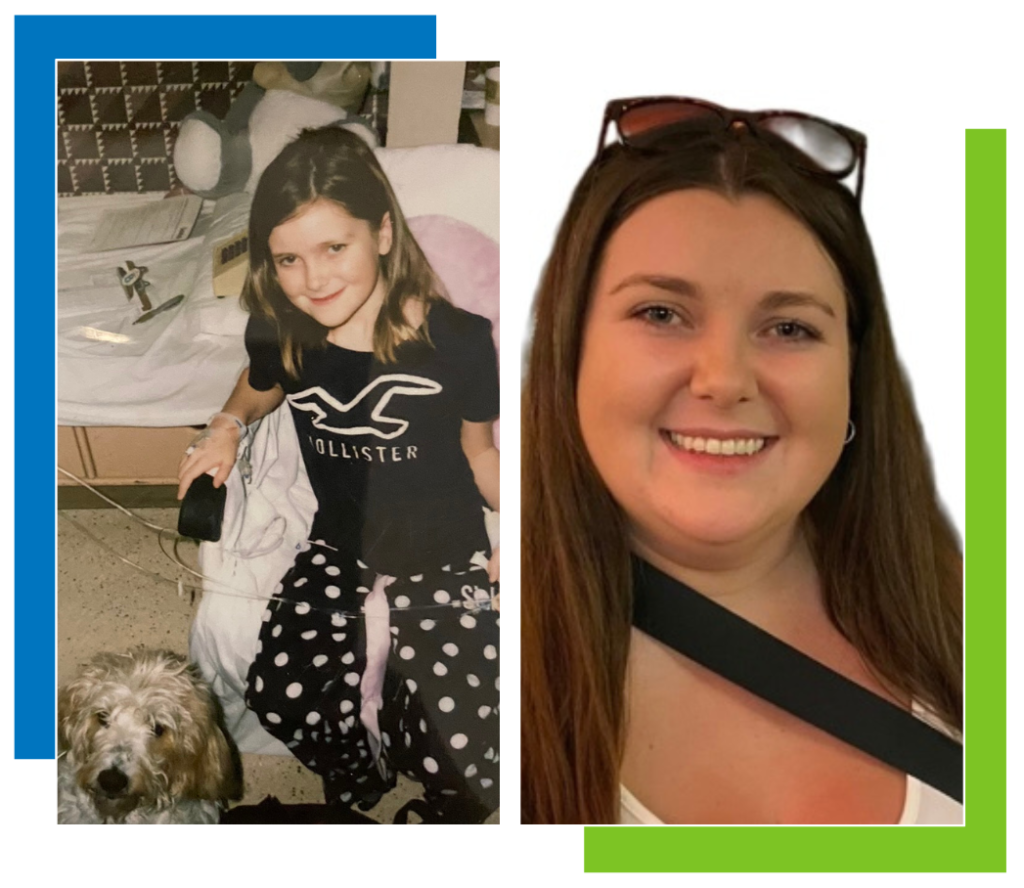
Photo above: Left: Cassandra after first spinal surgery. Right: Cassandra now.
"Could my past medical experiences have an impact on my ability to have biological children in the future?"
Transitioning from pediatric to adult care has been quite a journey, and it is still challenging at times. I went from having a dedicated team supporting me in every aspect of my life to feeling like I was navigating my health on my own. I was familiar with Princess Margaret Cancer Centre from my radiation treatment, but the whole experience was pretty overwhelming. I made sure to ask my POGO Aftercare Clinic Nurse lots of questions, everything from learning how to check for lumps in my breasts? to understanding the potential impact of my past treatments on my body. One particularly important question I had was about my fertility: Could my past medical experiences have an impact on my ability to have biological children in the future?
That single question changed my life.

"The emotional toll is substantial, especially since, despite all my efforts, there is no guarantee of success."
Left photo: The daily medication injections for egg-freezing process
I learned that my AMH (anti-müllerian hormone) levels were low, indicating a low egg count, which led me to Mount Sinai Hospital’s fertility clinic. At 22 years old, the news that I didn't have much time was a shock. I had to weigh my options: have a child soon, freeze my eggs, or consider alternatives like egg donation or adoption. In the end, I chose egg freezing, which significantly shifted my life plans. The treatments were tough and the costs made things even more complicated. The emotional toll is substantial, especially since, despite all my efforts, there is no guarantee of success.
My radiation treatment affected my fertility, which is a topic that doesn't always get the attention it deserves. While fertility preservation is starting to come up more frequently in discussions with younger patients, it wasn't something that was brought up in my discussions with my health team. I feel this gap in communication and resources is an important issue that deserves more attention.
Navigating my fertility journey has been quite an eye-opening experience. It is understandable that when you’re focused on managing an illness, fertility can sometimes take a back seat. But for many, the ability to have children is a big deal. It can be frustrating to miss out on preservation opportunities simply because of a lack of information. It feels a lot like missing the boat. And who wants to miss the boat?
These experiences have inspired me to become a voice for others in similar situations. Advocacy goes beyond just pushing for medical advancements; it is also about making sure patients have the information and support they need to make informed choices about their futures. By sharing my story at events like the 2024 POGO AfterCare Education Day and through this article, I hope to encourage others to ask the right questions, seek the information they need and stand up for their own needs. If there is one lesson I have taken away, it is that you sometimes must be your own best advocate.
Recognizing that my experiences can help others has truly changed how I view my health challenges, seeing them not just as a burden, but as opportunities to make a positive impact in the community. Through advocacy, I aim to bridge the gaps in care and ensure that the next generation of patients has access to comprehensive support, particularly when it comes to fertility awareness. As I continue on this advocacy journey, I am genuinely excited to see what the future holds. My journey has shown me that while medical treatments are crucial, so is the support for the emotional and future aspects of life, like fertility. As health care continues to advance, let’s make sure to include these important conversations, making sure every child has the chance to lead a fulfilling life, both during and after treatment.

Creative Corner with Cartoonist Erica
Author: Erica DiVincenzo
Diagnosis: Ewing's Sarcoma (right arm).
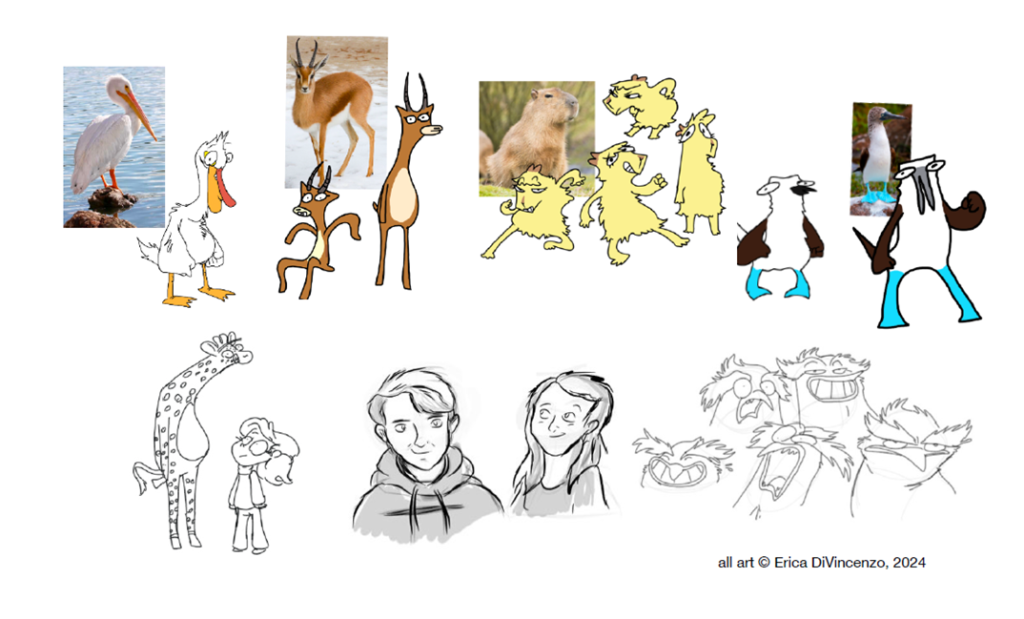
I am a cartoonist. This is how I see the world in my mind. This is how I see people and animals. As early as Kindergarten, almost any attempt I made at art appeared as cartoons. This tendency became more obvious when I was 7 and spent a year at McMaster Children’s Hospital for cancer treatment. To make the time pass, I would draw. Almost always cartoons. I am very thankful that the doctors saved my drawing arm, which had bone cancer in it. I am still making cartoons every day and finding unique ways to use them in my career as an artist. Cartoons bring a lot of humour and joy to life.
Navigating Ontario’s Accessibility Act as a Childhood Cancer Survivor
As a childhood cancer survivor, I often think about the distinction between being “disabled” and living with a disability. Personally, I see myself as someone with a disability rather than being defined by it. My own journey involves various ailments and impairments resulting from treatments, and while some of us might use assistive devices like hearing aids, canes, prosthetics, walkers, or wheelchairs, others face invisible disabilities.
Regardless of whether a disability is visible or not, many of us encounter significant barriers and discrimination in everyday life—be it in customer service, access to information, employment, transportation, or even within natural and constructed environments. Often, these barriers stem from a lack of adherence to The Accessibility for Ontarians with Disabilities Act (AODA) of 2005. It’s important to remember that it isn’t simply about visual appearance; a brief scan doesn’t ensure adherence to the "Customer Service Standard" of the legislation.
I’ve always had an interest in public transit, so, I’ll use that as an example:
Imagine a TTC driver shouting at you to “use the back door!” While it’s generally advisable for passengers to use the back door to facilitate smoother boarding, those with disabilities should have the option to use the front door if needed. Disabilities aren’t always visible, and drivers should be cautious not to judge based on the presence of assistive devices alone. After all, the devices are just tools; the person’s disability is what matters.
Our experiences with accessibility can vary widely, and I encourage you to reflect on your own encounters with barriers and challenges. If you’re not yet familiar with The Ontario Human Rights Code and The Accessibility for Ontarians with Disabilities Act, 2005, I strongly recommend taking the time to review these important pieces of legislation.
Not so Alone After all
Author: Sara Payne
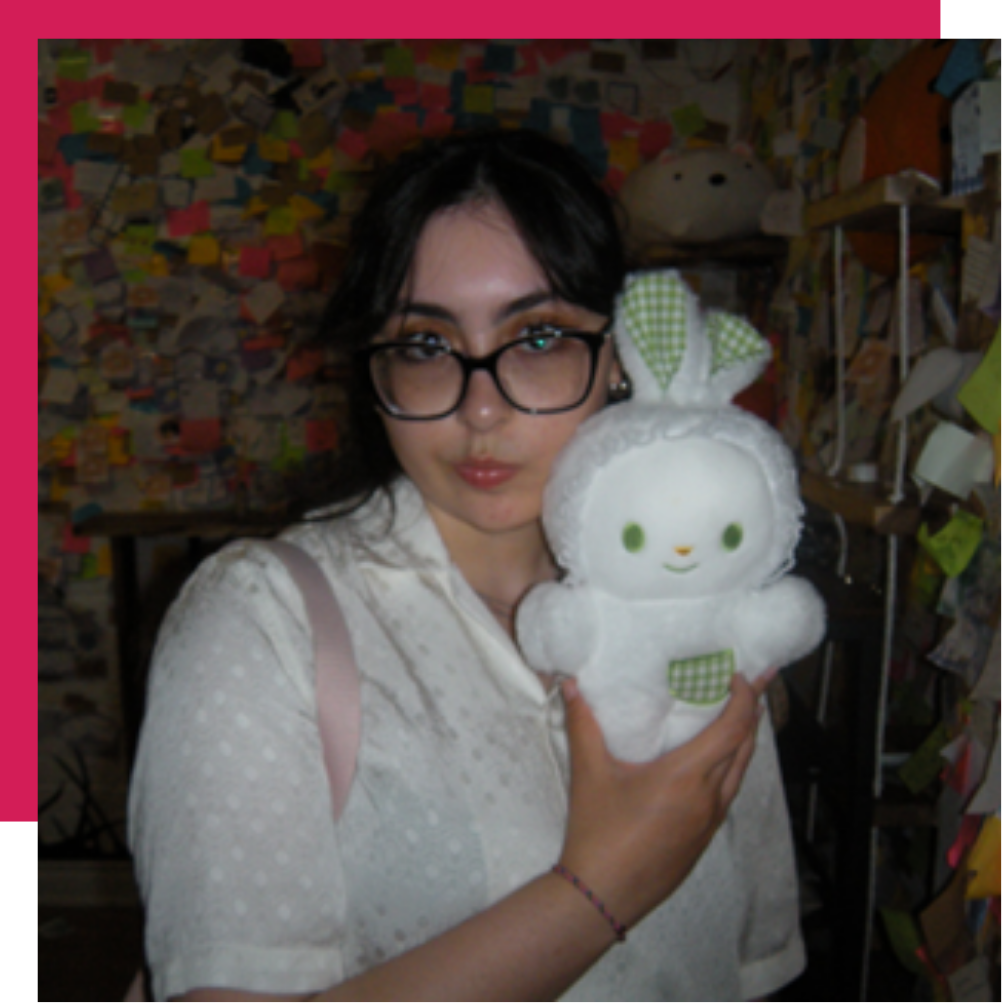
The future can be terrifying, but planning for mine gave me hope. When I got sick, I tried to take it one day at a time because I quickly learned how unpredictable life can be. However, I still planned for my future: graduate high school, go to college, become a paramedic and be happy. I never knew if I was going to achieve those things, but holding onto that picture in my mind helped me a lot.
When I was in hospital, anytime I felt like giving up I would look outside and see my future self in an ambulance, helping others. I was healthy and happy in my uniform. I would also envision myself in my future apartment, decorated the way I want it and my cat lying by the window enjoying some sun.
There have been times I thought I wasn’t going to be able to achieve my dream. But knowing how badly I wanted it to become a reality made me work that much harder. I wasn’t going to let cancer take this away from me. One of my favourite quotes is, “You want it because your future self already has it.” It gives me motivation to work hard and keep going.
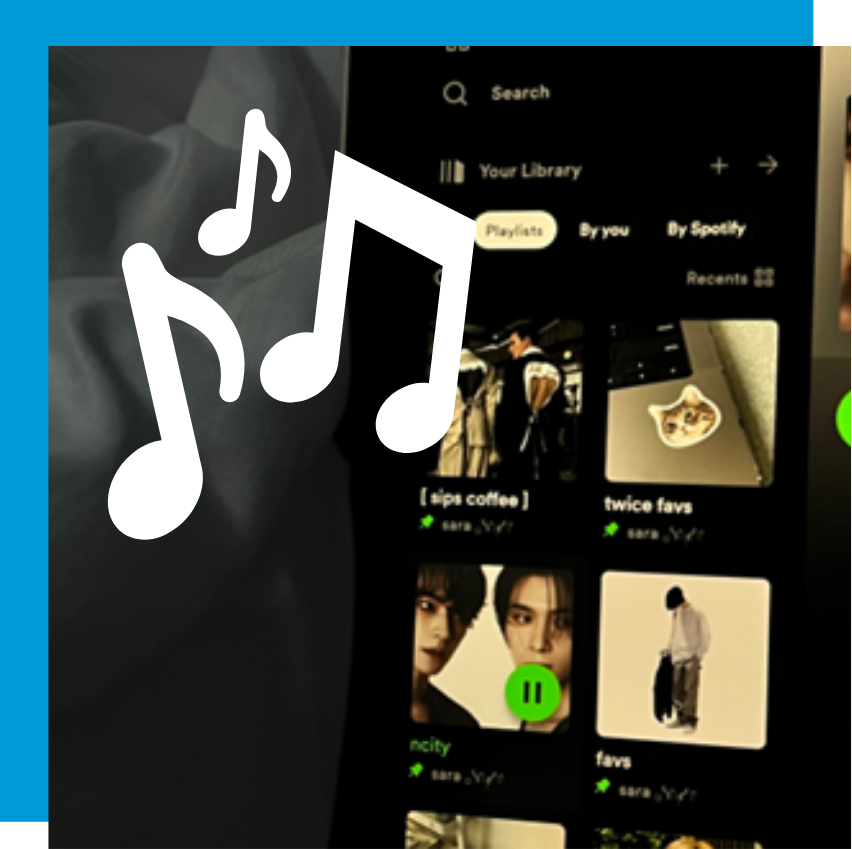
Music was another thing I held on to when I was sick. Music and lyrics are like a story that can be interpreted however you want and provide an escape. One song I regularly listen to nowadays is WITHOUT YOU by NCT U. It's about feeling alone and isolated, but it also shows that all it takes is one person to turn your life around and help you see better days. It makes me think of my friends who never left my side when I got sick and my mom who was with me 24/7.
I have a lot of good memories with my mom in the hospital. I also met some amazing people and even made some friends for life. Connecting with teens my age who went through the same thing I did and hearing their stories of survival helped me feel more at ease.
Regardless of what someone is dealing with, I think everyone has one thing they can hold on to even if they may not realize it. Maybe it’s a feeling, or a person or a small thing you do daily.
It can be hard to figure out what it is because our brain can get so filled with the stresses in life.
I think I’m now at a point where I’ve learned to enjoy my own company. I have a few solid friendships I wouldn’t trade for the world. I have good relationships with my cousins and even when I am physically alone, I don’t feel lonely.
Having cancer, and even being in remission, is such an isolating and lonely experience sometimes, but getting lost in daydreams about my future and listening to music makes me feel less lonely. I truly hope everyone has that one thing to comfort them and bring them joy, even if it's for just 10 minutes a day. I can’t say for sure things will get easier, but I think it’s still worth it.
Survive
Author: Kayla Russell

About myself: My name is Kayla Russell. I attend the University of Waterloo as an undergraduate student. I was diagnosed when I was 11 years old, and 2024 marks ten years cancer-free. I've always enjoyed writing and reading stories; I just can't get enough of them. I didn't always love poetry, though. I didn't start writing until a few years ago, and one of the things I wrote about was letting go of some pent-up feelings. Yet, the reason I will always continue to love poetry is because of the way we can relate to each other through our words. This is also the reason I wrote this piece, which was to show myself how I happened to think at the time. Nevertheless, I hope it is one that can be of some comfort to you.
"Survive, they said
But I’d rather stay in bed..."
Writing Process: I usually write my poems in a journal and then type them up on my computer just as a second copy or like an electronic diary, if you will. Sometimes I start writing something and then it ends up being completely different. A peaceful, cozy spot where I can curl up or sit comfortably is where I usually find myself writing. Writing is like my release. When I’m feeling sad or irritable, I write. I write to escape, or I write to find some answers. I started writing these poems to help create a safe space for myself to know that it’s okay to feel however I feel. Also to remind myself that there's no right or incorrect way to feel about what happened to me; it’s a journey.
Survive, they said
Survive, they said
But I’d rather stay in bed
All day long
Where my pillow
Sings sweet songs
Of rest here
But something inside me
Has a little more energy
Than I did yesterday
So, I make my way
Out of bed
And stand in front of the mirror
Surprisingly,
I don’t look as tired
But I'm worn out on the inside
Something inside of me
Says hide
But I wipe my tears
And walk away from the mirror
It will be okay
Tomorrow’s another day
Survive, they said
For every poison that wishes to
Kill me from the inside out
That is not the thing that will kill me
The cages of my mind with thoughts
That are locked behind
Bars, yelling the same thing
You’re not good enough
You will never survive this
They were right, you probably won’t make it
I am weak from the thoughts that drain the life
Out of me
Who is she?
Who is the one who’s done with life
Who is the one who doesn’t let strife
Come in between her and her dreams
Who will let me dream?
So, I have to take the prisoners
All of the emotions I’ve locked away
And say
It’s okay to feel
But I can’t complain
The comfortability from laying in a bed of fearTells me
Nothing can hurt me if I pretend it’s not real
I can just spiral in doubt
Until I fall asleep with the pain that
Lulls me away to the land of dreams
When I wake up, I know what they will say
Survive, they said
It’s only up
From here

Giants
You have beautifully risen
Despite all the bad
That has happened
Your triumph is a beanstalk
Reaching new heights
Tackling new giants
And still growing
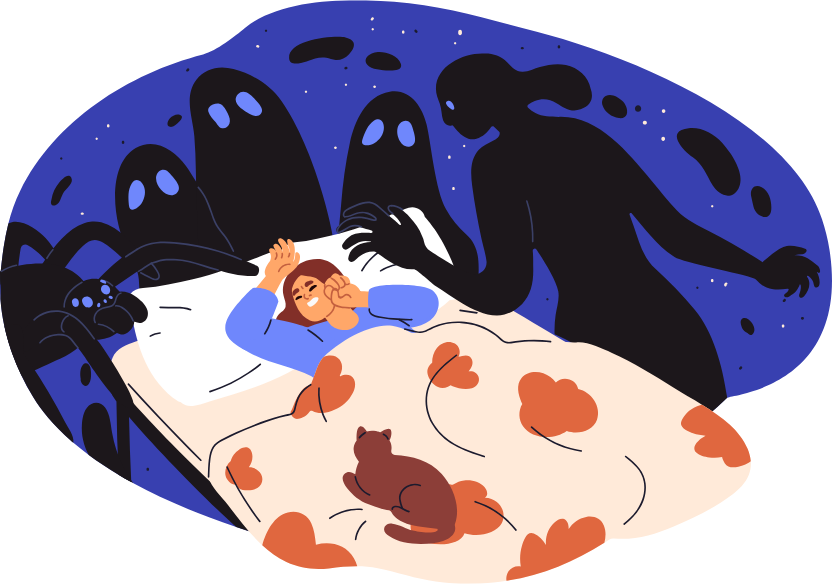
Am I Still Dreaming?
A very scary
Dream of mine
Is for all
My nightmares to come true
Is it bad that I wish to
See how strong I can be
To fight off all
That haunts me?
Join us in Raising Money for Kids with Cancer!

Do you want to give back to an organization that is important to you but don’t know where to begin?
Individual, community, school and corporate events in support of POGO make a big impact in the lives of children and youth with cancer, survivors and their families.
Celebrate a milestone, host a sporting event, fundraise at your school, plan a social event, create a team challenge at your office or add a fundraising component to an existing event — there are so many options!
The funds you raise provide financial assistance to families so they can pay for out-of-pocket costs associated with their child’s treatment, support survivors with customized school and work counselling when their disease or its treatment has left them with learning challenges and fund promising research that examines the impact of childhood cancer and its treatment.
Get started today with our easy-to-use fundraising platform. Reach out to events@pogo.ca with any questions or for help getting started!
Related Content

Using AI for Brain Tumour Treatment

Radiation therapy (RT) is a common treatment for brain tumours (the second most common cancer in childhood after leukemia). The goal is to deliver a focused dose of radiation to the tumour and surrounding at-risk regions while minimizing radiation to normal brain tissues. This is particularly crucial for young patients in whom excess RT to normal brain tissues can lead to significant long-term side effects.
The standard method of manual radiation therapy planning is time-consuming and can vary in quality depending on the experience of the radiation therapist and oncology staff. Artificial intelligence (AI)-assisted planning has been shown to improve the speed and quality of RT plan design and reduce unnecessary doses to normal brain tissues.
In a project involving the Princess Margaret Cancer Centre in Toronto, as well as the London Regional Cancer Program (Ontario), researchers evaluated the potential benefit of collaborative AI-RT planning for children, youth and young adults with brain tumours. The group intends to disseminate the cutting-edge AI technology and create new collaborations to improve RT for thousands of cancer patients across Canada.
For this study, 61 patients were enrolled, with approximately two RT plans created by expert RT planners (standard practice) and one AI-assisted plan created for each patient. In a blind evaluation by the treating oncologists, the AI-assisted plans were deemed to be as good or better than the manual plans. AI-assisted plans delivered a slightly smaller dose of radiation to normal brain tissues and were designed in less time.
The conclusion: AI-assisted radiation therapy planning creates high-quality radiotherapy plans for children and young adults with brain tumours. This is the first study of AI-assisted RT planning to include children, and creates an opportunity to rapidly create high quality plans for patients needing urgent treatment, and facilitate planning for smaller centres.
Read the full published article: A Prospective Study of Machine Learning − Assisted Radiation Therapy Planning for Patients Receiving 54 Gy to the Brain
Derek S. Tsang, MD, MSc; Grace Tsui, BSc, MRT(T); Anna T. Santiago, MSc, MPH; Harald Keller, PhD; Thomas Purdie, PhD, FAAPM; Chris Mcintosh, PhD; Glenn Bauman, MD; Nancy La Macchia, MRT(T); Amy Parent, BSc, MRT(T); Hitesh Dama, BSc, MRT(T); Sameera Ahmed, MSc; Normand Laperriere, MD; Barbara-Ann Millar, MBChB; Valerie Liu, BSc; David C. Hodgson, MD, MPH, FASTRO
POGO CEO Lauren Ettin Makes the Rounds

Since Lauren Ettin joined POGO as Chief Executive Officer in April 2024, she has been making the rounds, becoming familiar with the inner workings of POGO programs and services at our partner hospitals, and the unique nature of childhood cancer care and Ontario’s childhood cancer care system. Here’s what she shared.
Q: How has your experience and background prepared you for your new role at POGO?
Lauren: My career has been in health care across all sectors: public, private and not-for-profit, with the same vision of always improving the delivery of care for all Ontarians. I've worked in the Ontario government, consulting, in an association and led a not-for-profit.
My last role was my first in pediatrics and I was really struck that children are not little adults; delivering care for kids is distinct and unique. In Ontario, we have a remarkable childhood cancer care system—an actual cohesive system—established by visionary leaders and recognized as a national, if not international, leader in the healthcare field.
Q: In the last four months, you have spent a lot of time getting to know POGO’s partners and our various stakeholders. Why was it important to spend so much time in the community?
Lauren: In pediatric cancer, there are so many different lenses and perspectives. It was really important for me to spend time meeting our partners, building relationships with people and understanding their experience and vision for the system; where they see our collective strengths and opportunities—and then bringing that all back to inform POGO’s work and priorities.
There is exceptional pride in the quality and accessibility of Ontario’s childhood cancer care system. At POGO, we have an opportunity to build on our ability to bring people together to learn from each other, and plan, execute and spread in scale together—not only to other parts of Ontario’s healthcare system, but around the world.
Q: Describe what has stood out for you in your short time at POGO.
Lauren: What stands out most is how we put children and family at the centre of care, knowing a childhood cancer diagnosis impacts the child but reverberates more broadly. And the interprofessional healthcare teams are experts in supporting individual patients from diagnosis and treatment to survivorship, and sometimes, unfortunately, to end of life. POGO’s programs address their physical medical needs, but also their mental health and personal needs.
POGO also collects data on every child diagnosed to inform system planning. The research we do and the clinical practice guidelines we develop translate into better care and improved outcomes.
What’s more, we have incredibly supportive donors who share our vision for children's cancer care in the province.
This all makes POGO incredibly unique.
Q: September is Childhood Cancer Awareness Month. What do you want people to know or understand about childhood cancer in Ontario?
Lauren: Over the past 50 years, there have been dramatic improvements in childhood cancer care and fewer kids are dying of cancer. Today we expect approximately 85% of children who are diagnosed to be long-term survivors due to things like research and clinical trials. Still, with all this good news about increase in survivorship, cancer is still the most common disease-related cause of death in children over the age of 1 year.
Also, it is important to note that two of every three childhood cancer survivors are at risk of a late effect due to their cancer or its treatment, like second cancers or cognitive challenges. While surviving cancer is certainly the goal, it is not where the journey ends. The impacts of childhood cancer can last a lifetime.
Q: POGO will soon release a new Childhood Cancer Care Plan, developed in consultation with a wide range of stakeholders. What are two or three things that made a strong impression on you as you stepped into your role and worked to bring the Plan to completion?
Lauren: To address the unique complexities, ripple effects and long-term impacts of childhood cancer, POGO and its partners have built a system that provides wrap-around care and support for children and families at every stage of the journey. One of the things we heard from the consultations is that we're on the right path with opportunity for improvements, and the way to execute on the Childhood Cancer Care Plan is for all our partners, within their different roles, to work together to move the Plan’s goals and objectives forward.
Q: With all that you’ve seen and heard through your rounds what are you most excited about?
Lauren: I’m excited to build on POGO’s collaboration with current and new partners; to convene leaders and focus our attention on making tangible improvements in care that are aligned to the goals and objectives in the next Childhood Cancer Care Plan. I feel strongly that our intentional efforts are sure to reap great rewards. Ontario can continue to strengthen its world-class childhood cancer system so that patients and survivors can count on having the treatments, resources and supports they need today – and for life.
Related Content

Study Examines Late Effects and Treatment Protocols for Hodgkin Lymphoma in Children

Childhood cancer and its treatment come at a risk of late effects for survivors. In fact, the evidence shows that two of every three childhood cancer survivors are at increased risk of at least one late effect due to their cancer or its treatment, including heart disease, second cancers and cognitive challenges.
A recent study published in JAMA (The Journal of the American Medical Association) looks at the treatment of Hodgkin lymphoma in children and the resulting risk of cardiac disease to survivors.
POGO Medical Director, Dr. David Hodgson, is the lead author of the study titled Late Cardiac Toxic Effects and Treatment Protocols for Hodgkin Lymphoma in Children.
“Cardiac disease as a late effect of treating Hodgkin lymphoma is a serious risk that is well documented,” he says. “One of the challenges of improving treatment is that we don’t want to wait for over 20 years to observe the late effects of treatments we’re currently giving today. The goal of this study was to estimate the risk of late effects of current treatment to better understand how to advise current patients and families, and also explore what changes to treatment would have the greatest benefit to reduce these risks.”
Understanding the extent to which treatment can be modified for improved health outcomes is critical for several reasons.
- Reducing treatment intensity is a trade-off against the risk of relapse.
- Understanding which components of treatment can be adjusted, and to what extent, can lead to better decisions about treatment modifications.
- Care for survivors is based on their treatment exposure making the burden of follow-up care an important consideration.
The study evaluated the treatment of 2,563 patients with Hodgkin lymphoma treated in four consecutive Children’s Oncology Group clinical trials between 2002 and 2022. Patients were treated with different doses of radiation therapy and doxorubicin chemotherapy – both of which are known to increase the risk of cardiac late effects. Based on the doses of these treatments, the 30-year cumulative incidence of severe or life-threatening heart disease was estimated to decrease from 10% in the first trial to 6% in the last trial. The findings were favourable, suggesting that evolutions in treating Hodgkin lymphoma will lead to a net reduction in late cardiac disease. Moreover, findings suggest that for adolescent and young adult patients, increasing the use of “cardioprotective” medications during treatment would be one of the best ways to reduce this risk further, without compromising cure rates.
“While there is still work to be done to monitor the long-term gains in reducing cardiac toxic effects, this is encouraging news that bodes well for the quality of life of childhood cancer survivors,” says Dr. Hodgson. “And, as with every study, we need to ensure that the guidelines for follow-up care of survivors, particularly in POGO AfterCare Clinics, are updated to reflect the latest evidence.”
Read the study here.
Related Content
Freedom International: Childhood Cancer Champion Since 2016

Freedom International Brokerage Company (Freedom) is one of Canada’s leading full-service, Inter-Dealer Brokers—providing electronic brokerage services to wholesale capital market participants in Canada and globally.
Since 2016, Freedom has been a committed corporate partner to POGO, demonstrating their shared vision of making a difference in the lives of children battling cancer through substantial financial, in-kind and volunteer contributions.

Freedom’s involvement began when Kevin Kirby, President and CEO, joined POGO’s Development Cabinet, a group tasked with growing POGO’s fundraising revenue. Recognizing their values aligned with POGO’s mission, Freedom quickly became a valued partner and has contributed $302,500 over the last nine years in support of POGO's programs and signature events that raise critical funds for childhood cancer research, financial assistance to families, and school and work supports for survivors.
Tim Anastakis, Vice President at Freedom, underscores the significance of their partnership with POGO, stating, "Knowing that I work for a company that prioritizes children's charities makes me proud," a sentiment that is echoed amongst Freedom employees.
In addition to their financial support, Freedom goes above and beyond by providing coveted tickets to Toronto Blue Jays and Toronto Maple Leafs games—offering families the chance to have happy moments together at a time that is typically filled with hospital visits and days at home sick.
"It's a pleasure knowing Freedom ticket donations help towards brightening a child's life even for a small moment." – Andrew Cooper, FX Forward Broker, Freedom International
PARTNER WITH POGO
Corporate partners play a critical role in helping POGO transform the childhood cancer care system and enable POGO to deliver care and support to children, youth, survivors and their families affected by childhood cancer.
POGO offers a portfolio of sponsorship opportunities that can enhance your brand, raise your community profile, and help you achieve your marketing and promotional goals.