Navigating Ontario’s Accessibility Act as a Childhood Cancer Survivor

As a childhood cancer survivor, I often think about the distinction between being “disabled” and living with a disability. Personally, I see myself as someone with a disability rather than being defined by it. My own journey involves various ailments and impairments resulting from treatments, and while some of us might use assistive devices like hearing aids, canes, prosthetics, walkers, or wheelchairs, others face invisible disabilities.
Regardless of whether a disability is visible or not, many of us encounter significant barriers and discrimination in everyday life—be it in customer service, access to information, employment, transportation, or even within natural and constructed environments. Often, these barriers stem from a lack of adherence to The Accessibility for Ontarians with Disabilities Act (AODA) of 2005. It’s important to remember that it isn’t simply about visual appearance; a brief scan doesn’t ensure adherence to the "Customer Service Standard" of the legislation.
I’ve always had an interest in public transit, so, I’ll use that as an example:
Imagine a TTC driver shouting at you to “use the back door!” While it’s generally advisable for passengers to use the back door to facilitate smoother boarding, those with disabilities should have the option to use the front door if needed. Disabilities aren’t always visible, and drivers should be cautious not to judge based on the presence of assistive devices alone. After all, the devices are just tools; the person’s disability is what matters.
Our experiences with accessibility can vary widely, and I encourage you to reflect on your own encounters with barriers and challenges. If you’re not yet familiar with The Ontario Human Rights Code and The Accessibility for Ontarians with Disabilities Act, 2005, I strongly recommend taking the time to review these important pieces of legislation.

Not so Alone After all
Author: Sara Payne
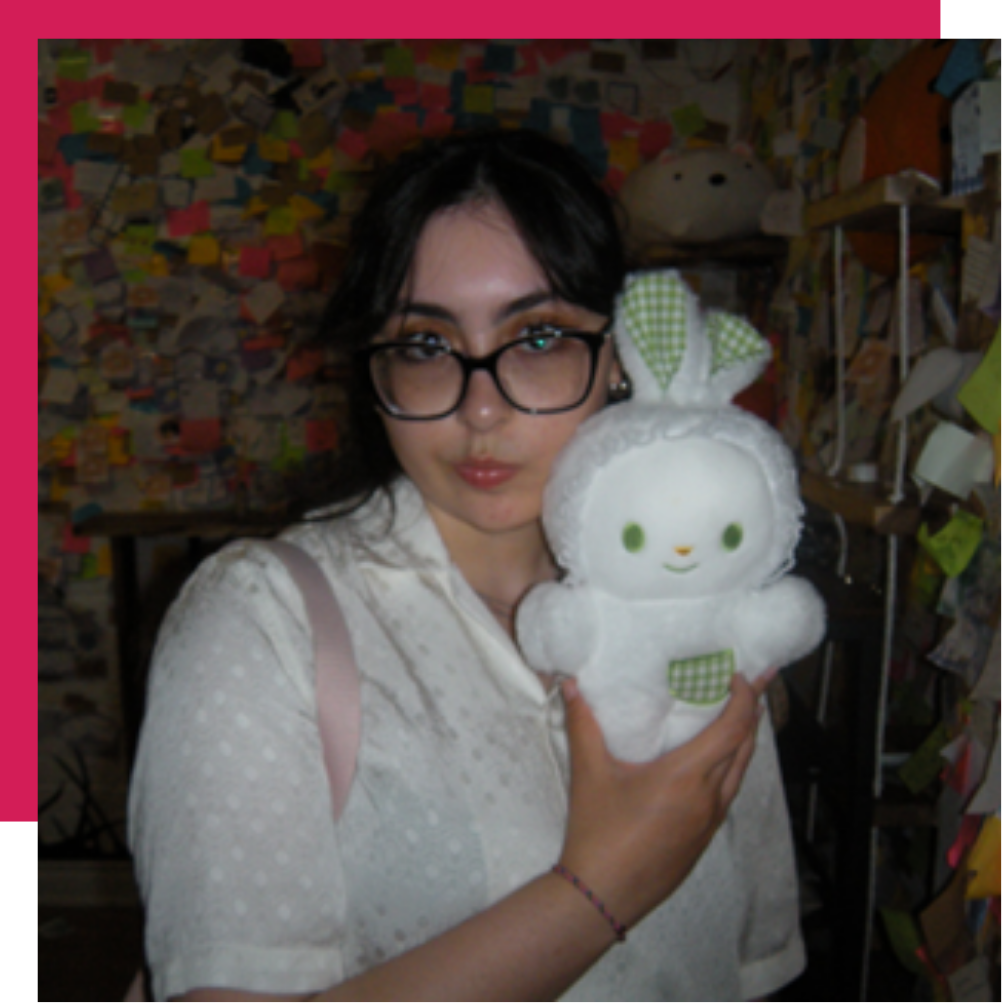
The future can be terrifying, but planning for mine gave me hope. When I got sick, I tried to take it one day at a time because I quickly learned how unpredictable life can be. However, I still planned for my future: graduate high school, go to college, become a paramedic and be happy. I never knew if I was going to achieve those things, but holding onto that picture in my mind helped me a lot.
When I was in hospital, anytime I felt like giving up I would look outside and see my future self in an ambulance, helping others. I was healthy and happy in my uniform. I would also envision myself in my future apartment, decorated the way I want it and my cat lying by the window enjoying some sun.
There have been times I thought I wasn’t going to be able to achieve my dream. But knowing how badly I wanted it to become a reality made me work that much harder. I wasn’t going to let cancer take this away from me. One of my favourite quotes is, “You want it because your future self already has it.” It gives me motivation to work hard and keep going.
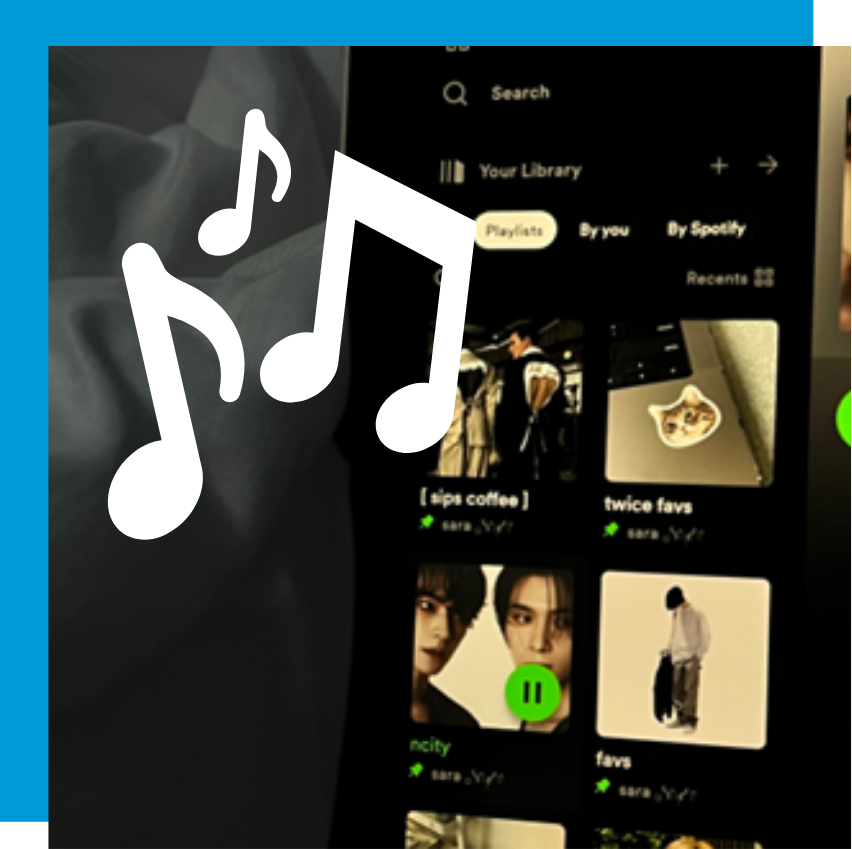
Music was another thing I held on to when I was sick. Music and lyrics are like a story that can be interpreted however you want and provide an escape. One song I regularly listen to nowadays is WITHOUT YOU by NCT U. It's about feeling alone and isolated, but it also shows that all it takes is one person to turn your life around and help you see better days. It makes me think of my friends who never left my side when I got sick and my mom who was with me 24/7.
I have a lot of good memories with my mom in the hospital. I also met some amazing people and even made some friends for life. Connecting with teens my age who went through the same thing I did and hearing their stories of survival helped me feel more at ease.
Regardless of what someone is dealing with, I think everyone has one thing they can hold on to even if they may not realize it. Maybe it’s a feeling, or a person or a small thing you do daily.
It can be hard to figure out what it is because our brain can get so filled with the stresses in life.
I think I’m now at a point where I’ve learned to enjoy my own company. I have a few solid friendships I wouldn’t trade for the world. I have good relationships with my cousins and even when I am physically alone, I don’t feel lonely.
Having cancer, and even being in remission, is such an isolating and lonely experience sometimes, but getting lost in daydreams about my future and listening to music makes me feel less lonely. I truly hope everyone has that one thing to comfort them and bring them joy, even if it's for just 10 minutes a day. I can’t say for sure things will get easier, but I think it’s still worth it.
Survive
Author: Kayla Russell

About myself: My name is Kayla Russell. I attend the University of Waterloo as an undergraduate student. I was diagnosed when I was 11 years old, and 2024 marks ten years cancer-free. I've always enjoyed writing and reading stories; I just can't get enough of them. I didn't always love poetry, though. I didn't start writing until a few years ago, and one of the things I wrote about was letting go of some pent-up feelings. Yet, the reason I will always continue to love poetry is because of the way we can relate to each other through our words. This is also the reason I wrote this piece, which was to show myself how I happened to think at the time. Nevertheless, I hope it is one that can be of some comfort to you.
"Survive, they said
But I’d rather stay in bed..."
Writing Process: I usually write my poems in a journal and then type them up on my computer just as a second copy or like an electronic diary, if you will. Sometimes I start writing something and then it ends up being completely different. A peaceful, cozy spot where I can curl up or sit comfortably is where I usually find myself writing. Writing is like my release. When I’m feeling sad or irritable, I write. I write to escape, or I write to find some answers. I started writing these poems to help create a safe space for myself to know that it’s okay to feel however I feel. Also to remind myself that there's no right or incorrect way to feel about what happened to me; it’s a journey.
Survive, they said
Survive, they said
But I’d rather stay in bed
All day long
Where my pillow
Sings sweet songs
Of rest here
But something inside me
Has a little more energy
Than I did yesterday
So, I make my way
Out of bed
And stand in front of the mirror
Surprisingly,
I don’t look as tired
But I'm worn out on the inside
Something inside of me
Says hide
But I wipe my tears
And walk away from the mirror
It will be okay
Tomorrow’s another day
Survive, they said
For every poison that wishes to
Kill me from the inside out
That is not the thing that will kill me
The cages of my mind with thoughts
That are locked behind
Bars, yelling the same thing
You’re not good enough
You will never survive this
They were right, you probably won’t make it
I am weak from the thoughts that drain the life
Out of me
Who is she?
Who is the one who’s done with life
Who is the one who doesn’t let strife
Come in between her and her dreams
Who will let me dream?
So, I have to take the prisoners
All of the emotions I’ve locked away
And say
It’s okay to feel
But I can’t complain
The comfortability from laying in a bed of fearTells me
Nothing can hurt me if I pretend it’s not real
I can just spiral in doubt
Until I fall asleep with the pain that
Lulls me away to the land of dreams
When I wake up, I know what they will say
Survive, they said
It’s only up
From here

Giants
You have beautifully risen
Despite all the bad
That has happened
Your triumph is a beanstalk
Reaching new heights
Tackling new giants
And still growing

Am I Still Dreaming?
A very scary
Dream of mine
Is for all
My nightmares to come true
Is it bad that I wish to
See how strong I can be
To fight off all
That haunts me?
Volunteering: Apply for the Experience, Stay for the Benefits
There are so many benefits to volunteering!
Whether it’s delivering meals to seniors or walking shelter dogs, being a peer mentor or being part of a team organizing an event, when you volunteer, you connect with others and you often see that you’re making a positive difference in their lives or in the community. So, it’s no surprise that volunteering can have both physical and mental health benefits. Research has shown that adults with disabilities or chronic health conditions who volunteer often see an improvement in their pain levels. Volunteering can also reduce stress, anxiety and depression.

Volunteer for One Day or More – The Choice is Yours!
Volunteering also provides a great opportunity to test different educational or career paths. Whether you have a job in mind, or are unsure what field interests you, volunteering allows you to look for opportunities that require various levels of commitment. It might be a one-day event, a two-week long project, twice a month for a year, or other…you have the flexibility to decide what to pursue based on your capabilities and time availability.
Add Volunteer Experience to Your Resumé
If you’re also looking for paid employment, there are ways that you can use your volunteer experience to help get a job. As a volunteer, you might be on the organization’s email list where job postings are sent out. You can also develop internal workplace connections to ask about open or upcoming positions, and a recommendation. References are often required when applying for jobs, so having someone that can speak directly to skills you have demonstrated is incredibly valuable. Adding volunteer experience and the skills you have developed from it to your resumé will help with your application to other jobs!
Seek Accommodations as Needed
If you have a disability and/or need accommodations, you can still volunteer! Read the volunteer posting carefully to see what you are expected to do in the role. If you need support with any of the job requirements, you can start a conversation about this when going through the application process.
It can be intimidating to bring up a need for accommodations, but if you feel passionate about a position, do not let that be a barrier. Remember that you are entitled to ask for accommodations and many community agencies that hire volunteers are eager to provide these if possible. You are the expert in this situation, so be prepared to explain what accommodations would be most beneficial to you. Remember, you do not have to disclose a diagnosis or any medical information if you don’t want to.
As you can see, while you’re helping others, there’s a lot you can get in return. So, consider getting out there to volunteer!
Need help with applying to a volunteer position? Contact your POGO School and Work Transitions Counsellor so they can help you prepare for the volunteer experience.

*This article was adapted from the S2S Network presentation “Volunteerism: Empowering Yourself and Others” by childhood cancer survivor Payton Tenebaum. Information about this year’s S2S Network presentations is coming soon!
Q & A with our Newest POGO Counsellor

WHY DO YOU WANT TO BE A POGO TRANSITIONS COUNSELLOR?
I have always been drawn to roles that involve supporting individuals within our community and I have experience with helping people navigate various transitions in life. Joining the POGO team represents a new and exciting opportunity for me. I have not previously worked with cancer survivors, so this is a unique learning experience. We all encounter transitions at some point, and being able to contribute to someone’s journey by providing the help they need is incredibly rewarding to me.
WHAT IS YOUR FAVOURITE PART ABOUT YOUR ROLE?
My favourite aspect of the job so far has been getting to connect with people. I enjoy engaging in conversations and getting to know individuals on a personal level. It’s also really great seeing how committed the whole healthcare team is to assisting individuals who have cancer.
WHAT IS THE HARDEST ONCOLOGY WORD/TERMINOLOGY YOU HAVE HAD TO LEARN?
There’re a few and I’m definitely still learning, but if I had to pick one right now it would be myxopapillary ependymomas, which I have learned is a type of brain tumour.
WHAT HAS BEEN THE BIGGEST SURPRISE WORKING WITH SURVIVORS?
The biggest surprise for me has been the lasting impact that cancer treatments can have on an individual’s body later in life. Before stepping into this role, I hadn’t fully grasped the extent of these long-term effects. Nevertheless, it’s remarkable witnessing the support system that surrounds cancer survivors from the dedicated teams at the POGO AfterCare Clinics.
DOGS OR CATS?
Without a doubt, dogs. Maybe it’s because I’m allergic to cats, or maybe it’s just that dogs have mastered the art of unconditional love and I will take that any day, especially since it comes without the sneezing!
WINTER OR SUMMER?
Most definitely summer! I dream of living somewhere where the weather is warm all year round. I find there is so much more to do in the warm weather!
WHAT IS YOUR FAVOURITE PUMP-UP SONG RIGHT NOW?
Maybe not considered a “pump-up” song, but one song that has been on constant repeat for me that I love to belt out to is “White Horse” by Chris Stapleton.
WHAT IS THE BEST PIECE OF ADVICE YOU'VE EVER RECEIVED?
The advice I received that has stuck with me is to romanticize your life. Essentially, make even the smallest things in your day-to-day life seem amazing and exciting. Every Sunday, I write down the best thing that happened to me on the weekend. Sometimes there are bigger moments we can think of easily, but sometimes it’s nice to think of the small moments, too, like having the time to drink a hot cup of coffee before heading off to work!
Creative Corner with Ramjot
Growth
When I first started creating this sculpture, it was an absolute mess. The structure and stability of the tree were a challenge to figure out but slowly it all started coming together. It was like putting the pieces together in a puzzle. I didn't fully understand why I created a tree until I started sculpting every little curve or indent, gluing on the leaves and adding the finishing touches. The tree symbolized my growth. Just like me, the tree encountered many obstacles when it was being sculpted. It took hours, days, weeks to finish and at some point, I felt like giving up on it. The tree expressed me. It started wonky but the more time and effort I dedicated to it, the stronger it got. Similarly, when I was recovering from my cancer treatment, it was hard to fit in with my peers at school and integrate into my new reality. But as the years went on and I got out of my comfort zone, I grew to be the best version of myself. My piece, Growth, shows the journey of my life and how I've grown into the person I am today.

Check out other Creative Corner works done by Dorian and Xander
Successful Employment Through Targeted Hiring: A Survivor Experience
What is Targeted Hiring?
Targeted hiring is a type of initiative used by public and private organizations to address employment barriers and help with the under-representation of designated groups to achieve equal employment opportunities. This is accomplished by narrowing the pool of candidates to specific categories of candidates, such as individuals with disabilities.
Q & A With a POGO School and Work Transitions Client
Q: What can you tell me about your recent interview where you were successful in being hired?
Client: I interviewed over the phone, which was nice as travelling can be difficult for me due to my disability. The questions were pretty much what I prepared for because my counsellor and I went through common interview questions and practiced them together over Zoom. We also discussed scenarios and did some mock interview style discussion. Because of this, I was able to answer the real interview questions with confidence.
Plus, the interviewers were very informative about what to expect on an average day.
Q: How is your employer being accommodating to you as a person with a disability in the workplace?
Client: The general attitude of my workplace is genuinely team-oriented! I was asked if I needed a chair, and from day one, I have been greatly encouraged to ask for help. There's even mental health support, which is quite a relief.
Q: Was your POGO Counsellor a resource in this process? If so, how did they help?
Client: My counsellor was very helpful during the whole process. Finding this job and ensuring my resume was in good shape, practicing for the interview, and ensuring I got placed at a store location I preferred is honestly going above and beyond.
Q & A with our newest POGO Counsellors

WHY DID YOU WANT TO BE A POGO TRANSITIONS COUNSELLOR?
| Sharon: My mom is a cancer survivor and we are infinitely grateful for the supportive care provided at Princess Margaret Cancer Centre. She works as a teacher, and I witnessed her transition back to work after treatment. I saw that a smooth transition to school or work is possible with the proper support and access to the right resources. I wanted to work as a Transitions Counsellor to contribute to that support system that all cancer patients should have access to. | Olivia: I have seen firsthand how difficult and heartbreaking a cancer journey can be; I wanted to be a Transitions Counsellor to hopefully make the journey a little bit easier for folks. Also, I am a bit of a nerd and love to get my hands on any new piece of learning or education, and I was intrigued by the idea of being able to encourage others to develop a love of education as well! |
WHAT IS YOUR FAVOURITE PART ABOUT YOUR ROLE?
| Sharon: The people. Everyone is dedicated and passionate about the work they do. I am beyond honoured to be part of this team. | Olivia: Being able to connect with and build relationships with so many people. |
WHAT IS THE HARDEST ONCOLOGY WORD/TERMINOLOGY YOU HAVE HAD TO LEARN?
| Sharon: There are several; medulloblastoma was one. | Olivia: I don’t know about the hardest, but I think one that surprised me was Sonic hedgehog. |
WHAT HAS BEEN THE BIGGEST SURPRISE WORKING WITH SURVIVORS?
| Sharon: A pleasant surprise was how many survivors prioritized new hobbies. Quite a few mentioned how post-treatment sparked a curiosity to try new things such as pottery, playing a new instrument, joining a book club etc. Hearing about the joy and empowerment of learning a new skill was beautiful. | Olivia: I’m not sure if I was necessarily surprised by anything. Coming into this role, I didn’t know what to expect and made a conscious effort to come open-minded and see everyone as a unique individual regardless of diagnosis. |
DOGS OR CATS?
| Sharon: Team dogs, always. Specifically, golden retrievers. That energy and enthusiasm is contagious. | Olivia: Dogs all the way! Cats are too cold. Plus, my dog Walter, the basset hound, is just about the best animal out there, so I have to vote dogs! |
WINTER OR SUMMER?
| Sharon: I'm an avid hiker, BBQ apprentice and frequent beach-goer, so summer will always trump winter for me. | Olivia: Summer! I love going to the beach, being at a cottage and swimming in the ocean or a pool. |
WHAT IS YOUR FAVOURITE PUMP-UP SONG RIGHT NOW?
| Sharon: Eye of the Tiger by Survivor. It’s a classic! | Olivia: My favourite pump-up song on the radio is I’m Good by David Guetta and Bebe Rexha, but my tried and true song to pump me up is Don’t Stop Me Now by Queen. |
Should I Apply for OSAP?

What is OSAP?
The Ontario Student Assistance Program (OSAP) is a mix of loans and/or grants funded by the provincial and federal government to help you pay for post-secondary school. The program is open to full-time and part-time students.
How do I know if I am eligible for OSAP?
While many of our clients say they are not eligible for OSAP because their parents’ income is too high, we recommend using the OSAP Aid Estimator to estimate what you could receive. Many clients are surprised that they are actually eligible. Plus, even if you are only eligible for $1, this may allow you to access other types of funding. Individuals with disabilities, for example, may be eligible for more grants, such as the Canada Student Grant for Services and Equipment (CSG-DSE) and/or the Bursary for Students with Disabilities (BSWD). A doctor or neuropsychologist must complete an “OSAP Disability Verification Form” for you. Your POGO Transitions Counsellor can help facilitate this.
*TIP: If an estimate is not yet available for your school year, try using the previous year or try again in the spring.*
I don't want any loans after post-secondary school. Why would I apply for OSAP?
If you are eligible for grants, you can request that you receive the "Grant Only Funding," essentially meaning that you'll receive grants but not the loan portion of OSAP. Typically you do not have to pay back grants. However, this would change if you are not taking the minimum course load, you decide to withdraw from your program or if your application is reassessed to show underrepresented income, for example. Speak with your financial aid office in advance if you'd like the "Grants Only Funding." See the OSAP Aid Estimator link above to see if you would be eligible for grants.
I need the loans portion of OSAP to pay for school, but I’m worried I won’t be able to pay these back after I graduate. What are my options?
First, repayment of student loans has been a little bit easier these past few years with interest on federal loans being waived for the COVID-19 pandemic. This was set to expire on March 31st, 2023; however, at the time of this writing, the Canadian government recently passed a Bill to eliminate this interest permanently. Remember, this does not apply to provincial loans, and some interest will still be accrued.
You also may be eligible for the Repayment Assistance Plan (RAP). Your eligibility is based on your family size and income. There are two stages: “Interest Relief” and “Debt Reduction.” For “Interest Relief,” the government may pay some or all of the interest accrued on your loan. For “Debt Reduction,” they will either lower or eliminate the required monthly payments for six months. You must apply for RAP through the National Student Loans Service Centre (NSLSC) and reapply every six months.
Applying for OSAP can be overwhelming and stressful, so don't hesitate to contact your POGO Transitions Counsellor, who can help you better understand the process or connect you with your school’s financial aid office.
Helpful Link
Let’s Talk About Scholarships!
Written by Lindsay VanSickle
POGO Counsellor London

Let's Talk about Scholarships
With the rising cost of living, the thought of paying for post-secondary tuition can feel overwhelming. The additional expenses of textbooks, transportation, equipment, meal plans, etc., add more causes for anxiety. To support the cost of post-secondary education, various scholarships and bursaries are available. Resources specifically for cancer and brain tumour survivors are also available. Let’s explore the options below!
Post-Secondary Education Scholarships and Bursaries
Scholarships and bursaries are available based on academic performance, athletic excellence, community involvement, and financial and life circumstances. Some are made available to specific groups such as cultural communities, clubs, high schools, etc. They do not require repayment.
Your POGO Transitions Counsellor, post-secondary financial aid offices or your high school guidance counsellor are great resources to consult when applying.
Helpful Links:
https://studentawards.com/ https://www.scholarshipscanada.com/ www.disabilityawards.ca
Ontario Student Assistance Program (OSAP)
The Ontario Student Assistance Program (OSAP) provides government funding for student loans and grants. A grant is money you don’t have to pay back, while a loan is money you start repaying after school completion. Both are provided by the provincial and/or federal government and are based on your financial situation.
Regarding OSAP, you may need to start paying back your loan six months after your study period ends. Refer to the OSAP Aid Estimator below to determine your loan eligibility. Even if you only qualify for a small loan, this can lead to other scholarship and bursaries within the program, so it's worth applying for.
Helpful Links:
OSAP website: https://www.ontario.ca/page/osap-ontario-student-assistance-program
OSAP Aid Estimator: https://osap.gov.on.ca/AidEstimator2223Web/enterapp/enter.xhtml
Read Should I Apply for OSAP? https://www.pogo.ca/should-i-apply-for-osap/
2023 Scholarships for Childhood Cancer and Brain Tumour Survivors
Most of these scholarships require a medical letter from your hospital confirming your diagnosis. You can usually get this through your POGO AfterCare Clinic. Let your POGO Transitions Counsellor know if you need help getting this letter.
NATIONAL SURVIVOR SCHOLARSHIPS & AWARDS
| SCHOLARSHIP | AWARD AMOUNT | ELIGIBILITY | APPLICATION AVAILABLE | DUE DATE |
| Childhood Cancer Canada Survivor Scholarship | $1500 OR TEVA $5000 | Undergraduates apply for $1500 TEVA $5000 is for graduate students in health sciences programs | March 1 | April 30 |
| Brain Tumour Education Award | Up to $5000 | You were diagnosed with a brain tumour before age 25 and are currently between 16 and 30 years of age | Spring 2023 | TBD |
| Emmy Duff Scholarship Foundation | $2000 | You are a very active volunteer | October 2022 | May 27, 2023 |
| Terry Fox Humanitarian Award | $7000 each year for up to 4 years | You are beginning to study or already studying toward your first undergraduate degree or diploma; you have made a significant positive impact on your community | November 1 | December 1 |
| The Lorna Rosenstein Youth Volunteer Leadership Award | $1500 awarded directly to the recipient | You are between 14 and 24 years old, impacted by cancer and have shown volunteer leadership in the community | April 2023 | May 18, 2023 |
REGIONAL SURVIVOR SCHOLARSHIPS
| SCHOLARSHIP | AWARD AMOUNT | ELIGIBILITY | APPLICATION AVAILABLE | DUE DATE |
| ChildCan (London) | $1000 | You reside within certain boundaries around the London area | April | TBD |
| Sandra Allen Memorial Education Award (Hamilton – McMaster Children’s Hospital) | $2500 | You are from a Help A Child Smile registered family, are being or have been treated for cancer (or are a sibling of a patient) at McMaster Children’s Hospital and you demonstrate community leadership; You are under the age of 30 | Spring 2023 | TBD |
| Shine Bright Bursary (Northern Ontario) | $1000 | You are a resident of Northern Ontario (north of Parry Sound) and are a childhood cancer survivor or survivor’s sibling | TBD | TBD |
| Leucan (Quebec patients) | $1000 - $2000 | You are a Leucan child member, have been diagnosed with childhood cancer and are enrolled in Secondary IV, V, or a post-secondary study program, or in a special education program | TBD | TBD |
| Xerox/POGO Transitions Scholarship at George Brown College | $1500 *Please contact your POGO Transitions Counsellor for more information | You are a POGO Transitions client and a current student at George Brown College | Varies | Varies |

POGO Counsellor Toronto