On the Tip of the Toes Adventure: A Journey of Healing and Connection
Author: Holley Stuart
Diagnosis: Lymphocyte-predominant Hodgkin lymphoma
Age of diagnosis: 16

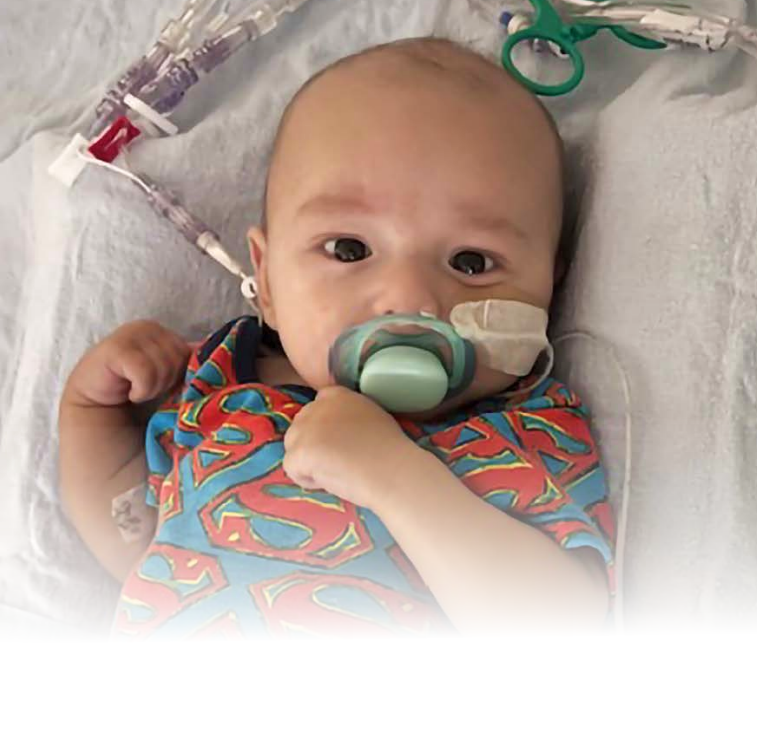
In May 2025, I embarked on a unique adventure hosted by the On the Tip of the Toes (Sur la Pointe des Pieds) Foundation, which has been offering therapeutic adventures to young people living with cancer since 1996. Each year, they organize several expeditions designed to support healing the mind, heart, and soul.
I had the privilege of participating in the 79th expedition, a four-day, off-grid canoe trip on the Poisson Blanc (White Fish) Reservoir in Quebec. Our group hailed from various parts of Canada: six from Quebec, one from Alberta, one from British Columbia, and me from Ontario. This bilingual (English/French) voyageur canoe trip included nine participants and nine expedition team members who made the experience unforgettable.
This adventure was truly transformative
The expedition team members took care of every detail, including delicious meals, proper campsites, transportation for our belongings, and the necessary medical support. They also blogged our adventures and supported our mental health by encouraging us to share and listen to each other, as well as giving us time to journal.
Before the trip, my emotions were on a rollercoaster—excited, nervous, and unsure of what to expect. The experience was also phone-free, which in this day and age is hard when our phones are always with us. But without our devices to distract us, we were able to truly connect with each other and the world around us. My adventure began on a Wednesday, when I took my first airplane trip without my family to meet my team, people whom, up until that point, I had only met online. Thursday morning, we headed to base camp to prep our belongings with the items provided by the organization. Over the next few days, we shared our cancer journeys, learned about each other's interests, joked, sang (a lot), and played games.

The Poisson Blanc Reservoir is breathtaking with calm, dark waters and hilly mountains covered in various shades of green. The reservoir is dotted with numerous small islands, some of which are campsites, while others remain untouched. The view seemed to stretch for kilometers.
During the day, we canoed the reservoir to our lunch location and then to our evening campsite. Some highlights: singing songs in the boat, tossing the ball around at lunch, waking up others to the song “Hotel California," and engaging in many conversations. At night, we enjoyed campfires, playing the Loup-Garou game and reflecting on our day.
This adventure was truly transformative. I highly recommend it to others seeking a unique and healing experience.


Conversations With My Mom: A Childhood Cancer Survivor’s Guide to Awkward Health Talks
“Mom, why doesn’t that man have any hair?”
“Can I have a chair with wheel like that lady?”
Ah…the unfiltered curiosity of children. My twin brother and I were masters of asking deeply personal, highly inappropriate questions at the absolute worst times. Our poor mother was (and still is) my go-to person for pretty much everything. Like many parents, I am sure she sometimes dreaded fielding our loud and awkward inquiries in public places, but she always handled it with patience (and the occasional deep sigh).
Fast forward to our teenage years, my mother probably braced herself for awkward questions about puberty, sex or some horrifying combination of the two. But life threw a different kind of curveball: at age 11, I was diagnosed with acute myeloid leukemia (AML). Suddenly, my questions weren’t just embarrassing—they were existential.
“Why is this happening to me?”
“Am I going to die?”
While she did not always have a definitive answer, she answered truthfully and the best she could. And now, more than 20 years post-treatment, I still go to her first when I have a health question.
Which led to the semen sample incident.
One particularly awkward situation came about after my oncologist suggested a fertility test to check if my cancer treatment had affected my ability to have children. Simple enough, right? So, I went to a lab and inquired about giving a semen sample. What follows is the conversation I had on the phone with my mother while walking home (yes, on a busy public street).
Me: Hey, so I went to the lab today about that fertility test. The lady was very clear that I could not provide the sample there.
Mom: (sighs) Jamie, I really don’t need to hear this. (pause) Wait, so they don’t even give you a private room?
Me: Apparently not! Also, I have to abstain for a few days beforehand, and the sample has to be delivered within a specific time frame.
Mom: But you don’t have a car and you won’t make it on time by bus! Oh no. (pause) Can’t they just do it another way? Like, stick a big needle in there?
Me: I really hope not.
Mom: I really don’t need to hear about this… (pause) Anyway, have I told you about my mammograms?
Me: Yes. Repeatedly.
Fertility: The Question No One Wants to Ask
One of the hardest parts of surviving childhood cancer is dealing with the long-term effects—many of which don’t show up until years later. Fertility is a big one. It wasn’t on my 11-year-old mind, but fast forward a couple of decades, and suddenly, it’s a very real concern.
For some childhood cancer survivors, fertility can feel like an unanswered question lurking in the background. The only way to find out is through awkward, slightly mortifying medical tests. It’s not always an easy subject to talk about, but it’s important. Whether you’re considering having kids, exploring options like sperm or egg freezing, or just trying to understand how treatment may have affected you, asking the question is the first step. And if those conversations feel too awkward to have with a doctor, well—there’s always your mom.

Jamie is a childhood cancer survivor who takes pride in his role as Communications Assistant at POGO. His creativity and self-described “weirdness” is reflected in his writing and his presentations at POGO staff meetings. Reading and playing video games would be his well-developed hobbies if only his beloved cat, Lupin, would just give him some alone time.

Finding Your Career Vibe
Author: Emma King
The Difference Between Passion and Purpose and Their Impact on Your Career

As early as age 16, individuals are often encouraged to contemplate their future careers—a decision that carries significant weight and long-term implications. However, being expected to determine your lifelong path at such an early age can be an overwhelming challenge. What happens when you feel lost and are not sure what direction will fulfill you? Whether you are exploring new career paths or redefining your goals, understanding the difference between passion and purpose can provide clarity and direction.
Here are some strategies to help navigate this uncertainty.
Understanding Passion vs. Purpose
Passion is often described as an activity or interest that ignites enthusiasm and brings personal fulfillment. It is what excites you, what you love doing, and what brings you joy in the present moment. Purpose, however, extends beyond individual satisfaction; it is the overarching impact you aspire to make in the world.
Passion fuels motivation, while purpose provides direction and meaning to one's efforts.
For example, if you are passionate about painting, you may find deeper purpose in using art to inspire, heal or connect with others. Passion serves as the emotional drive, while purpose ensures that drive contributes to something greater than oneself.

Strategies for Discovering Your Purpose
Identifying your purpose is a process that requires introspection, experimentation and self-awareness. Here are some effective methods to uncover what truly drives you.
- Self-Reflection: Ask yourself:
- What brings you joy or a sense of accomplishment, even on difficult days?
- What challenges have you overcome, and how did they shape your strengths?
- What impact do you want to have on others?
- Career and Personality Assessments: Personality and aptitude tests can offer valuable insights into your strengths, interests and work preferences. While they may not provide definitive answers, they serve as a foundation for exploring potential career paths aligned with your innate abilities.
- Exploring Volunteer Opportunities: Engaging in volunteer work provides firsthand experience in various fields while allowing you to assess what resonates with you on a deeper level. The key is not just what you volunteer for, but how it makes you feel. If you love baking, consider using that skill for a cause—such as preparing meals for shelters or organizing bake sales to support charitable organizations. Ask yourself: Do you enjoy the creative process? The precision? The joy of sharing your work with others? These small revelations can be instrumental in understanding what truly fulfills you.
- Networking and Mentorship: Speaking with professionals in different industries and seeking guidance from mentors can expose you to career trajectories you may not have previously considered. Learning from others' experiences can offer clarity on potential paths aligned with both your passion and purpose.

Navigating Uncertainty: What If You Don’t Know What You Love?
The commonly stated advice, "Do what you love, and you’ll never work a day in your life," is well-intentioned but often misleading. Many people struggle to pinpoint a singular passion, and that is perfectly normal. Passion is not always innate; rather, it is frequently discovered through exploration, trial and error, and evolving experiences.
If you feel uncertain, allow yourself the freedom to experiment. Engage in various activities, expose yourself to different things and reflect on what consistently brings you fulfillment. Instead of focusing on an immediate answer, embrace the journey of discovery, trusting that clarity will emerge over time.
Conclusion
Both passion and purpose play important roles in growing a fulfilling career. Passion ignites enthusiasm, while purpose offers a sense of contribution and direction. Those who integrate both elements into their professional lives often experience greater long-term satisfaction. If you are unsure of your path, take proactive steps to explore different avenues, seek meaningful experiences and reflect on what genuinely matters to you. Your personal journey has already equipped you with resilience, strength and a unique perspective—qualities that will guide you toward a purposeful and fulfilling career.
Speak with a POGO School and Work Transitions Counsellor if you have questions about what we can offer to support you on your passion and purpose journey.

Our Newest POGO Counsellors!
WHY DID YOU WANT TO BE A POGO TRANSITIONS COUNSELLOR?
| Rachel: I’m a social worker who previously worked in child protection. I like working with young adults who are in the stage of making their own decisions. | Emma: At a young age, I realized that I wanted to be in a helping role. My dad worked in a dialysis unit and I loved hanging out with the nurses! | Samantha: I have always loved what McMaster Children’s and POGO have done for children. Their work is incredible and I am so grateful to be part of it. |
WHAT IS YOUR FAVOURITE PART ABOUT YOUR ROLE?
| Rachel: Meeting people in oncology who are very caring. I love to problem-solve! | Emma: One-to-one conversations and hearing client stories inspire me! | Samantha: I genuinely love connecting with my clients and making a meaningful impact on their lives. Helping them navigate their journey and reach their goals is incredibly rewarding, and I celebrate every win along the way! |
WHAT IS THE HARDEST ONCOLOGY WORD/TERMINOLOGY YOU HAVE HAD TO LEARN?
| Rachel: All of them are the hardest two weeks in! | Emma: I’ve already Googled the majority of them. Hepatoblastoma sticks out as the hardest to pronounce. | Samantha: I know lots about oncology terms from past experience and, honestly, it is not easy to learn or understand. I am going to say the hardest thing for me to comprehend is all the codes when they are referring to genetic markers! |
WHAT HAS BEEN THE BIGGEST SURPRISE WORKING WITH SURVIVORS?
| Rachel: How big of an impact childhood cancer has and how resilient the survivors are. | Emma: Working at POGO has made me aware of all the resources and the community within survivorship. A great surprise! | Samantha: People often assume that working with survivors or those in active treatment is always heavy or somber, but that couldn’t be further from the truth. They are some of the most inspiring, resilient and determined individuals I’ve ever met. Their positivity and “go-getter” energy are truly refreshing, and I feel privileged to witness their strength every day. |
DOGS OR CATS?
| Rachel: Dogs growing up; cats now. As an introvert, I appreciate how they like their time alone versus Velcro dogs! | Emma: Both! | Samantha: Dogs all the way! I have a Frenchie named Gus and he is my soul dog ❤️ I am not a cat hater - but there’s just something about the connection with a dog that is personal to me. Plus, I can’t deal with cats being nocturnal and bouncing around when I’m sleeping! Ha-ha |
WINTER OR SUMMER?
| Rachel: Winter! Hate the heat, humidity and bugs in Sudbury. I also like outdoor Winter activities. | Emma: I’m more of a Spring and Fall person | Samantha: I am a Summer girl. I need a warm breeze, a late sunset and people driving with the windows down, playing some good 80s rock. |
WHAT IS YOUR FAVOURITE PUMP-UP SONG RIGHT NOW?
| Rachel: "Sk8er Boi" by Avril Lavigne | Emma: “Birds of a Feather” by Billie Eilish | Samantha: That’s tough… I love a wide range of music, but I can’t help myself when “Timber” by Kesha & Pitbull comes on… it’s goin’ down! |
Stay Tuned for a New Evolution of the S2S Network
Author: Barb Williams
The S2S Network has been an incredible collaboration between survivors, community members and the School and Work Transitions team at POGO. Over the years, we have seen some incredible growth in confidence and skills among the survivors who take part as facilitators and mentors, as well as strong connections within the community at large. We know many of you have found value in attending, whether you attended one session, or you kept coming back for more.
We’re using this opportunity to reflect, refine and reevaluate our programming. Our aim is to centre survivors as experts in the childhood cancer journey, while fostering a stronger, more informed community and general awareness about childhood cancer.
Stay tuned for updates in your inbox and on the POGO website. Whether you’ve been part of S2S before or you’re curious about what’s next, we’re excited to welcome you to the next chapter.

Internships: The ‘Intern’al Route to Success!
“The people were truly what made my experience so amazing, and having been able to work in such a supportive environment has set a precedent for the rest of my career.”
An internship can provide a powerful experience. At its best, it gives students real-world work experience, builds their confidence, helps them explore different careers and enhances their resume and contacts.
When an internship recognizes that childhood cancer survivors can have unique challenges in school and work settings, it can be even more impactful.
That’s why, when Emblem Developments/First Avenue Investment Council wanted to offer more than their ongoing financial support of POGO, they consulted with the School and Work Transitions Program to develop a paid summer internship program for childhood cancer survivors, which launched in 2024.
Author: Helen Antoniades interviewing Maryam Khraishi

Because it is specifically for childhood cancer survivors, Maryam, last year’s intern, says, “It alleviated a pressure that everyone understood what I had been through; there was already an understanding that I needed time for physiotherapy every week and that I had certain mobility difficulties. The program was designed to fill the gaps in my experiential learning caused by missed work while I was undergoing treatment during my university education.”
Maryam had the opportunity to meet professionals in a variety of roles and learn about how an office environment works. She got instructions and feedback that can be applied to her current schooling and future career. And having conversations with staff about career, education and life provided valuable guidance on her future path. Additionally, Maryam says, “The internship being paid allowed me to focus completely on the work and alleviated the financial worries/pressure I had from tuition, rent and living expenses.”
The experience shows what the School and Work Transitions Program already knows: childhood cancer survivors have deep potential and can thrive in a work environment, when given the supports they need. Maryam says, “The people were truly what made my experience so amazing, and having been able to work in such a supportive environment has set a precedent for the rest of my career.”
Paid Summer Internship for Childhood Cancer Survivors
Are you a childhood cancer survivor who is looking to gain valuable work experience in the financial or real estate industry? The First Avenue & EMBLEM Internship Program is open to young adults who have survived childhood cancer and are looking to experience one-on-one mentorship from leaders who care about and support their development.
First Avenue Investment Counsel (First Avenue) is a Canadian firm specializing in investment management and multi-family office services. Our pension-style investment approach, inclusive of equities, fixed income, and exclusive alternatives, assists clients in achieving their unique financial goals. As trusted partners, invested alongside our clients, we align their financial success with their values and long-term aspirations. Committed to excellence and a personalized approach, we guide clients with clarity and confidence through their wealth planning. We cultivate a collaborative environment where employees are empowered to pursue their ambitions and positively impact the communities we serve.
EMBLEM Developments is one of the most active real estate development firms in the GTA, known for its investment-driven approach and high-quality residential communities. EMBLEM Developments has earned a reputation as a forward-thinking developer with meticulous attention to design. EMBLEM’s investment in suite layouts, finishes and building design has positioned the company to achieve record sales pricing at each project launch. The EMBLEM portfolio continues to grow, with over 4,588 residences representing $3.6 billion of development value.
Job Description
The intern will have the unique opportunity to work alongside and support First Avenue or EMBLEM in one or some of the following departments of their choice.
First Avenue:
- Client service and support
- Portfolio management and equity research
- Marketing and Communications
- Operations
EMBLEM Developments:
- Sales and marketing
- Planning and development
- Development and construction management
- Operations
What will you need to succeed?
Must-have:
- Time management and organization skills
- Familiarity with Microsoft, PowerPoint and Excel
- Interest in trying new tasks
- A collaborative, team-player mindset
- Interest in working in a business setting
Nice-to-have:
- Knowledge of the financial or real estate industry
Requirements
This position is for a 2-month summer placement (July to August 2026). To be eligible, you must be:
- A survivor of childhood cancer
- Able to work in Toronto for the duration of the internship
- Available to work in office full-time (some exceptions may be granted)
- Legally entitled to work in Canada
- You must also meet one of the following criteria:
- Be enrolled in college or university
- Have graduated from college or university within the last two years
Inclusion Employment
We are committed to building inclusive teams and providing accessible working experiences. Accommodation for applicants with disabilities will be provided at each stage of the recruitment process and throughout the internship. If you are selected for an interview and require accommodation, please notify us so we can make arrangements in advance.
What’s in it for you?
The opportunity provides candidates with:
- Industry Exposure: You will be immersed in the world of finance and real estate, gaining first-hand experience of day-to-day operations, client interactions and industry practices.
- Networking Opportunities: You will be working alongside professionals who are experts in their field, allowing you to build deep connections to open doors for future opportunities and mentorship.
- Skill Development: You will be building on different technical capabilities depending on the departments that you’re working in– expanding your existing skill set and giving you a chance to put your theoretical knowledge to the test.
- Exploring Career Paths: You will be able to work with and learn from professionals from all walks of life. With leaders who are committed to supporting and fostering your development, you will be challenged with multi-faceted learning opportunities to give you clarity on what type of career you want to pursue.
- Pursuit of Excellence: Our businesses are collaborative, innovative and supportive of your pursuit of excellence. This means you will be working with and have access to best-in-class facilities and technologies to empower you to be the best version of yourself – one that is continuously growing and learning.
How to Apply
Interested applicants are invited to complete the application and upload their resume and cover letter through the online form here.
We gratefully appreciate all interest, however, only those selected for an interview will be contacted.
Additional Job Details
*Please note this role is in-person and you will be required to be in person five days a week from 8am to 5pm.
Address: 1819 Yonge St, Toronto, ON, Canada, M4S 1X8
Work Hours/week: 37.5
Job Type: Internship
Pay Type: Salaried
Length of Internship: Two months (Thursday July 2, 2026, to Monday August 31, 2026)
Application Open: Monday, January 19, 2026
Application Deadline: Sunday, February 15, 2026
2026 Recruitment Process and Timelines
| Activity | Details |
| How to Apply | Application Submission (January 19, 2026, to February 15, 2026) Applicants are required to complete the online application and submit a cover letter and resume. |
| Selection Process | Application Screening (February 2026) Applications are reviewed and assessed against criteria that reflect the skills and knowledge that are required for the position. Interviews (March 2026) The interview is an opportunity for us to get to know candidates better and allows candidates to showcase their qualifications. Interviews will be conducted between March 9, 2026, and March 20, 2026. Intern Selected (March 2026) Conditional job offer presented to selected candidate by March 31, 2026. |
| Onboarding Process | Placement Notification (May 2026) The successful candidate will be notified of their placement, manager, and additional details. Placement Begins (July 2026) The successful candidate will commence their internship on Thursday, July 2, 2026. |

Gaming Through Cancer Without Cheat Codes
Author: Jason Truong
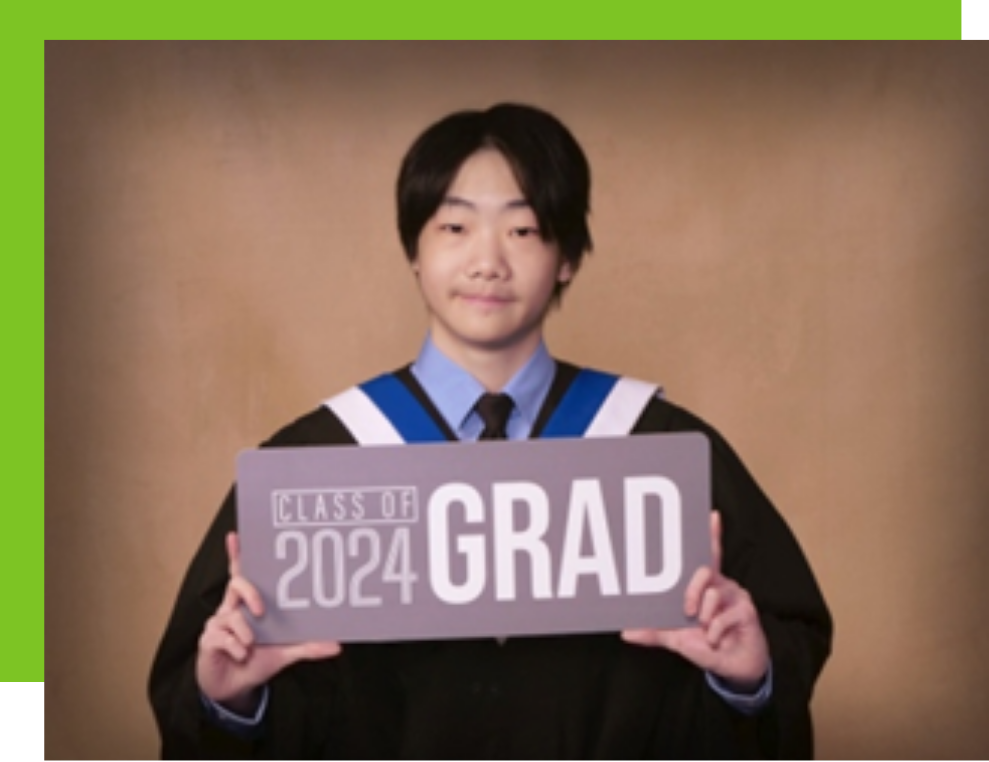
It started out as a lighthearted December night. A short break to relax before I prepared for another day of school. On my laptop was an old video game that me and my sister were playing. Then the phone rang. The call from my doctor was devastating.
"Throughout my life video games have helped me when times were rough..."
In the dead of the night, my dad and I were on our way, stepping through puddles of rain in a dark alley. I went from place to place, and after trials and tribulations, I ended up in the emergency room at the Children’s Hospital in London, Ontario, hooked up to an IV and watching old cartoons on Nickelodeon. I cannot clearly recall the series of events—it was as if I was in a daze the whole night. In the end, I was diagnosed with chronic myelogenous leukemia (CML), a relatively rare cancer in children. I was 14 years old.
The first days of my hospital stay were without rest. However, this all changed when a support program at the hospital called Youth CoRE gave me the opportunity to play Nintendo Switch games with an opponent. With this, my days seemed brighter and flew by.
After returning home from 10 days in hospital, I went back to my daily routine of online school. I fondly remember finishing my homework as soon as I could to boot up my laptop, and diving into an exciting game. The shining highlight of my first and second years of high school was the immersive experience of those games, worlds vibrant and inexhaustibly explorable far and wide, together with unique storytelling, music and art direction.
As time went on, online classes became harder to bear. One day, I just couldn’t see the point anymore. For my 11th year, I returned to in-person learning. My first day back at school was disheartening. I knew nobody. I felt like I didn’t even know myself. I lost sleep and I noticed I was rarely playing video games, if at all.
Eventually, I tried to make time to start playing again. My first title was NieR:Automata, which I had been anticipating for many years. This game’s narrative explores philosophical themes within a narrow context: the search for the meaning of existence, the reason to keep on fighting, and the subject of identity loss, all amidst a war and chaos. It resonated with me deeply. Rediscovering my passion for video games allowed me to reconnect and have fun with my friends, even as all of us got busier.
Throughout my life video games have helped me when times were rough; not only by playing them, but I have also been creating my own since the age of nine. Inspired by the dedication of game developers to their work, I have always thought, “I could be like them someday.”
After finishing a computer programming course in my final year of high school, I decided to take it on as my chosen field of study. In fall 2024, I am bound to start Computer Programming at St. Clair College to help widen my range of programming knowledge. For those who may be living through tough times, I want to inspire them to create, like many games and developers have inspired me.
Bio: Jason Truong is an 18-year-old CML survivor, still undergoing treatment. Here is a game that he created, inspired by Mario. Jason is also interested in sci-fi, anime and wildlife, including sharks and gentoo penguins.

- Castle Crashers
- Chocobo Racing
- Dragon Quest 11
- Final Fantasy XIII
- Muse Dash
- NieR:Automata
- Pokémon Black and White
- Resident Evil 4
- Scribblenauts
- Undertale
- Yakuza 0
- Yakuza Kiwami (much less explicit, equally violent as first)

My Fertility Journey
Author: Cassandra Watson
Living with a chronic condition can feel like riding a never-ending roller coaster—minus the fun parts, of course. My journey started with a spinal tumour diagnosis in 2009 (myxopapillary ependymoma, if you are into those fancy medical terms) which led to several surgeries and radiation therapy. Unfortunately, I ended up with chronic pain to manage, but I have to say these treatments made a significant difference. While this experience wasn’t exactly a walk in the park, it motivated me to advocate for others facing similar challenges, especially around fertility preservation. I’ll dive into that part soon!
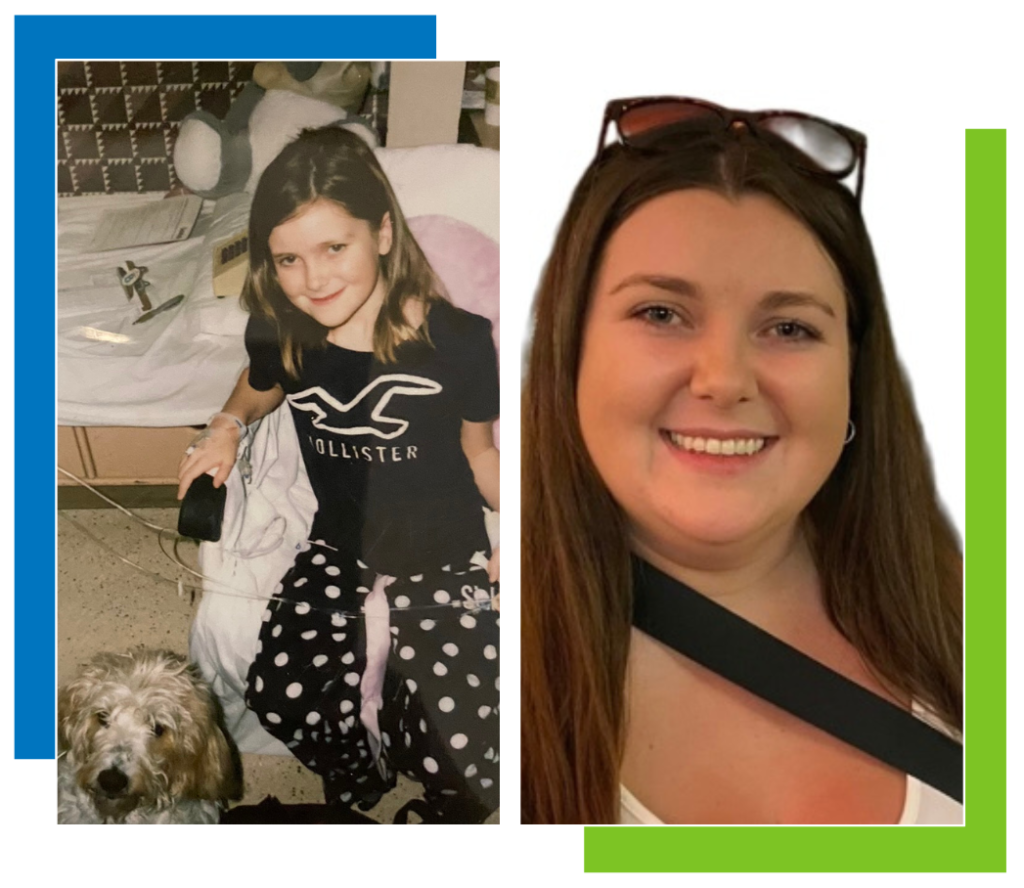
Photo above: Left: Cassandra after first spinal surgery. Right: Cassandra now.
"Could my past medical experiences have an impact on my ability to have biological children in the future?"
Transitioning from pediatric to adult care has been quite a journey, and it is still challenging at times. I went from having a dedicated team supporting me in every aspect of my life to feeling like I was navigating my health on my own. I was familiar with Princess Margaret Cancer Centre from my radiation treatment, but the whole experience was pretty overwhelming. I made sure to ask my POGO Aftercare Clinic Nurse lots of questions, everything from learning how to check for lumps in my breasts? to understanding the potential impact of my past treatments on my body. One particularly important question I had was about my fertility: Could my past medical experiences have an impact on my ability to have biological children in the future?
That single question changed my life.

"The emotional toll is substantial, especially since, despite all my efforts, there is no guarantee of success."
Left photo: The daily medication injections for egg-freezing process
I learned that my AMH (anti-müllerian hormone) levels were low, indicating a low egg count, which led me to Mount Sinai Hospital’s fertility clinic. At 22 years old, the news that I didn't have much time was a shock. I had to weigh my options: have a child soon, freeze my eggs, or consider alternatives like egg donation or adoption. In the end, I chose egg freezing, which significantly shifted my life plans. The treatments were tough and the costs made things even more complicated. The emotional toll is substantial, especially since, despite all my efforts, there is no guarantee of success.
My radiation treatment affected my fertility, which is a topic that doesn't always get the attention it deserves. While fertility preservation is starting to come up more frequently in discussions with younger patients, it wasn't something that was brought up in my discussions with my health team. I feel this gap in communication and resources is an important issue that deserves more attention.
Navigating my fertility journey has been quite an eye-opening experience. It is understandable that when you’re focused on managing an illness, fertility can sometimes take a back seat. But for many, the ability to have children is a big deal. It can be frustrating to miss out on preservation opportunities simply because of a lack of information. It feels a lot like missing the boat. And who wants to miss the boat?
These experiences have inspired me to become a voice for others in similar situations. Advocacy goes beyond just pushing for medical advancements; it is also about making sure patients have the information and support they need to make informed choices about their futures. By sharing my story at events like the 2024 POGO AfterCare Education Day and through this article, I hope to encourage others to ask the right questions, seek the information they need and stand up for their own needs. If there is one lesson I have taken away, it is that you sometimes must be your own best advocate.
Recognizing that my experiences can help others has truly changed how I view my health challenges, seeing them not just as a burden, but as opportunities to make a positive impact in the community. Through advocacy, I aim to bridge the gaps in care and ensure that the next generation of patients has access to comprehensive support, particularly when it comes to fertility awareness. As I continue on this advocacy journey, I am genuinely excited to see what the future holds. My journey has shown me that while medical treatments are crucial, so is the support for the emotional and future aspects of life, like fertility. As health care continues to advance, let’s make sure to include these important conversations, making sure every child has the chance to lead a fulfilling life, both during and after treatment.
Creative Corner with Cartoonist Erica
Author: Erica DiVincenzo
Diagnosis: Ewing's Sarcoma (right arm).
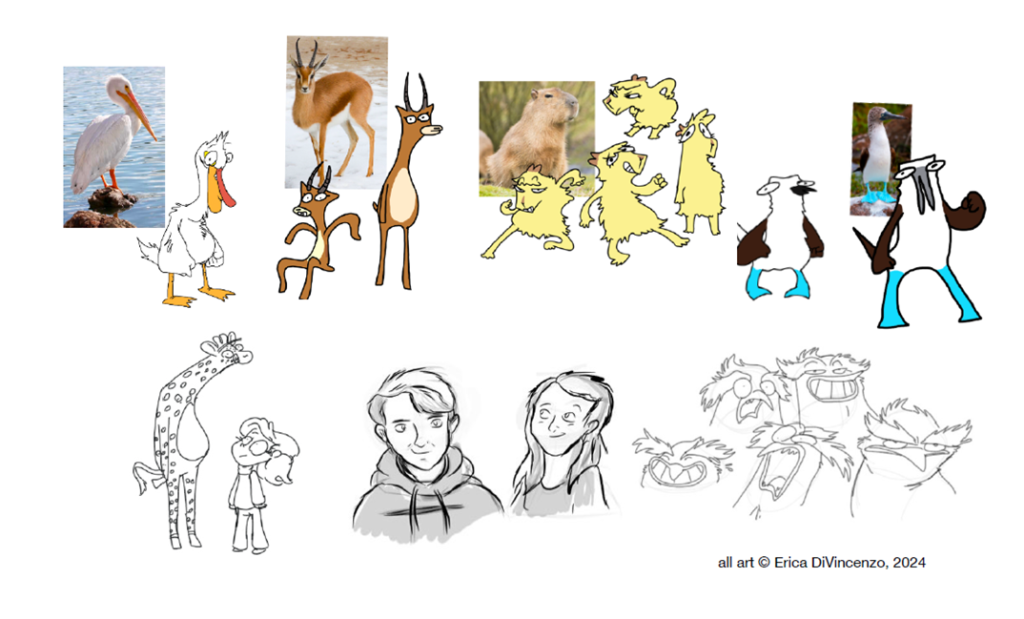
I am a cartoonist. This is how I see the world in my mind. This is how I see people and animals. As early as Kindergarten, almost any attempt I made at art appeared as cartoons. This tendency became more obvious when I was 7 and spent a year at McMaster Children’s Hospital for cancer treatment. To make the time pass, I would draw. Almost always cartoons. I am very thankful that the doctors saved my drawing arm, which had bone cancer in it. I am still making cartoons every day and finding unique ways to use them in my career as an artist. Cartoons bring a lot of humour and joy to life.