Graduation Coach for Black Students Promotes more than Academic Success
POGO Counsellors strive for excellence in providing culturally-aware support to the diverse group of survivors we work with. Every February we celebrate Black History Month, which gives us an additional opportunity to learn about and reflect on Black culture and apply what we have learned to our work with students. A resource we want to bring attention to this year is the Graduation Coach for Black Students (GCBS) program through an interview with POGO Transitions manager Barb Williams and Ms. Breanna Phillip (Coach Bre), a passionate and inspiring coach in the Halton District School Board.

Barb: Why did the Ministry of Education create the Graduation Coach for Black Students program?
Coach Bre: The Ministry of Education created the role based on data showing that Black students did not feel safe in schools and were not seeing themselves represented either through the presence of Black people in schools or in the school curriculum. Students are experiencing anti-Black racism from staff and peers in an educational system founded on a history of oppression and are not getting appropriate support from staff when these incidents are reported.
Barb: What is your role as a Graduation Coach for Black Students and how long have you been a coach?
Coach Bre: Coaches support Black students and families in navigating their educational experiences and ensure that they are given the tools and circumstances to thrive in the school system. While we offer direct support to students, another significant part of our role is working with school staff to increase their knowledge and understanding of the impacts of anti-Black racism on the educational experiences of Black students. We also hold staff and faculty accountable for ensuring safe and inclusive educational spaces for Black students. Additionally, we aim to support and advocate for parents of Black students, who also face the exact oppression, racism and alienation that their children experience.
The Halton District School Board has a multi-year strategic plan which includes tenets of equity & inclusion and mental health & well-being. The GCBS program offers services, initiatives and programming that foster equity and inclusion for Black students. Coaches also recognize the experience of anti-Black racism can be extremely traumatizing and directly impacts the mental well-being of Black students, so this program is in line with that component of the multi-year plan as well.
The GCBS program will have been at the Halton District School Board for one year as of April 2023, but has been at other school boards since 2020. I started in this role when the Halton District School Board program began.
Barb: Tell us about a particular moment, outcome or activity you are most proud of in your time as a coach.
Coach Bre: There are many, but one I’m most proud of is the outcome of an affinity space in one of the five schools we work at. An affinity space is essentially a classroom that the Black students can make their own by decorating with visual representations of Blackness, for example. An affinity room is designed to be both a place of belonging and a space that belongs to Black students. However, in this instance, when the students were not in the affinity room, the area was used by non-Black identifying school staff for other purposes. Students said they felt that “teachers were using a master key to break into their space” and were uncomfortable with this. I arranged a meeting with the vice-principal and the students. The students unapologetically articulated that this was their space and did not want other people coming into it. I was so proud of how the students demonstrated their rights and ability to stand up for themselves and their needs. As a result, an agreement was made that the lock to the classroom would be changed, and the students now have a safe and secure space that is truly their own.
Barb: What has it meant to the Black students to have you as a resource?
Coach Bre: I will start my answer with a quote from a student who, when asked about having access to an affinity space, referred to it as “an oasis.” She went on to express that when Black students enter the room, nothing out there matters anymore.
The program allows for a space for students to simply be. When moving through very white spaces as a Black individual, there is a lot of performing that has to happen, and that gets exhausting. With the coaches, students get to just be themselves, and that’s more than enough. Additionally, students have the space to speak out about experiences that have various nuances due to their identity, and they have the safety of knowing I will understand without them having to over-explain. This is not likely an opportunity they have had before.
Additionally, this program ensures that Black student voices are brought to tables where their voices have historically been missing. A Black-identifying staff member sitting at decision-making tables can significantly change a Black student’s educational experience trajectory.
The program also allows Black students to build community and social capital by meeting one another, whereas, historically, Black students have not had the opportunity or space to connect or know each other.
Barb: What does it mean to your education colleagues to have you as a resource?
Coach Bre: Just as with anything else, some people struggle with change, which has been evident. However, others are amazing, excited and open to learning and being held accountable; they know they have caused harm and want to know how to stop causing harm. I am also proud to have been recognized as a recipient of an Inspire Award from the Halton District School Board by the vice-principal of one of the schools where I work.
Barb: How does your presence benefit Black students and the Black student community?
Coach Bre: Number one would be representation. When I went to high school, there were no Black staff at all. If there are Black staff at schools now, the majority are not in higher-ranking positions. They are not at tables of “power” where big decisions are being made. I am at those tables. It has been encouraging for Black students to see and know I am at these tables and realize that sitting at them is achievable and they can do it too.
Barb: How can Black students find a coach at their schools, or can you offer any advice on how students can advocate for adding a GCBS at their school if one does not exist?
Coach Bre: In Halton, although Graduation Coaches are only assigned to five of the many high schools, Black students in schools that don’t have a designated coach can reach out to coaches from schools that do, and we try our best to address their needs. Before the program expands to a school, we have staff on our Human Rights and Equity team that speak with administrators to determine site preparedness for the program. We want to be sure that there is pre-work being done by the school and that they are demonstrating their readiness for the Graduation Coach for Black Students program. We want to ensure that accountability is not placed on the program but that school leaders are held accountable for ensuring that Black students have positive experiences in educational spaces.
Barb: What can POGO Counsellors do to ensure that we provide equitable, safe and informed counselling/guidance to our Black student survivors?
Coach Bre: It is important that as POGO Counsellors you recognize oppression exists not only in school systems but in the medical system. You can best support Black students by understanding how oppression has worked against them, for example, within the processes that have historically excluded their cultural context. Remain curious about culture and, in this case, what is important in Black cultures. For example, in Black culture, community inclusion is often missed as desirable when people in the helping profession lack cultural experience and have been educated in a manner that promotes individualism. Severing the tie between child and parent is one of the historical elements of oppression. It breeds mistrust. So even when working with a student over 18, be conscious of this and consider how to navigate the situation from a place of cultural humility.
Barb: Is there anything else you want people to know about GCBS?
Coach Bre: The title can confuse some people, because we correlate graduation and educational success with academics. People might think that we only work with students in Grades 11 and 12, preparing them for graduating high school. In fact, it takes more than grades for a student to complete their formal educational journey well. We don’t only want our students to finish well academically; we also want them to finish well emotionally, mentally and socially.
When a Graduation Coach for Black Students sits in on school meetings with or about a student, we are the ones who are often able to see the nuances in a student’s situation through the cultural lens because of where we sit in our identity. We bring the lens that has been missing for far too long.
Author’s Note: To find out more about the Graduation Coach for Black Students program, please visit the Ontario Government website

Manager, POGO Transitions Program

Happy Days Again: My Post-Treatment Cancer Journey

Ella Gwendolyn Jeffery
The first time I had a dressing change, I cried over what my life had become. Three weeks earlier I was healthy and doing all the things an 11-year-old should do—running, climbing, and swimming. Here I was now: fighting a disease that I knew nothing about, except for the fact that it ruins lives. It was ruining mine.
A nurse tried to comfort me by saying, “When this is all over, you’re going to be happy and healthy, and nothing’s going to ever bother you again!” I believed her wholeheartedly; I couldn’t bear to think of any other outcome.
My leukemia did go into remission; the bone marrow transplant cured me of my cancer for good, and I became healthy again. Achieving happiness was a different story.
I returned to school full-time, less than a year after my diagnosis. School was what I had missed most during treatment, and I was expecting it to be fun. But on the first day of grade seven, I found myself in the bathroom having a panic attack. I was worried about germs and all the things that could make me sick. I was scared that my immune system wouldn’t be able to handle it.
Then there were my classmates. They had changed so much during the year I was away. I suppose I looked different too, but the difference in them seemed so sudden and was scary.
Some days I would be in a fog, remembering physical sensations of the pain I endured and fearing it would return. By mid-week I was overwhelmed and exhausted. I started faking being sick to get out of school early. My mother wasn’t fooled, but she didn’t say anything because she knew I was struggling—not physically or academically, but mentally. My world had almost ended, but I was expected to act like it had just kept turning.
That first year back at school, I began counselling with a wonderful therapist at Oakville Trafalgar Memorial Hospital. It took dozens of sessions before I was even able to talk about my leukemia diagnosis, but my therapist remained patient until the day I was able to say, “On October 18th, 2014, I was diagnosed with cancer.” I was challenged to go through these memories, write them all out, and say to myself, “I was diagnosed with cancer, but it’s gone now. I won.”
When I was asked to write this story about a pivotal moment in my cancer journey, I wondered if it would count to write about the recovery after treatment. But then I realized, a huge portion of recovering from a traumatic event is the mental health process; accepting what has happened to you, and knowing that while your life has changed forever, you can still make happy, timeless memories.
In my opinion, the key to recovering mentally from an event like childhood cancer is to acknowledge what happened, express it in any way that you see fit, and then remind yourself of how hard you fought to beat the illness. After that first writing challenge in therapy, I began to write out every detail I remembered from treatment—thoughts, physical feelings, and descriptions all went into a series of journals. Even my memories of what I was wearing on a given day went into my writing! And, over this period, my fog went away. It took years, but more and more I was able to live in the moment with my friends and family, rather than being stuck remembering pain from the past. School became less of a trial and more of a pleasure.
Now I am in classes at my dream university, and I love the life I have created. There are still days where I feel sad about what happened to me. I don’t think you should come out of cancer thinking that nothing’s ever going to bother you again, but I do know that over time, things get better. To every childhood cancer warrior out there, know that you are strong in your battle, happy times do come, and no matter what, every day you are winning your fight!
At the time of writing, Ella Jeffrey was a client in the POGO Transitions Program. With the support of her POGO Counsellor, Ella achieved her goals! (January 2023)
Last updated: June 2024
Doing Good for the Childhood Cancer and Survivor Community
Austin: What was it like battling cancer as a young teen?
Eloise: I was 14 years old when I was diagnosed with cancer, just weeks shy of starting my Grade 10 year. I was already trying to grapple with big questions like, “Who am I?” and “Who do I want to become?” I was busy navigating life and all things that “normal” teenagers experience. Then, on top of this quest for identity, I was suddenly confronted with a life-threatening illness. I felt overwhelmed, confused and defeated. I had no idea how to react or how to feel. There is no better way to describe it than an absolute rollercoaster of emotions.
In my opinion, the fundamental difference between young kids going through cancer and teens, is their sense of awareness. Unlike many young kids next to me on the 8th floor of SickKids, I KNEW something was wrong. Actually, I knew EXACTLY what was wrong. I had cancer—a disease I never imagined I would have, especially at 14.
Many brave young children I encountered accepted this painful journey with a sense of “normalcy.” Despite all they were going through, they maintained their positivity and love for life. This was something I could not mirror—not for lack of trying. I wanted to exude the same level of strength, courage and positivity as many of those children but I was keenly aware of my painful, frustrating and exhausting journey with cancer. People sometimes forget that teenagers are far closer to identifying as adults than they are to children, yet, they are unique and require a certain approach to their care.
Austin: In what ways does your journey with cancer still impact you today?

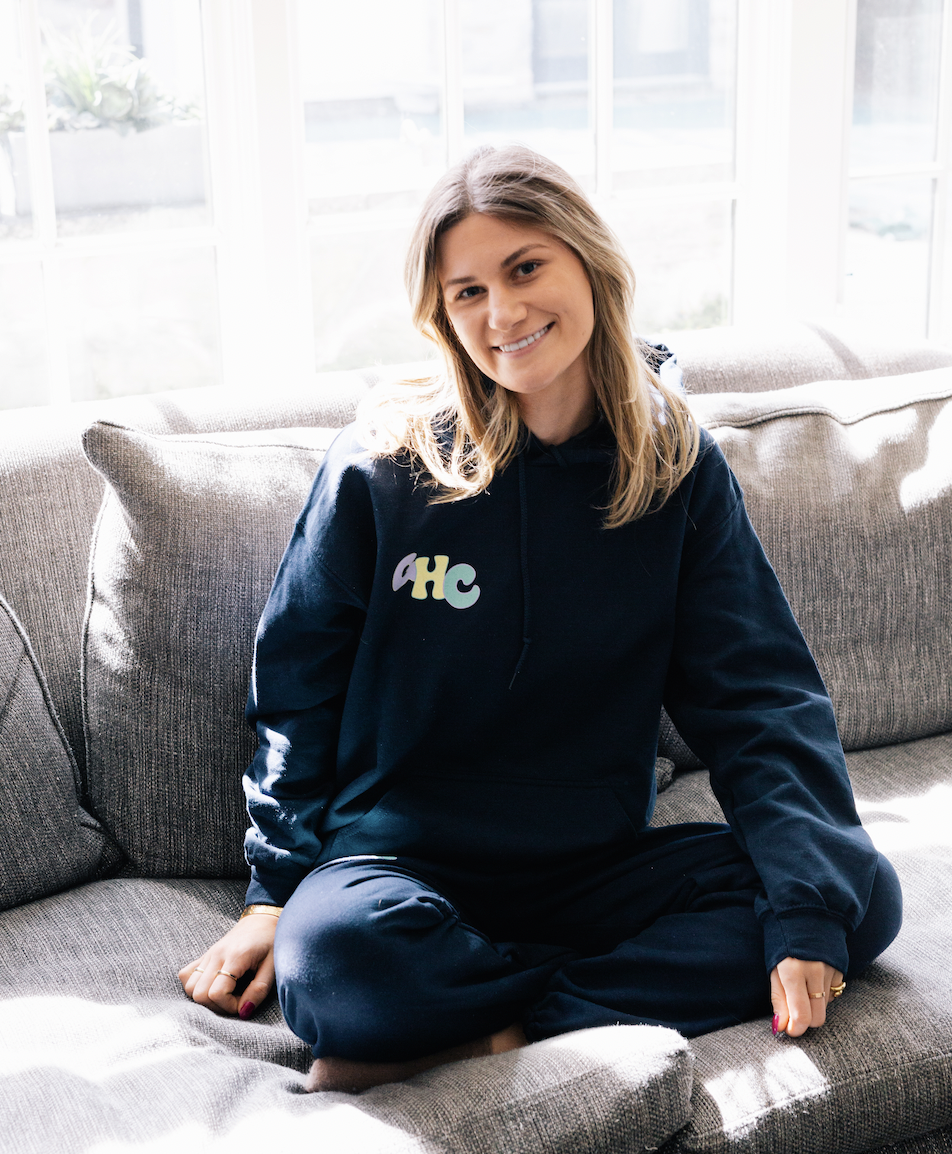
Eloise: Despite being cancer-free for nearly eight years, my journey through survivorship has been far from easy. Cancer continues to influence many areas of my life, both positively and negatively. On a professional level, I have built a career inspired by my experience. The Good Hood Club is a loungewear company that champions childhood cancer care, most notably by donating 50% of its profits to childhood cancer organizations like POGO. Given my journey and fortune with cancer, I constantly seek ways to give back. The Good Hood Club has provided me with a vehicle to do that.
Although cancer is a “distant memory,” the emotional turmoil it sparked is not. Daily, I battle anxiety primarily linked to having had cancer as a teen. This has been an ongoing challenge for me; however, I am committed to finding ways to help me manage it. More abstractly, cancer has taught me many invaluable life lessons. Undoubtedly, my biggest takeaway has been my appreciation and love for life.
Austin: How did you decide to start Good Hood Club as a business and how did you come up with the name?
Eloise: While studying commerce at Queen’s, I took a digital marketing class in my 3rd year. One of the projects required us to create an e-commerce-based business from scratch. While most of our classmates saw this as merely a school project, my group saw it as an opportunity to do something good. My best friend, Chloe, and I wanted to create something meaningful. We thought, “What can we sell that will do good?” Our answer, “Hoods.” We also wanted people to feel part of a more significant community, a club. Hence the name, Good Hood Club.
Austin: What does Good Hood Club mean to you, both on a personal and a professional level?
Eloise: On a professional level, I could not have asked for a better way to dive into the workforce. I have gathered experience across various areas. I have had unparalleled hands-on experience in marketing, operations, strategy, manufacturing, finance...you name it! I am incredibly grateful for the experience Good Hood Club has given me to date. Over time, I hope to watch the company grow, continuing to touch the lives of those battling childhood cancer.
On a personal level, Good Hood Club has been an invaluable healing method. The easiest way to deal with my pain is by transforming it into purpose. Good Hood Club has allowed me to do this, and for that, I am eternally grateful.
Austin: Do you think as a survivor of childhood cancer that there are enough support systems in place to help families and children?
Eloise: I think that there is always room for improvement. However, I am eternally grateful for the help and support I have received over my journey. The childhood cancer community is filled with exceptional individuals who have made invaluable contributions to the community. I would love to see additional resources in the realm of psychosocial support. For me, mental health has been a massive part of my journey with cancer; however, it has not necessarily been a massive part of my care. In my experience, cancer has been just as much a mental health disease as a physical one; yet, it is not treated as such. I hope for a future where both aspects are equally prioritized in cancer care protocols, right from the beginning.
Related Content
Austin: Do you have any advice for young adults that survived childhood cancer that are struggling to find a career that will be fulfilling for them?
Eloise: It is easy to get caught up in what you think you want and should do versus exploring what you truly want and were meant to do. As a business student, I was on a path to a corporate career. I thought that was what I wanted. The second I took the opportunity to try new things and explore, I uncovered newfound passions I wanted to pursue. My advice would be to always experiment and try. Don’t stay committed to one path until you have taken the opportunity to see what else you might want to explore.
Eloise founded Good Hood Club with her university best friend, Chloe, to make their love for hoodies more meaningful and promote comfort during stressful times. 50% of Good Hood earnings go to POGO (Pediatric Oncology Group of Ontario) and their mission to achieve the best childhood cancer care system for children, youth, survivors and their families in Ontario and beyond.
You can find Good Hood at:
Website: https://goodhoodclub.com
Facebook: https://www.facebook.com/goodhoodclub/
Instagram: https://www.instagram.com/goodhood.club/

Austin is an ALL survivor who is interested in music and is an avid drummer. He’s also passionate about giving back to cancer charities that helped him and his family during their cancer journey.

Virtual Learning When You Have ADHD
From the Perspective of a Childhood Cancer Survivor - Leigha Bartholomew

Being a childhood cancer survivor, I know what it is like to fall behind in school. Months of my schooling were spent in a hospital and attending weekly medical appointments. I began to feel overwhelmed thinking I’d never be able to catch up or that I wasn’t doing as well as my peers. It was never expected that I would be at the same level as everyone else while I was going through treatment, at the time I believed I just wasn’t good enough. I’m sure a lot of cancer survivors have felt the same way at one point or another.
I had a similar feeling when post-secondary schools introduced a virtual learning environment in the midst of the pandemic. I started noticing a shift in my capabilities. A new learning atmosphere meant new challenges that I couldn’t adapt to as quickly as I had in the past. Attending classes became more difficult, focusing on work and remembering to finish assignments on time developed into more of an issue than it had been just a few months before, and my motivation to be involved in class discussions decreased. On top of that, I couldn’t bring myself to speak with my professors over Zoom about the challenges that I was facing. It seemed like I was in a rut and I didn’t know how to pull myself out.
My ADHD diagnosis came just a few months after we started learning virtually. While I was familiar with ADHD, I was surprised to learn that I had the disorder myself. Adding this on top of the other issues I had with mental health (I was diagnosed with Generalized Anxiety Disorder in high school) was not something I had even considered, especially so far into my education. If someone were to look at my grades, I bet they wouldn’t have considered it either. Luckily, I didn’t have to go through these challenges all on my own.
Because mental health and learning disabilities pose a challenge for a number of young people, there are resources that have been put into place by schools to help students get through their education. In post-secondary school, there are learning strategists or assistive/adaptive technologists for students seeking academic support. Your academic advisor is also available to help you find programs or services tailored for your specific challenges.
Related Content
Being a childhood cancer survivor can further complicate things. While some survivors may already be predisposed to having mental health and learning challenges, others can develop them due to the treatments they received or other related factors and experiences. These issues can also continue into adolescence and adulthood. Since most people working in pediatric oncology are aware of these challenges, there are specific resources available to survivors and their families. POGO AfterCare Clinic professionals, such as counsellors, art therapists, clinical psychologists and social workers are some of the resources available to help cancer survivors develop strategies related to the difficulties they might be facing with school or everyday life, and POGO School and Work Transitions Counsellors can help you to access these various resources!
My advice to fellow survivors would be to understand that you are not alone if you find yourself struggling. I am sure a lot of people can relate to me when I say that I prefer in-person schooling over the virtual classroom, but that doesn’t mean it’s any less scary having to make the transition. If my own experiences have taught me anything, it’s that everyone has a different style of learning. If you need help, reach out. No matter how difficult things might seem, there are always people and programs available to students and survivors if they need help.
Boxing for Mental Health
18-year-old Isla MacIntosh discusses how boxing helps her cope with her mental stressors

Taneisha: Can you tell me a little bit about yourself and your experience with childhood cancer?
Isla: I was diagnosed with leukemia when I was four years old and have been in remission since the age of seven. I work at a golf course in Ottawa and I just finished my first year in the Behavioural Science Program at St. Lawrence College.
Taneisha: Other than your family, does anyone else know about your diagnosis? Did you have to miss any school due to your cancer and its treatment?
Isla: My parents mentioned it to people they knew and our surrounding neighbours and, of course, my school knew. I missed kindergarten entirely so my first year attending school in person was in Grade 1. Everyone was very supportive.
Taneisha: Do you feel you continue to get the support you need?
Isla: My sister has done everything she could to support me ever since I was young. She pretty much gave up her childhood because of me. In my early teens, I realized how big my diagnosis really was, and I needed to find an outlet to relieve stress. At 14, boxing became that outlet. My whole family is supportive of my boxing.
Taneisha: How did you discover boxing?
Isla: I found this youth recreational boxing class in Ottawa where I grew up. The coach was the first female boxing coach. She was a big inspiration to me because she had cancer so I felt that I could relate to her. She also helped me find a great boxing school when I started going to school in Kingston. Now I train 3-4 days in person and on the other days, I do dryland training. Dryland training means conditioning, running, weights and other strength activities.
Taneisha: How did boxing help you with your mental health stressors and how did it help you get through your first year of college?
Isla: When I moved away for school in Kingston, I found a safe place for boxing with nice people, which helped me not worry as much about school. Boxing is very technical. When you are in the middle of it, you have to focus on boxing and nothing else. It takes you out of any stressful situation you might feel you are in.
Taneisha: What are your goals—both for boxing and your education?
Isla: I like to compete so my goal for boxing would be to go to nationals. My goal for school is to find a full-time job that relates to behavioural science.
Taneisha: Do you have any advice for other childhood cancer survivors who are going through something similar to what you are going through?
Isla: My advice would be to find an outlet that is important to you, especially if you are older and there are external pressures. It could be sports, music or something else. An outlet can be a safe place for you to express yourself.
 Taneisha Kandiah was diagnosed with leukemia when she was 18 months old. She has been in remission since the age of three. She recently graduated from the University of Ottawa in life sciences.
Creative Corner with Holly
Holly Bokor's Port Illustration
 Port is part of a triptych* of self-portraits about my memories from when I had cancer at age 14. A lot of medical experiences and journeys can result in feeling dehumanized, objectified. Port focuses on the wires and tools, with no identifying features of the figure. The background contains scans of old documentation from my own treatment. Though it’s a drawing of myself, the sense of identity is purposefully removed. It reflects my feelings of emotional detachment. Essentially, it’s an attempt to capture that strange dissociation that occurred while I was in treatment.
*Artwork made up of three pieces or panels
Holly is a recent graduate of Seneca College's illustration program. They find solace in expressing thoughts through line. You can find more of their work at congercine.com.
Survivor’s Childhood Cancer Experience Inspires her Career in Pediatric Oncology Nursing
Kafia Ibrahim is a registered nurse whose personal experience as a two-time childhood cancer survivor inspired her career path. She works in the haematology/oncology unit at The Hospital for Sick Children (SickKids) in Toronto and attributes some of her success to touchpoints she had with a POGO Interlink Nurse while in treatment and a POGO Counsellor after treatment.

Kafia was diagnosed with rhabdomyosarcoma, a soft tissue cancer, when she was eight years old. Her treatment involved chemotherapy and radiation. At 15, Kafia relapsed and faced a second diagnosis of another soft tissue cancer. This time, surgery and chemo were part of her treatment protocol.
“I was too young to remember the details,” Kafia says “but I know that from the time I was diagnosed, my family had very positive experiences with Tina, my POGO Interlink Nurse. I attended Campfire Circle (formerly Camp Ooch and Camp Trillium) because of her and made lifelong friends, and she came to our home and connected us to many community and financial supports.”
Related Content: Surviving Childhood Cancer: From Confidence Buster to Confidence Builder
After her treatment ended, Kafia faced many challenges pursuing her academic and career goals.
“Those challenges were a result of the side effects of treatment,” she explains. “With nothing to control my pain and the resulting negative impact this had on my mental health, it took me longer than usual to finish high school. In Grade 10, I went from online school, to alternative school and back online. I utilized many of the services of the POGO School and Work Transitions Program during this time. When I was finally able to finish high school, my POGO Counsellor, Lucie, helped me with my university applications. She also notified me of scholarships that I would be eligible to apply for, and I received one from Childhood Cancer Canada. My POGO Counsellor also helped me get extra time for tests at school, something I didn’t even know was possible. She helped me know my rights and build my confidence to ask for what I needed. I don’t know if I would have done as well as I did if it were not for my POGO Counsellor.”
Wonderful nurses made an impact
While Kafia’s experiences through her cancer journey were not all great, the positive ones led to her career decision.
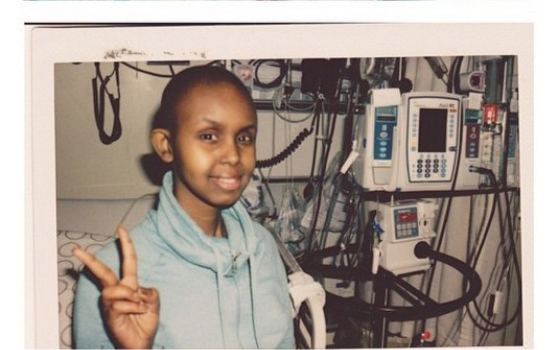
“I have had my fair share of experience with healthcare providers, especially nurses,” says Kafia. “I’ve experienced the good, the bad and the ugly. The amount of influence that nurses can have on a patient’s experience with their disease is more than one would expect. I still remember the wonderful nurses that helped get me through some of my hardest days. Whether it was singing my favourite song with me, celebrating my 16th birthday when I was in-patient or providing me with a shoulder to cry on when things got too much. I want to be able to provide this personal connection for another child and their family that may be going through a similar situation.”
Related Content: Returning to School after a Cancer Diagnosis? Ask for Help!
Gaining invaluable on-the-job experience
From 2019 to 2020, while in her nursing program, Kafia had the opportunity to work as a clinical extern at SickKids. In this mentored nursing assistant role in the haematology/oncology unit, she gained invaluable experience. She got to know families and found many ways to offer them respite, like staying at their child’s beside so they could take a coffee break. Remembering how bored she was as a patient, Kafia made it a point to entertain her patients. She learned the importance of building trusted relationships. Also, working in the hospital where she had received treatment was a way to see if any underlying or unresolved emotions would surface that might get in the way of her career success. Thankfully, none did!
“This job allows me to meet the bravest people. I feel like my experience with cancer allows me to see the bigger picture when providing care to patients and their families. My career plans include becoming a POGO Interlink Nurse in 3 to 5 years and finding ways to better support the transition from pediatric to adult care for childhood cancer patients. When I see the impact that my care can have on patients, it motivates me to work harder.”

Kafia Ibrahim is a registered nurse at The Hospital for Sick Children. She earned her Bachelor of Science in Nursing from the Seneca/York Collaborative Program. She is a two-time childhood cancer survivor. Her POGO Interlink Nurse and POGO Counsellor inspired and supported her career goals.

Presentations Help Survivors Build Skills
The 2022 Survivor to Survivor (S2S) Network presenters have been chosen! The four presenters are ready to work with topic experts to create presentations on subjects that matter to the childhood cancer and brain tumour survivor community.
Payton's topic is how volunteering and networking can help survivors find jobs. She says, “I am so passionate about this topic because I have been fortunate enough to benefit from the services of many volunteer-based organizations. I have seen what a difference volunteers can make and just how integral they are to these organizations. I am looking forward to sharing this passion with the S2S Network!”
Dirk, who’ll be presenting on how to speak up and advocate for yourself, believes that S2S sessions can help childhood cancer survivors, especially when they’re transitioning from treatment to the "real-world." He says what’s so important is that survivors not only learn from the content of S2S sessions, but they also get to connect with other survivors and feel that they’re not alone.
Olivia will be presenting on how each childhood cancer or brain tumour survivor’s journey is different and shouldn’t be compared to anyone else’s. She knows that after treatment, survivors often need to learn how to regain confidence in their ability to grow and learn, and she wants them to know that there is no deadline to be successful.
Faiza’s session will be about how to deal with difficult conversations that can come up about cancer and survivorship, and things survivors can do to support their wellbeing. She says, “I never felt such a deep connection with others in terms of cancer until I joined last year’s S2S session. If you struggle with any late effects of cancer, I'm sure the workshops will be a great source of inspiration for you, as much as they were for me. I can't wait to see you there!”
Watch your email and follow us on Facebook and Instagram for the dates of each S2S session!
Sign up for POGO Transitions eNews Newsletter and get S2S Workshop updates.
Learn more about POGO's Survivor to Survivor (S2S) Network.
Learn more about the POGO School and Work Transitions Program.
Dr. Ewurabena Simpson Discusses Culturally Respectful Health Care
A conversation with POGO Transitions Counsellor Sarah Brandon and her respected colleague Dr. Ewurabena Simpson.

Sarah: We know that representation matters. Can you describe what that means for Black patients and their families?
Dr. Simpson: Speaking from my own experience as a patient, having a pediatrician who was also from the Black community had an important impact on the therapeutic relationship that my pediatrician had with me and with my family. Seeing someone from a similar cultural background meant that our pediatrician understood how our skin tone may have changed the way that certain conditions manifested on my complexion and how our cultural background influenced my family’s views on health and learning. It also meant that our family felt safe discussing specific challenges and experiences of subtle or overt racism as we settled into our life in Canada. One of the most lasting impacts that having a Black pediatrician had for me was that it helped me to see myself as a future physician, that I also belonged and that I could make a difference in the lives of all children regardless of their backgrounds.
Sarah: What does culturally respectful health care mean to you and what are 3 goals to strive for?
Dr. Simpson: I don’t think that there is a right answer to this question but in my mind, a commitment to culturally respectful health care would imply that we as healthcare providers will maintain an awareness and openness to others regardless of whether they are similar to or different from ourselves.
Dr. Simpson’s Three Goals for Culturally Respectful Health Care
- It is important to acknowledge that we all come from different life experiences and cultural backgrounds that will influence the way that we experience health and access health care.
- As healthcare providers, we should be aware that we cannot know everything about another person’s experience.
- We should remain humble and open to learning about our patients’ cultural backgrounds and experiences so that we can respond to and support their health needs in a way that is sensitive to and respectful of their culture.
Sarah: What can healthcare providers do in their practice to ensure Black patients feel safe and heard in our care?
Dr. Simpson: With each and every patient, it is important for us to check our personal biases and to be aware of how they may unconsciously influence our daily interactions and our approaches to patient care. When caring for Black patients, it is important to recognize that being Black does not represent a specific belief system, group of behaviours or any cluster of health attributes. Each patient is an individual and every family is a unique unit. As a healthcare provider, you should treat every patient encounter with an open mind and avoid making generalizations or assumptions that are based on a patient’s racial or cultural background. While being of African or Caribbean descent may be associated with race-based disparities in health, we should always remember that a patient’s health and experiences are shaped by much more than their physical attributes.
Sarah: What is the importance of honouring Black History Month in hematology and oncology as part of the continued fight against racism?
Dr. Simpson: Black History Month is our opportunity to celebrate the ongoing contributions of African, Caribbean and Black communities in Canada. By acknowledging these contributions and these communities in medicine and in hematology/oncology, this inclusion reinforces the fact that we all belong in this community, that we all have a role and that we all have a voice.
Sarah: Do you have a message for our Black childhood cancer survivors this Black History Month?
Dr. Simpson: You have gone through a long and difficult journey to overcome your illness and to get to a place of better health. You are among our champions for childhood cancer and for Black history. You inspire all of us and we hope that you feel cared for and safe in your medical care and in your day-to-day lives. If there are ways that we, as your healthcare providers, can be more supportive and sensitive in your care, we are open to doing better.
While this article was written in recognition of February being Black History Month, POGO recognizes that continually providing culturally respectful health care contributes to our vision of an excellent childhood cancer system. Read POGO's Diversity, Equity and Inclusion statement.
 Sarah Brandon is a POGO Transitions Counsellor working at CHEO and Kingston General Hospital to empower youth and young adult survivors of childhood cancer and brain tumours in their transition from high school to post-secondary education or work.
Music heals and can change your life
Ten years ago, I was diagnosed with a papillary brain tumour of the pineal region. I went through three surgeries, a lumbar puncture and thirty treatments of radiation at CHEO and SickKids. I am 21 now.
Since I was young, music has been important in my life. When I was in the hospital for cancer treatment, I would associate different doctors, nurses and family members with songs. I also sang to help me through tough times. In fact, when I woke from the third surgery, my family and doctors were surprised to find me singing!
And it’s not just me. Neurological researchers have found that music reduces the stress hormone cortisol. It releases dopamine and serotonin into the brain, helping you relax and stay focused. And it stimulates oxytocin—a hormone related to positive, happy feelings. Studies have also shown that music can help people process their feelings and change their mood completely.
Try it yourself! When someone you know is in a bad mood, try playing one of their favourite songs to see how they react. It might seem like a small thing, but as mentioned above, music can improve your mood and your whole outlook.
Written by Ariane Delorme
Mon nom c’est Ariane Delorme et dix ans passés, j’ai été diagnostiqué avec une tumeur cérébrale papillaire de la région pinéale. J’ai dû subir trois chirurgies majeures, une ponction lombaire, et trente traitements de radiations à CHEO et à Sick Kids. J’ai vingt et un maintenant.
Depuis un jeune âge, la musique est devenu très importante pour ma vie. Lorsque je me retrouvais à l’hôpital pour mes traitements, j’associais des chansons aux docteurs, infirmières et membres de ma famille. Je chantais aussi pour m’aider à passer au travers des temps difficiles. Je me suis même réveillé de la troisième chirurgie en chantant! Ceci a laissé mes docteurs ainsi que ma famille surpris.
Ce n’est pas seulement moi. Les recherches en neurologie ont découvert que la musique réduit le cortisol, qui est un hormone de stress. Ça relâche la dopamine et la sérotonine dans le cerveau, qui aident à se détendre et rester concentrer. Ça stimule aussi l'ocytocine. Une hormone reliée aux pensées et sentiments positifs. Les études ont aussi montré que la musique peut changer l'humeur complètement des gens.
Essaie toi-même! Lorsque quelqu’un vous connaissez est pas dans la meilleure humeur, essais de jouer l’une de leurs chansons préféré pour voir comment ils réagissent. Ça semble peut-être comme rien, mais comme mentionné ci-dessus, la musique peut améliorer votre humeur et votre perspective.
Écrit par Ariane Delorme