Data Privacy Inquiries and Challenge
Research & Data
POGO is committed to protecting the privacy of personal health information.
If you have a privacy inquiry, require personal health information, suspect a privacy violation or wish to challenge POGO’s compliance with privacy principles, POGO has put in place a process to investigate and resolve concerns or questions.
To request personal health information, please fill out the Privacy Access Request form and email it to the Privacy Officer at privacy@pogo.ca.
If you have any questions regarding privacy and security at POGO, please contact POGO’s Privacy Officer. Please download the POGO External Privacy Complaint Form to assist us in investigating your concern. Our Privacy Officer will respond to you within 48 hours of receiving the completed form with an update on any actions that will be taken to resolve your concern.
POGO Privacy Officer
Privacy Officer
480 University Avenue, Suite 1014
Toronto, ON M5G 1V2
Phone: 416-592-1232
Toll-Free: 1-855-367-7646
Email Privacy Officer
If you wish, you may also contact the Office of the Information and Privacy Commissioner of Ontario:
Information and Privacy Commissioner of Ontario
2 Bloor Street East
Suite 1400
Toronto, Ontario M4W 1A8
Email the Information and Privacy Commissioner
Phone: Within Toronto area: 416-326-3333
Within Ontario: 1-800-387-0073
TDD/TTY: 416-325-7539
Fax: 416-325-9195
Keeping your data up to date
POGO uses the National Change of Address (NCOA) Mover Data Service to stay connected to our supporters. Canada Post-NCOA Mover Data Service is a verification system used to update/validate address information. POGO is compliant with Canada Post’s NCOA Terms of Use. If you have concerns with the statement above or have further questions, or you would like to opt-out of this service, please contact the Privacy Officer at privacy@pogo.ca.

Data Privacy FAQs

Research & Data
Supportive Care and Guidelines
Below are frequently asked questions about privacy and protecting personal health information at POGO.
Authority
A: POGO is named as a prescribed entity for the purposes of section 45 of Ontario’s Personal Health Information Protection Act, 2004. Under this designation, POGO can receive, use and disclose personal health information without consent, for analyzing and compiling statistical information that helps manage, evaluate, monitor, allocate resources and plan for our health care system. In addition, POGO and other researchers may also conduct research using personal health information. POGO and researchers must comply with section 44 of the same act (PHIPA, 2004), which outlines strict legal requirements that researchers must follow in order to use and disclose personal health information within POGO’s database, POGONIS (Pediatric Oncology Group of Ontario Networked Information System).
POGO receives personal health information from many sources, including persons or organizations in the health sector defined as “health information custodians” under the Ontario’s Personal Health Information Protection Act, 2004, such as the Ministry of Health, physicians, hospitals, laboratories, pharmacies and long-term care homes.
In order to maintain this privilege, POGO must have in place policies, practices and procedures to protect the privacy of individuals whose personal health information POGO receives, and to maintain the confidentiality of that information. These policies, practices and procedures are reviewed and approved by the Information and Privacy Commissioner of Ontario every three years.
A: POGO uses personal health information to improve the circumstances of Ontario’s children with cancer, their families, survivors and caregivers, through the development, implementation and continual refinement of an accessible, well-integrated provincial childhood cancer system.
This personal health information helps POGO assess how well the childhood cancer health system is performing, identify areas of strength, recommend areas that need improvement and then plan and coordinate programs and services to meet the ongoing needs of children with cancer, caregivers and healthcare professionals.
The scope of POGO’s activities includes:
- Identifying and analyzing trends, patterns and outcomes of children with cancer
- Identifying gaps in the delivery of cancer care services
- Developing, implementing and evaluating new programs of care, and identifying the optimal location of such programs
- Evaluating the financial and economic implications of childhood cancer control programs
- Assessing the status of survivors and their related quality of life
- Providing information to policy makers and the government to help shape decision-making to reflect the needs of children in Ontario with cancer
In addition, POGO may collect and use personal health information to conduct research related to childhood cancer treatment. Prior to collecting and using personal health information for research purposes, POGO complies with all the requirements of the Personal Health Information Protection Act, 2004.
A: POGO reports health information only through the interpretation of aggregate data, not individual data. That is to say, no individual can be identified from the reports. Most information is published in medical journals or in special reports for a variety of stakeholders, including the Ministry of Health.
A: Yes, anyone can access these reports. Requests for these reports can be made by contactingPOGO’s Privacy Officer.
Information Collection
A: POGO receives personal health information abstracted from medical records of hospitals in the province of Ontario who treat childhood cancer patients or childhood cancer survivors. POGO also receives personal health information from other administrative databases, registries and surveys, such as those from patients and their families and Vital Statistics Canada. In addition, POGO receives personal health information from other entities and persons who maintain registries of personal health information that are prescribed in the Ontario’s Personal Health Information Protection Act, 2004, such as Ontario Health (Cancer Care Ontario).
A: POGO collects information related to the financial assistance received by families from POGO; information from community nursing services provided by the POGO Interlink Nursing Program; and information related to hospital staffing, which is used to help understand how many professionals are needed and where. Publicly available information, such as population estimates and Statistics Canada census area profiles, are also collected.
A: POGO conducts regular audits with the persons or organizations that supply personal health information to POGO.
A: The POGO database (POGONIS) contains personal identifiers. However, only a limited number of employees who require access to these identifiers in carrying out their responsibilities have access to these identifiers in a secured data centre.
Information Sharing and Access
A: POGO only discloses your personal information or personal health information with your consent or as permitted or required by law, including the Ontario’s Personal Health Information Protection Act, 2004 and its regulation.
A: POGO does not provide individuals with access to their personal health information, but rather, refers the individuals or their substitute decision-makers to the responsible healthcare provider.
Information Security
A: Rigorous privacy and security policies, practices and procedures for the protection of personal health information have been implemented and are based on Ontario’s Personal Health Information Protection Act, 2004 and on the ten guiding principles found in the Canadian Standards Association Model Code, which is part of the federal Personal Information Protection and Electronic Documents Act.
All POGO staff undergo mandatory privacy training and annually sign a confidentiality agreement.
POGO’s comprehensive security audits and controls address the organization’s operational, technological and physical space. For example, there are strict policies that limit access to personal information in POGO’s custody. POGO’s facility has continuously tracked card key access and video surveillance. Personal information, including personal health information, is stored in a secure area within the POGO office, which can only be accessed by a few designated employees. The database server has no external connection to guarantee the security of the information. Computer passwords are frequently changed, firewalls and computer software are in place for tracking activity and data encryption techniques are always employed.
Finally, the expertise of external security personnel is used to test the integrity of POGO’s security and to ensure it is up to date with technology.
A: POGO’s mandate requires that it hold personal health information on an ongoing basis in order to satisfy long-term follow-up of pediatric oncology treatment and outcomes. For specific research purposes, POGO retains personal health information as long as is necessary to fulfill the purpose of the research projects for which the personal health information was collected.
Electronic files are securely deleted (magnetized or erased), paper is shredded by bonded professional shredding companies, CDs are perforated and broken and tapes are securely destroyed with a magnetizing device.
Research Ethics
A: All research studies conducted by POGO are conducted in compliance with the requirements of the Ontario’s Personal Health Information Protection Act, 2004, which includes the preparation of a written research plan and obtaining Research Ethics Board approval of the research plan prior to using personal health information. In addition, all research studies undergo review by POGO scientists to ensure that the research plan investigates important health questions and that the study methodology is appropriate.
A: No. As a non-profit charitable organization, POGO’s research is not supported by commercial interests.
Funding is received from a variety of sources, including the Ontario Ministry of Health, the POGO Development Office (fundraising), the POGO Chair in Childhood Cancer Control and other granting foundations.
Accountability
A: POGO is accountable to the Ontario Ministry of Health.
POGO’s Privacy Officer ensures that all collections, uses and disclosures of personal information, including personal health information, comply with all applicable laws including the Ontario’s Personal Health Information Protection Act, 2004. As an example, POGO’s Privacy Officer ensures that prior to the use of personal health information for research purposes and prior to the disclosure of personal health information for research purposes without consent, a research plan must be prepared in accordance with the requirements of the Ontario’s Personal Health Information Protection Act, 2004 and the plan must receive Research Ethics Board approval.
POGO also undergoes electronic security audits by external security experts to protect the confidentiality and security of personal information and personal health information.
Additionally, policies, practices and procedures implemented by POGO to protect privacy and confidentiality are reviewed and approved by the Information and Privacy Commissioner of Ontario every three years.
A: The CEO of POGO and the POGO Privacy Officer are responsible for ensuring the security and confidentiality of the personal health information.
For more information, please contact our Privacy Officer.
Data Privacy

Research & Data
Supportive Care and Guidelines
Protecting Privacy and Personal Health Information at POGO
As a Prescribed Entity under Ontario’s Personal Health Information Protection Act, 2004 (PHIPA), POGO values and protects the personal health information of individuals. With this status, we balance preserving the privacy of children and youth with cancer, survivors of childhood cancer and their families with collecting and using health information to support innovative research and health care planning. This includes the allocation of resources and service delivery to help build a better childhood cancer and survivor care system for everyone. Learn more about privacy and protecting personal health information at POGO by reading our Privacy Policy (Policy 1.01 Policy in Respect of POGO’s Status as a Prescribed Entity, formerly the POGO Privacy and Data Security Code) and our FAQ page.
Our Commitment to Privacy
POGO respects personal privacy, safeguards the confidentiality of personal health information and ensures a secure database environment.
We achieve this through:
- Upholding principles for the protection of personal health data
- Enforcing strict policies which limit access to data
- Maintaining organizational, technological and physical security measures
- Mandatory privacy training and signed confidentiality agreements for all agents (e.g., employees, students, researchers, third parties, etc.)
- Entering into data sharing agreements with our hospital partners, researchers and other Prescribed Entities
- A strict approval process for research proposals
- Implementing processes for the review of privacy and information security policies and procedures by the POGO Senior Leadership Team or POGO Data Operations Committee
- Regularly reviewing our policies to ensure they are compliant with current health information legislation and protection practices
- Maintaining a privacy and security audit program
POGO Privacy and Information Security Roles and Responsibilities
The Chief Executive Officer (CEO) of POGO is ultimately accountable for ensuring POGO and our agents comply with our Privacy Policy, PHIPA and its regulations and POGO’s privacy and information security policies and procedures and the security of PHI.
The CEO has delegated the day-to-day management of privacy and information security at POGO to the following individuals:
- Privacy Officer
- Director, Finance and Administration
- Manager, Data Holdings and Operations
Information and Privacy Commissioner of Ontario
The Information and Privacy Commissioner of Ontario (IPC) reviews and approves POGO’s privacy and information security policies and procedures every three years in order for POGO to maintain its Prescribed Entity designation. All documentation related to the triennial review and approval of POGO may be accessed on the IPC website.
Data Requests

Research & Data
Supportive Care and Guidelines
POGO is pleased to make POGO data available to our partners, researchers and stakeholders conducting childhood cancer analyses and research.
Before you submit a data request, please read our Access to and Use of POGO Data document which identifies the process for obtaining POGO data.
Please note that POGO requires a minimum of 20 business days to complete data requests.
Alexandra Airhart
Manager, Data Holdings and Operations
416-592-1232 ext. 271
Email Alexandra Airhart
Data Reports

Research & Data
Supportive Care and Guidelines
Reports of Childhood Cancer Statistics
POGO data reports are important for data-driven planning and quality improvement of the childhood cancer care system, one of the five strategic goals of POGO’s Childhood Cancer Care Plan: A Roadmap for Ontario 2024-2029.
POGO monitors and publicly reports childhood cancer statistics in Ontario, including cancer incidence (new cases), mortality (deaths) and survival over time and by population. We do this work using data collected in our childhood cancer database POGONIS, and by contributing data, knowledge and analytical insights through reports developed in partnership with other organizations, to ensure the right data are available and being used to drive an effective childhood cancer care system.
In addition, POGO provides statistics to hospital partners related to their case-mix, patient outcomes, health service utilization and workload to ensure high-quality care for children with cancer in Ontario.
POGO offers a specialized series of public reports on the burden of childhood cancer in Ontario.
Childhood Cancer in Ontario: The 2020 POGO Surveillance Report
This report features updated statistics on childhood cancer incidence, mortality, survival and estimated prevalence among children aged 0–14 years in Ontario.
Childhood Cancer in Ontario 1986–2015: A POGO Surveillance Report
The 2018 POGO Surveillance Report provides detailed statistics related to the impact and burden of cancer in children, aged 0 to 14 years, in Ontario, over a 30-year period, using data from POGONIS, with a focus on the incidence of childhood cancer in Ontario, mortality, survival and prevalence in the population. For the first time, the prevalence of childhood cancer is estimated for the Ontario population.
POGO Atlas of Childhood Cancer 1985–2004
The POGO Atlas is the inaugural report of childhood cancer statistics in Ontario. It provides a comprehensive overview of the patterns of incidence, mortality, survival, treatment and healthcare utilization of children with cancer in Ontario over a 20-year period.
In partnership with Ontario Health (Cancer Care Ontario), POGO provides data on childhood cancer for the Ontario Cancer Statistics report series on the burden of cancer in Ontario.
Ontario Cancer Statistics, 2024
Ontario Health (Cancer Care Ontario)
Available at: https://www.cancercareontario.ca/ocsreport
Through our ongoing collaboration with Ontario Health (Cancer Care Ontario), POGO has contributed new cancer incidence, mortality and survival statistics for Ontario’s children (ages 0 to 14 years) in Ontario Cancer Statistics 2024, the fifth edition of the Ontario Cancer Statistics report. The Ontario Cancer Statistics report series provides comprehensive information on the changing burden of cancer in Ontario to help plan, investigate, measure and monitor population-based cancer control efforts.
Ontario Cancer Statistics, 2022
Ontario Health (Cancer Care Ontario)
Available at: https://www.cancercareontario.ca/en/data-research/view-data/statistical-reports/ontario-cancer-statistics-2022
POGO’s contribution to the fourth edition of this report marks our continued collaboration with Ontario Health (Cancer Care Ontario) and second inclusion of childhood cancer statistics for Ontario’s children (aged 0 to 14 years) in an Ontario Cancer Statistics (OCS) report. The OCS report series helps inform health system planning that directly affects patient care.
Ontario Cancer Statistics, 2020
Ontario Health (Cancer Care Ontario)
Available at: https://www.cancercareontario.ca/en/statistical-reports/ontario-cancer-statistics-2020
POGO’s contribution to the third edition of this report marks the first-ever inclusion of childhood cancer statistics for Ontario’s children (aged 0 to 14 years) in an Ontario Cancer Statistics report and helps inform health system planning that directly affects patient care.
POGO collaborates with the Public Health Agency of Canada (PHAC) to report childhood cancer data for Ontario.
Cancer in Young People in Canada (CYP-C) Data Tool
Public Health Agency of Canada
Available at: https://health-infobase.canada.ca/data-tools/cypc/
POGO collaborates with the Public Health Agency of Canada (PHAC) by providing childhood cancer data from POGONIS to populate the Canadian childhood cancer surveillance database Cancer in Young People in Canada (CYP-C). The CYP-C data tool provides incidence and outcome statistics on all children diagnosed with cancer in Canada, aged 0 to 14 years.
Contact Us
For more information about POGO’s data reports or to collaborate with POGO on a future data report, please contact us at info@pogo.ca.
Sign up for our POGO Childhood Cancer Statistics eNews list for new reports, related announcements and other news from POGO.
Databases

Research & Data
Supportive Care and Guidelines
POGONIS is the engine driving POGO’s analytic and research activities. It is actively used for monitoring and surveillance of childhood cancer and to generate data to inform health system planning and policy development. POGONIS is a source of validated and reliable data used to monitor the incidence, mortality, survival and prevalence of childhood cancer, the demand for cancer care, patient outcomes and long-term effects of childhood cancer treatment.
The POGO AfterCare Program Database maintains patient information collected by the POGO AfterCare Clinics in POGO’s Provincial Pediatric Oncology AfterCare Program, which provides routine health screening and education to survivors of childhood cancer at risk for long-term health-related effects from their cancer treatment.
The POGO Financial Assistance Program Database maintains information about patients and families enrolled in the POGO Financial Assistance Program, which supports families through the enormously financially challenging period of a child’s active cancer treatment.
The POGO Interlink Nursing Program Database maintains information about patients and families cared for by POGO Interlink Nurses through the POGO Interlink Nursing Program, which offers specialized oncology support to patients and families across hospital, home and community environments in Ontario.
The POGO Satellite Program Database maintains patient information collected by the POGO Satellite Clinics in POGO’s Provincial Pediatric Oncology Satellite Program, which transfers aspects of a child’s cancer care to POGO Satellite Clinics in community hospitals closer to home.
The POGO School and Work Transitions Program Database maintains client information on childhood cancer survivors who enroll in the POGO School and Work Transitions Program for assistance in transitioning to post-secondary education or the workforce.
POGO Research Unit

About POGO Research Unit
Supportive Care and Guidelines
Research is essential for improving the health and outcomes of children with cancer.
POGO established the POGO Research Unit (PRU) in 1996 to focus on research that contributes to a better understanding of childhood cancer and its impacts, and improved outcomes for children with cancer and their families. The PRU partners with institutions throughout the province and beyond to promote multidisciplinary, multi-institutional health research activities that:
- Enhance our understanding of the causes of childhood cancer
- Inform policy development
- Align resources with research needs
- Diminish the impact of childhood cancer on children, families and society
Led by a steering committee comprised of academic, scientific and thought leaders, the POGO Research Unit focuses on four pillars of scientific inquiry:
- Epidemiology
- Health Services Research
- Economics
- Survivor Status/Quality of Life
Epidemiology
- Epidemiology, including environmental and molecular interactions, especially relating to those cancers of changing incidence in childhood
- Disease distribution by cluster analysis
- Trends analysis and projections, notably in regard to the anticipated increment in incidence and projections of resource utilization
- Disease, treatment, sociological and system determinants of clinical outcomes
Health Services Research
- Evaluation of innovative developments and determinants of success in health care delivery
- Evaluation of practice guidelines
- Studies of knowledge transfer – from science to care delivery and policy, and from the professional to the public realms
- Study of the application of new technologies to childhood cancer care
Economics
- Investigation of existing methodologies for estimation of costs attributed to childhood cancer, and development and application of new measures
- Study of cost, cost effectiveness, and cost benefits of differing forms of therapy for similar diseases
- Studies of the economic burden of illness on children and families
- Comparison of costs of programs delivered in different settings
Status of Survivors/Quality of Life
- Investigation of short- and long-term health outcomes
- Measurement of health status and health-related quality of life during and after therapy
- Identification and study of interventions intended to alter long-term health status including preventive strategies and health promotion interventions
- Assessment of family coping and survivors’ late effects
2020 POGO Surveillance Report
Research & Data
Supportive Care and Guidelines
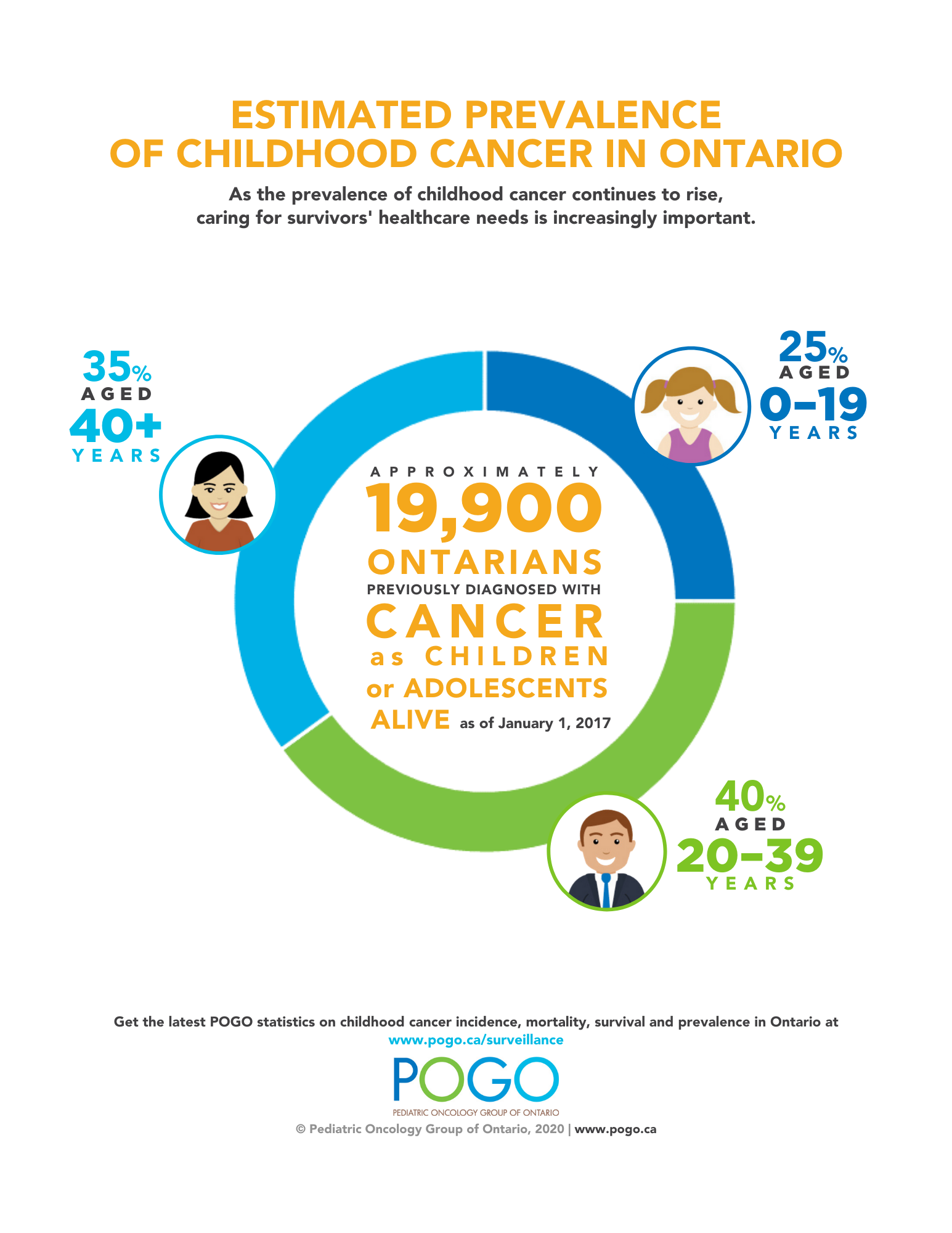
Childhood Cancer in Ontario: The 2020 POGO Surveillance Report provides updated childhood cancer statistics on the impact and burden of cancer in children aged 0–14 years in Ontario. It analyzes childhood cancer incidence (new cancers), mortality (deaths), survival (number of children diagnosed with cancer who survive 5 years after diagnosis) and estimates of prevalence (the number of Ontarians alive today with a previous diagnosis of cancer as a child or adolescent, aged 0–19 years). New in 2020: In addition to updating the data and trends, new details about childhood cancer subtypes and age groups have been added.
*The report is intended for use with Microsoft Office Excel 2010 and later versions. It uses the Excel Macro-Enabled Workbook file format (file extension *.xlsm) to deliver the best user experience. Please review our one-page instructions Accessing the 2020 POGO Surveillance Report.
Childhood Cancer in Ontario: The 2020 POGO Surveillance Report supports service delivery planning and evaluation, policy advice, decision-making and research, with the ultimate goal of transforming over 30 years of data from POGO’s active childhood cancer registry, POGONIS, into actionable information for use by POGO and our system partners. It represents the latest edition in our series of POGO childhood cancer surveillance statistics reports, based on data sourced primarily from POGONIS.
By monitoring and publicly reporting Ontario childhood cancer statistics, POGO ensures the right data are available and being used to drive an effective childhood cancer system, one of the strategic objectives of our Childhood Cancer Care Plan: A Roadmap for Ontario 2024-2029.
Key Messages
Incidence Rates and Trends
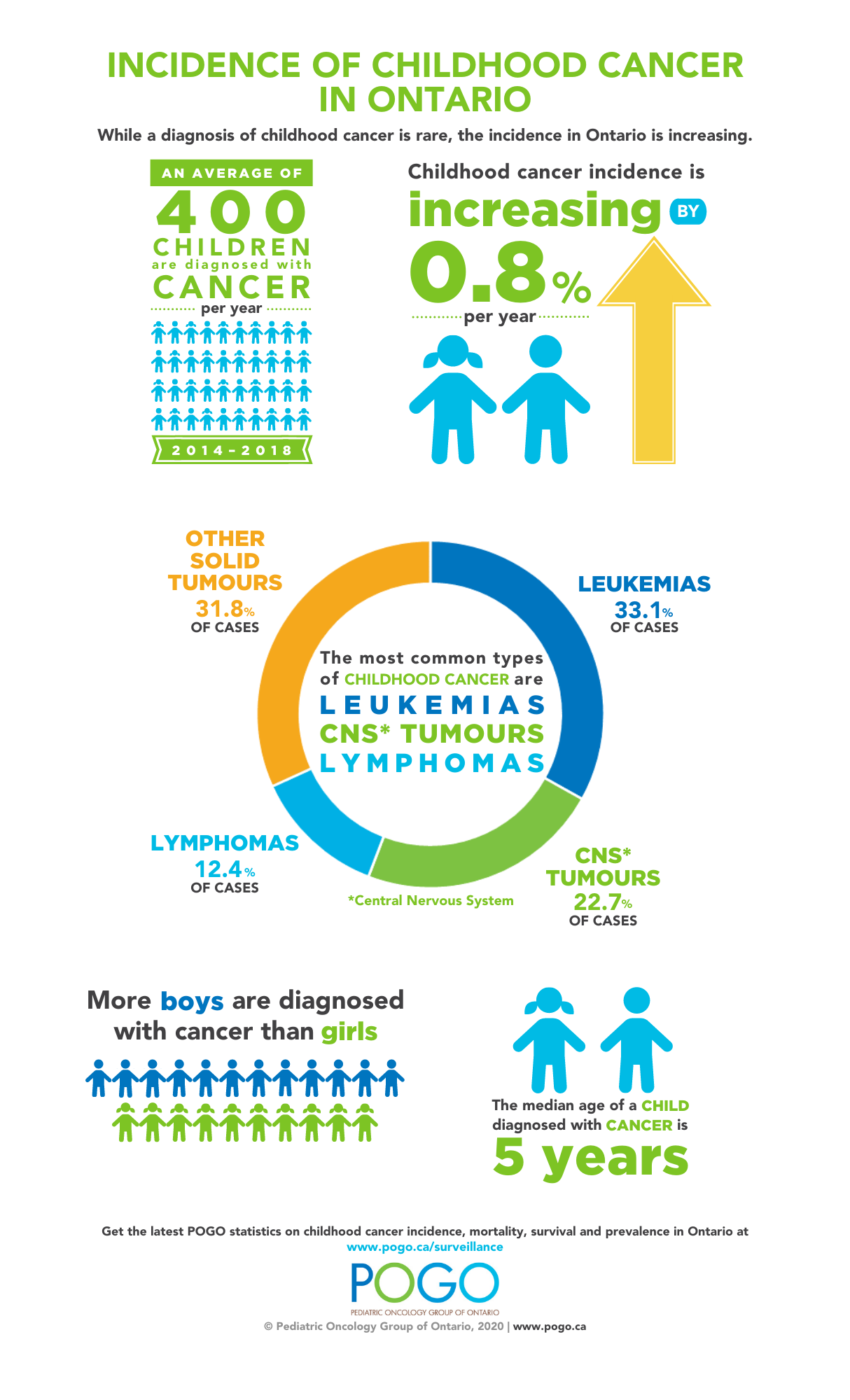
KEY MESSAGE: A diagnosis of childhood cancer is rare, accounting for <1% of all cancer diagnoses in Ontario’s population. However, the incidence rate of childhood cancer in Ontario is increasing by an average of 0.8% per year (1986–2018).
IMPLICATION: Research into the causes of childhood cancer is needed.
Mortality Rates and Trends
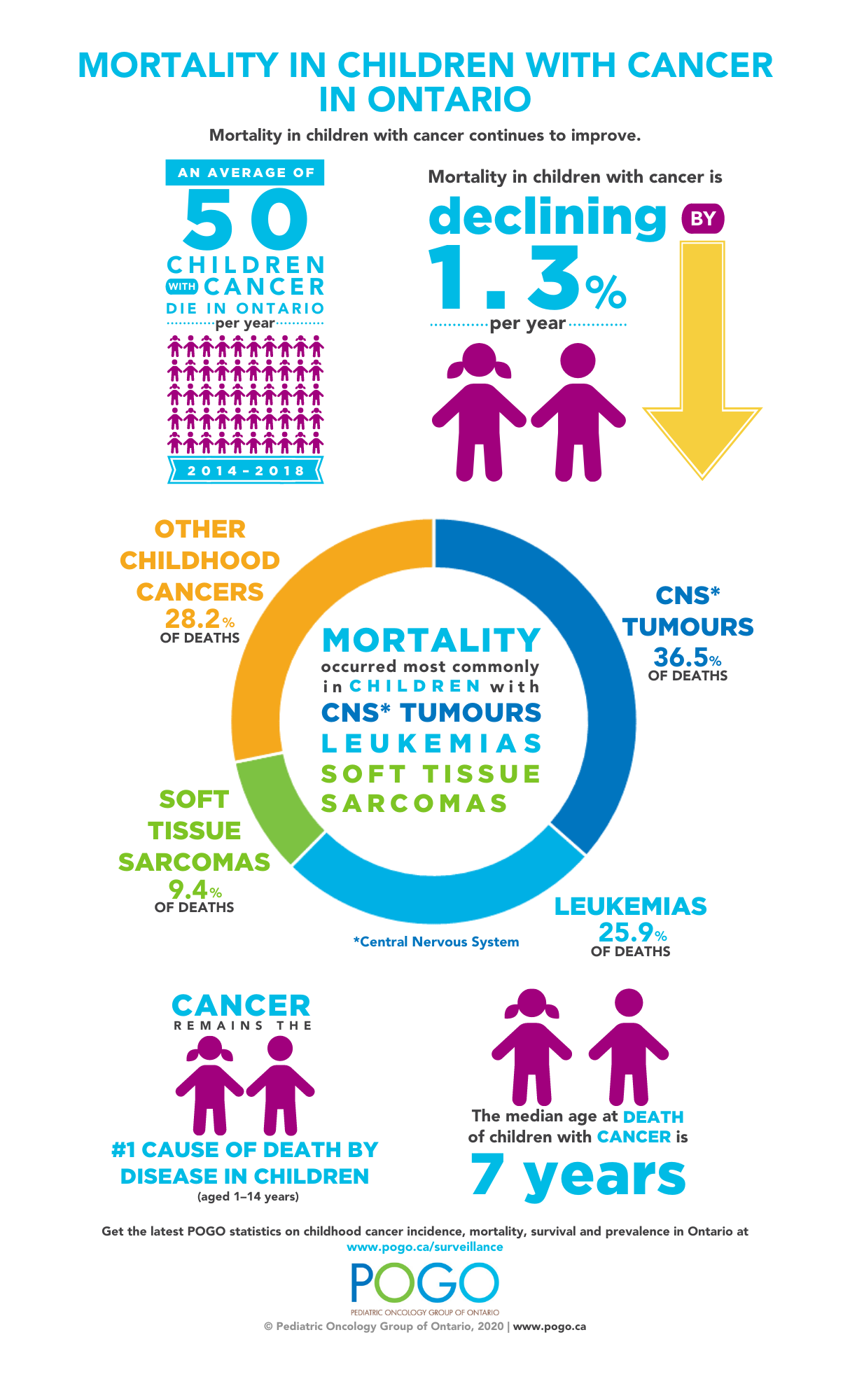
KEY MESSAGE: There has been a significant decline in the mortality rates of children, aged 0–14 years, with cancer, of an average of 1.3% per year (1991–2018).
IMPLICATION: Although mortality is declining due to more successful treatments, cancer remains the most common cause of disease-related deaths among children in Ontario over the age of 1 year, second only to accidents/unintentional injuries.
Survival Proportions and Trends
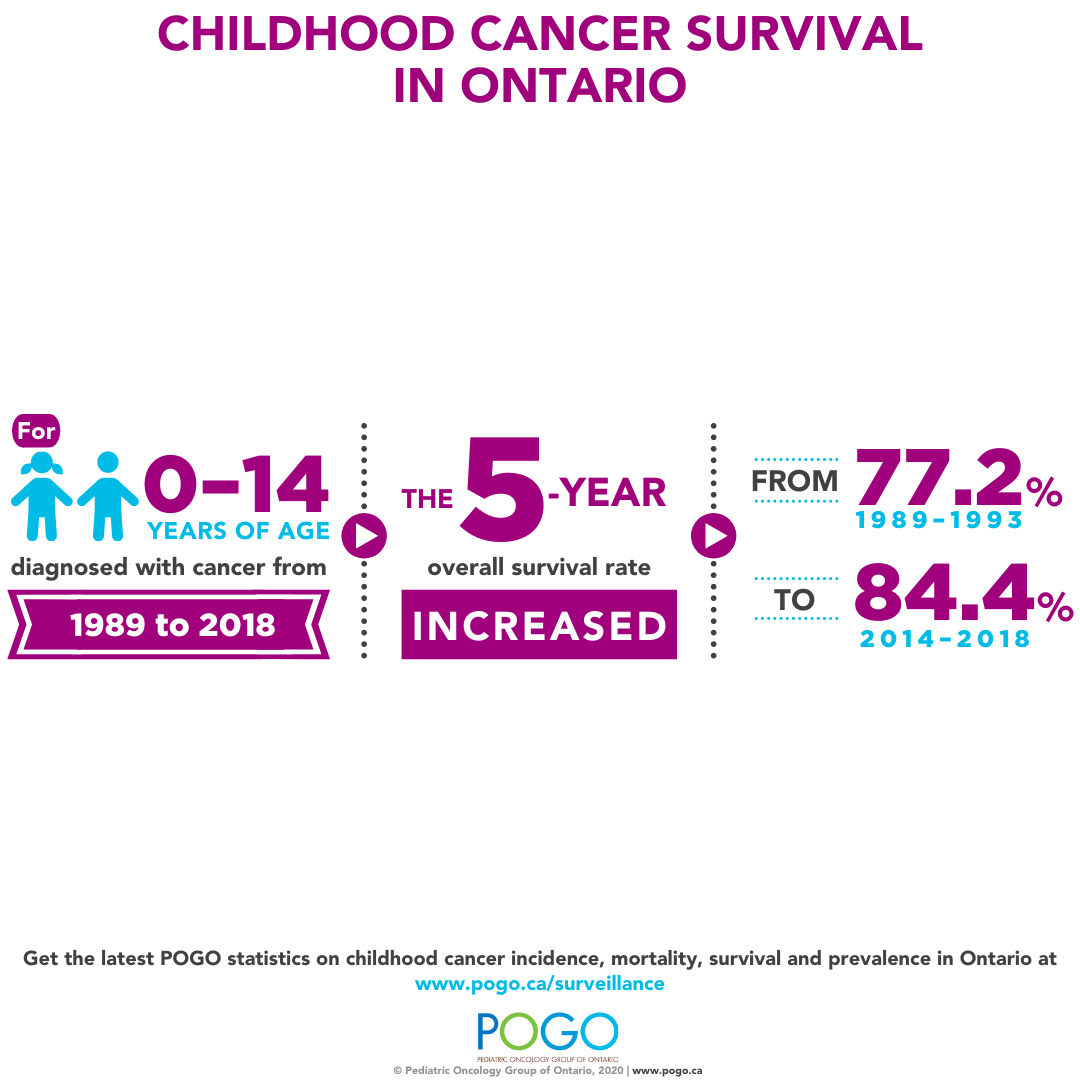
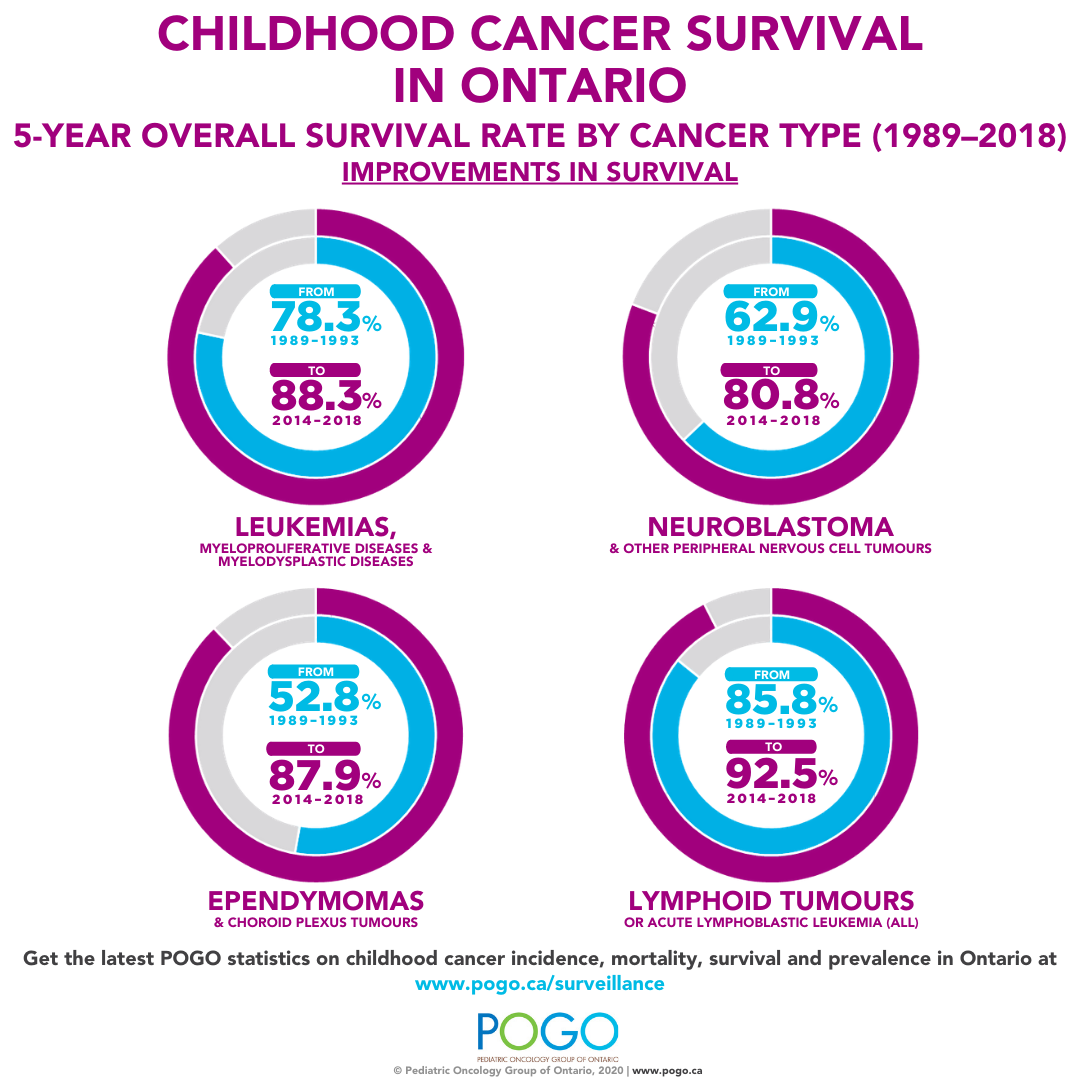
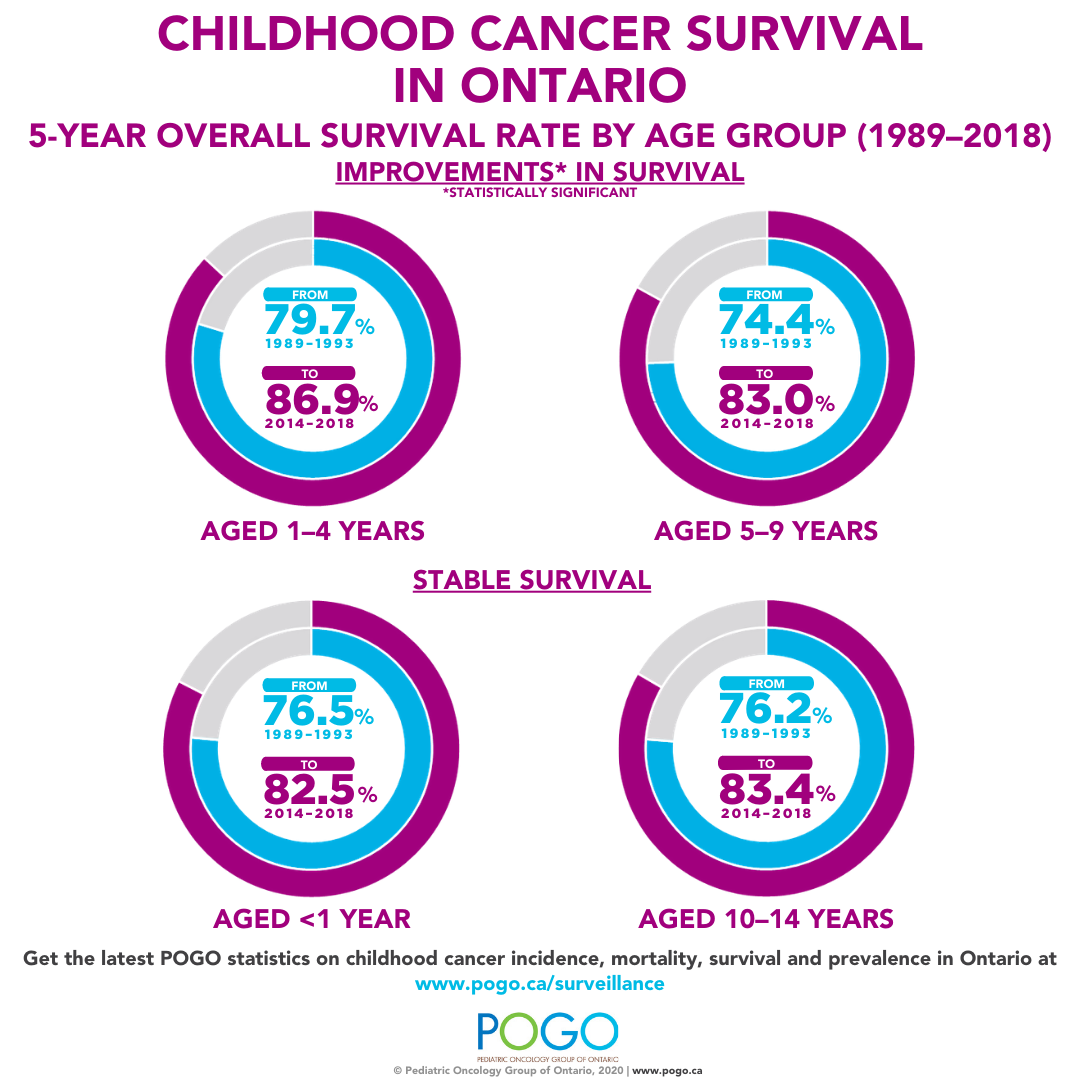
KEY MESSAGE: Survival is continuing to improve for many, but not all, types of childhood cancer.
IMPLICATION: Novel treatments will be required to cure more children with poor prognoses, while reducing the intensity of treatment may further improve outcomes for children with diagnoses with already high cure rates.
Estimated Complete Prevalence
KEY MESSAGE: The estimated prevalence of Ontarians diagnosed with cancer as children or adolescents has risen steadily due to the increasing incidence of childhood cancer, combined with improvements in survival over the last few decades.
IMPLICATION: Caring for survivors of childhood cancer is increasingly important given the growing population and increased healthcare needs associated with late effects of treatment.
Supplementary Resources
PowerPoint Slides (PPT)
The following PowerPoint slides are available for download, pre-populated with selected figures and results from the report.
- 1.0 Incidence Rates and Trends
- 2.0 Mortality Rates and Trends
- 3.0 Survival Proportions and Trends
- 4.0 Estimated Complete Prevalence
- Childhood Cancer in Ontario: The 2020 POGO Surveillance Report (complete slide deck, including all indicator types listed above)
Infographics
Infographics related to childhood cancer incidence, mortality, survival and prevalence in Ontario are available.
Related Resources
For a complete overview of POGO reports of childhood cancer statistics and to learn more about our data collaborations with other organizations, including Ontario Health (Cancer Care Ontario) and the Public Health Agency of Canada, please visit our Data Reports webpage.
Read The Childhood Cancer Care Plan: A Roadmap for Ontario 2024-2029, the fifth long-range plan produced by POGO and our stakeholder partners to strengthen Ontario’s childhood cancer care system.
Contact Us
Please contact us at info@pogo.ca.
Send us your feedback on this report. We’d love to hear from you!
Get more information on this report and other POGO data reports.
Collaborate with POGO on a future data report.
Receive an alternative format of any part of this report. POGO is committed to ensuring accessible services and communications for individuals with disabilities.
PLUS, sign up for our POGO Childhood Cancer Statistics eNews list for new reports, related announcements and other news from POGO.
AND, submit a request for POGONIS data in support of childhood cancer analysis and research through our Data Requests webpage.