Symptom Screening With SSPedi

Healthcare Practice
Supportive Care and Guidelines
Why Symptom Screening Matters in Childhood Cancer Care
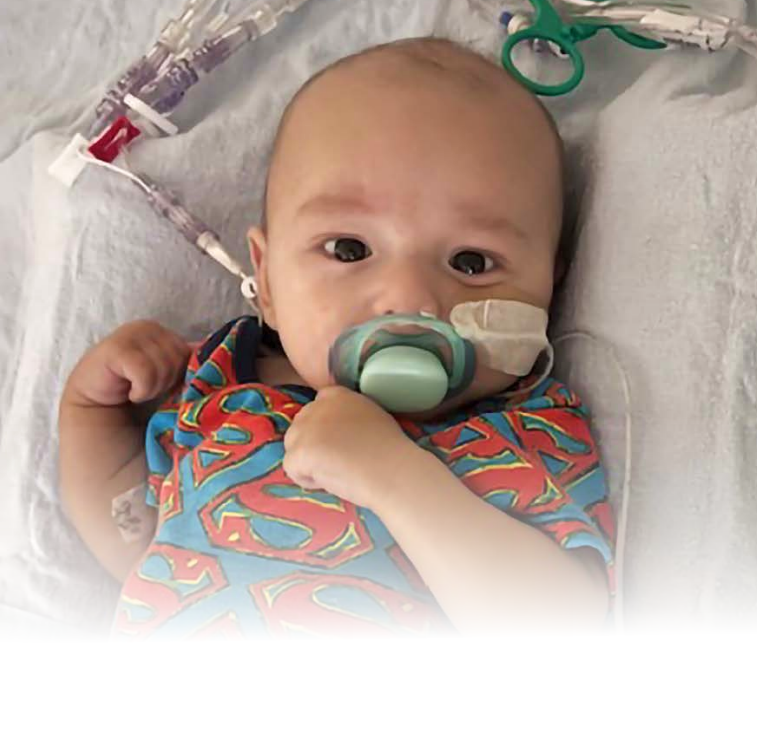
Cancer and its treatment are hard on children and adolescents, and the symptoms that come with it, such as nausea, pain, fatigue, and anxiety, can be frequent, unpredictable, and severe. When those symptoms go unnoticed or unreported, children suffer.
POGO is leading the implementation of the Symptom Screening in Pediatrics (SSPedi) tool across Ontario and advancing a new standard of supportive care for children with cancer. This coordinated, system-wide approach to symptom monitoring centres the child’s voice in care.
SSPedi is a validated 15-item tool that allows children and adolescents to routinely report their symptoms from hospital or home. With SSPedi, patients can flag symptoms that bother them, such as mouth sores or vomiting. By including patient-reported outcomes into everyday practice, POGO is helping to ensure symptoms are identified and addressed in a timely way.
Evidence shows this approach leads to better symptom control and improved quality of life.
How SSPedi Supports Care
- Enables real-time symptom reporting through digital programs SPARK and Epic
- Supports timely identification of symptoms
- Complements POGO’s evidence-based care pathways for symptom management
Impact Across Ontario
POGO’s leadership in implementing SSPedi is building a foundation for:
- Standardized data collection
- System-wide benchmarking
- Continuous quality improvement
Together, these efforts are helping reduce symptom burden and improve quality of life for children and adolescents with cancer.
POGO's History in Symptom Screening
- 2026 – POGO and partners establish minimum requirements for how SSPedi should be used across Ontario hospitals treating children with cancer.
- 2026 – A POGO Project Grant supports the establishment of routine symptom screening across Ontario.
- 2023–2024 – A POGO Silva Legacy Grant supports the development of scalable ways to measure guideline-consistent supportive care delivery using electronic health data.
- 2019 – POGO funding supports development of new versions of SSPedi, including a version for caregivers (proxy-report) and for children aged 4 to less than 8 years (mini-SSPedi).
- 2012 – The POGO Research Unit provides a seed grant to Dr. Lillian Sung and Dr. Lee Dupuis to begin developing SSPedi to help track symptoms in children 8 to 18 years old.
- 2010 – POGO launches the Supportive Care Guidelines and Implementation Program to ensure all children and youth with cancer in Ontario receive high-quality, evidence-based supportive care.
- Early 2000s – POGO makes supportive care a key focus in caring for children with cancer.


Pediatric Oncology Nursing Tools and Resources

Healthcare Practice
Supportive Care and Guidelines
POGO Nursing Telepractice Guidance Document for Pediatric Oncology Nurses

Last Revision: March 2019
Now more than ever, patients and families are seeking virtual care from their healthcare teams. Derived from a comprehensive literature review of current best telepractice standards in pediatric oncology, the POGO Nursing Telepractice Guidance Document for Pediatric Oncology Nurses supports nurses in delivering safe and effective telepractice care to children and youth with cancer and their families.
The document offers symptom assessment and guidance for constipation, diarrhea, chicken pox exposure, nausea and vomiting, fever, mucositis and acute pain. It also covers telepractice communication principles and techniques, call closure, communication challenges and more!
The POGO Nursing Telepractice Guidance Document is subject to ongoing revisions and updates. If you wish to download and save a local copy of this document, we recommend you regularly check the version posted here to ensure you have the most up-to-date guidance.
Video Education when Caring for a Child with Cancer at Home

Nurses play a critical role in the delivery of patient and family education and rely on access to trusted resources and tools with standardized content that can be individualized to meet the unique needs of each family. Pediatric oncology nurses witness significant family distress at the time a child is first diagnosed with cancer, a time when families must learn an overwhelming amount of new information.
During the early treatment phase, children are predominantly cared for in the outpatient and home setting by their families. This places the burden of responsibility on parents to monitor and manage symptoms and side effects of treatment and recognize and respond to signs of potentially life-threatening toxicities and complications. Providing education to nurses during this time and a sense of doing it well is a vital component of nursing job satisfaction. Nurses must understand what constitutes the delivery of quality education but also have access to effective teaching tools.

THE RePORTer – POGO’S NURSING NEWSLETTER

Healthcare Practice
Supportive Care and Guidelines
In the fall of 2024, POGO launched its inaugural nursing newsletter, brought to you by the POGO Nursing Committee. This initiative is a direct reflection of POGO’s ongoing commitment to pediatric oncology nursing in Ontario. This bi-annual newsletter aims to support professional development, foster communication, promote nursing best practices, and so much more to ultimately strengthen our collective efforts in delivering exceptional nursing care to children and their families.
POGO Nursing Newsletter Stories

From Urgent Questions to Lasting Pathways: Fertility Care at SickKids
For many children and adolescents with cancer, treatment is lifesaving. But these treatments can…

The Aha! Moments
Every nurse has “aha” moments that, when looking back, they go, “Oh yes, that is how we got here.”…


REDiAL- Resuming Normalcy During Acute Leukemia
Leukemia maintenance therapy primarily involves oral chemotherapy at home, with less frequent…

Spotlight on Nursing Leader Dr. Lindsay Jibb: Pediatric Oncology Research Trailblazer
Dr. Lindsay Jibb’s work is grounded in real-world challenges witnessed firsthand at the bedside.…

Homeward Bound: Building Pediatric Palliative Care Capacity in Northern Ontario
For many years, our team at the POGO Satellite Clinic in Sudbury, located at Northeast Cancer…

Reflections on Advances in Pediatric Oncology Survivorship and AfterCare
Eleanor Hendershot is an experienced pediatric oncology nurse at McMaster Children’s Hospital,…

Delivering Nursing Education in Thunder Bay, Ontario: A Perspective of Learning and Connection
As pediatric oncology nurses working across Ontario, we share a deep commitment to advancing care…
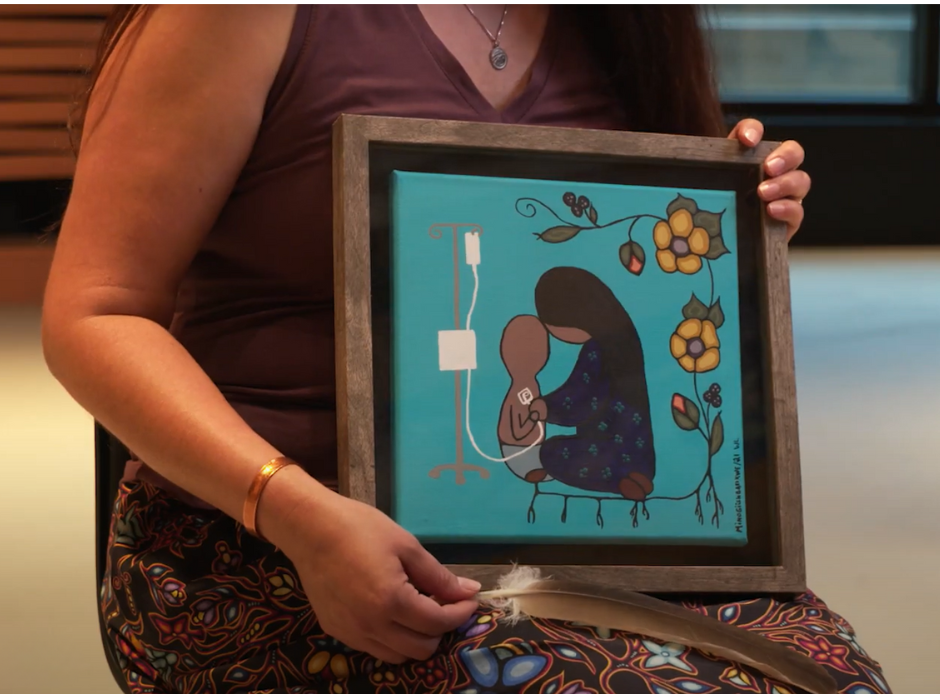
Marking National Indigenous History Month with a Special Video for Parents and Caregivers of Children with Cancer
Introductory Note from POGO The POGO Indigenous Children with Cancer Initiative, established in…
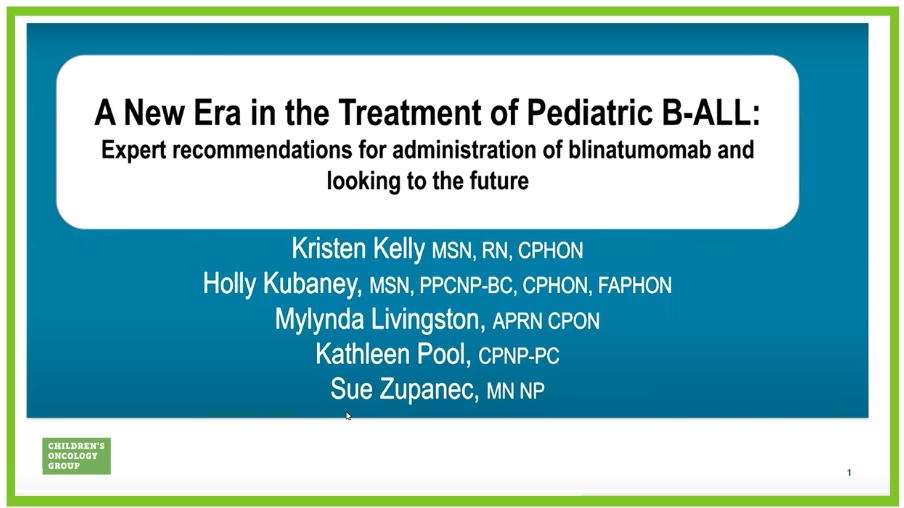
A New Era in the Treatment of Pediatric B-ALL
Expert Recommendations for Administration of Blinatumomab and Looking to the Future For those…
If you have a story or content suggestion, please email pogonursing@pogo.ca.
Nursing Education and Professional Development
Healthcare Practice
Supportive Care and Guidelines
The Biennial POGO Pre-Symposium Nursing Day
The POGO Pre-Symposium Nursing Day is a vital event held every two years, dedicated to meeting the evolving needs of nurses working in pediatric oncology. As nurses represent the largest group of healthcare professionals in this specialized field, this day plays a crucial role in bringing together healthcare practitioners and clinicians from across Ontario and beyond to share insights, research, and best practices in caring for childhood cancer patients and their families. The programming is carefully designed to address the timely and unique challenges faced by nurses in this emotionally and physically demanding field, fostering collaboration, education, and professional development. By creating a space for open dialogue, this event enhances the ability of nurses to provide compassionate and expert care to children, youth and families undergoing cancer treatment, ultimately improving patient outcomes and supporting families through their journey.
Nursing Webinars
POGO hosts educational webinars throughout the year on a range of topics to support the learning needs of pediatric oncology providers, including nurses.
APHON Pediatric Chemotherapy/Biotherapy Provider Program
Ontario is fortunate to have several trained educators who are skilled in delivering the Association of Pediatric Hematology/Oncology Nurses (APHON) Pediatric Chemotherapy and Biotherapy Provider Program, both in-person (preferred) and virtually. This program is designed to equip nurses with the essential knowledge to safely care for children and adolescents undergoing chemotherapy or biotherapy.
For more information about upcoming course offerings in your area or to request a session for your hospital, please contact Devon Williams, Senior Manager of Clinical and Support Programs.
Nursing Student Community Placement Opportunities
POGO welcomes nursing students interested in a community placement related to pediatric oncology! Based in the POGO office, you will have the opportunity to contribute to current projects and initiatives of the POGO Nursing Committee and other POGO program areas, job-shadow pediatric oncology nurses in our POGO Satellite Clinic, POGO AfterCare Clinic, and POGO Interlink Nursing programs, and gain real-world experience through hands on-learning.
To learn more about community placement opportunities at POGO, please speak with your Program Coordinator or contact us.
Food Restrictions
Healthcare Practice
Supportive Care and Guidelines
If you have any questions about any of the POGO guidelines, our development processes or guidelines under development, please email: guidelines@pogo.ca

Guidelines and Implementation Tools
Healthcare Practice
Lorem ipsum dolor sit amet, consectetur adipiscing elit. Quisque ut eleifend elit. Nam felis est, viverra in augue at, auctor efficitur ex. In vestibulum dolor augue, eget euismod erat facilisis at. Aenean vitae leo id enim tempor dapibus in tempus felis. Nunc tellus lorem, tempor ac tempor non, egestas vel justo. In sit amet lectus vel magna commodo dictum. Proin ut velit at turpis pellentesque maximus eu sit amet erat.

Pediatric Palliative Care

Healthcare Practice
Supportive Care and Guidelines
Resources for healthcare providers: pediatric palliative, end-of-life care
POGO is working with the palliative care community to support our joint efforts to expand access to pediatric palliative care services and supports for children and youth in Ontario, and their families, including children who are treated in the childhood cancer care system. The following documents have been developed by the Provincial Paediatric Palliative Care Steering Committee’s End-of-Life Symptom Management Guide and End-of-Life Care Fact Sheet Working Group, jointly led by the Provincial Council for Maternal and Child Health (PCMCH) and the Pediatric Oncology Group of Ontario (POGO).
Approaching the End-of-Life: Pediatric Palliative Care Information for Healthcare Providers
*New* Guide sur les soins pédiatriques en fin de vie à l’intention des professionnels de la santé
Expert Opinion Guidance from the Ontario Pediatric Palliative Care Steering Committee: 2023 Update
This document is designed to provide guidance to healthcare providers on approaching the expected death of a child. This includes revisiting existing therapies; anticipation, prevention, and treatment of common issues and symptoms; and, coaching families and caregivers through the expected changes and experiences that may occur as the body gradually shuts down.
Archived 2016 – Pediatric Palliative Care: Approaching End-of-Life Information for Healthcare Providers
Symptom Management for Children Near/At End-of-Life
*New* Guide de prise en charge des symptômes chez les enfants en fin de vie
Expert Opinion Guidance from the Ontario Pediatric Palliative Care Steering Committee: 2023 Update
Symptom management for pediatric palliative care patients at the end-of-life requires an astute care team that is aligned to the status of the child as well as the goals of care of the child and family. The management strategies and medications included in this document are listed according to symptom and may be used for specific indications in pediatric patients approaching end-of-life. When no suggested dosing interval is provided, the decision to provide a medication regularly or “as needed” is up to the discretion of the treating team. Furthermore, goals of care should be discussed and kept in mind prior to initiating therapies.
Archived 2016 – Symptom Management Guide for Children Near/At End-of-Life
The information included in these documents serve as a guide intended only for healthcare providers. Healthcare providers are encouraged to connect families to available family-directed resources to seek additional support, clarification, and guidance from the regional pediatric palliative care specialist resources, as required.
The content in these resources do not replace clinical judgement or dictate the treatment of individual patients. Furthermore, users of these documents are reminded that medications and dosing strategies included do not take into account drug-drug interactions. Caution must always be used when prescribing medications that providers are unfamiliar with.

Anticipatory CINV
Healthcare Practice
Supportive Care and Guidelines
- 2021 CPG Update – Guideline for the prevention and treatment of anticipatory nausea and vomiting due to chemotherapy in pediatric cancer patients (open access at Pediatric Blood and Cancer)
- Endorsed by the Children’s Oncology Group (COG)
- Archived 2014 CPG – Guideline for the prevention and treatment of anticipatory nausea and vomiting due to chemotherapy in pediatric cancer patients (open access at Pediatric Blood and Cancer)
- Endorsed by the Children’s Oncology Group (COG)
If you have any questions about any of the POGO guidelines, our development processes or guidelines under development, please email: guidelines@pogo.ca
Antibacterial Prophylaxis
Healthcare Practice
Supportive Care and Guidelines
- 2019 CPG – Guideline for antibacterial prophylaxis administration in pediatric cancer and hematopoietic stem cell transplantation (open access at Clinical Infectious Diseases)
- Endorsed by the Children’s Oncology Group (COG)
- 2019 SR – Efficacy of antibiotic prophylaxis in patients with cancer and hematopoietic stem cell transplantation recipients: A systematic review of randomized trials (open access at Cancer Medicine)
- 2021 Network Meta-analysis – Conventional compared to network meta-analysis to evaluate antibiotic prophylaxis in patients with cancer and hematopoietic stem cell transplantation recipients (available at BMJ Evidence-Based Medicine)
If you have any questions about any of the POGO guidelines, our development processes or guidelines under development, please email: guidelines@pogo.ca
Venous Thromboembolism*
Venous Thromboembolism
Supportive Care and Guidelines
Guidelines for Management of Venous Thromboembolism: Treatment of Pediatric Venous Thromboembolism
This supportive care CPG has been endorsed by POGO
If you have any questions about any of the POGO guidelines, our development processes or guidelines under development, please email: guidelines@pogo.ca