Symptom Screening With SSPedi

Clinical Practice Guideline
Supportive Care and Guidelines
Why Symptom Screening Matters in Childhood Cancer Care
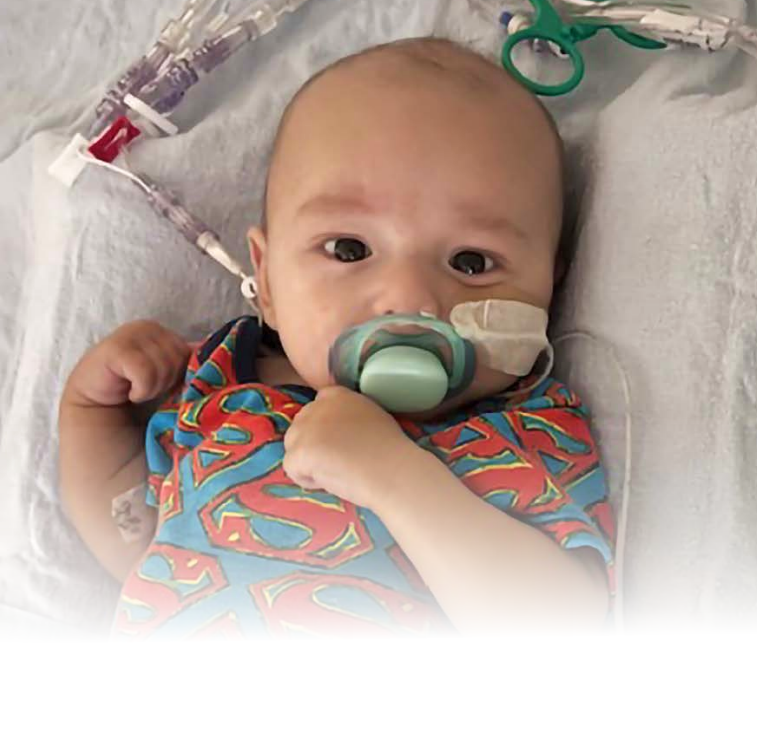
Cancer and its treatment are hard on children and adolescents, and the symptoms that come with it, such as nausea, pain, fatigue, and anxiety, can be frequent, unpredictable, and severe. When those symptoms go unnoticed or unreported, children suffer.
POGO is leading the implementation of the Symptom Screening in Pediatrics (SSPedi) tool across Ontario and advancing a new standard of supportive care for children with cancer. This coordinated, system-wide approach to symptom monitoring centres the child’s voice in care.
SSPedi is a validated 15-item tool that allows children and adolescents to routinely report their symptoms from hospital or home. With SSPedi, patients can flag symptoms that bother them, such as mouth sores or vomiting. By including patient-reported outcomes into everyday practice, POGO is helping to ensure symptoms are identified and addressed in a timely way.
Evidence shows this approach leads to better symptom control and improved quality of life.
How SSPedi Supports Care
- Enables real-time symptom reporting through digital programs SPARK and Epic
- Supports timely identification of symptoms
- Complements POGO’s evidence-based care pathways for symptom management
Impact Across Ontario
POGO’s leadership in implementing SSPedi is building a foundation for:
- Standardized data collection
- System-wide benchmarking
- Continuous quality improvement
Together, these efforts are helping reduce symptom burden and improve quality of life for children and adolescents with cancer.
POGO's History in Symptom Screening
- 2026 – POGO and partners establish minimum requirements for how SSPedi should be used across Ontario hospitals treating children with cancer.
- 2026 – A POGO Project Grant supports the establishment of routine symptom screening across Ontario.
- 2023–2024 – A POGO Silva Legacy Grant supports the development of scalable ways to measure guideline-consistent supportive care delivery using electronic health data.
- 2019 – POGO funding supports development of new versions of SSPedi, including a version for caregivers (proxy-report) and for children aged 4 to less than 8 years (mini-SSPedi).
- 2012 – The POGO Research Unit provides a seed grant to Dr. Lillian Sung and Dr. Lee Dupuis to begin developing SSPedi to help track symptoms in children 8 to 18 years old.
- 2010 – POGO launches the Supportive Care Guidelines and Implementation Program to ensure all children and youth with cancer in Ontario receive high-quality, evidence-based supportive care.
- Early 2000s – POGO makes supportive care a key focus in caring for children with cancer.

Food Restrictions
Clinical Practice Guideline
Supportive Care and Guidelines
If you have any questions about any of the POGO guidelines, our development processes or guidelines under development, please email: guidelines@pogo.ca

Guidelines and Implementation Tools
Clinical Practice Guideline
Lorem ipsum dolor sit amet, consectetur adipiscing elit. Quisque ut eleifend elit. Nam felis est, viverra in augue at, auctor efficitur ex. In vestibulum dolor augue, eget euismod erat facilisis at. Aenean vitae leo id enim tempor dapibus in tempus felis. Nunc tellus lorem, tempor ac tempor non, egestas vel justo. In sit amet lectus vel magna commodo dictum. Proin ut velit at turpis pellentesque maximus eu sit amet erat.

Anticipatory CINV
Clinical Practice Guideline
Supportive Care and Guidelines
- 2021 CPG Update – Guideline for the prevention and treatment of anticipatory nausea and vomiting due to chemotherapy in pediatric cancer patients (open access at Pediatric Blood and Cancer)
- Endorsed by the Children’s Oncology Group (COG)
- Archived 2014 CPG – Guideline for the prevention and treatment of anticipatory nausea and vomiting due to chemotherapy in pediatric cancer patients (open access at Pediatric Blood and Cancer)
- Endorsed by the Children’s Oncology Group (COG)
If you have any questions about any of the POGO guidelines, our development processes or guidelines under development, please email: guidelines@pogo.ca

Antibacterial Prophylaxis
Clinical Practice Guideline
Supportive Care and Guidelines
- 2019 CPG – Guideline for antibacterial prophylaxis administration in pediatric cancer and hematopoietic stem cell transplantation (open access at Clinical Infectious Diseases)
- Endorsed by the Children’s Oncology Group (COG)
- 2019 SR – Efficacy of antibiotic prophylaxis in patients with cancer and hematopoietic stem cell transplantation recipients: A systematic review of randomized trials (open access at Cancer Medicine)
- 2021 Network Meta-analysis – Conventional compared to network meta-analysis to evaluate antibiotic prophylaxis in patients with cancer and hematopoietic stem cell transplantation recipients (available at BMJ Evidence-Based Medicine)
If you have any questions about any of the POGO guidelines, our development processes or guidelines under development, please email: guidelines@pogo.ca
Venous Thromboembolism*
Venous Thromboembolism
Supportive Care and Guidelines
Guidelines for Management of Venous Thromboembolism: Treatment of Pediatric Venous Thromboembolism
This supportive care CPG has been endorsed by POGO
If you have any questions about any of the POGO guidelines, our development processes or guidelines under development, please email: guidelines@pogo.ca
Platelet Transfusion*
Platelet Transfusion
Supportive Care and Guidelines
Guidance on Platelet Transfusion for Patients with Cancer
This supportive care CPG has been endorsed by POGO
If you have any questions about any of the POGO guidelines, our development processes or guidelines under development, please email: guidelines@pogo.ca
Ototoxicity
Clinical Practice Guideline
Supportive Care and Guidelines
- 2020 CPG – Prevention of cisplatin-induced ototoxicity in children and adolescents with cancer: a clinical practice guideline (The Lancet Child & Adolescent Health – Free access available with registration.)
- Endorsed by the Children’s Oncology Group (COG)
- 2019 Rapid Review – Interventions for cisplatin-induced hearing loss in children and adolescents with cancer: rapid review (The Lancet Child & Adolescent Health – not available as open access)
If you have any questions about any of the POGO guidelines, our development processes or guidelines under development, please email: guidelines@pogo.ca
Mucositis
Clinical Practice Guideline
Supportive Care and Guidelines
- 2021 CPG Update – Clinical practice guideline for the prevention of oral and oro-pharyngeal mucositis in pediatric cancer and hematopoietic stem cell transplant patients (open access at European Journal of Cancer)
- Endorsed by the Children’s Oncology Group (COG)
- Archived 2015 CPG – Guideline for the prevention of oral and oropharyngeal mucositis in children receiving treatment for cancer or undergoing haematopoietic stem cell transplantation (open access at BMJ Supportive and Palliative Care)
- Endorsed by the Children’s Oncology Group (COG)
If you have any questions about any of the POGO guidelines, our development processes or guidelines under development, please email: guidelines@pogo.ca
Fever and Neutropenia
Clinical Practice Guideline
Supportive Care and Guidelines
- 2023 CPG Update – Guideline for the management of fever and neutropenia in pediatric patients with cancer and hematopoietic cell transplantation recipients: 2023 update (open access at Journal of Clinical Oncology)
- Endorsed by the Children’s Oncology Group (COG) and the Multinational Association of Supportive Care in Cancer (MASCC)
- Archived 2017 CPG – Guideline for the management of fever and neutropenia in children with cancer and hematopoietic stem-cell transplantation recipients: 2017 update (open access at Journal of Clinical Oncology)
- Archived 2012 CPG – Guideline for the management of fever and neutropenia in children with cancer and/or undergoing hematopoietic stem cell transplantation (open access at Journal of Clinical Oncology)
- Endorsed by the Children’s Oncology Group (COG)
If you have any questions about any of the POGO guidelines, our development processes or guidelines under development, please email: guidelines@pogo.ca