Having the Last Laugh: Coping Through Comedy
Author: Percy McIntosh
Diagnosis: Medulloblastoma (at age 9)
What do you call a man who floats in water?
Bob.

I love to laugh, I always have. When I began my journey after a diagnosis of cancer, I learned that laughing wasn’t just a thing I like to do but the best tool in my emotional toolbox.
After my medulloblastoma diagnosis in 2017, humour began playing a larger role in my life. Laughing and cracking jokes became great ways to escape my harsh reality. I have always believed the difficult parts of life can be made easier when looked at through a comedic lens. Charlie Chaplin once said, “Life is a tragedy when seen in close-up, but a comedy in long-shot.” Stripping away the filmmaking metaphor, I take that to mean when we look at the bigger picture, we can find light and humour in what burdens us at face value.
As if cancer wasn’t bad enough, after the surgery to remove my brain tumour I was left mute and partially paralyzed. Interestingly, during my mutism, the first sound I made was laughter. (Sorry cancer, looks like you can’t kill the humour bug.) My humour also helped me regain my voice in speech therapy. Turns out, even losing my ability to speak couldn’t stop me from wanting to tell jokes.
Don’t just take my word for the healing power of comedy. Listen to (shudder) science (can you tell I’m majoring in social science?). In psychology, humour is known as a “cognitive reframer.” Essentially, it alters the way your brain deals with threats or stressors. When you laugh, your brain releases endorphins, feel-good chemicals that reduce stress (see kids, laughter is way better than drugs).
As a result of being in the hospital between the ages of nine and ten, I missed out on a lot of important fundamental social skills. I am truly grateful for how comedy was able to carry me socially through middle school and high school and will hopefully score me some friends at university. In fact, there’s a hack I learned that I intend on using at university: if you’re funny and fun to be around, there’s a good chance people will like you and be keen on helping you out. Don’t be a goofball around all teachers though; some are old and no fun…so be careful! A comedian’s best strength is being able to read the room. Sometimes being serious to get on the teacher’s good side will help build bridges to where you want to go.
Ultimately, I find that using humour as a crutch isn’t about forgetting the pain; it’s about having the last laugh.

This story was written by a childhood cancer survivor for the fall 2026 issue of empowerMEnt, the POGO School and Work Transitions Program newsletter.

Aiden's Journey to Paramedicine, Supported by the Learn and Stay Grant
Interviewer: Rachel Martin
Interviewee: Aiden
 Aiden was diagnosed with a brain tumour before the age of two. Over the years, he underwent multiple surgeries, received chemotherapy and faced a number of complications along the way. Aiden recalled, “I had to wear an eye patch for a time as one of the nerves behind my eye was damaged during a surgery. Thankfully, the nerve eventually healed completely.”
Now 17, Aiden has graduated high school and is looking ahead to his next chapter. He is following his passion and will be starting the paramedic program at Northern College in Timmins this September. As Aiden prepares for college, the Ontario Learn and Stay Grant is helping make that next step more affordable. The program supports students entering high-demand healthcare fields in designated regions of Ontario by covering tuition, books and other direct educational expenses.
There are currently three regions of Ontario that offer the Learn and Stay Grant: Northern Ontario, Southwestern Ontario and Eastern Ontario. How it works is that you have to remain working in the region for half of the time that you attended school. For example, for a four-year nursing degree, you would have to stay in the region and work for two additional years. The applications are completed through the OSAP portal. If you fail to meet the grant requirements, the grant money is converted into an OSAP loan that would need to be paid back.
Aiden learned about the Ontario Learn and Stay Grant in high school. Living in Northern Ontario means that he is able to access the grant at his local college and save even more money by living at home during his studies. For Aiden, the grant means spending less time worrying about the cost of textbooks and more time focusing on the program he’s excited to begin. “I’m hoping that this will be an opportunity to get ahead after graduation as I won’t have to spend years paying back student loans.” At a time when post-secondary costs can feel overwhelming, the grant provides a meaningful head start.
Aiden shared that he has wanted to be a first responder for as long as he could remember. “I did a paramedic placement in high school and loved it so much that I put extra hours in. I enjoy the fast pace, the unpredictability and the fact that no two shifts are ever the same.”
As a result of the cancer diagnosis, he spent much of his early childhood in a medical setting, surrounded by medical professionals. Looking back, Aiden believes those early experiences helped shape the career path he has chosen. For Aiden, pursuing a career in healthcare is also a way to give back. “I look forward to caring for people who need support, just as medical professionals once cared for me.”
If you are considering work in the medical field, the Ontario Learn and Stay Grant is a great way to save money on education costs, work an in-demand job and, maybe even, discover a new part of Ontario. To learn more, talk with your POGO School and Work Transitions counsellor or click here.
This article was written as a collaboration between childhood cancer survivor Aiden B.M. and Northern Ontario POGO Counsellor Rachel Martin for the fall 2026 issue of empowerMEnt, the POGO School and Work Transitions Program Newsletter.
Drawing My Way Forward
Author: A.J. Servillon
Diagnosis: Medulloblastoma (at age 15)
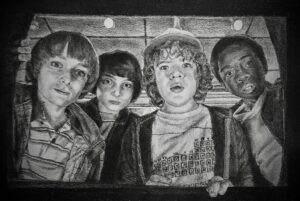
Every drawing or design I create begins the same way.
I draw lines that don’t seem to make much sense at first but eventually a picture starts to materialize.
Looking back, I realize that life after childhood cancer has felt very similar.
At 15, I was experiencing what felt like the worst headaches 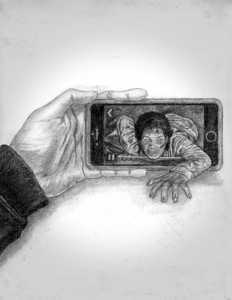 and dizziness known to humankind. I was diagnosed with medulloblastoma and went through chemo and radiation therapy. Treatment eventually came to an end, but I discovered that healing doesn’t stop when you leave the hospital.
This marked the beginning of a different journey. Like many survivors, I found myself learning how to navigate a “new normal” while growing up, finishing my education and trying to figure out what came next. I am also still trying to deal with feeling behind in life, but my gratitude for many things always outshines it.
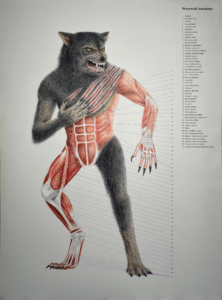
Drawing/art began as a passion that has grown into AJ Art & Design. I create custom pencil portraits and continue to develop my skills as both a visual artist and graphic designer.
Along the way, I’ve learned that moving forward doesn’t always mean following a known path. Sometimes, it means meandering until you reach your destination.
I still don’t know exactly where my career will take me, but I no longer measure my progress by whether my path looks like everyone else’s.
Every drawing reminds me that meaningful things are built one line at a time. And that’s enough to keep moving forward.
Link to my full portfolio, if you want to check it out!
This story was written by a childhood cancer survivor for the fall 2026 issue of empowerMEnt, the POGO School and Work Transitions Program newsletter.
Creative Corner with Calvin
Author and Photographer – Calvin
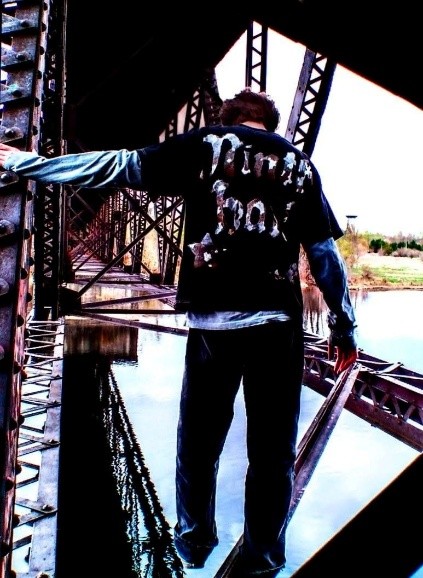
There are many beautiful places in Arnprior, starting with the trestle bridge. It has an amazing view and always makes for the perfect picture, no matter the light. In this photo, me and my friend were messing around when I randomly had an idea: what if I leaned into the dark lighting to make it look like he was walking on water? That’s exactly how it turned out.

The second photo has more of a vibrant, happy-go-lucky feel. I took a walk during school to calm down, and when I reached the marina in Arnprior, I almost instantly reset my headspace. That’s why I took this picture, to share some happiness with y’all.
Lastly, there’s the picture of the perfect guitar. My buddy had just redesigned his guitar, and we wanted to take some pictures with it. On a walk through the forest, we came across a graveyard with a giant statue of Jesus on the cross, and that’s when I got the idea to take this shot as a metaphor. Because just like some people’s relationship with God, music lifts spirits.
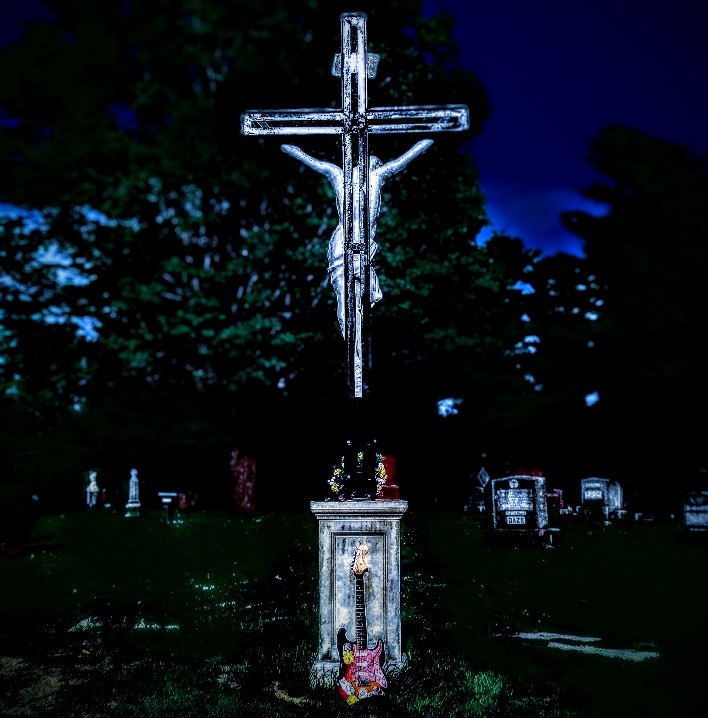
I hope you enjoy these pictures. They were all taken carefully with my NBO 8K Ultra vlog camera.
Creative Corner is a feature of empowerMEnt, the POGO School and Work Transitions Program newsletter that showcases the many creative strategies childhood cancer survivors use to cope, heal and navigate their journeys shared in their own voices.
The Creative Path
Author: Ashley Zheng
Diagnosis: Osteosarcoma (at age 13)
 A month after celebrating my 13th birthday, a tumour was found on my left femur and I was diagnosed with osteosarcoma.
It felt surreal; the semester was just beginning, and it was supposed to be my last year in middle school, a year I would spend with all my friends. Instead, I found myself in the hospital, isolated and lonely, as many of the COVID-19 precautions were still in effect.
I relied on art to keep myself occupied during treatment. I channelled my energy into creative endeavours, which focused my mind and helped me connect with my medical team. It was emotionally healing to have an outlet during that time.
Things took a turn when I was told I had two options: amputate to ensure the tumour would be completely removed or keep my leg with no guarantee I would recover cancer-free. I struggled immensely with deciding whether this method of surgery was the right choice.
I chose to amputate.
Five years later, I still struggle with the after effects of my choice.
As a highly visual person and an artist, I naturally evaluate what I see, including how I see myself.
My passion is rooted in visual feedback, and my disability has permanently changed how my body looks. I am reminded of this daily: when I put on my prosthetic leg, when I catch my reflection and when I notice that my gait is slightly different. Because of this, I avoided wearing clothing that would reveal my prosthetic in public.
A key form of self-expression—how I dress—was shaped by insecurity.
While participating in a research study for prosthetic users, I noticed that someone’s device looked remarkably realistic. I later learned that they had a cover made to wrap around the prosthetic, making it look like a real leg.
Despite having long come to terms with my disability, I realized I still longed for something that would help me reconnect with my sense of self. When I contacted my prosthetist, I was told that, due to its atypical structure, my prosthetic had limited standard design options.
Rather than settling for this answer, I turned to my strength: art.
My disability doesn’t hinder my ability to create art. I designed my own prosthetic cover, inspired by aesthetic designs I had seen online but adapted to reflect my personal style. I incorporated unique colours and a three-dimensional element not typically used. While I was unsure if my design could be realized, the final product matched my vision exactly.
Art has always been a part of my life, through thick and thin. By using my creative talents, I have found a path to inspire my recovery process.
It’s no longer a cover used to hide my prosthetic; it is a way to express myself creatively despite the unfortunate circumstances.
I’ve felt much more comfortable in my own body and about sharing my disability with my peers since donning the prosthetic cover. It’s an opportunity to showcase my artistic achievement, rather than share a medical detail that makes me different from others.
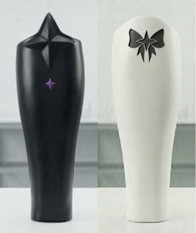
I am proud of myself for pushing myself to create my own design when I could have settled for a premade cover. This experience reassured me that pursuing a post-secondary career in the arts was the right choice. I will continue finding ways to use the visual arts to help myself, and other patients, as I continue my artistic journey at Sheridan College in the fall.
This story was written by a childhood cancer survivor for the fall 2026 issue of empowerMEnt, the POGO School and Work Transitions Program newsletter.
Searching for Meaning
Author: Kathryn Cubacub
Diagnosis: Craniopharyngioma (at age 11)
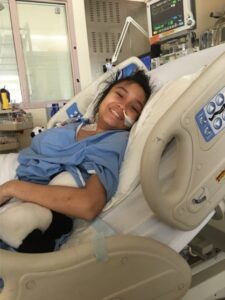
From 2015 onwards, I spent much of my life in and out of SickKids Hospital. When other kids were out at recess, I was getting bloodwork done for my Tuesday endocrine appointment. While other kids were studying math, I was studying the letters on the eye chart at the ophthalmologist.
The routine of appointments and hospital visits became my normal.
Being in the hospital so often, however, wasn’t the experience I remember the most, it was the people: the doctors, nurses, MRI techs, transporters, phlebotomists, even the kitchen and cleaning staff.
I remember being 12 years old, staring out the window in the oncology waiting room, awaiting the appointment that would depict what invasive therapy we were going to try. I remember feeling angry. And I remember the social worker, Emma, giving me a journal and instructions to write everything I felt on its pages, so it wouldn’t weigh on my mind.
I remember sitting in my hospital bed, post-craniotomy, anxiously watching my nurse practitioner, Sarah, prep the tools to remove the staples from my head. One staple in, and I knew I couldn’t do this. The child life specialist sat with me through the entire procedure, walking me through breathing practices and using a small Swarovski duck as a distractor so I didn’t have to think about the pain of the staples being removed. Sixty-six staples later, I made it through.
I remember dealing with self-consciousness and acceptance of my medical conditions as a teenager. I felt like having a brain tumour marked me as different. My psychologist, Dr. Regina, helped pick apart the chaos of my thoughts and interpret them so I could feel clarity.
These moments later became my driving motivation for my future education.
Freshly diagnosed and unable to attend school regularly, I was the most isolated I had ever been from my friends and my life back home. Seeking some deeper meaning to everything, I took to books for comfort. I became deeply curious about brain tumours and the brain. I read everything I could find at the library, partly for comfort and partly because it helped me feel a little less powerless.
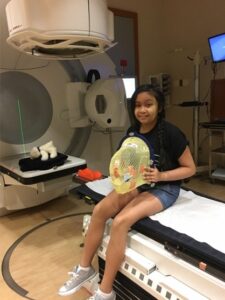
What began as a way of understanding my own experience eventually led me to pursue a university education in psychology. I went from noticing the fears, hopes and uncertainties of living with a brain tumour to wanting to study them academically. I wanted to know why I coped the way I did, why others coped differently and how people make meaning in the face of illness.
But more than that, I was reminded of the way I felt when the social worker helped me process going through radiation treatment, when the child life specialist got me through removing the staples from my head and when the psychologist listened to my worries. I knew my purpose was to give others the same sense of comfort and care I felt with those individuals.
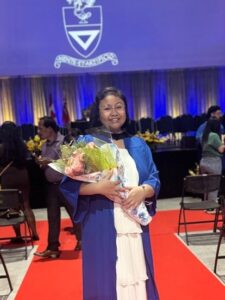
Being newly graduated with my Bachelor of Arts in Psychology, I’m not entirely sure what path I’ll be on moving forward. But I do know that I want to make a positive difference in others’ lives, just as others did for me. Whether that’s as a psychologist, a social worker or a child life specialist.
Studying psychology has given me the language and tools to process my experience. It helped me understand why I felt the way I did, and in many ways, it helped heal the inner child who was always searching for answers.
This story was written by a childhood cancer survivor for the fall 2026 issue of empowerMEnt, the POGO School and Work Transitions Program newsletter.
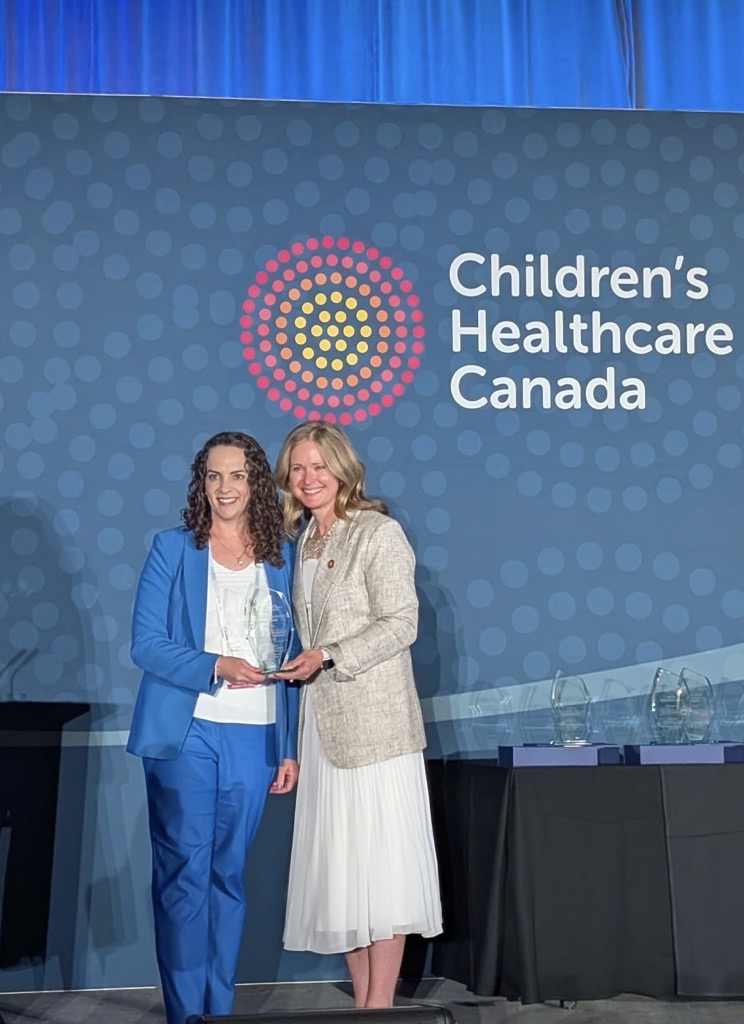
Pediatric Oncology Group of Ontario (POGO) Receives National Award for Impact in Children’s Health
Toronto, ON, June 1, 2026 – The Pediatric Oncology Group of Ontario (POGO) has received the 2026 Child Health Systems Impact Award from Children’s Healthcare Canada (CHC) in recognition of its leadership in building and advancing a world-class childhood cancer care system.
This award reflects what is possible when visionary leadership and intentional system design place children and families at the centre. POGO was founded with the understanding that children are not small adults, and childhood cancer requires a specialized, coordinated system of care to address the complex needs of growing minds and bodies.
Children and youth with cancer require more than treatment—they need an integrated system that supports their physical, emotional, and social well-being. Equity is foundational to that care: no child’s health outcome should depend on where in Ontario they live. Ontario’s Childhood Cancer Care System, led by POGO, removes barriers to care and supports children and families across the full continuum—from diagnosis to treatment, into survivorship, and when needed, palliative and end-of-life care.
The CHC Board Awards Committee recognizes POGO’s outstanding contributions and leadership in advancing Ontario’s childhood cancer care system, citing how POGO’s province-wide model of evidence-informed care has transformed how childhood cancer services are delivered. POGO’s innovations have led to measurable improvements in access and long-term outcomes, and the organization’s steadfast, collaborative partnerships have contributed to a national and global benchmark for pediatric oncology care, ultimately improving both the quality of care and the lived experience of children with cancer across Ontario.
“This award reflects POGO’s founding vision and the strength of province-wide partnerships with multidisciplinary healthcare teams, researchers, government, donors, and, importantly, families, working together to support children and youth with cancer,” said Lauren Ettin, CEO of POGO. “We are grateful to Children’s Healthcare Canada for this recognition. We share the award with our partners in childhood cancer care and remain committed to continuing this work, strengthening the system and ensuring every child and family receives the wraparound care they deserve.”
About POGO
The Pediatric Oncology Group of Ontario (POGO) provides wraparound care to ensure that everyone affected by childhood cancer has access to the best care and support. POGO partners to achieve an excellent childhood cancer care system for children, youth and their families, survivors of childhood cancer, adolescents and young adults with cancer, and healthcare teams, in Ontario and beyond. POGO champions childhood cancer care and, as the collective voice of this community, serves as the official advisor to Ontario’s Ministry of Health. POGO is a non-profit organization with charitable status, here for kids with cancer, for now, for life. Learn more at www.pogo.ca
About Children’s Healthcare Canada
Children’s Healthcare Canada is a national association representing organizations that deliver health services to millions of children and youth each year. CHC advocates to accelerate excellence and innovation in health systems serving children, youth, and their families across the continuum of care. The Innovation & Impact Awards recognize excellence, collaboration, and leadership across the community, from clinicians and researchers to administrators, family partners, and advocates.
Media contact:
Jacqui DeBique
Senior Manager, Communications
info@pogo.ca