Childhood Cancer Care Plan

About Us
Supportive Care and Guidelines
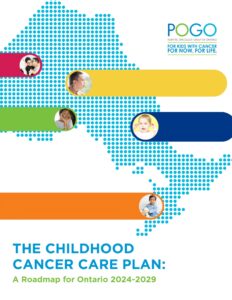
The Childhood Cancer Care Plan: A Roadmap for Ontario 2024-2029 is POGO’s sixth long-range plan as advisor to the Ontario government on childhood cancer care. It sets out a path for the next five years to leverage collaboration and coordination across the province to ensure wrap-around care and support for children, youth, survivors and families at every step of the childhood cancer journey.
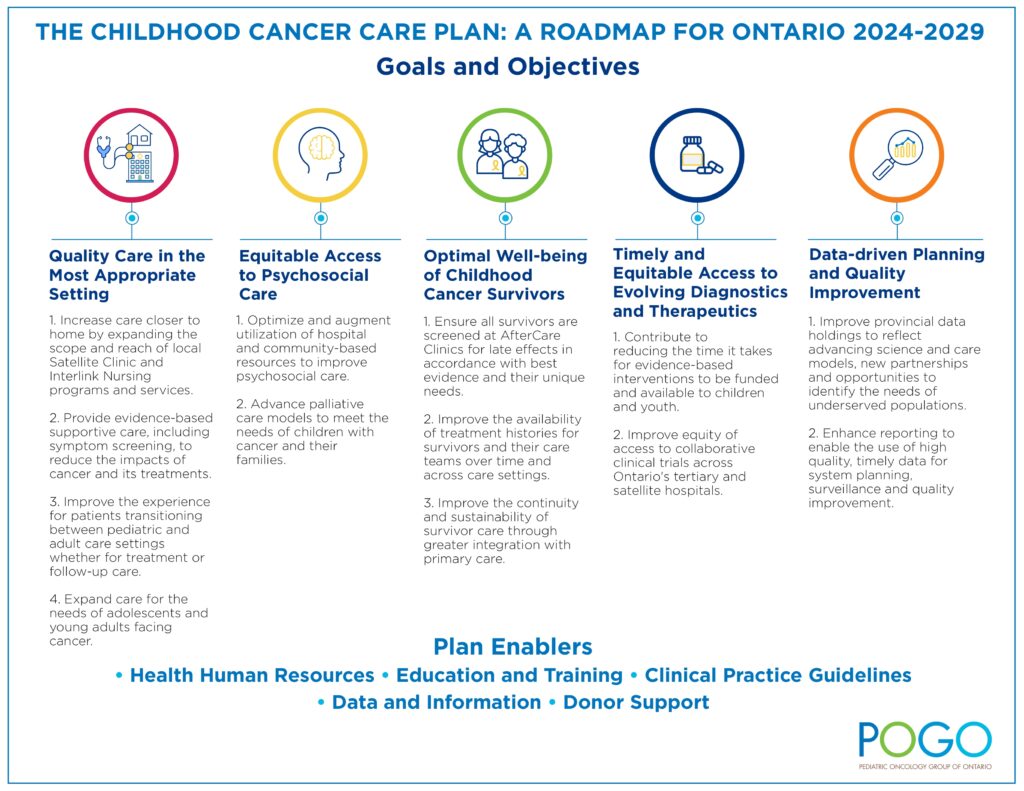
Led by POGO, the development of this Plan was informed by diverse voices from across Ontario’s childhood cancer care system. These valuable perspectives led to the creation of five goals:
- Quality care in the most appropriate settings.
- Equitable access to psychosocial care.
- Optimal well-being of childhood cancer survivors.
- Timely and equitable access to evolving diagnostics and therapeutics.
- Data-driven planning and quality improvement.
Working to achieve the best childhood cancer care system is a shared responsibility. Together with our partners in care, we will build on our collective success to achieve the ambitious goals of the 2024-2029 Childhood Cancer Care Plan.
Questions/Comments
Contact: info@pogo.ca
Past Plans
- Download the 2018-2023 Childhood Cancer Care Plan
- Download the 2018-2023 Goals at a Glance

Reports and Publications

About Us
Supportive Care and Guidelines
From our work behind the scenes in research that is generously funded by donors, to frontline care provided by POGO Interlink Nurses funded by Ontario’s Ministry of Health, to long-range provincial planning for Ontario’s childhood cancer care system, POGO, with our partners, is ensuring everyone affected by childhood cancer has access to the best care and support. Our reports reflect the breadth and scope of this work.
Donor Impact Reports
Our reports highlight the incredible accomplishments we have achieved with the contributions of our many supporters.
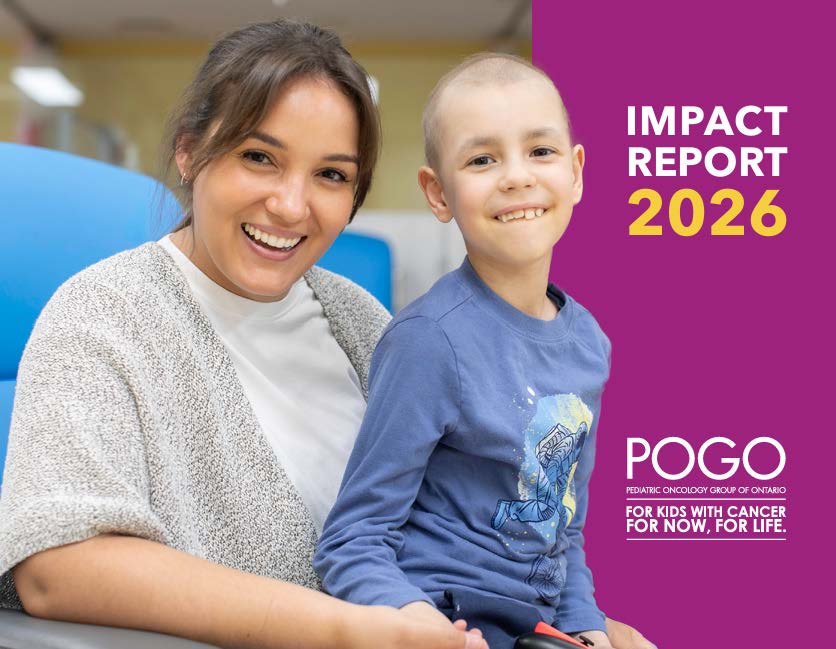
2026 Impact Report
Past Reports


POGO Fingertip Facts
The Childhood Cancer Journey


Financial Reports
POGO Surveillance Reports

Newsletters

About Us
Supportive Care and Guidelines
POGO champions childhood cancer care. When a child is battling cancer, we ensure that the child has lifelong access to the best care for the best possible outcomes. We provide that child’s family with financial support to help ease the burden. We commit to his or her ongoing care, knowing that childhood cancer survivors endure medical challenges into adulthood. We advance cancer care for all children with cancer through our pioneering database and research. POGO leads a unique and impactful pediatric cancer network that is a model for Canada and other parts of the world.
POGO’s quarterly newsletter, Childhood Cancer Matters, delivers captivating stories, childhood cancer news, useful resources and event announcements right to your inbox.
Most recent issue
Fall 2025
This bi-annual newsletter aims to support professional development, foster communication, promote nursing best practices, and so much more to ultimately strengthen our collective efforts in delivering exceptional nursing care to children and their families.
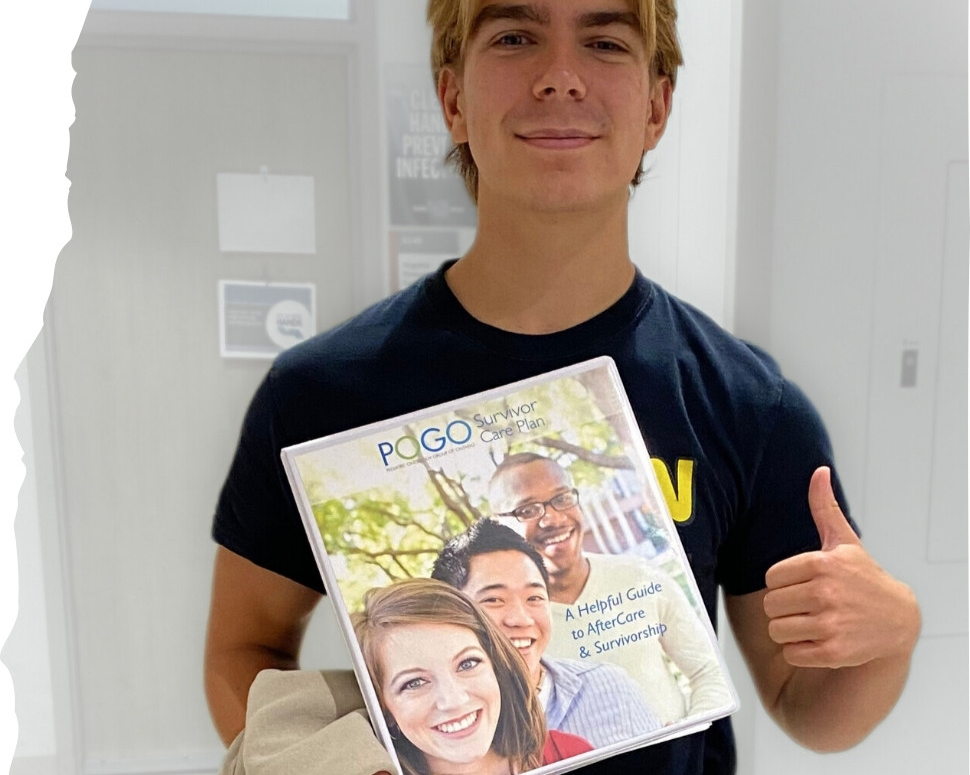
Sharing information about school and work, useful resources and lived experiences of childhood survivors.


Inspiring Childhood Cancer Stories | POGO Videos

About Us
Supportive Care and Guidelines
Meet some of our champions of childhood cancer. Their compelling videos will inspire you!
Acute Lymphoblastic Leukemia: The First 30 Days
POGO Interlink Nurse Tina Hamalainen illustrates what is involved in an ALL diagnosis—medically, emotionally and logistically—by sharing one family’s experience.
Careers
About Us
About Us
Available Positions
At the Pediatric Oncology Group of Ontario (POGO), we are united by a powerful purpose: to ensure that every child and adolescent facing cancer in Ontario has the best possible care and outcomes. As the leader of the childhood cancer system in Ontario, we work with hospitals, healthcare teams, families and other partners, to improve the system of care and support those who need it most, when it matters most.
About the Role
This is more than a clinical data specialist role. It’s an opportunity to help shape the future of childhood cancer care in Ontario.
As the Clinical Data Specialist, you’ll play a key role in ensuring the quality, integrity, and meaningful use of pediatric oncology data across Ontario. Working with the POGO team, clinicians, researchers, and health system partners, you’ll support program development, clinical research, health system planning, and quality improvement initiatives that help improve outcomes for children and youth affected by cancer. The use of our data also supports our charitable work and donor engagement.
Using POGO’s unique provincial data holdings, you’ll validate, analyze, and interpret data related to cancer diagnosis, treatment, survivorship, and long-term outcomes. You’ll also help develop and enhance data quality frameworks, support program development and growth, bolster research projects, contribute to reporting and publications, and provide expertise in the interpretation of complex pediatric oncology data.
What You’ll Do
- Collaborate with POGO teams, clinicians, researchers, and data partners to resolve complex data issues and ensure consistency and alignment with national and international standards.
- Analyze, validate, and maintain high-quality pediatric oncology data using established clinical standards and definitions.
- Develop and support data quality assurance processes, frameworks, and business rules.
- Extract, prepare, and interpret data for research, reporting, surveillance, and quality improvement initiatives.
- Contribute to reports, publications, presentations, and provincial, national, and international childhood cancer surveillance efforts.
- Monitor evolving oncology practices and recommend improvements to data collection and reporting processes.
About You
- You bring experience in clinical research, clinical data management, and the collection, validation, and interpretation of health information from patient medical records, research studies, clinical registries, or public health surveillance systems.
- You have demonstrated experience abstracting and analyzing data from hospital or clinical documentation, ensuring data quality, accuracy, and adherence to established protocols and regulatory requirements.
- You have post-secondary education in a related field such as Health Informatics, Health Sciences, Nursing, Epidemiology, Public Health, Life Sciences, or a similar discipline.
- You have knowledge of cancer diagnoses, treatment pathways, and oncology coding or classification systems such as ICD-O, ICCC, SEER, and SNOMED CT. Experience with pediatric oncology, survivorship, or cancer surveillance initiatives is considered a strong asset.
- You are detail-oriented, analytical, and passionate about using data to improve care and outcomes for children and youth living with and beyond cancer.
How to Apply
If you’re passionate about using data to improve outcomes for children and youth affected by cancer, we’d love to hear from you. Please submit your resume and a tailored cover letter outlining your interest in the role and how your experience aligns with the qualifications. Applications without a cover letter will not be considered.
Email your application to HR@pogo.ca with the subject line: Clinical Data Specialist, Pediatric Oncology.
What We Offer
At POGO, you’ll have the opportunity to make a meaningful impact while growing your career in a collaborative and mission-driven environment. We offer:
- A flexible hybrid work model (two days per week in office)
- Extended health and dental benefits along with paid sick time
- Participation in the Healthcare of Ontario Pension Plan (HOOPP)
- A supportive, inclusive, and collaborative team culture
- Free membership to the gym and fitness centre in our building
- Convenient underground building access at St. Patrick subway station
- The opportunity to contribute to improving childhood cancer care across Ontario
Expected starting salary: $64,000 – $76,000 per year
Commitment to Accessibility and Inclusion
POGO is committed to fostering an inclusive, accessible workplace. Accommodations are available throughout the recruitment and selection process. Please let us know if you require accommodation at any stage.
We thank all applicants for their interest; however, only those selected for an interview will be contacted. Applicants must be legally authorized to work in Canada. POGO is not currently sponsoring temporary or permanent work visas.
To support an efficient recruitment process, POGO may use AI-assisted tools during candidate screening and recruitment activities. All applications and hiring decisions are reviewed by people.
Our Partners

About Us
Supportive Care and Guidelines
POGO’s partners in service delivery include five specialized pediatric cancer centres or tertiary hospitals, and nine community hospitals providing pediatric oncology programs as POGO Satellite Clinics.
Tertiary hospitals are those where children with malignant disease are diagnosed and treated. POGO Satellite Clinics deliver selected components of childhood cancer care in partnership with the child’s pediatric oncology health care team at the tertiary hospital.
Specialized Pediatric Cancer Centres/Tertiary Hospitals
Children’s Hospital, London Health Sciences Centre
www.lhsc.on.ca
CHEO
www.cheo.on.ca
Kingston Health Sciences Centre, Kingston General Hospital Site
https://kingstonhsc.ca/
McMaster Children’s Hospital, Hamilton Health Sciences
www.mcmasterchildrenshospital.ca
The Hospital for Sick Children
www.sickkids.ca
Hospitals with POGO Satellite Clinics
Northeast Cancer Centre, Health Sciences North
www.hsnsudbury.ca
Orillia Soldiers’ Memorial Hospital
www.osmh.on.ca
Peterborough Regional Health Centre
www.prhc.on.ca
Scarborough Health Network, Centenary Site
www.shn.ca
Southlake Health
www.southlake.ca
Thunder Bay Regional Health Sciences Centre
www.tbrhsc.net
Trillium Health Partners, Credit Valley Hospital
www.trilliumhealthpartners.ca
Waterloo Regional Health Network (formerly Grand River Hospital)
www.wrhn.ca
Windsor Regional Hospital
www.wrh.on.ca
POGO AfterCare Clinics
Hamilton
McMaster Children’s Hospital, Hamilton Health Sciences
Kingston
Cancer Centre of Southeastern Ontario at Kingston Health Sciences Centre
London
Children’s Hospital, London Health Sciences Centre
Ottawa
CHEO (children)
The Ottawa Hospital Cancer Centre (adults)
Toronto
The Hospital For Sick Children (children)
Princess Margaret Cancer Centre (adults)
Our Committees

About Us
Supportive Care and Guidelines
Our committees are a reflection of the spirit of collaboration that is a hallmark of POGO. Committee members volunteer their time and expertise to make a tangible difference. Working in partnership with a wide group of stakeholders—healthcare professionals, parents, survivors, national and provincial cancer care partners—brings different experiences to bear on the issues and challenges of the childhood cancer care system. Together, we engage in creative and evidence-informed thinking and drive Ontario’s system to deliver the best care for the best possible outcomes for patients, survivors, their families and those who care for them. We are grateful for the commitment of our volunteers and encourage others to get involved on a POGO committee by contacting us at info@pogo.ca.
First Nations, Inuit, Métis and Urban Indigenous Children with Cancer Initiative Core Group
Advises on ways to improve equity and cultural safety in care for Indigenous children with cancer and their families.
Ontario Adolescent and Young Adult Cancer Care Steering Committee
Advises POGO and Cancer Care Ontario on the identification, selection, approach to and implementation of initiatives intended to improve care for adolescents and young adults experiencing cancer.
POGO Pediatric Oncology Therapeutic and Health Technology Advisory Committee
Provides timely evidence-based clinical and health system guidance on drug, therapeutic and diagnostic health technology-related issues in support of childhood cancer care in Ontario.
POGO School and Work Transitions Program Advisory Committee
Provincial AfterCare Steering Committee
Provincial Pediatric Palliative Care Steering Committee
A joint committee of POGO and the Provincial Council on Maternal Child Health.
Provincial Research Ethics Board Principal Investigator Task Force
Supportive Care Steering Committee
Identifies and advises POGO on nursing priorities in the delivery of childhood cancer care across the province in collaboration with tertiary and community partners.
If you are seeking more information about any of the committees on this page, please reach out to info@pogo.ca.