In Conversation with Dr. Paul Gibson

As POGO's Associate Medical Director, Dr. Gibson provides oversight for POGO’s seven Satellite Clinics including clinical practice and professional development training. He also chairs POGO’s Technology and Therapeutic Advisory Committee (TAC) that works to ensure timely and equitable access to state-of-the-art cancer treatment to all children in Ontario. Dr. Gibson was a member of the executive committee of the Provincial Pediatric Oncology Plan (PPOP), POGO’s long-range plan for childhood cancer care in Ontario. He is also a pediatric oncologist, and recently joined the team at McMaster Children's Hospital in Hamilton. He is also an Associate Professor of Pediatrics at McMaster University.
Q. What does Childhood Cancer Awareness Month (CCAM) mean for you?
Dr. Gibson: September is a time to celebrate collaboration. It’s a time to acknowledge the team efforts that lead to the remarkable outcomes in children’s cancer. It’s the families, the doctors, the nurses, the child life specialists, pharmacists, rehabilitation professionals, information coordinators, volunteers, tertiary hospitals and satellite centres. The saying is that it takes a village to raise a child. Well, it takes a province to care for families impacted by childhood cancer.
Q. What led you to pediatric oncology?
Dr. Gibson: As an undergraduate student, I worked as a counsellor at a variety of summer camps for kids with special needs and interacted with pediatric oncology patients and the dedicated professionals caring for them. It was here that my interest in oncology was sparked. I spent two summers in Alberta where I had the pleasure of working with Kids Cancer Camps of Alberta. Once in medical school, I was fortunate enough to be granted a studentship to spend the summer working with the pediatric oncology team at the Children’s Hospital of Eastern Ontario (CHEO). My experience there cemented my goal to become part of this world. I was fortunate to train in pediatric oncology at SickKids and then spend 10 amazing years working as part of the team at Children’s Hospital in London.
Q. What aspects of your work bring you the greatest joy, challenge or sadness?
Dr. Gibson: When I tell people I work in childhood cancer, their first response tends to be, ‘It must be so sad.’ I always explain that while the bad days can be awful, the vast majority of days are filled with laughter, levity and team work. Day to day we see our patients enjoying the moment, playing with their families, nurses, child life specialists, therapeutic clowns and volunteers. The biggest challenge still lies in the fact that we don’t cure every patient. Our team is profoundly impacted by challenges such as relapses and patients we can’t cure. It’s important for us to lean on each other in those hard times.
Q. When and why did you become involved with POGO?
Dr. Gibson: I first became involved with POGO as a trainee at SickKids. I participated in the annual POGO symposiums and enjoyed being part of the collective provincial community. I also had the chance to be a presenter during the Satellite Education Days and learn more about the communities served. When I joined the team in London in 2010, I came to appreciate the important job POGO plays in ensuring excellence and equity in kids’ cancer care throughout the province. POGO not only serves as the official advisor to the Ministry of Health, but also an important facilitator of collaboration and cooperation between professionals caring for children with cancer throughout Ontario.
Q. What mark do you want to make as POGO’s Associate Medical Director and as an oncologist?
Dr. Gibson: POGO’s successes over the past 30+ years have been built on the backs of dedicated volunteers and leaders. As the Associate Medical Director, I wish to make my mark by not only continuing the programs, relationships and advocacy of the past, but also to play a role in helping to usher in new therapies and technologies to improve childhood cancer outcomes for all patients in Ontario.
Q. If you could say one thing to the families and children in your career, what would that be?
Dr. Gibson: I would say, “Thank you!” It’s an incredible privilege to be ‘let in’ to their family dynamic at a time most would say is their worst. Not only do families allow us to work with them and care for their child, but so many also participate in research and clinical trials knowing that the knowledge we gain may never impact their child, but may improve the care and outcomes of countless children in the future.
Q. What would be your call to action to Ontarians for CCAM?
Dr. Gibson: Ontarians must make childhood cancer research a priority. While more children survive childhood cancer now than ever before, too many young lives are still lost every year. We must ensure Ontario children have access to clinical trials that will aim to improve outcomes and minimize long-term complications. We must also ensure that we take our best efforts to care for those who survive but are left with immense health challenges and also those who will not be cured and deserve the same world- class care at the end of life.
Dr. Gibson graduated medical school from Queen’s University, Kingston, Ontario, in 2004 and started training in pediatrics at BC Children’s Hospital. He has practiced pediatric hematology and oncology exclusively since starting his subspecialty training at Sick Kids in 2007.
Dr. Gibson served as Physician Lead for the creation and implementation of a variety of computerized provider order entry efforts in Southwestern Ontario, both within and beyond oncology. He has participated in a variety of research endeavours aimed at improving symptoms and quality of life in children and adolescents undergoing cancer therapy.
Dr. Gibson is an avid sports and music fan and when he’s off duty attends Blue Jays’ and Toronto Leafs’ games, and supports independent musicians and festivals.

A Lifetime of Care for My Lifetime in Care

At four, I was diagnosed with stage 4 rhabdomyosarcoma, in my case a tumour the size of a baseball in the lower abdominal area near my bladder. At 20, I have lived almost my entire lifetime in cancer care. And alongside my parents, POGO, through its many programs and services, has been with me every step of the way. POGO teams have supported me through treatment, which included eight rounds of chemotherapy and a series of surgeries at the age of four. And now, 16 years later, as I manage the late effects that have developed as a result of my treatment, POGO AfterCare Clinics continue to support me.
Most people know that cancer treatment can be fairly aggressive, but what many don’t realize is that it can have serious side effects many years later. I continue to be monitored by oncology for second cancers. I need to see a cardiologist every six months because the toxic mix of drugs I was given has the potential to seriously lower my Ejection Fraction Index, which is the fraction of blood pumped out with every heartbeat. And I visit my internist annually because the surgeries that removed my tumour, also left a lot of scar tissue.
Until a few years ago, all of my follow-up care took place at SickKids where I was diagnosed and treated. When I turned 18, I graduated from the all-encompassing children’s hospital system, with its seamless management and coordination between departments, to the adult system (in most situations I am by far the youngest person in the waiting room!). While I have three new doctors spread across the city, luckily for me, and every childhood cancer survivor in Ontario, all of my follow-up care is still coordinated through a POGO AfterCare Clinic. So when my cardiologist wanted to change my medication, POGO teams were able to determine that it wouldn’t do any damage based on the treatment I had as a child. And when my internist wanted to do an exploratory procedure, POGO teams again intervened noting it could do more damage than good with the scar tissue that was built up over many surgeries.
As you can see from my personal story, childhood cancer requires a lifetime of follow-up care. I know POGO will be there for me over the next 20 years, 20 more after that and counting. Without the seamless care of POGO’s AfterCare Clinics, and survivor care programs, many young cancer survivors would fall through the cracks.
Eloise's Story
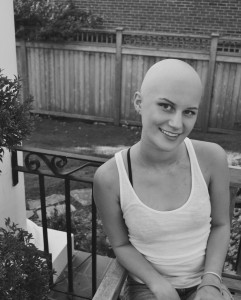 My name is Eloise McIntosh. I am 16 years old and two years ago, over the summer between grade 9 and grade 10, I was diagnosed with stage IIb Hodgkin lymphoma.
It started when I was on a youth adventure trip in Hawaii. Three weeks in, I got sick on a 12-mile hike to our camping destination. When I was still sick a week later, the doctors in Toronto tested for infectious diseases and the mono virus. I also had a chest x-ray to test for pneumonia. That is when they discovered it: a mass in my esophagus right near my trachea.
There are all kinds of terrifying things about getting a childhood cancer diagnosis. I had never even spent time in a hospital before and I had to have surgery right away. Chemotherapy was the worst experience of my life. They put me on steroids which caused my face to get fat and I felt angry all of the time. And when they told me that I would have to meet with a fertility specialist, that definitely freaked me out.
But there are also the trials and tribulations that come with being 14 years old. I was worried about my social life and missing out on my high school experience. As a teenage girl, the thought of losing my hair was obviously a huge concern for me. In fact, I did lose all of my hair... and my eyebrows and eyelashes. My leg hair completely fell out. I felt naked and unprotected. My wig became, and still is, part of my ability to feel somewhat normal, but probably the biggest contributor to my emotional well-being was how supported I was by my friends and family.
Both my parents and my younger brother and sister were around me all of the time. My aunts, uncles and cousins visited often and they became “my posse.” And at least one of my friends from school was with me during every chemotherapy treatment. I never felt alone and I realize how lucky I was. Many families need to travel for treatment—to Toronto, Ottawa or one of the five big cities with a major children’s hospital. I saw lots of kids in treatment with just one parent sitting beside them while the other was far away. Young kids and teenagers separated from their friends and siblings. I’m sure it was a very isolating experience for them.
That is why I agreed to be the keynote speaker at the upcoming POGO gala to benefit kids with cancer. Funds raised will support POGO’s mission to ensure all children with cancer, and their families, have equal access to the best care—no matter where in Ontario they live.
I hope to meet you all at the event on May 7th, taking place at the Liberty Grand Entertainment Complex in Toronto (you can find out more here: www.pogo.ca/gala). If you cannot make it, I hope you will consider showing your support by making a donation to my campaign to support families.
Thank you so much!
Sincerely,
Eloise
Eloise McIntosh made this speech at the POGO Gala in 2016. She is now the co-founder of The Good Hood Club, a loungewear company dedicated to championing childhood cancer, most notably through donating 50% of its profits to pediatric oncology initiatives.
Government of Canada increases duration of Employment Insurance compassionate care benefit
Excerpted from Government of Canada Press Release
The Minister also said today that the Government will work towards providing more generous leave for caregivers in the future. The Government has committed to making the compassionate care benefit more flexible, easier to access and more inclusive, she said.
Compassionate care benefits provide temporary income support to eligible individuals who must be away from work to provide care for a gravely ill family member at risk of death.
Effective January 3, 2016, the enhanced benefit, announced in 2015, allows claimants to collect up to 26 weeks of benefits, up from the current 6 weeks. Further, the period during which benefits can be taken is expanded to 52 weeks (up from 26 weeks). Benefits can be shared between family members.
Eligibility for compassionate care benefits remains the same, including the requirement for a medical certificate signed by a doctor attesting to the family member’s condition.
Corresponding changes to the Canada Labour Code will come into force at the same time to ensure that the jobs of employees in federally regulated enterprises remain protected while they avail themselves of compassionate care benefits under the EI program.
Related Topics
- Learn about the financial assistance POGO provides to families
- Visit Service Canada to get the most up to date information about Employment Insurance compassionate care benefits
Ontario Making Hospital Parking More Affordable
Ontario hospital parking discounts came into effect October 1, 2016!
On January 18, 2016 Ontario's Ministry of Health and Long-Term Care issued the following press release:
As of October 1, 2016, hospitals that charge more than $10 a day for parking will be required to provide 5-, 10- and 30-day passes that are:
- Discounted by 50 per cent off their daily rate
- Transferable between patients and caregivers
- Equipped with in-and-out privileges throughout a 24-hour period
- Good for one year from the date of purchase.
Ontario consulted with patients, patient advocacy groups, hospitals and the Ontario Hospital Association to find a fair plan that reduces the financial burden of parking fees for patients and their visitors.
Between now and October 1, 2016, hospitals will work directly with their Patient and Family Advisory Councils to implement this new policy, ensuring that it is well promoted and easy to understand. Each hospital will provide details on its specific parking policy and discounts.
Approximately 900,000 patients and visitors - including 135,000 seniors - are expected to benefit from reduced parking fees each year.
Saving patients and their loved ones money on hospital parking is part of the government's plan to build a better Ontario through its Patients First: Action Plan for Health Care, which is providing patients with faster access to the right care, better home and community care, the information they need to stay healthy and a health care system that's sustainable for generations to come.
" Parking fees should never be a barrier for patients when they go to the hospital. With today’s announcement, we are providing relief from the high cost of parking at some hospitals in Ontario. By making parking more affordable for patients and their loved ones who visit the hospital often, we are helping to reduce the burden of parking fees and putting patients first."
- Dr. Eric Hoskins, Minister of Health and Long-Term Care
" We are thrilled that our concerns around the high cost of hospital parking have been addressed in a meaningful way that will help defray the cost of hospital parking for families of children with cancer in Ontario. You heard our voices, included us in the consultation, and have come up with a plan that reflects that in a very positive way. Thank you."
- Susan Kuczynski, Member of Ontario Parents Advocating for Children with Cancer
QUICK FACTS
- The Ministry was pleased to have consulted with a number of hospitals and the Ontario Hospital Association in regards to parking fee changes in Fall 2015
- The Ministry will require other hospitals that do not own their own lots to make best efforts to influence their partners, like municipalities and private operators to cap or cut parking fees for those who must visit the hospital frequently.
- In Ontario 45 Hospitals currently offer free parking and 54 charge $10 or less per day. It is estimated that 36 hospitals charge more than $10 a day.
- The government is directing hospitals not to raise their daily parking rates for the next three years starting today.
RELATED LINKS
- POGO Financial Assistance Program
- "Rates Cut in Half for Frequent Hospital Visitors" Ontario Government Press Release, Oct. 3, 2016
- Ontario Ministry of Health: Patients First: Action Plan for Health Care
How our Family Changed the Day My Son was Diagnosed with Cancer
Our son Jonah was diagnosed with leukemia on October 29, 2014. Prior to that, we had been to see the doctor a couple of times for what seemed to be typical seven-year-old stuff. When he had headaches after being hit at hockey, we went to CHEO (Children’s Hospital of Eastern Ontario) where he was diagnosed with a concussion. Then when he complained of being tired all of the time, not wanting to eat and night sweats, we thought it was the flu and took him to the clinic. On the morning of October 28th, my husband John took Jonah to the lab to get his blood work done; the doctor wanted to check for anemia.
That night, I remember the clock beside the bed read 9:16 when the phone rang. My husband had just left for work and the kids and I were already in bed. The gentleman on the phone said, “Is this Jonah’s mom? This is the Dr. E from the clinic. I am calling because we got Jonah’s blood work back. You need to get up and take him to CHEO immediately. And I want you to remember the word platelets. Now repeat it.” I repeated the word. “Good. His platelets are at 13; one, three. I know that probably doesn’t mean anything to you, but Jonah needs to go to the hospital right now, do you understand?” I said that I did and he said, “Go now” and hung up.
Not even 30 seconds later Jonah walked into my bedroom and said, “Mum, I can’t take this sweating anymore.” It was pouring from his arms like an open faucet. I said, “It’s okay babe, we are going to go to the hospital right now.”
Everything shifted that night, even our family dynamic. It became all about taking care of Jonah. John is stepdad to Jonah and his brother Beaudin and we have a little girl, Maeve. The boys would typically spend every weekend in Kingston with their dad George, his wife Charlotte and her daughter Brooklyn. Jonah couldn’t do that anymore, we didn’t want to separate the boys and we were not willing to let any relationships slide, so George, Charlotte and Brooklyn often stayed at our house in Ottawa.
The usual daily routine quickly became more complicated. We adjusted our schedules and took time off work to accommodate caring for Jonah, school drop off and pick up for Beaudin, and childcare for Maeve. All day treatment meant all day parking and meals at the hospital, gas back and forth, and unexpected daycare costs. And having three new people in the house made mealtime and housework chaotic.
It was definitely a challenge blending the two families, but we had to or it just wouldn’t have worked for the kids. Everybody had their own stressor. For me it was fear of the unknown all of the time; George became obsessed with staying on top of the laundry; Beaudin had to deal with lots of questions at school; and Maeve went from one day in daycare to five because we needed the security of knowing the baby was safe and taken care of. It was the hardest thing our family has ever gone through—emotionally, physically and financially—but it has brought the eight of us closer together, especially the kids, and Jonah is the hub. He knows he has a couple of years left of treatment but he never seems defeated. He is so mature for his age. This experience has made him wise beyond his years.
—Satara Stephens

P.S. I would like to thank Marilyn, our POGO Interlink Nurse for being such a huge support to our family. Marilyn even spoke to Jonah’s class to help them understand what was going on and make things easier for Beaudin at school. I would also like to thank POGO and everyone who donates to the financial assistance program—it lifted a huge burden at a time when we needed all the help we could get.
POGO Research Education Days Spur on Successive Generations of Pediatric Oncology Researchers
POGO’s 2016 Research Education Day provides graduate students, post-doctoral fellows, clinical fellows and new investigators with the opportunity to gain practical skills and advice to build a research career in pediatric oncology. Topics at this one-day event include: how to build a strong research team and work through the associated challenges; work-life balance; inter-disciplinary insights into applied research; and how to become a leader in the field. In a panel discussion on mentorship, researchers will share their experiences first as mentees and later as mentors. Participants can also attend two workshops: To the top of the Pile: Writing a Stand Out Grant Application and What’s Hot and What’s Passé in Pediatric Oncology Research.
POGO provides continuing education that enables healthcare professionals to remain at the forefront of the ever- and rapidly advancing field of pediatric oncology.
The 2016 POGO Research Education Day takes place Wednesday, April 13, 8:00 a.m. – 4:30 p.m. at St. James Cathedral, 54 Church St, Toronto. Get the details!
To subscribe to the POGO Research Unit distribution list contact Rachelle Marek: rmarek@pogo.ca.
2015 POGO/Ooch Survivor Conference

On October 16-18, 2015, Camp Oochigeas and POGO presented the 3rd Life After Childhood Cancer Survivor Conference, a gathering for survivors of childhood cancer aged 19 and over. More than 70 adult survivors of childhood cancer joined us at Camp Oochigeas in beautiful Muskoka for a weekend of connecting with other survivors, learning about managing their health and living well after childhood cancer.
Scroll down to view the Survivor Conference slide presentations that POGO was granted permission to share. If you are interested in a specific subject, click on a subject tag at the bottom of a post to view all the slides or videos that cover that subject.
NOTE: The content of each presentation captures the unedited information and opinions presented by the speaker. Please note that the information contained in the presentations was current at the time it was presented – there may be further information in subsequent literature. Listed speaker credentials were current at the time of presentation.
PLENARY SESSIONS
We Are All Storytellers: Discovering the Power of Knowing and Sharing Your Story
Michael Lang, MSc
Raymund Ong
Managing Your Fertility: Current Options, Practical Strategies
Sara R. Cohen, LL.B.
Karen Glass, MD, FRCS(C), FACOG
All in the Family: Talking to Siblings about Childhood Cancer
Norma D’Agostino, Ph.D., C.Psych.
Shamata, sibling of childhood cancer survivor
Kevin Wang, MD/PhD student
Beyond Survival: Emotional Equilibrium After Cancer
Christopher Recklitis, Ph.D., MPH
WORKSHOPS
Communicating with Family and Friends
Norma D’Agostino, Ph.D., C.Psych.
Common Workplace Issues: Tools and Strategies
Lori Otte, BA, RRP
Genetic Testing for Cancer Survivors – Who and When
Nikki Parkinson, MSc, CGC
We Are All Storytellers: Discovering the Power of Knowing and Sharing Your Story
Presentation Description:
"Facts lead to knowledge, but stories lead to wisdom." - Dr. Rachel Remen
Many childhood cancer survivors may not realize that they are living an amazing story or know how to begin telling it. This fun and interactive session drew on Mike Lang's and Raymund Ong's own personal experiences, as well as short digital stories and murals created by other cancer survivors, to explore the idea of storytelling as it relates to cancer and our lives in general. The goal of the session was to empower and inspire survivors to tell their stories so that the wisdom they have gained from their painful (and incredible) life journey can be shared with others who need it.
Telling Their Story: Video from the 2015 Survivor Conference
Five attendees of the 2015 Ooch/POGO Survivor Conference shared their perspectives on survivorship; the challenges and obstacles they faced, the effect their diagnoses had on their lives and how they've found hope, inspiration and fulfilment. These individuals shared their stories in the hopes that they will resonate with other childhood cancer survivors, who in turn may choose to tell their own.
Video Credit: Michael Lang, Survive & Thrive Expeditions Ltd.
Speakers:
Michael Lang, MSc
Executive Director, Survive & Thrive Cancer Programs
Specialist, Person Centred Care Integration, AHS CancerControl
Research Assistant, University of Calgary
Raymund Ong
Founder, C4 Murals
Managing Your Fertility: Current Options, Practical Strategies
VIEW THE PRESENTATIONS
Presentation Description:
This session presented a brief overview of options for fertility preservation in female and male survivors of childhood cancer. Mostly, the session reviewed the options for survivors who are unable to conceive post treatment. The session discussed the options for building a family using third party reproduction. The practical and legal perspectives were discussed for surrogacy, donor eggs and donor sperm
Speakers:
Sara R. Cohen, LL.B.
Fellow of the American Academy of Assisted Reproductive Technology Attorneys
Adjunct Professor, Osgoode Hall Law School
Karen Glass, MD, FRCS(C), FACOG
Reproductive Endocrinologist, CReATe Fertility Centre
Director, Oncofertility Program
Assistant Professor, University of Toronto.