The Options are Limitless When it Comes to Raising Money for Kids with Cancer!
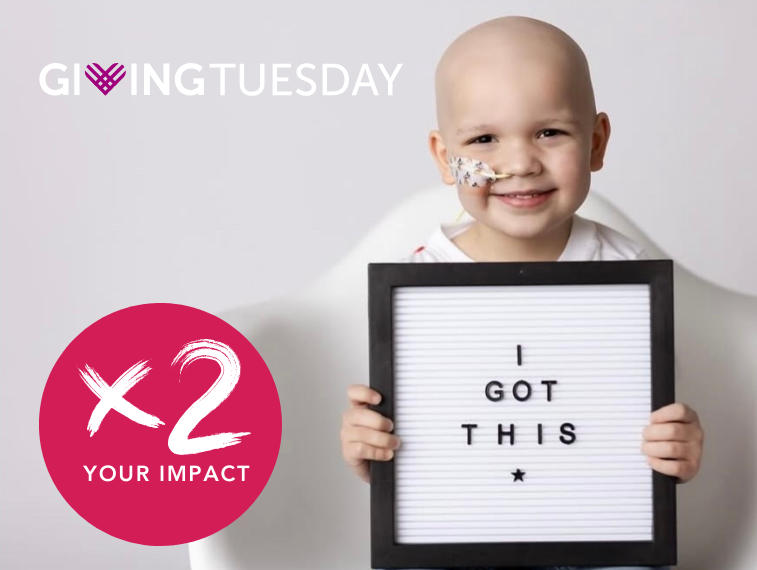
Our third-party fundraisers have done some amazing things to raise money for childhood cancer care. Hosting an event in support of POGO is only limited by the extent of your imagination. You can throw a themed party, organize a competitive dodgeball tournament, cycle across Ontario, shave your head, create a team challenge at your office, even workout in your PJs to raise awareness about the unique issues young cancer patients face.
At POGO, third-party (individual, community, school and corporate) events are crucial to our annual fundraising goal. The funds you raise provide financial assistance to families so they can pay for out-of-pocket costs associated with their child’s treatment, support survivors with customized school and work counselling when their disease or its treatment has left them with learning challenges, and fund promising research that examines the impact of childhood cancer and its treatment.

Have an idea but don’t know how to get started? Our team and easy-to-use fundraising platform are here to help! We can brainstorm your vision to help maximize your recruitment/attendance/fundraising, and we have pledge forms, videos and marketing materials to help make your event a HUGE success.
Holding an event for POGO is a meaningful way to make a difference in the lives of children and youth with cancer, survivors and their families, and it can also be a fun way to engage your friends, family, classmates and colleagues.
What will you do?
Check out POGO’s easy-to-use fundraising platform for more ideas

POGO Satellite Clinics Mark 25 Years of Providing Care Closer to Home
This year, 2023, marks POGO’s 40th anniversary and 25 years of providing care closer to home through the POGO Provincial Pediatric Oncology Satellite Clinic Program. POGO’s longstanding partnership with community hospitals across Ontario began in 1998 to reduce the logistical challenges experienced by families who live outside major city centres where hospitals with specialized childhood cancer programs are located.
Read on to learn more about POGO’s Satellite Clinic Program.
What is the POGO Satellite Clinic Program?
The POGO Satellite Program is a networked, shared-care system based on a partnership between POGO, eight community hospitals and the specialized childhood cancer programs at SickKids (Toronto), McMaster Children’s Hospital (Hamilton), Children’s Hospital (London) and CHEO (Ottawa). POGO Satellite Clinics are located in the community hospitals and enable aspects of a child’s care to occur closer to home. Each Clinic and the children’s hospital with which it is linked work collaboratively to provide integrated, seamless care for children with cancer and their families.
What are the POGO Satellite Clinics located?
POGO Satellite Clinics are in these communities across Ontario:
- Grand River Hospital, Kitchener-Waterloo Campus
- Trillium Health Partners, Credit Valley Hospital Site (Mississauga)
- Southlake Regional Health Centre (Newmarket)
- Orillia Soldiers’ Memorial Hospital
- Peterborough Regional Health Centre
- Scarborough Health Network, Centenary Hospital
- Northeast Cancer Centre, Health Sciences North (Sudbury)
- Windsor Regional Hospital, Metropolitan Campus
How do POGO Satellite Clinics help families?
With standardized childhood cancer care available closer to home, families spend less time travelling and away from work with a potential loss of income and time separated from their home and community. They also have the confidence of knowing that their child is receiving the best quality care, coordinated by the healthcare teams at their POGO Satellite Clinic and the associated children’s hospital. While long-distance travel cannot be eliminated altogether, receiving components of care closer to home vastly reduces families’ overall levels of stress, disruption of work and school attendance, and expense.
“Having a POGO Satellite Clinic so close to home cuts down on the cost of gas and, more importantly, helps us maintain some semblance of regular life. When Ryla has a fever, the POGO Satellite Clinic is our first stop. This minimizes the disruption in our lives and allows us more family time.”
- Roberta Webster, parent
How does the POGO Satellite Clinic program help the overall healthcare system?
POGO Satellite Clinics enable the hospitals with a specialized childhood cancer program to increase their capacity to provide more complex treatment and/or monitoring.
“Having patients seen and treated closer to home has allowed the healthcare staff and resources in specialized childhood cancer programs to focus on patients that might require more specialized care. It also eases both in- and out-patient numbers in these programs on any given day, allowing for more time with each family. The built-in communication between the POGO Satellites and the specialized childhood cancer programs ensures seamless care. Our families report their visits at POGO Satellites as a very positive experience. They report the kindness of staff and individual care received as fostering a welcoming environment that has the additional benefit of proximity to their home.”
- Dr. Carol Portwine, Division Head, Department of Pediatrics, Division of Hematology/Oncology, McMaster University
How is the geographic location of a POGO Satellite Clinic determined?
Many factors are considered when determining the geographic location of a POGO Satellite Clinic including, but not limited to, caseload in the region and geographic distance to a major hospital with a specialized childhood cancer program. POGO helps ensure that healthcare teams have the right mix of oncologists, nurses, social workers, pharmacists and other experts to meet the need.
“The POGO Satellite Clinic Program has been instrumental in allowing our families from Northern Ontario to get the specialized care they need close to home. It allows patients to remain with their families at a challenging time in their lives, and also with their friends and community supports. Working with the POGO Satellite Clinic at Northeast Cancer Centre, Health Sciences North really shows how we are all doing the best for our amazing patients.”
- Dr. Donna Johnston Chief, Division of Hematology/Oncology, CHEO
How can families be sure they are receiving the best care at a POGO Satellite Clinic?
POGO creates and updates operational standards and guidance documents so that comprehensive, technologically-advanced childhood cancer care can be delivered as close to the child’s home as is compatible with the level of care required. That care also has to be equivalent to care received in a specialized childhood cancer program. POGO remains an important resource in promoting partnerships between healthcare teams across the child’s treating hospitals, monitoring activity in the Satellite Clinics and promoting early referral to each community hospital to maximize capacity to provide complex cancer treatment closer to home. POGO also provides regular professional development opportunities for healthcare team members.
“We have a close-knit team. I love our work family of registered nurses, a registered dietitian, Satellite lead pediatrician, child life specialist, welcoming receptionist and music therapist.”
- Deb Crann, POGO Satellite Clinic Nurse Coordinator, Grand River Hospital

When Your Baby Has a Brain Tumour
Even though I was a new parent, I had this intuition that something wasn't right with my baby girl. Ryla's head seemed too big for her body when I compared her to other babies. She also developed “café au lait” spots on her body which I assumed were just birthmarks but were actually a sign of an underlying condition. At six months old, Ryla was diagnosed with neurofibromatosis, a rare genetic disorder that typically causes benign, slow-growing tumours on nerve tissue.

At ten months old, I noticed Ryla's eye wasn't tracking correctly. Our pediatrician didn't see anything unusual, but he knew we needed to monitor Ryla closely because of her diagnosis, so he referred her to a pediatric ophthalmologist. Ryla's condition changed quickly over the next month, and we ended up at SickKids before we even got to the appointment.
It started on Christmas day at my parents' house. Ryla's left eye was swollen and wouldn't stop watering.
A few days later, she woke up from a nap, and we were shocked to see her eye had gone from blue to brown. My husband, Rob, and I rushed her to Credit Valley Hospital and then to emergency at SickKids
Getting the diagnosis
Ryla had a mass compressing her optic nerve, causing proptosis (bulging) and blood leaking into her eye. She needed an ultrasound and an MRI to uncover what the mass was and its exact location. The wait was excruciating for us and very uncomfortable for Ryla, who went 24 hours on IV nutrients only.
Finally, at 11 p.m. on New Year's Eve, Ryla got her MRI, and a few hours later, we were told our baby had an inoperable brain tumour.
We were sent home with the knowledge that the next step would be chemotherapy, but because the quick growth of Ryla's tumour was atypical, it would need to be evaluated by the tumour board at SickKids to determine the best course of treatment.
Typically, this type of tumour would not get biopsied because the procedure can cause blindness, but since her condition changed so quickly, the hospital staff felt the tumour was aggressive and wanted to know what they were dealing with. An optic nerve surgeon explained that he would try to go between the bone and eye to do the biopsy but warned us that he might need to remove some of her bone to get a clear path to the tumour.

Celebrating Ryla's first birthday
We had to do something special for Ryla's first birthday because we thought it might be the only one we would get to celebrate.
Ryla's birthday occurred just a few days after the diagnosis and before the biopsy. We would not have made a big fuss because she was so young, but now that her future was uncertain, we couldn't let it go by without marking the day.
While driving from Toronto to our home in Streetsville, our friends and family rallied to decorate the house, and we had a huge celebration. It was incredibly touching to see the beginning of our support network forming.
It took about two weeks, but the biopsy showed that the cancer was not as aggressive as they had feared.
Ryla was approved for a clinical trial that included weekly chemotherapy at the hospital, but the results were not promising for her. She was approved for a second clinical trial involving a daily oral medication, but they had to alter the recommended dose to try to avoid any damage to her liver. It worked! Her tumour stabilized as long as she was on the medication, but started to grow again when the clinical trial ended. Luckily, she has been granted compassionate access to the clinical trial chemo which she continues today.
“It was hard to hear that Ryla was blind in one eye, but when the doctors told us they couldn’t resect the tumour to prevent it from spreading to her right eye, it was devastating. Removing her left eye will make her more comfortable, but we need to rely on the chemotherapy to protect the vision she has. It makes her future uncertain.”
-Rob McCormack

Getting care closer to home
As life shattering as this has been for us over the last 4.5 years, Ryla takes it (mostly) in stride. She is an inquisitive, smart, sassy kid. Ryla is always happy to go to the POGO Satellite Clinic at Credit Valley Hospital near our house—she loves the toys, and the staff make her feel like a superstar. She has even learned to advocate for herself—letting them know that she doesn't want eye drops if they aren't necessary and asking for the child life specialist when she feels vulnerable.
Support from a POGO Interlink Nurse
The road has been and continues to be very rocky. As Ryla got older, she started to grasp that other kids don't have to go to the hospital all the time.
And when she started school, it became starkly apparent to her that she looks different from everyone else. Her classmates would ask, "Why do you have one big eye and one little eye?" Arvinder, our POGO Interlink Nurse, came to Ryla's school and explained to her class that everyone is unique. Some people look different because they have different colour hair, eyes or skin. She taught the students how to ask Ryla questions that wouldn't make her feel bad, and Ryla feels more comfortable and loves going to school. Arvinder also advocated for a special needs EA in the classroom and a therapist for Ryla.
POGO has been with our family from the start. When Ryla was diagnosed, a POGO Interlink Nurse was assigned to help us navigate the challenges ahead. I have been on maternity leave and critical illness leave since Ryla was born, so our income has decreased significantly, but our expenses have increased. When you spend several days in a row at the hospital, you buy food and other things that you wouldn't have to if you were at home. Our POGO Interlink Nurse pointed us to resources like the POGO Financial Assistance Program to help pay for out-of-pocket costs. And having a POGO Satellite Clinic so close to home cuts down on the cost of gas and, more importantly, helps us maintain some semblance of regular life. When Ryla has a fever, the POGO Satellite Clinic is our first stop. This minimizes the disruption in our lives and allows us more family time. We are not out of the woods yet. Ryla's second surgery has not been scheduled yet, and we don't know what post-surgery will look like, but we know our POGO supports will help us get through it.

By Roberta Webster