Far From Home When Your Child Has Cancer
By Stephanie Lacasse
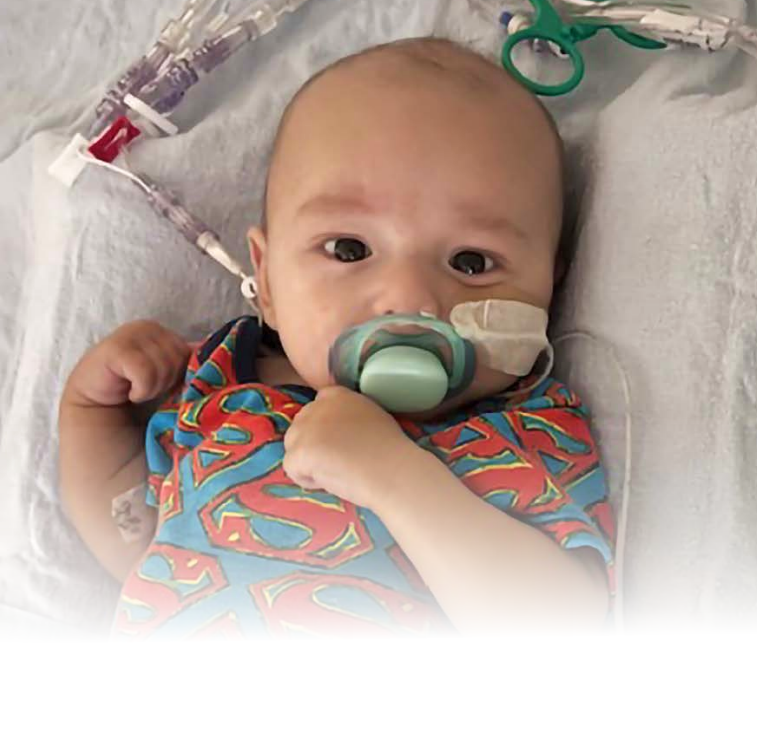
 The day I took my daughter Isabelle to the hospital, I was expecting to pick up a prescription for her and make my way to daycare to pick up my twins, Nicholas and Maxime, before meeting my eldest, Zacharie, at the bus from school. But when the doctor at our local hospital asked me to take a seat, I knew we were in for a much worse scenario. He told me her red and white blood cells were low—very low. He said it was likely cancer but they didn’t know what kind. He called ahead to the hospital in Sudbury and sent me straight there.
My husband, Joel, met us at the Northeast Cancer Centre and after a few more tests, we were told they were sending Isabelle to Toronto immediately. Only one parent could accompany her on the plane so being the more experienced driver, Joel made the six-hour drive to the city. I made arrangements for my best friend and my mom to pick up and take care of the kids, and we left. I had no idea I would not return home again for another 48 days.
“The first few times Isabelle got a lumbar puncture, I couldn’t breathe. Parents are not allowed in the room during the procedure and I just stood on the other side of the door paralyzed.”
- Stephanie Lacasse
Isabelle was diagnosed with acute lymphoblastic leukemia (ALL). The doctor told us the prognosis for kids with ALL is typically very good and the survival rate is high. We were so relieved; we decided to keep our sights on the end and buckle down for a fight. But the next few weeks were hideous and challenged us all in many ways. The intravenous needle in Isabelle’s hand kept coming out in her sleep and blood would spurt everywhere. She developed high blood pressure, severe pains in her belly due to constipation from the drugs and an infection where the port was implanted to deliver her meds. Isabelle also contracted C-difficile, a bacterial infection causing diarrhea, which completely wiped her out to the point she had no muscle mass in her legs and she had to learn to walk again. But the scariest thing for us was her non-responsive episodes which lasted for several minutes each time. Tests revealed that Isabelle had developed a blood clot in her brain from the original chemotherapy and she would require blood thinners delivered by needle twice a day for over a year. Joel took a month off work, but when we could not handle that financially anymore, he returned to his job and I stayed in Toronto to care for Isabelle by myself.
I haven’t been able to go back to work. Joel works out of town, one week on and one week off, so when he is not with us I am the one navigating this world of blood tests and chemotherapy while coordinating care for the rest of my family.
Luckily, most of Isabelle’s care takes place an hour away at the POGO Satellite Clinic at the Northeast Cancer Centre in Sudbury. This saves me the gruelling six-hour drive with a nauseous child in the back seat and means more time at home with my kids and my husband. The nurses at the clinic go above and beyond when it comes to connecting us to resources, especially when I do have to make the trip back to Toronto for aspects of Isabelle’s treatment that cannot be handled in Sudbury. Our family is incredibly grateful for the support that we have received.
Read more to learn how POGO Interlink Nurses support children with cancer and their families.
Having a child with cancer takes its toll on the other kids, the household, the marriage, but we seem to be getting back to normal lately—or at least a new normal. My beautiful little girl is four years old now. She doesn’t need to sit on my lap anymore when she gets her blood work done and loves taking the bus to school by herself. She is one tough little cookie.

Surviving Childhood Cancer: From Confidence Buster to Confidence Builder
By Barb Williams
It is surprising to many to hear that childhood cancer does not end with “being cured.” Childhood cancer and brain tumour survivors can develop learning difficulties resulting from their disease or treatment. These late effects may be further complicated by long-term physical effects, as well as emotional problems and mental health issues. It is easy to see how and why these young survivors face struggles in the worlds of work and school. Despite their physical and cognitive challenges, childhood cancer survivors have high aspirations for themselves and are motivated to achieve their goals. The POGO Transitions Program was developed as the result of parents’, patients’ and doctors’ concerns about young students, many with invisible disabilities, falling through the cracks at a critical time in their academic lives—graduating high school and moving on to college, university or work.
The Ups and Downs of Disclosing That You Are a Childhood Cancer Survivor
I want to point out that not all survivors struggle to meet their academic and professional ambitions. For some, the obstacles they experienced due to their childhood cancer have helped build their resilience, discipline and confidence. But there are a significant number of childhood cancer survivors who are grappling with emotional and mental health issues, including anxiety, depression, low self-esteem, low confidence and self-worth—sometimes accompanied by social isolation and bullying. And these issues, as much as their learning challenges, can severely impact their ability to achieve their goals and become independent young adults. As one of five POGO Counsellors across the province, it is my job to strengthen my clients’ confidence through realistic goal planning and facilitate their transition to post-secondary school and work. While there is a practical element to this in terms of job preparation and academic pathway information and navigation, there is often an emotional component. This is to say, I provide early guidance and career planning, help clients access the appropriate accommodations for school and work, and work with them to ensure their dreams and goals align with their strengths and skills. However, my colleagues and I also help our survivor clients address self-confidence and anxiety issues by listening without judgment and showing we care, and when further psychosocial intervention is required, we make the appropriate referrals. This one-on-one emotional support and encouragement POGO Counsellors provide is highly valued by survivors, as well as their family members who support them.
When I describe my job as working with childhood cancer survivors who experience challenges with school or work as a result of their disease or treatment, the most common reaction I get is how it must be such difficult or depressing work. On the contrary; I get to meet young people on their journey of surviving childhood cancer and planning for their futures, even if there are obstacles to overcome. We envision their next steps and talk about their dreams. I get the opportunity to engage with them in something positive, and if they are not feeling positive, there is a chance, with the rest of the healthcare team, to intervene and set them up for success. These are the things that make our Program so unique, so important and so uplifting. The most exciting thing for me as a POGO Counsellor is to watch my survivor clients’ self-confidence and ability to advocate for themselves increase, witness them rise to challenges they didn’t think themselves capable of, and see them achieve their goals and aspirations.
Barb Williams is the Provincial Coordinator and POGO Counsellor in the Hamilton area for The POGO School and Work Transitions Program (POGO Transitions Program). The Program facilitates a smoother transition for childhood cancer and brain tumour survivors moving on from high school to appropriate post-secondary and work opportunities. This post is based on Barb’s professional experience and the 2020 report The Transition to Meaningful Activity for Childhood Cancer Survivors: Understanding the Role of The POGO School and Work Transitions Program.