Childhood Cancer is a Lifelong Journey
Appearing in Metroland publications, September 17, 2024
While more kids are being diagnosed with cancer, more are surviving. Ontario’s childhood cancer survival rate is now 85 per cent — up from about 70 per cent in the mid-1980s. And while surviving cancer is certainly the goal, the impacts of childhood cancer can last a lifetime.
Richard Lautens Toronto Star file photo
By Lauren Ettin and Dr. David Hodgson
Lauren Ettin is the chief executive officer of the Pediatric Oncology Group of Ontario. Dr. David Hodgson is the medical director and chair in childhood cancer control for the Pediatric Oncology Group of Ontario, a radiation oncologist and clinician scientist at the Princess Margaret Cancer Centre, and associate staff at The Hospital for Sick Children.
Life for the Pugliese family changed forever when six-year-old Giacomo was diagnosed with acute lymphoblastic leukemia. For three years, they made countless trips to McMaster Children’s Hospital, watching their once-energetic little boy endure the challenges of cancer treatment, with interruptions to school and play dates.
Now 17, Giacomo’s treatment is behind him, but he is monitored regularly at the Pediatric Oncology Group of Ontario (POGO) AfterCare Clinic at McMaster Children’s Hospital for secondary cancers and heart issues — risks from his cancer and treatment. The clinic staff also emphasize the importance of a healthy, active lifestyle. His family is reassured that Giacomo will receive this crucial care for the rest of his life.
POGO’s network of clinics across Ontario play a vital role in the ongoing care of childhood cancer survivors, becoming an essential part of their lifelong health journey.
September is Childhood Cancer Awareness Month, a time to spotlight stories like Giacomo’s, which are increasingly common in Ontario.
While more kids are being diagnosed with cancer, more are surviving. Ontario’s childhood cancer survival rate is now 85 per cent — up from about 70 per cent in the mid-1980s. This is thanks to decades of clinical innovation, improvements in diagnostics and treatments, and approaches to addressing some of the related side effects.
While surviving cancer is certainly the goal, it is not where the journey ends. The impacts of childhood cancer can last a lifetime.
Childhood cancers are distinct from adult cancers in significant ways. For one thing, these cancers don’t result from lifestyle or diet. They come suddenly — and some are more likely to strike at a specific age. Typically, childhood cancers require intensive treatments, at major teaching hospitals, with highly specialized protocols. Consequently, care teams may be larger and include parents and caregivers as key decision makers.
A childhood cancer diagnosis impacts the whole family. One parent is often forced to give up work to manage the daily practicalities of their child’s care. Often, extensive travel or temporary relocation is required, uprooting families for months or sometimes years. This disruption reverberates, impacting extended family members, friends, teachers, classmates, work colleagues and communities.
Childhood cancers strike during a critical phase of development, when children and adolescents are marking key physical, mental and social milestones. As a result, two of every three survivors are at increased risk of at least one long-term side effect resulting from their cancer or its treatment, including heart disease, second cancers and cognitive challenges.
To address the unique complexities, ripple effects and long-term impacts of childhood cancer, POGO and its partners have built a system that provides wraparound care and support for children and families at every stage of the journey. Considered among the best in the world, Ontario’s childhood cancer system goes beyond diagnosis and treatment. Families are paired with nurses who help navigate the transition from hospital to home, and they can also access mental health services, financial supports, and programs that help survivors thrive into adulthood.
During Childhood Cancer Awareness Month, it’s important to recognize the tremendous progress made in childhood cancer care. But there is more we can do to ensure kids not only survive, but thrive.
It is vital that children with cancer and their families have access to the best evidence-based treatments and supports, closer to home. This requires strong, ongoing collaboration between care teams, hospitals, nonprofits, government, regulatory bodies, industry and others.
Over the past decade, we have also seen an increasing need for mental health services, a need that is urgently felt among the many who are impacted by a childhood cancer diagnosis. These priorities and others will be key components of Ontario’s Childhood Cancer Care Plan 2024-2029, a road map developed by POGO and its partners to be published later this month.
Ontario must continue strengthening its world-class childhood cancer system so that survivors like Giacomo can count on having the treatments, resources and supports they need today — and for life.

Let's Raise Awareness of Childhood Cancer all Month Long
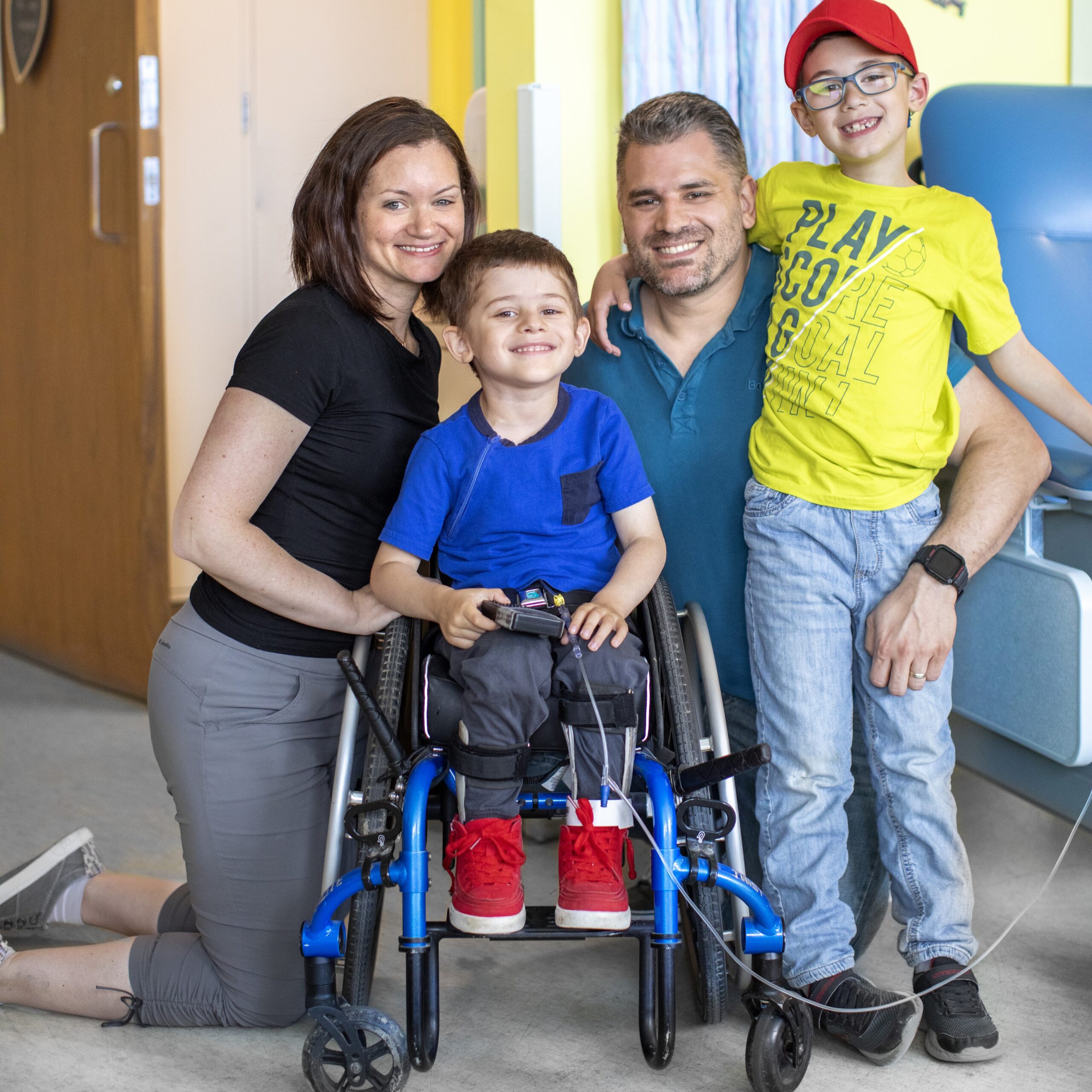
Meet the Funk family. When young Christopher was just a year old he was diagnosed with a spinal cord tumour. After an intense surgery and several months of chemotherapy, the family was relieved to move his treatment to a POGO Satellite Clinic closer to home, where he still receives weekly chemotherapy. This transition not only reduced the time his parents had to spend away from work but also allowed Christopher and his sibling, Alexander, to spend much more time together.
September is Childhood Cancer Awareness Month (CCAM). In Ontario and beyond, many are raising awareness of both the progress and ongoing challenges in childhood cancer care. Every day, POGO collaborates with hospitals, families, survivors, government, and donors to champion this cause.
Here’s how you can get involved:
GIVE
Support childhood cancer care by making a donation, becoming a monthly donor, learning more about legacy giving, or contributing in honour of someone affected by childhood cancer.
#LINKEDForLife Campaign
Vibrant paper chains will hang in the halls of POGO partner hospitals throughout Ontario, showcasing our collective commitment to support young cancer patients and their families, survivors, healthcare teams, and those who left us too soon. Donate to add your name and help grow our chain!
Get Your Company Involved
Engage your company with fun activities like office fundraisers, a pajama day, raffles, or building a #LINKEDForLife chain.
Register for an Event that Supports POGO
Stay active and support childhood cancer care by participating in the PUMA Toronto Women’s 8K/5K on Saturday, October 5, 2024 or the TCS Toronto Waterfront Marathon 5K on Saturday, October 19, 2024. Register and fundraise for POGO.
Let’s work together to make a difference!
Related Content

Pediatric Oncologist Cycles across Canada to Raise Funds for Kids with Cancer
 I first entered the world of childhood cancer as a counsellor at Camp Trillium in the year 2000. It quickly became apparent that this week away was often the only break that these families would get from their time at the hospital.
Fast forward to today, I am now a pediatric oncologist. I am the person who tells families their child has cancer. Often I get to tell them their child is cured and watch the relief flood over their faces. But for 1 out of every 5 kids, I still have to say "the cancer is back, and it might take your child's life." In addition, as the Medical Director of the POGO AfterCare program at McMaster Children’s Hospital in Hamilton, I see in my practice that surviving cancer isn’t the end of the story. As many as 60% of survivors will experience at least one chronic health problem due to their cancer and/or its treatment.
Since becoming an oncologist, I have been privileged to get to walk the cancer journey with so many kids and families. That is why three years ago, I upgraded my commuter tank with a basket to a road bike to ride in support of kids’ cancer care. Since then, I’ve been hooked. I love the feeling of sunshine on my back, and watching the scenery race by on a gorgeous day outside. This year, I am taking it to the next level and riding across Canada in Coast to Coast’s National Kids Cancer Ride taking place from September 4 – 21, 2019.
I am riding to support organizations that I’ve seen make a tangible difference to our families–the Children’s Hospitals (including mine!), the cancer camps, advocacy and support organizations, research funding and more. I am riding for our families–the ones who lost kids, those who are still supporting childhood cancer survivors, and the ones that are facing a brand new diagnosis. I am also riding for my dad who passed away after his own second cancer relapse this past year. I got to hear the words I often say, “His cancer is now incurable”…so I am riding in the hope that one day we’ll never have to say or hear those words again.
For those not familiar, this ride equates to about 150km/day for 18 days, as we cycle across Canada from Vancouver to Halifax during Childhood Cancer Awareness month in September. The ride raises funds through the Coast to Coast Against Cancer Foundation, which supports so many programs for our families affected by childhood cancer. Please consider supporting me here through donations: http://staceymarjerrison.nationalkidscancerride.com, as well as spreading the word.
I will be posting updates on my twitter feed and instagram accounts @staceymarj. I hope you will follow along as this journey continues, and that you come out to cheer us on as we ride through your city!