Life After Childhood Cancer – A Conference for Survivors
From setting life goals and dealing with the long-term health effects of treatment, to telling a new love interest about their experience with cancer, survivors of childhood cancer may struggle with many issues.
From October 16 – 18, 2015, POGO and Camp Oochigeas will present Life After Childhood Cancer, the third POGO survivor conference to address key issues survivors themselves have identified as being important to their health and well-being.
Matthew is a proud high school graduate, a college grad and a survivor. He has ongoing physical and cognitive challenges brought on by his disease and its treatment. He has difficulty with fine motor coordination, and a hard time listening and translating that information on paper. But he is driven to succeed and perseveres. Instead of taking notes by hand, he uses a laptop. If he doesn’t understand something, Matthew has no problem asking for help or researching until he figures it out. Matthew will attend the survivor conference for the first time this year.
“I’m looking forward to the survivor conference,” says Matthew. “I'm curious to hear from other survivors about their experiences and to share mine.”
In past years survivors of all ages have attended the conference and say it has helped them to better answer questions from others who have not experienced cancer.
“The conference aims to address educational and information needs in the context of social and recreational interaction – a combination we have found addresses survivors’ needs in a unique fashion, directly applicable to their daily life,” says Dr. Mark Greenberg, Senior Adviser, Policy & Clinical Affairs at POGO.
Practical approaches to their issues, like fertility and the disease’s impact on their families, are presented by leading experts, and also by other survivors. Survivors leave the conference knowing what questions to ask of their family doctor, who may never see another survivor in their practice.
“I’m happy that some sessions are run by other cancer survivors because it’s good to know I’m not the only one going through this,” says a past conference participant.
As for Matthew, his list of questions is building.
“I'm very interested to see what I can learn that will help me in the future,” he says.
While no one wants to think about cancer after they have beaten it, the thought of attending Life After Childhood Cancer would be one that is not wasted.
Get details about the 2015 Ooch/POGO Survivor Conference.

PBS Cancer Documentary, Part 3
Wednesday's episode: 6-year old Emily has leukemia and Doug Rogers, a 60-year-old NASCAR mechanic with melanoma. Each is a pioneer in new immunotherapy treatments. Both see their advanced cancers recede and are able to resume normal lives.
This episode picks up the story at another moment of buoyant optimism in the cancer world: Scientists believe they have cracked the essential mystery of the malignant cell and the first targeted therapies have been developed, with the promise of many more to follow. But very quickly cancer reveals new layers of complexity and a formidable array of unforeseen defenses. In the disappointment that follows, many call for a new focus on prevention and early detection as the most promising fronts in the war on cancer. But other scientists are undeterred, and by the second decade of the 2000s their work pays off. The bewildering complexity of the cancer cell, so recently considered unassailable, yields to a more ordered picture, revealing new vulnerabilities and avenues of attack. Perhaps most exciting of all is the prospect of harnessing the human immune system to defeat cancer.
Tune in to Cancer: The Emperor of All Maladies, 3-part documentary
Airing on PBS, 9 - 11 p.m. (Check your local listings)
Monday, March 30 - Magic Bullets
Tuesday, March 31 - The Blind Men and the Elephant
Wednesday, April 1 - Finding the Achilles Heel
This three-part film tells the comprehensive story of cancer, from its first documented appearances to the modern-day fight for a cure. Based on the Pulitzer Prize-winning book by Siddhartha Mukherjee, Ken Burns' film weaves together a captivating historical narrative with intimate stories about contemporary patients, and an investigation into the latest scientific breakthroughs that may bring a cure within reach.
Learn more at www.pbs.org.
Purchase the series at www.shoppbs.org.
Watch Katie Couric interview Mukherjee and Burns on Yahoo News.
PBS Cancer Documentary, Part 2
Tuesday's episode: The story of Dr. Lori Wilson, a surgical oncologist diagnosed with invasive breast cancer in both breasts in 2013. Her emotional and physical struggles with the disease provide a bracing counterpoint to the historical narrative that picks up in the wake of the declaration of a “war on cancer” by Richard Nixon in 1971. Flush with optimism and awash with federal dollars, the cancer field plunges forward in search of a cure. In the lab, rapid progress is made in understanding the essential nature of the cancer cell, leading to the revolutionary discovery of the genetic basis of cancer. But at the bedside, where patients are treated, few new therapies become available, and a sense of disillusionment takes hold, leading some patients and doctors to take desperate measures. It is not until the late 1990s that the advances in research begin to translate into more precise targeted therapies with the breakthrough drugs Gleevec and Herceptin.
Tune in to Cancer: The Emperor of All Maladies, 3-part documentary
Airing on PBS, 9 - 11 p.m. (Check your local listings)
Monday, March 30 - Magic Bullets
Tuesday, March 31 - The Blind Men and the Elephant
Wednesday, April 1 - Finding the Achilles Heel
This three-part film tells the comprehensive story of cancer, from its first documented appearances to the modern-day fight for a cure. Based on the Pulitzer Prize-winning book by Siddhartha Mukherjee, Ken Burns' film weaves together a captivating historical narrative with intimate stories about contemporary patients, and an investigation into the latest scientific breakthroughs that may bring a cure within reach.
Learn more at www.pbs.org.
Purchase the series at www.shoppbs.org.
Watch Katie Couric interview Mukherjee and Burns on Yahoo News.
PBS Cancer Documentary, Part 1
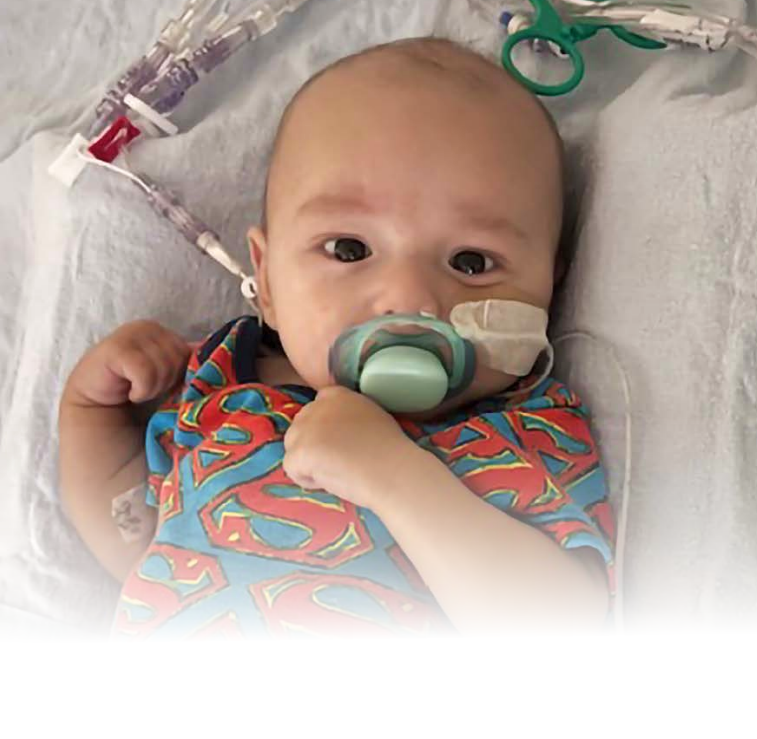
Monday's episode: The search for a cure plus, little Olivia Blair who, at 14 months, was diagnosed with T-cell acute lymphoblastic leukemia, which spreads to her brain and spinal column. The film follows her as she and her parents struggle with the many hardships and decisions foisted upon a cancer patient. She remains in full remission a year after her diagnosis, but is still on her journey to finish her three-year treatment plan. Also featured: Sidney Farber, who, defying conventional wisdom in the late 1940s, introduces the modern era of chemotherapy, and his full-scale national “war on cancer.”
Tune in to Cancer: The Emperor of All Maladies, 3-part documentary
Airing on PBS, 9 - 11 p.m. (Check your local listings)
Monday, March 30 - Magic Bullets
Tuesday, March 31 - The Blind Men and the Elephant
Wednesday, April 1 - Finding the Achilles Heel
This three-part film tells the comprehensive story of cancer, from its first documented appearances to the modern-day fight for a cure. Based on the Pulitzer Prize-winning book by Siddhartha Mukherjee, Ken Burns' film weaves together a captivating historical narrative with intimate stories about contemporary patients, and an investigation into the latest scientific breakthroughs that may bring a cure within reach.
Learn more at www.pbs.org.
Watch Katie Couric interview Mukherjee and Burns on Yahoo News.