What Price Do Families Pay When a Child has Cancer?
 You’re young and recently wed. You’ve started a family and are trying to make ends meet financially. You used to think eating lunches out was a big expense. Now there are diapers, special food, daycare, sports and other activities, and the need for more space! Hiring a sitter so you can go to dinner and a movie costs more than the dinner and movie! Your spending priorities have shifted but for the most part you’re managing.
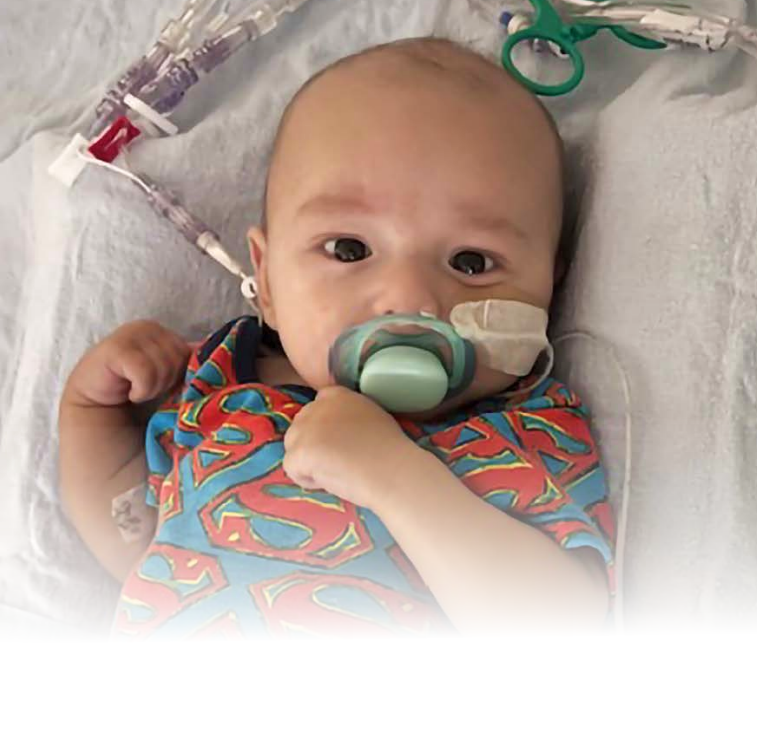
Then your eldest child starts to bruise easily, gets fevers often and doesn’t want to eat. Over a relatively short period of time you are told your child has cancer. Leukemia. You’re assured that survival is good and your child has a good chance to beat this. But the treatment hospital is over an hour’s drive away. You have to plan for many nights in the hospital; and your first stay will be weeks long. Either you or your partner has to stay with your ill child while the other is at home with your youngest. Travel-related expenses, including meals and accommodations, increased daycare costs and the realization that one of you won’t be able to go back to work for what will likely be a long time. Ugh. Of course you don’t think much about finances at the start. You are focused on keeping everything together and making sure your ill child will survive. But slowly the costs become apparent. The credit card bills roll in. So much for managing.
This is a common storyline among families of a child with cancer. Although most of the treatment is paid for by the government or private insurance, there are large costs associated with a child’s cancer care, the largest most often being a loss of nearly half the family income due to one parent leaving the workforce. This is a well-known issue among researchers. They know the financial costs in the early part of the diagnosis and treatment are huge. But what researchers haven’t figured out is how families do in the long term. What is the financial health of the family three, five or 10 years after the diagnosis? Does this kind of health crisis turn into a chronic financial condition for the family? Does the family ever recover financially?
New research by POGO is linking data from its cancer registry (POGONIS) to copies of Canadian tax returns stored at Statistics Canada. Families who experience a diagnosis of childhood cancer are being compared to families who do not experience cancer and are similar in age to the parents, in number and age of the children, where they live and income at the time of diagnosis. The researchers can then follow both family types over time and compare what likely ‘could’ have happened to the cancer family financially to what did happen.
This research is ongoing—the comparison families are now being identified—but so far we can see that a child’s cancer diagnosis stalls household income growth for about a year after the diagnosis, after which household income continues to climb. Of more interest is that families whose child dies after the diagnosis start their family life with lower household income compared to families with children that survive, after which the household income follows the same pattern of income growth. More on this story is yet to come, as this research will also examine the financial impact of the difference in cancer type. Stay tuned!
 Dr. Jason Pole is the Principal Investigator on the study Long-term Economic Consequences of a Childhood Cancer Diagnosis. He is Senior Scientist with the Pediatric Oncology Group of Ontario; an Associate Professor in the Dalla Lana School of Public Health, University of Toronto; Adjunct Scientist with The Hospital for Sick Children Research Institute; and Adjunct Senior Scientist at ICES, Toronto. Dr. Pole has a background in epidemiology and health services research with an emphasis in the use of administrative data and complex survey instruments.
Related Resources
- "Financial Hardship in Adult Survivors of Childhood Cancer," presentation at 2018 POGO AfterCare Education Day. Download PDF
- POGO Surveillance Report
- Childhood Cancer Care Plan

Losing My Leg to Cancer

B.C. (Before Cancer), I was a competitive gymnast. I had also started dancing and had even participated in one dance
competition before everything changed.
While I was enjoying my new dance classes very much, I noticed severe pain, on and off, in my right knee. I didn’t understand why it hurt so much because I hadn’t fallen. I didn’t worry about it because as a gymnast, and a very active kid, I was used to getting aches and pains.
But then one day, I fell at home doing a very simple move I had been doing for years. I hit my knee against the floor and I was
in unbearable pain. An x-ray told us that nothing was broken. I was told to apply ice, take some Advil and avoid dance until the
swelling went down.
Three weeks later, my pediatrician viewed the results and thought they looked suspicious; perhaps a solid blood clot. He sent me to repeat the x-ray and referred me to The Hospital for Sick Children.
On March 14, 2016, we went to the 8th floor of the hospital, followed a long hallway and were in shock when we saw the words “Cancer Clinic.” That was the first moment it sunk in that something might actually be very wrong. The doctors told us they were 99% sure I had a tumour in my femur and sent me for an MRI and surgical biopsy. I was terrified; I had never had surgery before.
The tests confirmed that I had osteosarcoma, the same type of bone cancer as Terry Fox, and that it was not only in my femur, but it had also spread to my lungs.
We had a long meeting with the surgeon who outlined two options for my leg:
- Endoprosthesis would mean that the tumour would be removed, a metal rod
inserted to replace my knee and femur and my leg would be saved. That option
came with high risk of other complications, additional surgeries later in life and very
limited mobility. In other words, no dancing. - A surgery called rotationplasty, where doctors remove the leg from the unhealthy knee up to the thigh. They take the healthy lower portion of the leg and rotate it 180 degrees and reattach it to the upper thigh so the ankle faces upward. Essentially, my rotated ankle would function as my knee and I would require a prosthetic leg, but I would have greater mobility than with the other surgical option.
At the age of 12, I was given two months to decide which life-altering surgery I would have. My mom and I had many disagreements. She wanted me to save my leg, while I wanted to do the surgery that would allow me to continue to do gymnastics and dance rather than just watch from the sidelines.
On June 23, 2016, I had rotationplasty and within a few months of the amputation, I was trying on my new prosthetic leg. It wasn’t easy learning to walk again, but the motivation to do something I love helped speed up the process.
The time spent in and out of the hospital was an intense time for my family. In addition to the fear that comes with a cancer diagnosis, I had a hard time coping with being a little kid in such adult circumstances. My parents had to deal with new financial burdens. And my little sister, Lizzy, felt abandoned and thought we didn’t love her anymore.
During this time, POGO was there to help us in many ways. Our POGO Interlink Nurse came to our home and talked to Lizzy to help her understand that these hard times would end and everything would be okay. She went to my school and talked to my classmates to give them guidance on how to support me without overwhelming me during this very difficult time. And when my mom gave up her job to be by my side, the POGO Financial Assistance Program helped us out.
On December 30, 2016, I completed treatment for a battle I never imagined I’d fight. The following September, I started high school and signed up for several dance classes, including ballet, jazz and even tap! I have been regaining my strength to get back on stage.
I’m so grateful to POGO donors and I hope that you feel proud to support kids like me.
- Adapted from Emma Neagu's speech at the 2017 POGO PJ Party
In December 2017, at Emma’s regularly scheduled scans, they found that the cancer had returned in both her lungs. She had two surgeries to remove the metastasis. Emma is an active advocate in support of research for kids who fight cancer.
Related resources
Read POGO's Childhood Cancer Care Plan for a roadmap to support childhood cancer investigation and research.