Author: Kathryn Cubacub
Diagnosis: Craniopharyngioma (at age 11)
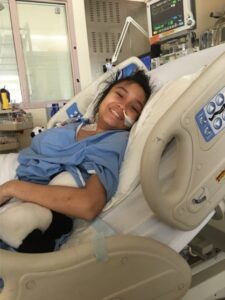
From 2015 onwards, I spent much of my life in and out of SickKids Hospital. When other kids were out at recess, I was getting bloodwork done for my Tuesday endocrine appointment. While other kids were studying math, I was studying the letters on the eye chart at the ophthalmologist.
The routine of appointments and hospital visits became my normal.
Being in the hospital so often, however, wasn’t the experience I remember the most, it was the people: the doctors, nurses, MRI techs, transporters, phlebotomists, even the kitchen and cleaning staff.
I remember being 12 years old, staring out the window in the oncology waiting room, awaiting the appointment that would depict what invasive therapy we were going to try. I remember feeling angry. And I remember the social worker, Emma, giving me a journal and instructions to write everything I felt on its pages, so it wouldn’t weigh on my mind.
I remember sitting in my hospital bed, post-craniotomy, anxiously watching my nurse practitioner, Sarah, prep the tools to remove the staples from my head. One staple in, and I knew I couldn’t do this. The child life specialist sat with me through the entire procedure, walking me through breathing practices and using a small Swarovski duck as a distractor so I didn’t have to think about the pain of the staples being removed. Sixty-six staples later, I made it through.
I remember dealing with self-consciousness and acceptance of my medical conditions as a teenager. I felt like having a brain tumour marked me as different. My psychologist, Dr. Regina, helped pick apart the chaos of my thoughts and interpret them so I could feel clarity.
These moments later became my driving motivation for my future education.
Freshly diagnosed and unable to attend school regularly, I was the most isolated I had ever been from my friends and my life back home. Seeking some deeper meaning to everything, I took to books for comfort. I became deeply curious about brain tumours and the brain. I read everything I could find at the library, partly for comfort and partly because it helped me feel a little less powerless.
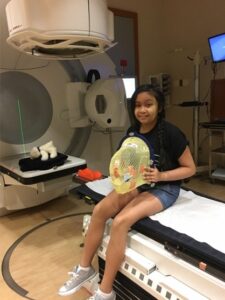
What began as a way of understanding my own experience eventually led me to pursue a university education in psychology. I went from noticing the fears, hopes and uncertainties of living with a brain tumour to wanting to study them academically. I wanted to know why I coped the way I did, why others coped differently and how people make meaning in the face of illness.
But more than that, I was reminded of the way I felt when the social worker helped me process going through radiation treatment, when the child life specialist got me through removing the staples from my head and when the psychologist listened to my worries. I knew my purpose was to give others the same sense of comfort and care I felt with those individuals.
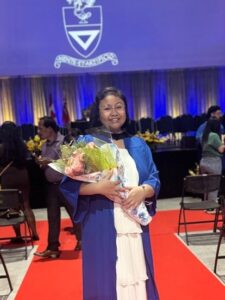
Being newly graduated with my Bachelor of Arts in Psychology, I’m not entirely sure what path I’ll be on moving forward. But I do know that I want to make a positive difference in others’ lives, just as others did for me. Whether that’s as a psychologist, a social worker or a child life specialist.
Studying psychology has given me the language and tools to process my experience. It helped me understand why I felt the way I did, and in many ways, it helped heal the inner child who was always searching for answers.
This story was written by a childhood cancer survivor for the fall 2026 issue of empowerMEnt, the POGO School and Work Transitions Program newsletter.