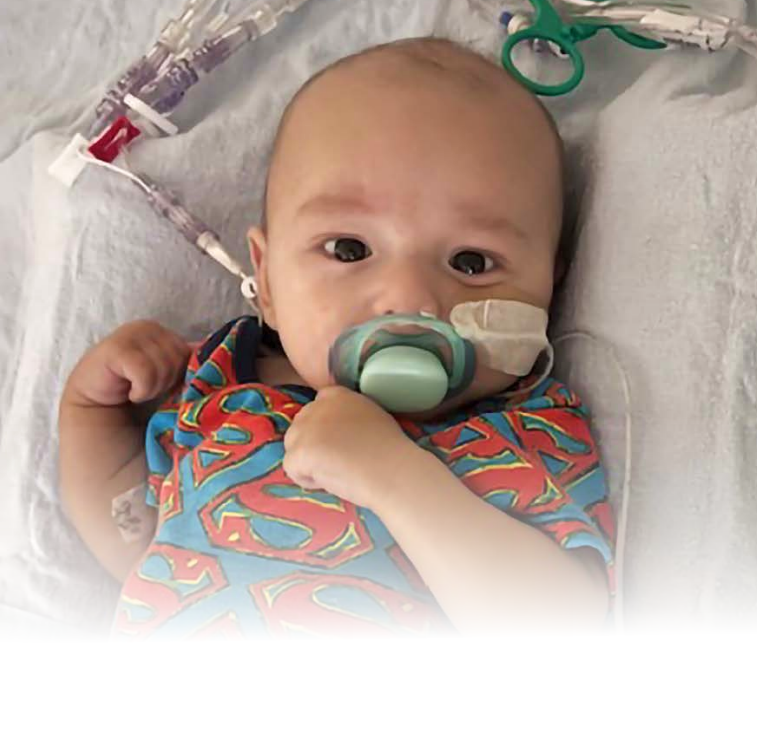
When Hugh, a brain tumour survivor, was applying to postsecondary school last year, he learned about scholarships from his POGO School and Work Transitions Counsellor, me!
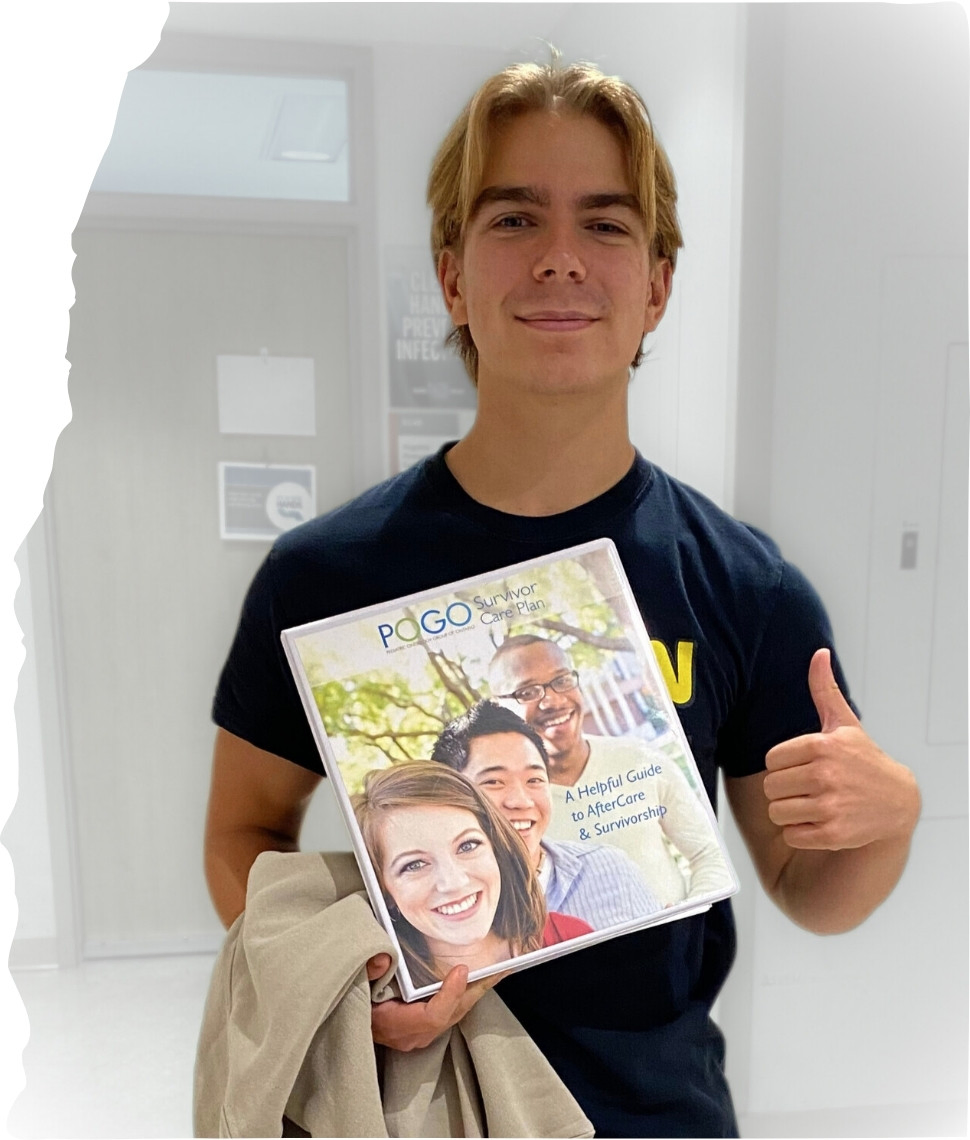
We worked on the applications together and recently talked about the process and any advice he had for this year’s scholarship applicants.
“First find out which scholarships you qualify for,” Hugh says. “Some are looking for a specific diagnosis or disability while others are looking for things like people with lots of volunteer experience.”
It is important to read the application instructions carefully because they’re all different. If reading for detail is not your thing, ask someone to help.
Each scholarship asks for some kind of “Personal Statement” about your cancer journey and what your plans are for school and the future. After putting together a draft, Hugh sent his statements to me to look over and edit.
You’ll also need a letter with proof of your diagnosis, which is in your AfterCare Binder, or you can ask your medical team.
Some scholarships may also ask for a reference letter. “Each scholarship had different requirements, so it wasn’t one and done,” Hugh says. “Giving yourself lead time is a good idea: you have to ask for the reference, sometimes you have to provide them with background information about who you are and your relationship to them, and then you have to give them time to write it.”
Hugh found this time to be a bit overwhelming because so many things were happening at one time—deciding which school to go to, getting his accommodations set up, course selection, figuring out housing, all the while waiting to hear if he’d been awarded a scholarship.
Last summer, Hugh was happy to hear he’d been awarded not only one, but two scholarships for childhood cancer survivors!
Once he got the news, he still had a lot of work to do: send his social insurance number, write a thank you letter, provide a quote for each of their websites, figure out which scholarship sent the money to his school, and which sent it right to him. He also had never received a cheque before and had to figure out what to do with it!
Hugh recommends leaning on your support system to help you navigate this process. “I talked to family, friends who were already in postsecondary, my teachers including my special education resource teacher (SERT), the school guidance counsellor, and of course, my friendly neighbourhood School and Work Transitions Counsellor.”
This story was written by Helen Antoniades, POGO Counsellor, for the spring 2026 issue of the POGO School and Work Transitions Program newsletter.